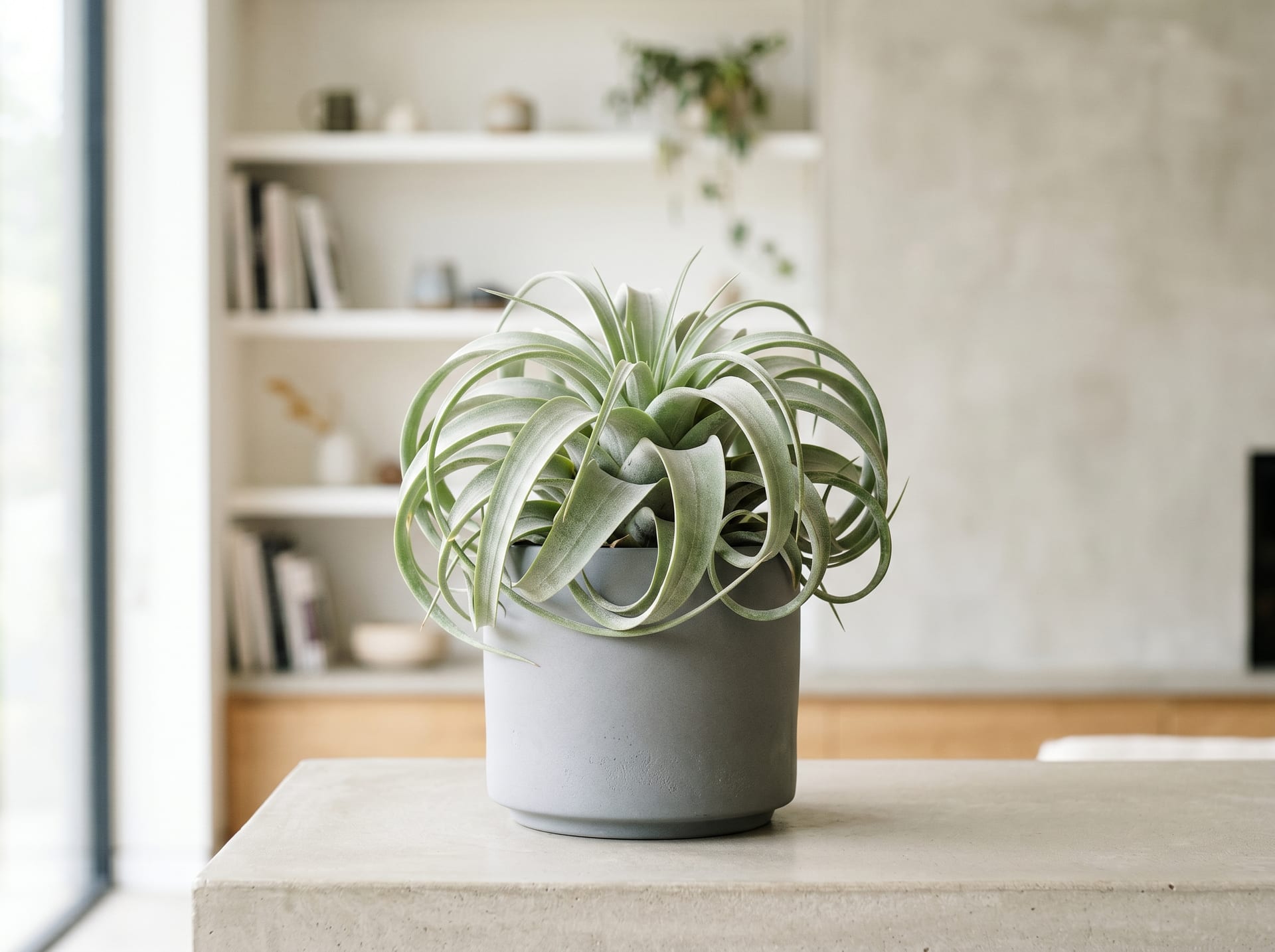
空氣鳳梨(鐵蘭)
Air plants (Tillandsia) are unique plants that grow without soil, absorbing moisture and nutrients from the air. They can be displayed freely as wall décor or living sculptures, making them ideal for small spaces. Many varieties are hardy and well-suited for first-time plant owners.
前 3 筆銷售免佣金!於2026年8月31日前登記生產者→前3筆成交的手續費免費!
栽培者 招募中!
在 ボタちょく 上架,直接銷售給全國的客戶吧!
ボタちょく承諾的 6 項透明性重點
在觀葉植物出品時,栽培者明示下列資訊。確保品種、產地、所需光量和栽培難度的透明度。
- 品種明示
- 實物照片
- 色澤
- 產地明示
- 所需光量
- 難度明示
Browse all 16 varieties
觀葉植物分類正在招募認證栽培者
栽培者正在陸續註冊,即將上架。設定上架通知,不錯過新商品。
「接收上架通知」需免費註冊會員即可設定。當有符合您儲存條件的新商品上架時,我們會以郵件和站內通知提醒您。
已註冊的栽培者(搶先看)
關於空氣鳳梨(鐵蘭)
Tillandsia belong to the bromeliad family and are native to tropical and subtropical regions of Central and South America, where they grow epiphytically on trees and rocky surfaces. The genus is named after Swedish botanist Elias Tillands, and over 600 species are known today. Their defining characteristic is the ability to grow without soil — tiny trichomes covering the leaves absorb water and nutrients directly from the air, mist, and rain. Silver-leafed varieties tolerate drier conditions and display a striking silvery appearance, while green-leafed types prefer higher humidity and offer a lush, glossy look. Their versatility as indoor décor is remarkable: they can be mounted on driftwood, cork boards, wire frames, or displayed in glass containers. With no soil required and minimal space needed, they adapt easily to urban indoor living and appeal to a wide range of plant enthusiasts, from beginners to seasoned collectors.
開始照料空氣鳳梨(鐵蘭)前需要了解的6件事
1No Soil Needed
Air plants don't need soil — they absorb moisture and nutrients through tiny hair-like structures called trichomes on their leaves. Simply attach them to driftwood, stones, wire, or any surface you like.
2Mist or Soak to Water
Mist the entire plant 2–3 times a week, or soak it in water for a few hours once a week. After watering, always shake off excess water and allow it to dry upside-down to prevent rot.
3Bright Indirect Light
Prolonged direct sunlight can scorch the leaves, so filtered light through a sheer curtain or a bright shaded spot works best. A well-lit room 1–2 meters from a window is typically sufficient.
4Blooming and Pups
Most species bloom once with vivid flowers after several years of growth. After flowering the parent plant gradually dies, but offsets called "pups" emerge at the base, allowing you to propagate new plants.
5Minimal Fertilizer Needed
Tillandsia can grow without fertilizer, but diluted liquid fertilizer misted once a month during the growing season (spring to autumn) encourages healthier growth. Avoid over-fertilizing, as it can damage the leaves.
6Cost and Where to Buy
Common small varieties are available from just a few hundred yen, while rare or large species can cost several thousand yen or more. They are widely sold at garden centers, specialty plant shops, and online retailers.
空氣鳳梨(鐵蘭)的常見問題
- Q.Do air plants really need no watering?
- A.They do still need regular watering — either misting 2–3 times a week or soaking in water for a few hours once a week. The key difference is that they absorb water through their leaves rather than roots in soil.
- Q.Can they grow in low-light indoor spots?
- A.Extremely dark spots can cause them to weaken and die. A bright spot near a window or under indirect light is ideal. They can also grow under fluorescent or LED grow lights if natural light is limited.
- Q.What happens to the plant after it blooms?
- A.After blooming, the parent plant slowly dies back, but offsets called pups grow from the base around the same time. Once a pup reaches about one-third the size of the parent, it can be separated and grown independently.
- Q.What should I watch for in winter care?
- A.Most varieties are sensitive to temperatures below 5°C, so bring them indoors during winter. Indoor heating can dry the air significantly, so slightly increase watering frequency to compensate for the lower humidity.
- Q.Why are the leaf tips turning brown?
- A.Brown leaf tips are often a sign of underwatering or low humidity — try misting more frequently or soaking the plant. If the base is turning brown and mushy, overwatering or poor airflow is likely the cause.