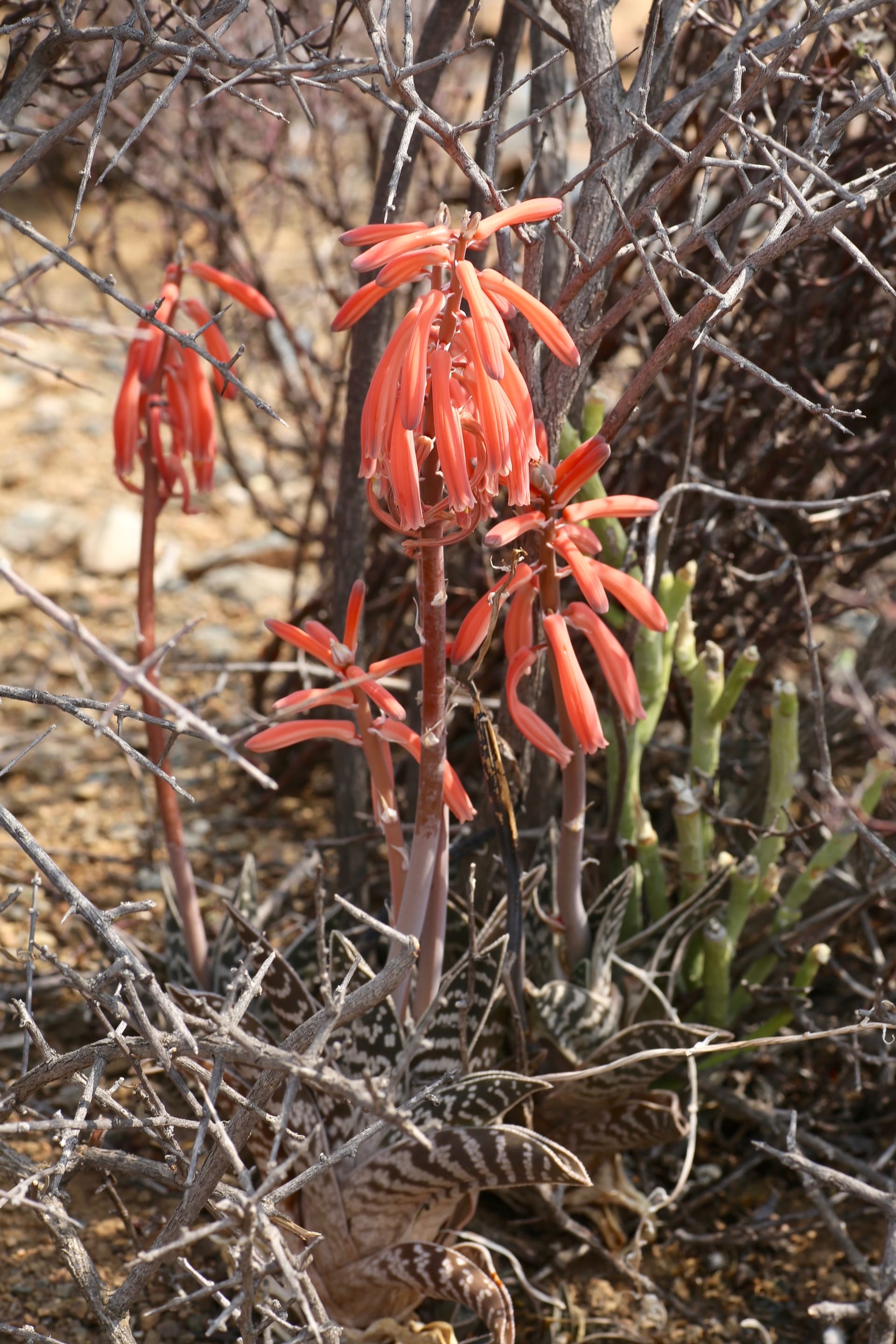
 © yakovlev.alexey from Moscow, Russia / CC BY-SA 2.0
虎紋蘆薈
Chiyoda-nishiki (also known as Tiger Aloe) is a compact aloe relative whose triangular, V-shaped leaves stack in three neat rows as the plant grows. Its deep green leaves are marked with white spots that form irregular crossbands, and each leaf edge is trimmed with a crisp white cartilaginous border. Once classified within the genus Aloe, it now belongs to the separate genus Gonialoe. This perennial stays compact, reaching up to about 25 cm tall with leaves 15 to 20 cm long. Its manageable size and easy-going nature make it a great choice for beginners exploring succulents and cacti.
View 虎紋蘆薈 encyclopedia →成交手續費 0%!2026年9月30日前註冊,前 2 株免佣金!
生產者 招募中!
在 GrowerDirect 上架,直接銷售給全國的客戶吧!
GrowerDirect承諾的 6 項透明性重點
生產者在多肉植物與仙人掌出品時明示以下資訊。保證品種、產地、所需光量、栽培難度的透明度。
- 品種明示
- 實物照片
- 色澤
- 產地明示
- 所需光量
- 難度明示
查看全部133個品種
多肉植物與仙人掌分類正在招募認證生產者
生產者正在陸續註冊,即將上架。設定上架通知,不錯過新商品。
「接收上架通知」需免費註冊會員即可設定。當有符合您儲存條件的新商品上架時,我們會以郵件和站內通知提醒您。
已註冊的生產者(搶先看)
虎紋蘆薈的基本資料
- 栽培難度
- 適合新手
- 壽命
- 多年生。生育3~7年後達到開花大小
- 體型
- 高度20~30cm(葉長10~20cm)
- 澆水
- 肥料需求不高(生育期施加稀薄肥料少量即可)
- 日照·放置位置
- 自生地中生長於灌木叢陰影或岩石裂隙。應在明亮日照~半日陰環境下栽培,盛夏強光時適當遮蔭。
- 澆水
- 一方面耐乾旱能力強,另一方面過度澆水或排水不良容易導致根部腐爛。待用土充分乾燥後再澆水。
- 溫度·越冬
- 不耐5℃以下的寒冷和冬季過濕。冬季應放在明亮室內或避免霜凍的地方,保持乾燥狀態管理。在國內圖鑑中被分類為春秋型。
- 用土·換盆
- 使用砂質排水良好的用土。子株增多導致花盆擁擠時進行換盆,兼行株分。
- 繁殖方法
- 株基部發出的子株進行株分是最簡便的方法。種子越新鮮越好,南非採取在夏季播種並保持濕潤的方式。
- 病害蟲·注意事項
- 有時會遭介殼蟲或蚜蟲危害。發現時應盡早去除,並在通風良好的環境中培育使其強壯。
關於虎紋蘆薈
Tiger Aloe (Chiyoda-nishiki) is a compact Gonialoe succulent known for its three-ranked, white-spotted leaves. Beginner-friendly and perennial, it stays a tidy size of up to about 25cm tall.
開始照料虎紋蘆薈前需要了解的7件事
1Light and Airflow
Chiyoda-nishiki enjoys bright light, but intense direct summer sun can scorch its leaves. Outdoors, filtering the light through a sheer curtain or giving it partial shade helps protect the foliage. Good airflow also reduces the risk of rot and keeps the rosette looking its best.
2Watering Basics
Like most succulents, it's best watered only after the soil surface has dried out for a few days. Its distinctive three-ranked leaves store water, so overwatering easily leads to root rot. Cut back on watering frequency in winter, when growth naturally slows down.
3Well-Draining Soil
Choosing a well-draining succulent or cactus soil mix is essential to prevent root rot. Mixing in pumice or small akadama granules improves aeration around the roots. A layer of drainage material at the bottom of the pot also helps excess water escape quickly.
4When to Repot
When roots start filling the pot, it's time to move up to a slightly larger container. Repotting during the active growing season puts the least stress on the plant. Hold off on watering for a few days afterward and keep it out of direct sun while the roots settle in.
5Seasonal Care
During its slow season, water less often and let the soil stay on the dry side. Avoid sudden temperature swings or prolonged cold, and keep the plant in a bright indoor spot if needed. During active growth, ample light and regular watering help it develop a sturdy rosette.
6Choosing a Plant
Healthy plants typically show deep green leaves with crisp, well-defined rows of white spots. Look for one whose leaves stack neatly in three tight ranks for that classic Chiyoda-nishiki silhouette. Avoid plants with damaged leaf tips or an overly stretched, leggy shape.
7Enjoying the Flowers
The flowers are pink to dull red, appearing from July to September in its native habitat on a flower stalk that is large for the size of the plant. Rather than rushing toward bloom, it's worth enjoying the leaf pattern and rosette shape over the long term.
虎紋蘆薈的常見問題
- Q.Is Chiyoda-nishiki technically an Aloe?
- A.Chiyoda-nishiki was once classified in the genus Aloe, but its classification has since been revised and it's now placed in its own genus, Gonialoe. It's easiest to think of it as a close relative within the Aloe family.
- Q.Is this a good plant for beginners?
- A.Yes, Chiyoda-nishiki is considered a beginner-friendly succulent. As long as you use well-draining soil and water only after the soil dries out, it's an easy plant to grow even for first-time succulent owners.
- Q.How large does it grow?
- A.It grows up to about 25 cm tall, with leaves 15 to 20 cm long. Its three-ranked leaves stay compact, making it easy to find a spot for it.
- Q.When does it flower?
- A.The flowers are pink to dull red and appear from July to September in its native habitat, on a flower stalk that is surprisingly large for the size of the plant.
- Q.What does Chiyoda-nishiki look like?
- A.Its deep green leaves are marked with white spots forming irregular crossbands and edged with a crisp white cartilaginous border. The triangular, V-shaped leaves stacking in three neat ranks is also a signature trait of this variety.
虎紋蘆薈栽培的實用工具
在圖鑑中詳細了解虎紋蘆薈
查看虎紋蘆薈的圖鑑條目 →
收錄栽培難度、尺寸、原產地、日照等基礎資料。