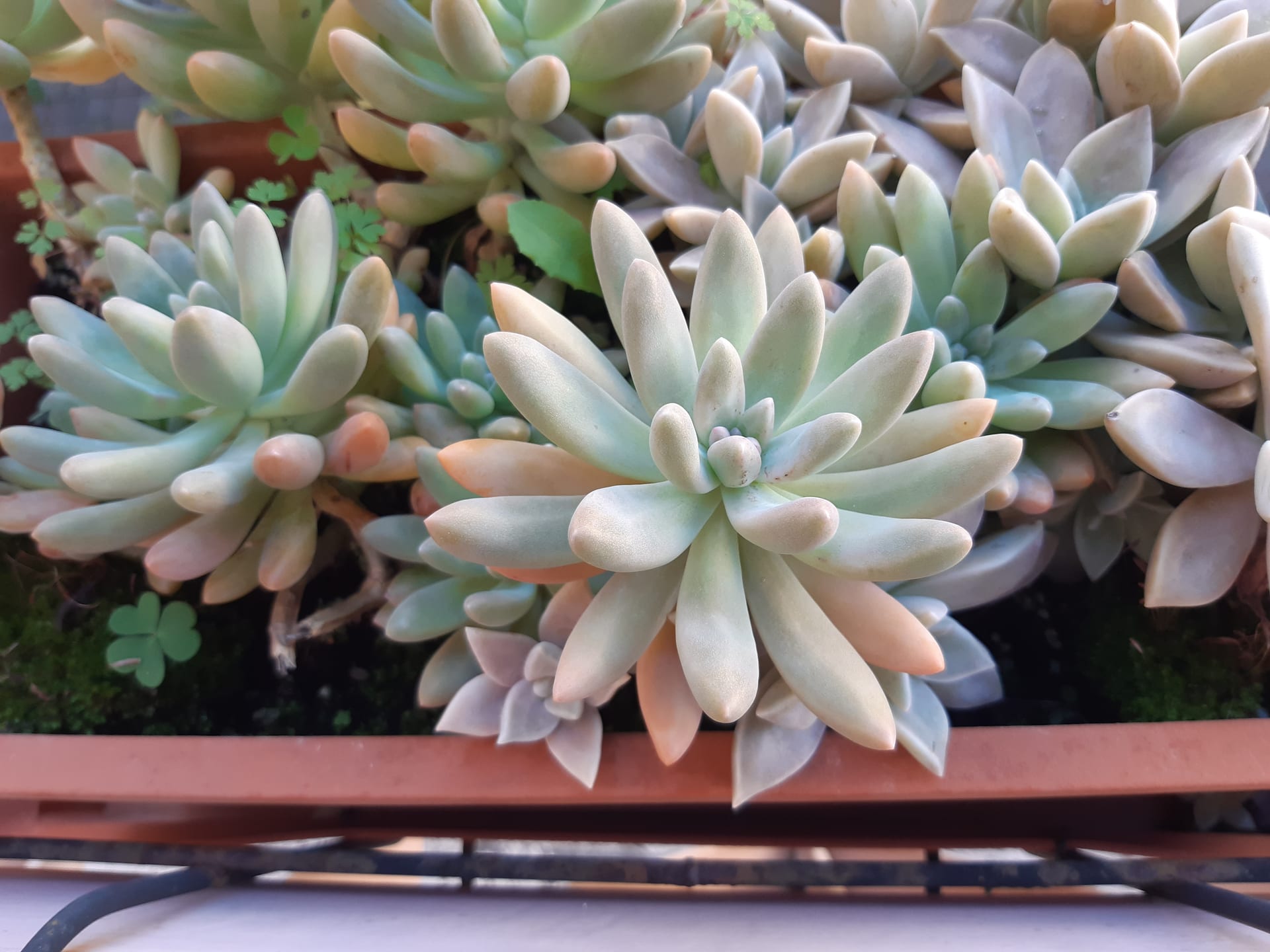
 © Harlock81 / CC BY-SA 4.0
秋麗
Known in Japan as 秋麗, 'Francesco Baldi' is an intergeneric succulent hybrid between Oborozuki and Otome-gokoro. Its slender, fleshy leaves stack into rosettes at the tips of the stems, forming a low clump about 10 to 12 cm across and 15 cm tall, with leaves up to 6 to 7 cm long. The color shifts with the conditions: blue-gray in part shade, pinkish gray in full sun, and purple-brown in winter. It is rated beginner-friendly, so it suits anyone new to succulents. It is a perennial, though little is documented about its lifespan, so many growers refresh their plants from cuttings over time.
View 秋麗 encyclopedia →成交手續費 0%!2026年9月30日前註冊,前 2 株免佣金!
生產者 招募中!
在 GrowerDirect 上架,直接銷售給全國的客戶吧!
GrowerDirect承諾的 6 項透明性重點
生產者在多肉植物與仙人掌出品時明示以下資訊。保證品種、產地、所需光量、栽培難度的透明度。
- 品種明示
- 實物照片
- 色澤
- 產地明示
- 所需光量
- 難度明示
查看全部133個品種
多肉植物與仙人掌分類正在招募認證生產者
生產者正在陸續註冊,即將上架。設定上架通知,不錯過新商品。
「接收上架通知」需免費註冊會員即可設定。當有符合您儲存條件的新商品上架時,我們會以郵件和站內通知提醒您。
已註冊的生產者(搶先看)
秋麗的基本資料
- 栽培難度
- 適合新手
- 壽命
- 多年生(壽命資料較少)
- 體型
- 蓮座直徑10~12cm,高約15cm的低矮群落。葉長至6~7cm
- 澆水
- 春季生育期施少量肥料
- 光照與擺放位置
- 適應半陰至全日照環境,但充分日照能使株形緊湊、色彩鮮豔。梅雨季應避免長期淋雨。由於莖脆弱,擺放位置確定後應避免經常移動。
- 澆水
- 春秋生育期待土乾後充分澆水,夏季需控制澆水防止悶濕。10月至3月澆水極少,僅保持葉片不皺縮即可。冬季濕度高時,即使土壤乾燥也可能受傷。
- 溫度與越冬
- 對寒冷相對耐受,即使結冰也有回復的可能,但仍應避免霜凍。為促進開花需在冬季經歷1個月以上15℃以下的低溫。
- 介質與換盆
- 使用混合碎石等排水性良好的介質,於3~5月進行換盆。
- 繁殖方法
- 脫落的蓮座與葉片易生根,可輕易透過扦插或葉插繁殖。亦可進行分株。
- 病蟲害與注意事項
- 主要病蟲害較少,但偶有蚜蟲、介殼蟲與粉介殼蟲危害。
關於秋麗
Graptosedum 'Francesco Baldi' (秋麗) is a hybrid of Oborozuki and Otome-gokoro with fleshy rosettes that turn blue-gray in part shade, pinkish gray in sun and purple-brown in winter. A beginner-friendly succulent.
開始照料秋麗前需要了解的7件事
1Give it plenty of light
Choose a bright spot with good airflow. In full sun the leaves turn pinkish gray, and in part shade the plant still grows but shifts to blue-gray. If it is too dark, the space between leaves tends to stretch, so keep it as bright as you can.
2Water only when dry
Wait until the soil has dried out completely, then water thoroughly until it runs from the drainage hole. The fleshy leaves store water, so frequent watering can lead to root rot and stuffiness. Water less often in winter and let the soil stay on the dry side.
3Use fast-draining soil
A well-draining succulent mix is the easiest choice, paired with a pot that has a drainage hole. If you blend your own, add plenty of granular material such as akadama or pumice. Avoid soil that stays wet for long, since it can damage the roots.
4When to repot
The plant spreads into a low clump, and roots filling the pot are your cue to repot. Moving it to a slightly larger pot in spring or autumn, when it is actively growing, puts the least stress on it. After repotting, wait a few days before watering to help protect the roots.
5Beware summer stuffiness
Hot, humid summers can leave the plant stuffy, so move it to bright shade with good airflow. Intense midsummer sun can scorch the leaves, so consider shading it. Water sparingly in this season, and do it in the cooler evening hours.
6Winter color and cold care
As temperatures drop, the leaves turn purple-brown, which is one of this plant's highlights. Keep it away from frost and freezing, and in colder regions bring it under eaves or into a bright indoor spot. Water lightly and let the soil stay fairly dry.
7Choosing a healthy plant
A good plant has tight rosettes and firm leaves without stretched gaps between them. Leaf color changes with the season and light, so check for soft, mushy leaves, dark spots, or a wobbly base rather than judging by color alone. New small leaves emerging from the center are a sign the plant is actively growing.
秋麗的常見問題
- Q.Can a beginner grow it?
- A.Yes, it is listed as beginner-friendly in the plant database. If you provide good light, airflow, and water only after the soil has dried, it is an easy succulent to start with.
- Q.Its leaf color is changing. Is it sick?
- A.The leaf color of this plant changes with its surroundings: blue-gray in part shade, pinkish gray in sun, and purple-brown in winter. Most of the time this is a natural response to light and season. Leaves that turn mushy, blacken, or melt are a different matter, often pointing to overwatering, so review the placement and watering.
- Q.How large does it get?
- A.The rosettes reach about 10 to 12 cm across, and the plant grows into a low clump roughly 15 cm tall. Individual leaves grow up to 6 to 7 cm long.
- Q.How many years will it live?
- A.It is a perennial succulent, but little is documented about its lifespan, so no specific number of years can be given. If the plant loses its shape, you can refresh it by cutting it back and rooting cuttings.
- Q.Can I grow it indoors?
- A.Yes, if you can offer a bright, airy spot such as a sunny windowsill. With too little light the gaps between leaves stretch and the coloring fades, so giving it some time outdoors in natural light and breeze now and then helps keep it in good shape.
秋麗栽培的實用工具
在圖鑑中詳細了解秋麗
查看秋麗的圖鑑條目 →
收錄栽培難度、尺寸、原產地、日照等基礎資料。