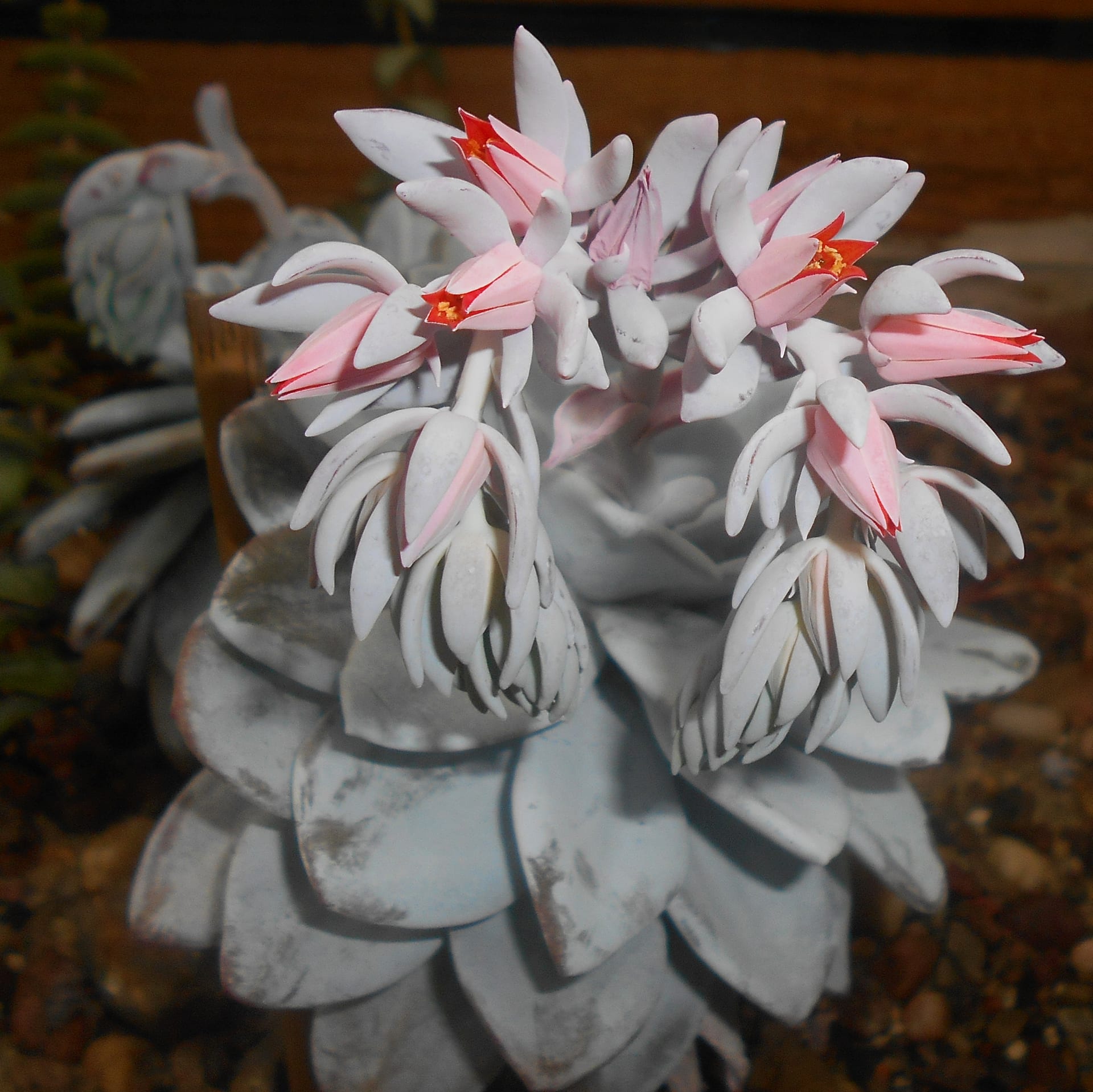
 © Salicyna / CC BY-SA 4.0
勞氏石蓮花
Echeveria laui is a species Echeveria native to Oaxaca, Mexico. Its plump, rounded leaves stack into a rosette that looks snow-white because of a thick coating of farina, the powdery bloom on the leaf surface. The rosette reaches about 15 cm across, and this perennial grows slowly. The farina rubs off easily at a touch, so it is best enjoyed without handling the leaves. It is rated for intermediate growers, and it suits people who like learning how to judge watering and light over time.
View 勞氏石蓮花 encyclopedia →成交手續費 0%!2026年9月30日前註冊,前 2 株免佣金!
生產者 招募中!
在 GrowerDirect 上架,直接銷售給全國的客戶吧!
GrowerDirect承諾的 6 項透明性重點
生產者在多肉植物與仙人掌出品時明示以下資訊。保證品種、產地、所需光量、栽培難度的透明度。
- 品種明示
- 實物照片
- 色澤
- 產地明示
- 所需光量
- 難度明示
查看全部133個品種
多肉植物與仙人掌分類正在招募認證生產者
生產者正在陸續註冊,即將上架。設定上架通知,不錯過新商品。
「接收上架通知」需免費註冊會員即可設定。當有符合您儲存條件的新商品上架時,我們會以郵件和站內通知提醒您。
已註冊的生產者(搶先看)
勞氏石蓮花的基本資料
- 栽培難度
- 適合中級者
- 壽命
- 多年生。生長緩慢
- 體型
- 蓮座花型直徑約15厘米
- 澆水
- 肥料需求適度偏多(使葉片肉厚且葉形圓潤)
- 光照與擺放位置
- 提供充足日光。光照不足時葉片可能會萎蔫脫落。夏季應置於避雨、通風良好的明亮半蔭處,冬季應放在避霜、向陽處或室內光線充足之處。
- 澆水
- 春秋型種。3至9月在用土乾透後適度澆水,避免從葉片上方澆水。高溫多濕的夏季應基本停止澆水,冬季應在涼爽通風處保持較乾的狀態。
- 溫度與越冬
- 根據海外資料記載耐寒性可達-3℃,國內圖鑑將0℃作為不枯死的最低溫度參考。冬季管理尤其需要特別注意。
- 施肥
- 適度增加肥料會使葉片肉厚、葉形短而圓潤,形成形態優美的蓮座花型。
- 繁殖方法
- 難以產生側芽。易進行自花授粉,因此可在花謝後保留花莖使種子成熟,採用實生法繁殖。葉插繁殖可使用下部老葉,但成功率較低。
- 病害蟲與注意事項
- 白粉觸摸後會脫落且無法恢復。應避免接觸葉片,植株移栽時應托住根部進行操作。
關於勞氏石蓮花
Echeveria laui is a species Echeveria from Oaxaca, Mexico, prized for its pure white rosette coated in thick farina. About 15 cm across and slow-growing, it suits intermediate growers. Learn the key points on placement and watering.
開始照料勞氏石蓮花前需要了解的7件事
1Keep Hands Off the Farina
The farina on the leaves comes off when touched and leaves visible marks, and the bare patches are slow to recover. When moving the pot or repotting, hold the pot or the base of the plant, and avoid touching the leaves or the center of the rosette. This is a plant best enjoyed by looking rather than handling.
2Bright, Airy Spot
Grow it in a spot with good light and steady airflow. With too little light the leaves stretch and the rosette loosens, so choose a bright position. In the strongest midsummer sun, provide some shade to prevent leaf scorch.
3Water at the Base
Water trapped between the leaves can cause rot, and droplets also spoil the farina. Bring the spout close to the base of the plant and water the soil without wetting the leaves. A good rule is to water thoroughly once the soil has dried out completely, and how often that is will vary with the season and your conditions.
4Fast-Draining Soil
Use a fast-draining succulent and cactus mix and a breathable pot to help prevent root rot. Because the plant grows slowly, a light mix that dries out readily is a good match.
5No Rush to Repot
Since growth is slow, frequent repotting is unnecessary. When the roots fill the pot or the soil has broken down, move the plant to a pot one size larger during its growing season. Support it gently at the base so your fingers stay off the leaves.
6Seasonal Care Tips
As with most Echeveria, spring and autumn are the main growing seasons. Give it plenty of light then and water once the soil has dried. In summer, avoid heat and humidity, keep air moving and water sparingly. In winter, protect it from frost and freezing, and keep it bright and on the dry side.
7Choosing a Healthy Plant
Look for a plant whose farina is even across the whole rosette, with plump, thick leaves and a tight, well-formed shape. It is safest to avoid plants with darkened leaves or a wobbly base. When yours arrives, handle it by the pot and leave the leaves untouched.
勞氏石蓮花的常見問題
- Q.Can a beginner grow it?
- A.It is rated for intermediate growers. It is easier once you are comfortable judging watering and light, so beginners may feel more confident after practicing with other Echeveria first.
- Q.Will it die if the farina rubs off?
- A.Losing some farina does not by itself kill the plant. The bare spots are slow to recover, though, so try to avoid touching the leaves.
- Q.How big does it get?
- A.The rosette reaches about 15 cm across. Growth is slow, so it takes time to see a change in size.
- Q.How often should I water it?
- A.Rather than following a fixed schedule, wait until the soil is completely dry, then water thoroughly at the base. Water less in summer and winter, and keep water off the leaves.
- Q.Should I grow it indoors or outdoors?
- A.Either works as long as the spot is bright and airy. Rain on the leaves can wash off the farina and cause damage, so outdoors choose a place sheltered from rain and protect the plant from frost in winter.
勞氏石蓮花栽培的實用工具
在圖鑑中詳細了解勞氏石蓮花
查看勞氏石蓮花的圖鑑條目 →
收錄栽培難度、尺寸、原產地、日照等基礎資料。