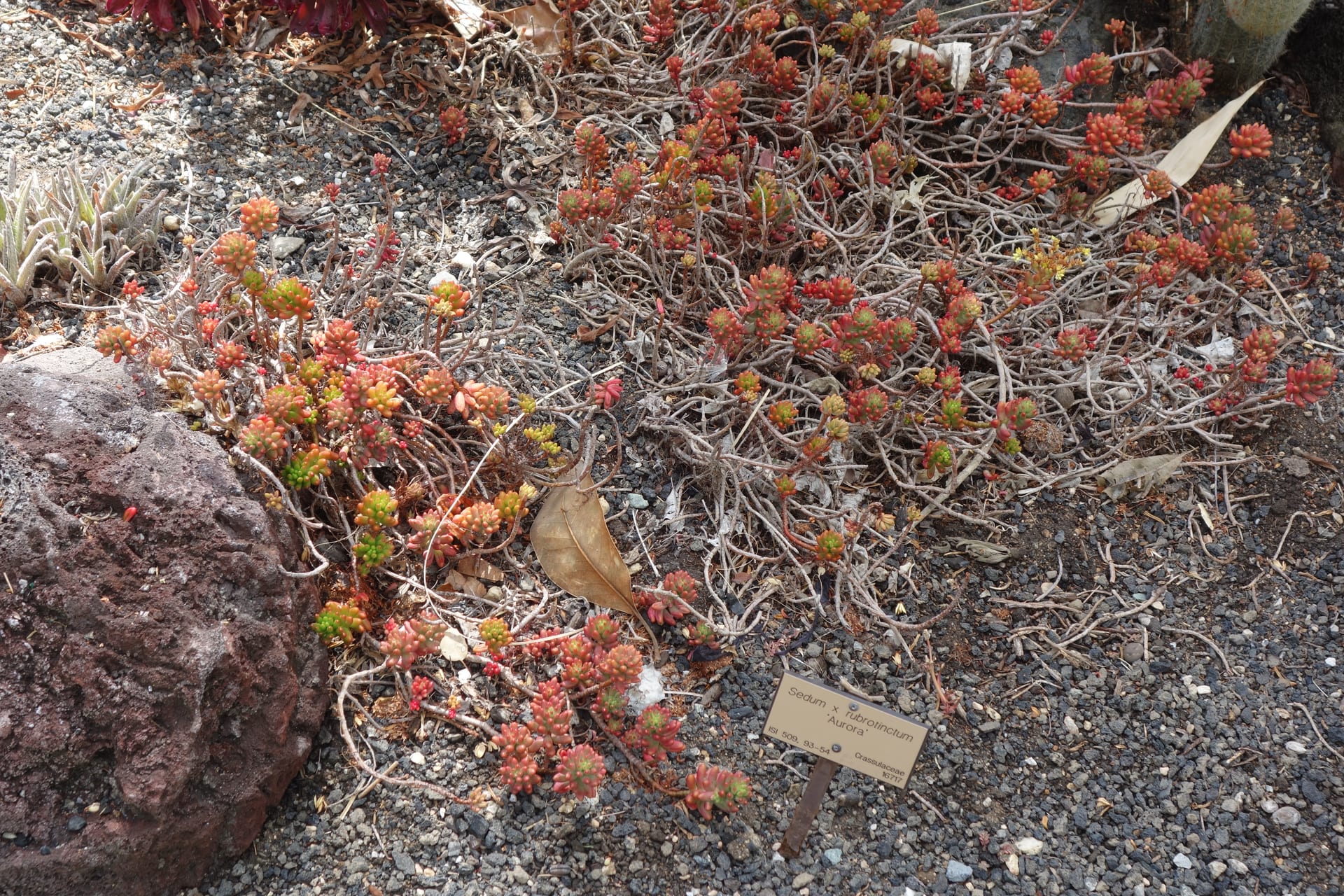
 © Daderot / CC0
虹珠'極光'(斑葉虹珠)
Aurora is the variegated form of Sedum rubrotinctum, known in Japan as Niji no Tama Nishiki. Plump, bean-shaped leaves line its stems, and the variegated leaves start to take on color as the weather cools in autumn, so one plant shows different looks through the year. It is an evergreen perennial and is rated beginner-friendly. Leaf cuttings rarely take, so it is propagated from stem cuttings instead. Even in a small pot it has real presence, which makes it an approachable first succulent.
View 虹珠'極光'(斑葉虹珠) encyclopedia →成交手續費 0%!2026年9月30日前註冊,前 2 株免佣金!
生產者 招募中!
在 GrowerDirect 上架,直接銷售給全國的客戶吧!
GrowerDirect承諾的 6 項透明性重點
生產者在多肉植物與仙人掌出品時明示以下資訊。保證品種、產地、所需光量、栽培難度的透明度。
- 品種明示
- 實物照片
- 色澤
- 產地明示
- 所需光量
- 難度明示
查看全部131個品種
多肉植物與仙人掌分類正在招募認證生產者
生產者正在陸續註冊,即將上架。設定上架通知,不錯過新商品。
「接收上架通知」需免費註冊會員即可設定。當有符合您儲存條件的新商品上架時,我們會以郵件和站內通知提醒您。
已註冊的生產者(搶先看)
虹珠'極光'(斑葉虹珠)的基本資料
- 栽培難度
- 適合新手
- 壽命
- 常綠多年生(壽命資料缺乏)
- 體型
- 缺乏體型數據
- 澆水
- 在春季和秋季生長期施用少量緩效肥料或液體肥料
- 日照與擺放位置
- 春季和秋季應在戶外陽光充足的地方栽培。因為不耐高溫多濕,梅雨季至夏季應在避雨、通風良好的半陰處度夏。秋季氣溫下降後開始著色。
- 澆水
- 屬於春秋型,在春季(3~6月)和秋季(9~11月)生長。生長期間介質表面乾燥時澆透,梅雨季結束後進入夏季休眠期應減少澆水,並避免雨淋。
- 溫度與越冬
- 親本虹珠據稱只要避免霜凍就相對耐寒。冬季應在無霜凍的地方管理。
- 介質與換盆
- 使用排水良好的介質,每1~2年在生長期前夕或初期進行換盆。此時可將過度徒長的株體進行修剪。
- 繁殖方法
- 用莖插進行繁殖。莖插可順利生根,但葉插幾乎無法成功。插穗後避免過度澆水,保持略微乾燥。最適期為3~5月和9~10月。
- 病蟲害與注意事項
- 莖和葉片可能遭介殼蟲和蚜蟲侵害,根部可能受線蟲危害。虹珠據稱接觸或誤食時可能造成刺激,應放在兒童和寵物無法觸及的地方,操作後務必洗手。
關於虹珠'極光'(斑葉虹珠)
Sedum rubrotinctum 'Aurora' is a variegated jelly bean succulent with plump, bean-shaped leaves. A beginner-friendly evergreen perennial, with care tips and FAQ.
開始照料虹珠'極光'(斑葉虹珠)前需要了解的7件事
1Bright spot, good airflow
A sunny spot outdoors or a bright windowsill suits it best. With too little light the stems stretch and the leaf color fades, so give it as much sun as you can. The variegated leaves scorch more easily, though, so shade it from harsh midsummer sun.
2Water after it dries
Water only after the soil has dried out completely, then soak it until water runs from the drainage hole. The leaves store water, so constantly damp soil invites root rot. Cut back in summer and winter, when growth slows.
3Free-draining soil
A ready-made succulent and cactus mix works well. If you blend your own, use plenty of free-draining material such as akadama or pumice. Choose a pot with a drainage hole, which helps prevent overwatering.
4When to repot
Repot in spring or autumn, when the plant is actively growing. Do it when the pot is full of roots or the stems have grown long and untidy. Hold off watering right after repotting and start again after a short pause, which helps protect the roots.
5Summer heat, winter frost
Hot, humid summers can cause stuffiness, so move it to a bright, airy spot with partial shade and out of the rain. Frost and freezing damage it in winter, so keep it under eaves or in a bright room. As the weather cools from autumn into winter, the leaves take on more red.
6Choosing a plant
Look for plump, firm leaves with no dark patches, wrinkles or translucent areas. Check that the stems are compact rather than stretched, and that the variegation is to your taste. The leaves drop easily, so handle the plant gently once it arrives.
7Propagate by stem cuttings
Leaf cuttings rarely take, so propagate by cutting a stem and planting it. Let the cut end dry before setting it in free-draining soil. Occasionally a plain green shoot appears as the variegation fades, so choosing well-variegated stems for cuttings helps keep the plant's look.
虹珠'極光'(斑葉虹珠)的常見問題
- Q.Can a beginner grow it?
- A.It is rated as beginner-friendly. The basics are good light, airflow, and watering only once the soil has dried. If you watch out for summer stuffiness and winter frost, it is an easy succulent to keep.
- Q.Why do the leaves keep falling off?
- A.The bean-shaped leaves are loosely attached and can drop with a light touch or bump. Overwatering or too little light can make it worse, so check its spot and watering. Fallen leaves rarely grow into new plants.
- Q.Are red leaves a sign of disease?
- A.Turning red in cool weather or bright light is a natural change often seen in this group of plants. If instead the color fades to green and the stems stretch, it may be a sign of too little light.
- Q.How does it differ from Niji no Tama?
- A.Aurora is the variegated form of Niji no Tama (Sedum rubrotinctum), and its variegated leaves set it apart from the plain form by color. The biggest practical difference is propagation: Niji no Tama grows easily from leaf cuttings, but Aurora rarely does, so it is propagated from stem cuttings.
- Q.How do I get it through winter?
- A.The key is to keep it away from frost and freezing. In cold weather, move it under eaves or into a bright room and water sparingly so the soil stays on the dry side. Adjust its spot to suit the winters where you live.
虹珠'極光'(斑葉虹珠)栽培的實用工具
在圖鑑中詳細了解虹珠'極光'(斑葉虹珠)
查看虹珠'極光'(斑葉虹珠)的圖鑑條目 →
收錄栽培難度、尺寸、原產地、日照等基礎資料。