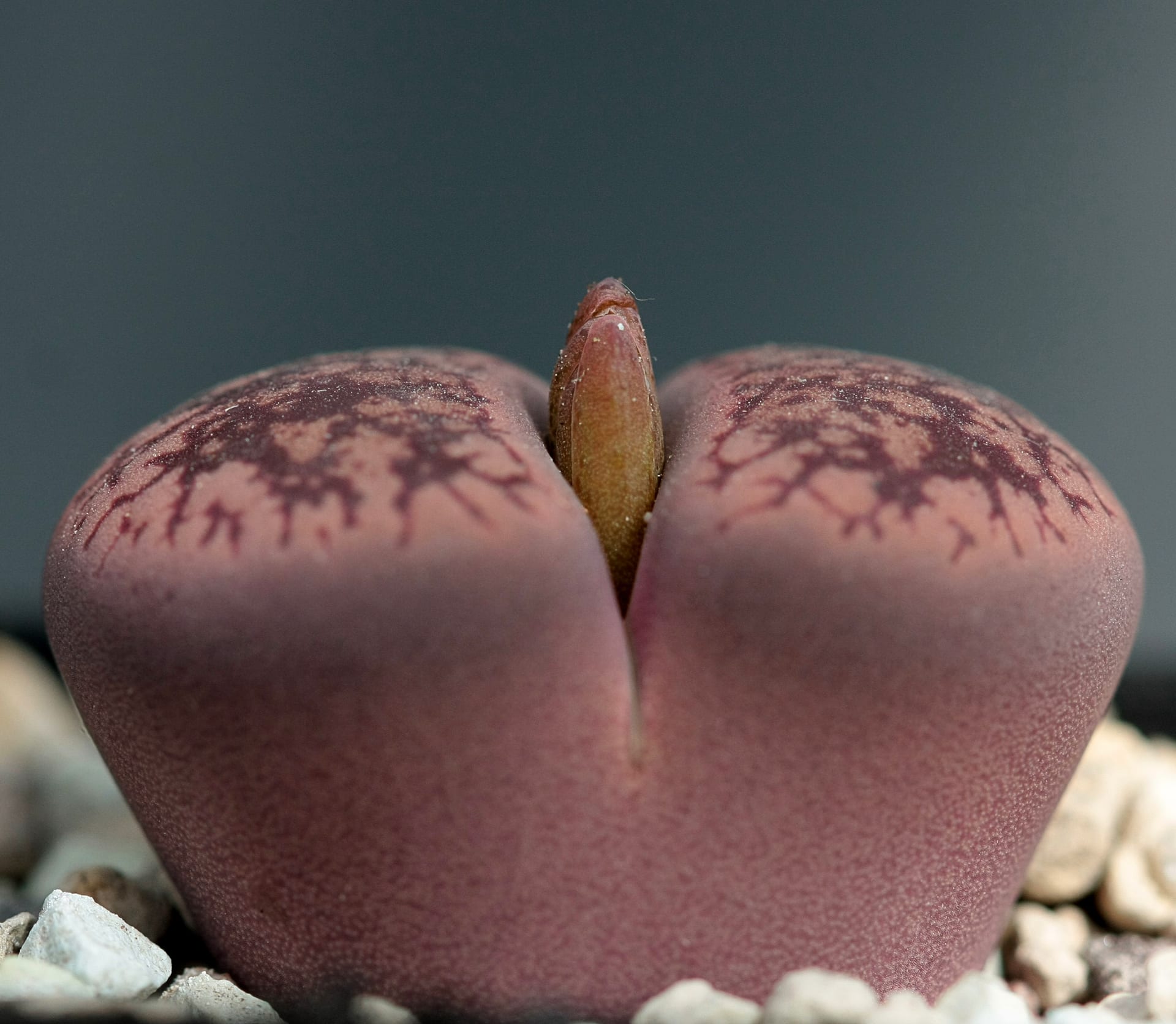
 © Dornenwolf / CC BY 2.0
日輪玉
Nichirin-gyoku, or Lithops aucampiae, is a South African living-stone succulent that looks like a small pebble split down the middle. Its reddish-brown top surface is marked with a dark brown net-like pattern, and each head measures roughly 25 to 55 mm long and 20 to 40 mm wide, which makes it a large Lithops. In autumn it produces bright yellow flowers up to 52 mm across, a striking contrast to its modest body. It is a widely grown, hardy species that is relatively forgiving of watering mistakes, so it suits beginners. As a perennial, it gives you new leaves and blooms year after year.
View 日輪玉 encyclopedia →成交手續費 0%!2026年9月30日前註冊,前 2 株免佣金!
生產者 招募中!
在 GrowerDirect 上架,直接銷售給全國的客戶吧!
GrowerDirect承諾的 6 項透明性重點
生產者在多肉植物與仙人掌出品時明示以下資訊。保證品種、產地、所需光量、栽培難度的透明度。
- 品種明示
- 實物照片
- 色澤
- 產地明示
- 所需光量
- 難度明示
查看全部131個品種
多肉植物與仙人掌分類正在招募認證生產者
生產者正在陸續註冊,即將上架。設定上架通知,不錯過新商品。
「接收上架通知」需免費註冊會員即可設定。當有符合您儲存條件的新商品上架時,我們會以郵件和站內通知提醒您。
已註冊的生產者(搶先看)
日輪玉的基本資料
- 栽培難度
- 適合新手
- 壽命
- 多年生植物(壽命資料稀少)
- 體型
- 單頭長度25~55毫米,寬度20~40毫米。花徑最大52毫米
- 適宜溫度
- 8〜25℃
- 澆水
- 秋季至春季生長期使用緩效性肥料或液肥少量
- 日照與栽培位置
- 在有遮雨、日照良好的地方栽培。要使顏色生長良好,需要明亮的光線。從梅雨期結束到夏季,應在通風良好的半陰環境中休眠。
- 澆水
- 冬型植物。花謝後,在舊葉完全被新葉取代之前,應基本控水。秋季涼爽時重新開始澆水,生長期在介質乾燥時從鍋底澆至流出為止。6~9月休眠期應控制澆水並保持乾燥。
- 溫度與越冬
- 冬季最低溫度不低於3℃可使植株保持良好狀態(不枯萎的目標是0~3℃)。輕微霜凍很少導致枯死,但在嚴寒期應移至室內或采取防寒措施。
- 介質與換盆
- 由於植物具有牛蒡狀的直根,應在深度略深的花盆中用排水良好的介質種植。不需要頻繁換盆,當生長變遲緩或花盆變狹窄時,在10~11月進行換盆。
- 繁殖方法
- 通過播種(10~11月)或將群生的植株進行分株繁殖。分株生根需要時間,應盡早進行。
- 病蟲害與注意事項
- 花芽和花朵可能受到介殼蟲或蚜蟲侵害,根部可能感染線蟲,花瓣可能被蛞蝓啃食,葉片可能被夜盜蛾幼蟲取食。謝花後的花殼會引起腐敗,應用手指摘除。
關於日輪玉
Lithops aucampiae: a large, beginner-friendly living stone with a net-patterned reddish-brown top and big yellow flowers. Traits and care tips.
開始照料日輪玉前需要了解的7件事
1Sun and airflow
Nichirin-gyoku wants plenty of direct light. With too little, it stretches out and the net pattern on the top surface fades, so give it a bright spot sheltered from rain outdoors, or a sunny windowsill indoors. Good airflow also helps prevent stuffy, damp conditions.
2Water mainly in autumn
Watering centers on autumn, when the plant is actively growing. Wait until the soil is completely dry, then water thoroughly and let it dry out again before the next watering. It is fairly forgiving of watering mistakes, but avoid keeping the soil constantly damp.
3Hold water while shedding
Lithops shed their old leaves as a new pair grows from inside, mostly from winter into spring. The new leaves draw moisture from the old ones, so don't water until the old pair has shriveled to a papery skin. Watering during this stage can harm the plant, so be patient.
4Keep it drier in summer
Growth slows in hot weather, so cut back on watering and let the plant rest. Strong sun combined with damp heat can lead to rot, so a bright spot with good airflow is safer. When cooler weather returns and the plant stirs, resume watering gradually.
5Choose a fast-draining soil
Drainage is the top priority. Mix coarse grit such as pumice or sand generously into a commercial succulent mix so the roots dry quickly. Because the roots grow deep, a slightly deeper pot works well.
6Repot only when crowded
Frequent repotting isn't necessary; do it when the plant has multiplied and filled the pot. Early autumn, as growth resumes, is a good time, and it helps to hold back water for a while afterward to protect the roots. Avoid disturbing a plant that is in the middle of shedding.
7Choosing a healthy plant
Look for a firm top surface with no wrinkles, dark spots, or damage around the fissure. A clear dark brown net pattern on the reddish-brown ground is a good sign. Each head should measure roughly 25 to 55 mm long and 20 to 40 mm wide, so check the listing for the number of heads and the condition of each one.
日輪玉的常見問題
- Q.Can beginners grow Lithops aucampiae?
- A.Yes, it is rated as beginner-friendly. It is a hardy, widely grown species that is relatively forgiving of watering mistakes, but you should still water in autumn and hold back during shedding and in summer.
- Q.When does it flower, and what are the flowers like?
- A.It produces large, bright yellow flowers up to 52 mm across. Blooming is mainly in autumn, and plants grown in a sunny spot are more likely to flower well.
- Q.Can I grow it on an indoor windowsill?
- A.Yes, if the windowsill is sunny. Too little light makes the plant stretch and the pattern fade, so choose the brightest spot you have and make sure the air doesn't stagnate.
- Q.The old leaves are shriveling. Is it dying?
- A.This is normal shedding: the new pair of leaves uses the moisture stored in the old pair, so the old leaves shrink. Hold back water until they have become a papery skin, then return to regular care once shedding is finished.
- Q.How many years can I keep it?
- A.It is a perennial that grows by shedding its old leaves each year. However, there is little documentation on its lifespan, so a specific number of years can't be given. With care suited to its needs, it can be enjoyed for a long time.
日輪玉栽培的實用工具
在圖鑑中詳細了解日輪玉
查看日輪玉的圖鑑條目 →
收錄栽培難度、尺寸、原產地、日照等基礎資料。