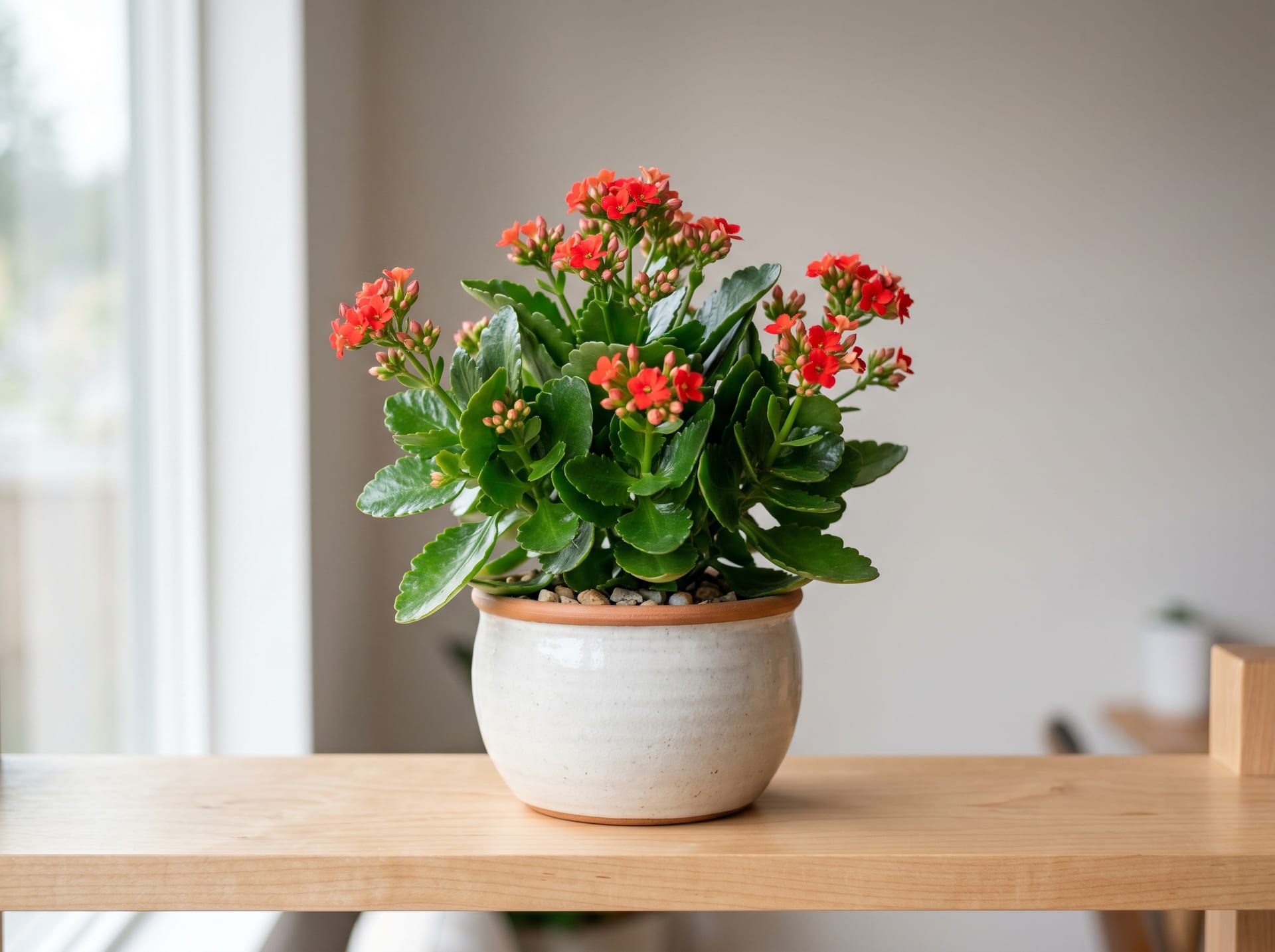
伽藍菜/長壽花
Kalanchoe is a popular succulent native to Madagascar, beloved for its vibrant clusters of small flowers that bloom for extended periods. Its drought tolerance and hardy nature make it an ideal choice for beginner plant growers. Simply place it near a bright indoor window to enjoy its cheerful colors throughout the year.
前 3 筆銷售免佣金!於2026年8月31日前登記生產者→前3筆成交的手續費免費!
栽培者 招募中!
在 ボタちょく 上架,直接銷售給全國的客戶吧!
ボタちょく承諾的 6 項透明性重點
栽培者在多肉植物與仙人掌出品時明示以下資訊。保證品種、產地、所需光量、栽培難度的透明度。
- 品種明示
- 實物照片
- 色澤
- 產地明示
- 所需光量
- 難度明示
Browse all 17 varieties
沒有符合條件的商品
請調整篩選條件,或在有新商品時接收通知。
「接收上架通知」需免費註冊會員即可設定。當有符合您儲存條件的新商品上架時,我們會以郵件和站內通知提醒您。
已註冊的栽培者(搶先看)
關於伽藍菜/長壽花
Kalanchoe belongs to the family Crassulaceae and is native primarily to Madagascar and tropical Africa. The genus name is thought to derive from Arabic or Chinese, and since its introduction to Europe in the 19th century, extensive cultivation has produced hundreds of garden varieties. The leaves are thick and glossy, typically green, though some cultivars display reddish tints along the margins. Its most celebrated feature is its flowers: dense clusters of small blooms in a wide range of colors—red, orange, yellow, pink, and white—that remain attractive for unusually long periods. Ease of care is another draw; with minimal watering needs and adaptability to indoor environments, kalanchoe is widely enjoyed as a gift plant and decorative houseplant.
開始照料伽藍菜/長壽花前需要了解的7件事
1Sunlight Is Key
Kalanchoe thrives in bright light and ideally needs 4–6 hours of direct or bright indirect sunlight per day. Insufficient light causes leggy growth and poor flowering. A south- or east-facing windowsill is the ideal placement.
2Water Sparingly
As a succulent, kalanchoe should be watered only after the soil has completely dried out. Overwatering is the leading cause of root rot, so never let water pool in the saucer. In winter, reduce frequency further to about once or twice a month.
3Short Days Trigger Reblooming
Kalanchoe is a short-day plant that forms flower buds when exposed to 14 or more hours of darkness per day. To encourage reblooming, practice "short-day treatment" by keeping the plant in a dark location for 14+ hours daily over 6–8 weeks. With this care, you can enjoy blooms year-round.
4Protect from Cold
Being of tropical origin, kalanchoe struggles in temperatures below 5°C. In winter, move it away from cold drafts near windows to a warmer indoor spot. It is particularly sensitive to frost, making outdoor overwintering difficult in most parts of Japan.
5Soil and Pot Selection
A well-draining succulent or cactus mix is ideal for kalanchoe. Choose unglazed terracotta pots or containers with drainage holes to allow excess moisture to escape and prevent root rot. Avoid oversized pots, as soil stays wet too long; a pot just one size larger than the root ball is appropriate.
6Fertilize Lightly in Bloom
Over-fertilizing can encourage leafy growth at the expense of flowers. Apply a diluted liquid fertilizer about once a month during the blooming seasons of spring and autumn. Avoid fertilizing in midsummer and winter when the plant tends to be less active.
7Be Aware of Toxicity
Kalanchoe is known to be toxic to pets such as dogs, cats, and rabbits. Ingestion can cause symptoms like vomiting and diarrhea, so it is important to keep the plant out of reach of animals. Households with small children should also take care with placement.
伽藍菜/長壽花的常見問題
- Q.Should I prune kalanchoe after flowering?
- A.Removing spent flower stems at the base keeps the plant tidy and encourages the formation of new flower buds. If the foliage becomes crowded, trimming back the stems periodically helps maintain a compact shape.
- Q.Why are my kalanchoe leaves shriveling?
- A.Shriveled leaves are often a sign of underwatering; if the soil is completely dry, water the plant thoroughly. However, advanced root rot can cause similar symptoms, so also check the condition of the soil and roots.
- Q.Can kalanchoe grow in a room without much sunlight?
- A.Kalanchoe prefers bright light, and in very low-light conditions it will become leggy and bloom poorly. Supplementing with fluorescent or LED grow lights can help to some extent, but placing it near a bright window is recommended whenever possible.
- Q.Can kalanchoe be propagated by cuttings?
- A.Kalanchoe propagates relatively easily from stem cuttings. Cut a stem about 5–7 cm long, allow the cut end to dry for 2–3 days, then insert it into fresh succulent mix to encourage rooting. Spring through early summer is the best time for propagation.
- Q.Do I need to repot kalanchoe right after buying it?
- A.Repotting immediately after purchase is not essential, but if roots are emerging from the drainage holes or the soil looks depleted, repotting in spring is advisable. To help the plant acclimate, minimize environmental changes for the first 2–3 weeks after bringing it home.