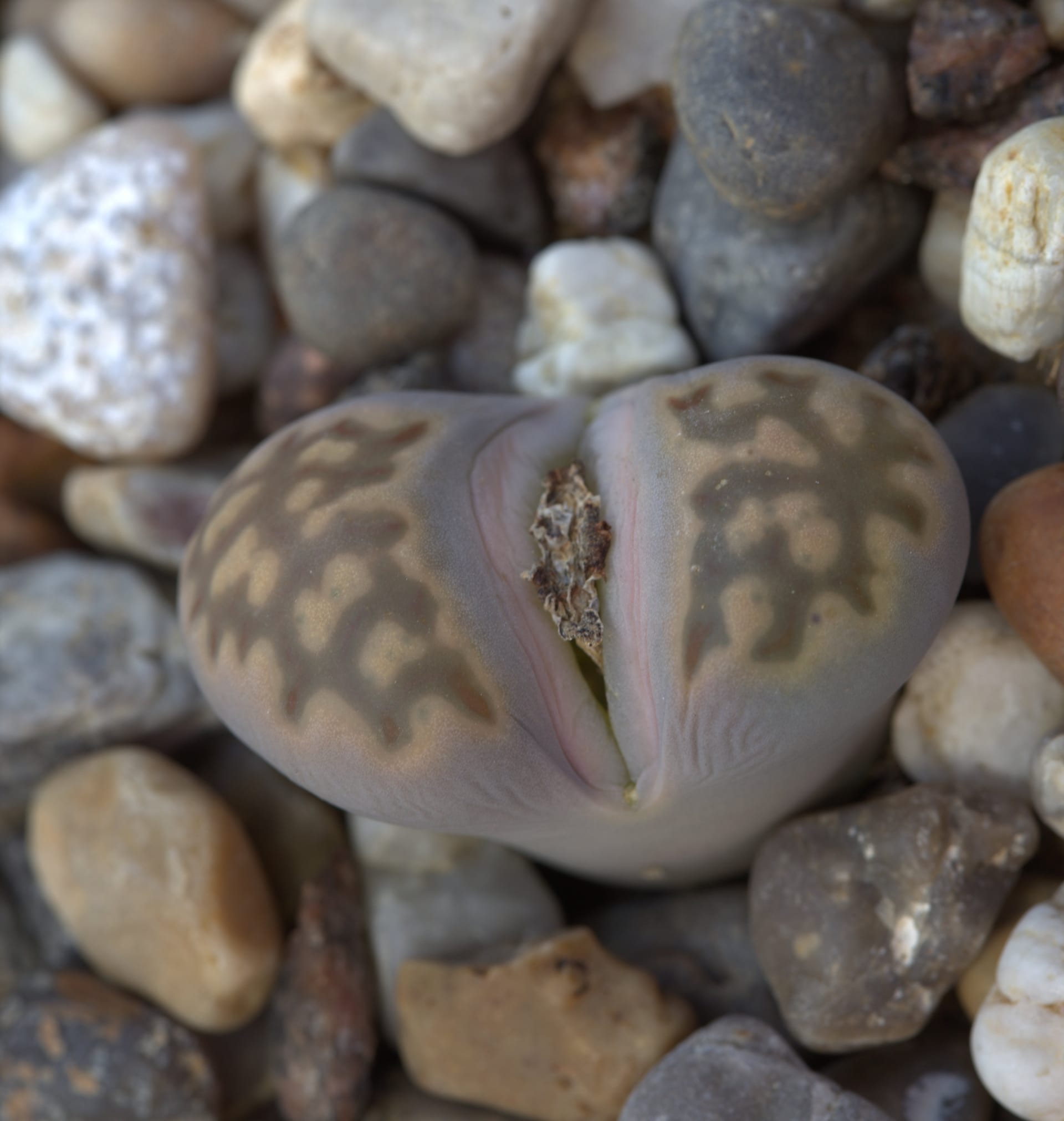
 © Averater / CC BY-SA 3.0
朱麗玉
Lithops julii, known in Japan as Jurei-gyoku, is one of the lithops, the so-called living stones that look like pebbles. Its pale grayish top surface carries a brown net-like pattern, and the fissure between the leaf pair is edged with a line that looks like smudged lipstick. White flowers open from midsummer into autumn, and the subspecies known in Japan as Fukurai-gyoku belongs to the same species. It stays small to medium in size, growing as a single head or as a clump of two to fifteen or more heads. A perennial rated as beginner-friendly, it rewards bright light, fast-draining soil and careful timing of watering with many years of shedding and blooming.
View 朱麗玉 encyclopedia →成交手續費 0%!2026年9月30日前註冊,前 2 株免佣金!
生產者 招募中!
在 GrowerDirect 上架,直接銷售給全國的客戶吧!
GrowerDirect承諾的 6 項透明性重點
生產者在多肉植物與仙人掌出品時明示以下資訊。保證品種、產地、所需光量、栽培難度的透明度。
- 品種明示
- 實物照片
- 色澤
- 產地明示
- 所需光量
- 難度明示
查看全部131個品種
沒有符合條件的商品
請調整篩選條件,或在有新商品時接收通知。
「接收上架通知」需免費註冊會員即可設定。當有符合您儲存條件的新商品上架時,我們會以郵件和站內通知提醒您。
已註冊的生產者(搶先看)
朱麗玉的基本資料
- 栽培難度
- 適合新手
- 壽命
- 多年生(壽命資料甚少)
- 體型
- 小~中型。單頭或2~15株以上的群生
- 適宜溫度
- 8〜25℃
- 澆水
- 在秋至春生長期間施予緩效肥料或液態肥料少量
- 日照·擺放位置
- 盡可能讓其接受充足光照,但小型株在盛夏強烈日照下易曬傷,故夏季應遮蔭,在通風良好的半蔭處休眠。
- 澆水
- 冬型植物。當秋季最低氣溫降至20℃以下時開始澆水,生長期間用土乾燥時澆至鍋底排水為止。開花後至舊葉完全枯萎前應減少澆水,6~9月休眠期也保持乾燥。
- 溫度·越冬
- 冬季最低溫度不低於3℃可保持株體美觀(不枯死的目標為0~3℃)。輕微霜凍難以致命,但嚴寒期應移至室內或進行防寒保護。
- 基質·換盆
- 減少腐葉土等有機物用量,多混砂礫及粗砂以製成排水良好的無機質基質。因其具牛蒡狀的直根系,應用具一定深度且排水良好的盆器種植。無需頻繁換盆,待生長遲緩或盆器變窄時,於10~11月進行換盆。
- 繁殖方法
- 可透過10~11月播種或分株群生株進行繁殖。
- 病蟲害·注意事項
- 花蕾和花朵易遭介殼蟲或蚜蟲侵害,根部可能被根線蟲感染;花瓣易被蛞蝓啃食,葉片易被夜蛾幼蟲食害。凋謝的花瓣應及時用手指移除,否則易導致腐爛。
關於朱麗玉
Lithops julii (Jurei-gyoku) is a beginner-friendly perennial lithops with a pale gray top surface and brown net-like pattern. Learn the basics of light, soil and seasonal watering before you start growing it.
開始照料朱麗玉前需要了解的7件事
1Light and airflow
Lithops like strong light, so choose a bright spot sheltered from rain outdoors or a sunny windowsill indoors. Too little light makes the plant stretch and lose its compact shape. Good airflow matters too, so avoid stuffy corners.
2Seasonal watering
Watering follows the seasons. In the growing period from autumn to spring, water thoroughly only after the soil has dried out completely, and in the summer dormancy stop or cut back sharply. Rather than watering on a fixed schedule, judge by how dry the soil is and how plump the plant looks.
3Fast-draining soil
Drainage comes first when choosing soil. Mix a generous amount of gritty material such as pumice or sand into a succulent and cactus mix so the roots do not stay wet. Because the roots grow fairly long, a somewhat deep pot works well.
4Hold water while shedding
Lithops shed by growing a new leaf pair out of the old one, which happens from late winter into spring. Watering at this stage can make the new leaves rot or split, so stop watering and simply wait. Resume normal watering once the old leaves have dried into thin papery skins.
5Beat the summer humidity
Hot, humid summers are hard on lithops while they are dormant. Move the plant to a bright, shaded spot with good airflow and out of the rain, and hold back on water to prevent rot. When cooler weather brings growth back, return to regular watering gradually.
6Repotting and pots
Repotting does not need to be frequent; once every few years, when the clump has filled its pot, is enough. Autumn, when growth begins, suits it best, and you should wait a while after repotting before watering. Handle clumps gently and avoid pulling them apart so the base is not damaged.
7Choosing a plant
Lithops julii ranges from single heads to clumps of two to fifteen or more, so you can pick the number of heads you like. Look for firm, plump tops without dark patches or soft spots. Pattern and color vary from plant to plant, so compare photos and descriptions before choosing.
朱麗玉的常見問題
- Q.Can beginners grow Lithops julii?
- A.It is rated beginner-friendly and is easy to grow once it has bright light and well-drained soil. The main trick is its unusual watering rhythm, which means holding back water during summer dormancy and while shedding. Get that right and most common failures can be avoided.
- Q.How often should I water it?
- A.There is no fixed interval. In the autumn-to-spring growing period, water only after the soil has dried out completely. During summer dormancy and while shedding, water very little or not at all, and judge by the dryness of the soil and the plumpness of the plant.
- Q.What is shedding, and should I water then?
- A.Shedding is the natural process in which a new leaf pair emerges from inside the old one and replaces it. Do not water during this time, and return to normal watering once the old leaves have dried into thin papery skins.
- Q.Is Fukurai-gyoku a different plant?
- A.Fukurai-gyoku is a subspecies included in the same species as Lithops julii. The basic care is the same, and appearance varies from plant to plant, so it helps to check the photos before choosing.
- Q.When does it bloom, and what if it does not?
- A.It produces white flowers from midsummer into autumn. If it skips a year, low light or a plant that is not yet well established may be the cause. Keep it in a bright place and let it grow steadily through the growing season.
朱麗玉栽培的實用工具
在圖鑑中詳細了解朱麗玉
查看朱麗玉的圖鑑條目 →
收錄栽培難度、尺寸、原產地、日照等基礎資料。