Display Techniques for Agave Collections | Shelving, Pot Pairing, and Spatial Staging Tips
Learn how to beautifully display your agave collection. Discover how to choose and arrange shelving, match pot designs with plant form, create spatial unity through staging techniques, and balance outdoor and indoor display methods.
Key Takeaways
Learn how to beautifully display your agave collection. Discover how to choose and arrange shelving, match pot designs with plant form, create spatial unity through staging techniques, and balance outdoor and indoor display methods.
Agave Display Requires No Special Aesthetic Sense
Displaying an agave collection beautifully requires no special interior design sense. Simply knowing a few basic principles makes a tremendous difference in the final result.
With their sharp spines and radially spreading foliage, agaves command attention even as individual specimens. When multiple plants are combined, a "collection beauty" emerges—a sense of scale and narrative that a single plant cannot achieve. This article systematically covers practical tips from pot selection through shelf utilization to display techniques for both indoor and outdoor settings.
Pot Selection Basics | Balancing Material, Color, and Size
Bringing Out Plant Character Through Material Selection
The pot material influences how the plant appears and which varieties pair well with it.
| Material | Characteristics | Compatible Varieties/Uses |
|---|---|---|
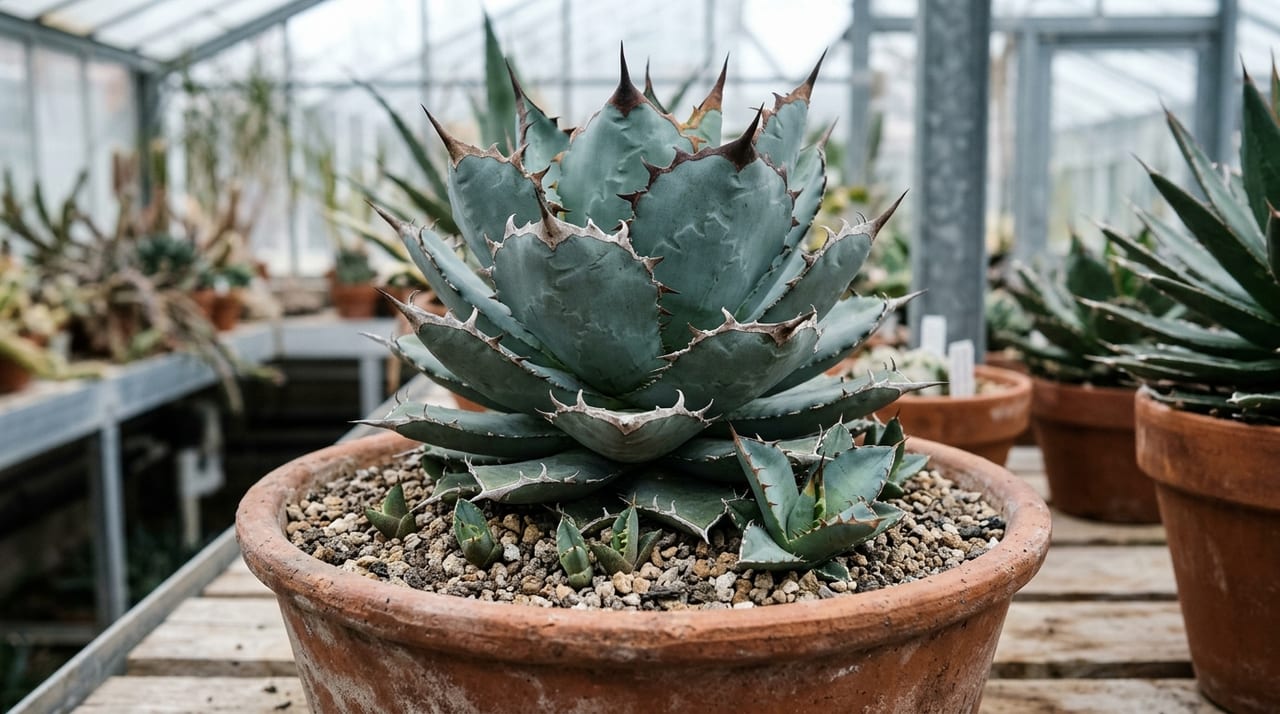
| Terracotta (unglazed clay) | Excellent airflow and drainage, the most logical choice for agave cultivation. The white salt efflorescence that develops over time is also an appealing aesthetic feature. | Pairs beautifully with thick-leaved varieties like Titanota and Sazanoyuki |
| Cement/Concrete | Wild, substantial aesthetic. Heavy weight resists tipping, making it suitable for outdoor display. | Complements rugged spine varieties like Parry and Ouhi Midareyuki-zasa well |
| Black/Ceramic pots | Sophisticated appearance; using black pots throughout creates a refined monochrome aesthetic. | Highlights bright foliage of blue agaves and white-edge varieties |
| White modern pots | Simple and versatile with any variety; highly functional as indoor décor. | Particularly striking on Scandinavian-style shelving |
Size Balance: "Slightly Overflowing" Is the Sweet Spot
While considering root development, pot size should be chosen so that the plant's diameter is roughly equal to the pot's diameter or appears slightly larger—this achieves the best visual balance. When a pot is too large for the plant, the plant appears diminished and weakens the collection's impact. Conversely, an undersized pot risks root-binding, so aim for harmony between aesthetics and plant health.
Shelf and Stand Placement: Creating Elevation and Depth
Displaying plants on a flat surface tends to feel monotonous. Adding elevation variation creates visual movement and gives the entire space a gallery-like three-dimensionality.
- Steel racks and iron shelves: Offer an industrial aesthetic that pairs well with agaves' wild character. The standard arrangement is to use shelf levels strategically—place small and rare varieties on upper tiers and larger varieties on lower ones.
- Wooden shelves and wood stands: Offer a natural aesthetic; the combination with terracotta pots is particularly striking. Vintage-finish wood pairs especially well with agaves' wild character.
- Plant stands: Effectively spotlight specific plants as "focal points." Placing your prize specimen or largest plant on a stand naturally draws the eye and creates a focal point within the collection.
- Combining with ground placement: Rather than placing everything on shelves, setting some specimens directly on the floor or ground creates natural rhythm and breathing room in the arrangement. Large specimens like Americana and Titanota are especially striking at ground level. For detailed comparisons of cultivation methods and individual characteristics, see our Titanota vs. Horrida cultivation guide.
Multi-Plant Arrangement Balance | Size, Variety, and Grouping Principles
Intentionally Create Size Variation
Groups mixing large, medium, and small sizes create variation and depth. Arranging same-sized plants in a row feels monotonous and fails to convey the breadth of your collection. The foundation is "layered composition"—place large plants in back and medium/small ones in front.
Foliage Color and Variety Contrast
Deep green varieties (Titanota, Parry), blue and silver tones (Blue Agave, Selsiae), and white-edge types (Sazanoyuki, Ouhi Sazanoyuki) create contrast when intentionally mixed, visually conveying your collection's diversity. Grouping by similar color or intentionally mixing contrasting tones completely changes the aesthetic. Those looking to expand their collection should also check our Five Agaves Recommended for Beginners for selection guidance.
The Odd-Number Principle
In design, odd-numbered groupings are known to appear more visually balanced. Grouping plants in threes, fives, or sevens creates natural cohesion and avoids the "overly symmetrical ordinariness" typical of even arrangements. Keep this odd-number principle in mind when grouping plants on shelves.
Staging Techniques: Outdoor and Indoor Approaches
Outdoor (Garden) Display
Outdoors, large containers and in-ground planting showcase dramatic scale and beauty. Large varieties like Titanota and Americana reveal their true character at outdoor scale, commanding the garden as dominant specimens. Applying mulch—pea gravel or pumice on the surface—tightens the visual presentation and provides both drainage and weed suppression benefits.
Part of outdoor display's appeal is how plants' appearance shifts with the sun's angle and the seasons. Creating a south-facing wall backdrop or pea-gravel-lined dry garden zone captures the essence of a Sonoran landscape.
Indoor Display
Indoors, focus on compact and rare varieties, displaying your collection in a way that integrates naturally with your living space. Arranging small specimens on a windowsill or grouping them on a living room shelf lets agaves settle naturally into your daily environment.
Indoors, it's crucial to position displays near bright windows, since direct sunlight is harder to provide. You can also enhance the interior aesthetic by applying white sand or decorative sand to floors or shelves, creating a tabletop-garden effect.
Conclusion | Three Principles Transform Your Display
Simply following the three principles of proper pot selection, elevation variation, and odd-number grouping transforms your agave display into something beautifully striking. Beyond simply showcasing your collection, you'll discover the joy of bringing agaves' power and sculptural beauty into your everyday living space. Change one pot, adjust your arrangement slightly, and your collection will shine even brighter.