Agave Sunlight & Lighting Guide | Growing Compact Plants Through Light Management
Learn how to manage light levels to grow compact Agave plants without elongation. We explain why direct outdoor sunlight is optimal, how to choose LED lights for indoor cultivation, and seasonal adjustments to shade conditions.
Key Takeaways
Learn how to manage light levels to grow compact Agave plants without elongation. We explain why direct outdoor sunlight is optimal, how to choose LED lights for indoor cultivation, and seasonal adjustments to shade conditions.
What Light Level Does Agave Need? Learning from Its Native Environment
Agave is a succulent plant native to the arid regions of Mexico and the southwestern United States. Since it naturally grows in an environment where intense direct sunlight shines throughout the year, its light requirements are among the highest of all foliage plants.
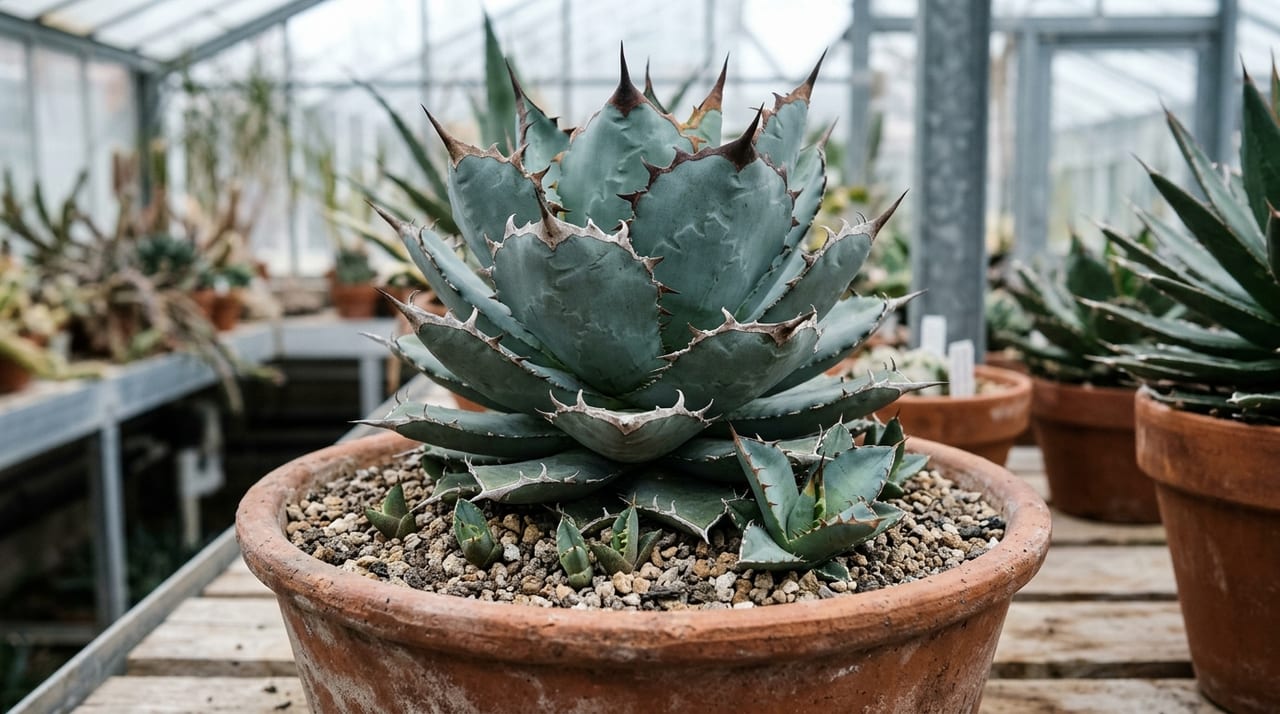
When light is insufficient, Agave stretches its leaves upward seeking light. When this phenomenon, called "elongation" or "etiolation," occurs, the plant loses its naturally compact and sharply angled form, and the leaves become thin and spaced out. Conversely, when given sufficient light, the leaves expand short and sturdy, with much better development of the leaf edges (serrations) and improved leaf coloration.
Light Level Guidelines
- Outdoor direct sunlight (full sun) is the ideal environment
- For indoor cultivation, ensure at least 10,000–20,000 lux or higher
- Aim for 6 or more hours of daily sunlight
- The more light provided, the better the leaf color, leaf shape, and serration development
You can judge whether the plant is receiving enough light by observing its shape. If the leaves are stretching upward and the entire plant becomes elongated, that's a sign of etiolation. If left unchecked, it becomes difficult to restore the plant to a compact form, making early intervention crucial.
Outdoor Sunlight Management | Seasonal Considerations
When cultivating outdoors, it's generally fine to expose the plant to direct sunlight without shade. However, there are situations where caution is needed.
Spring to Early Summer: Acclimate Carefully
When moving a plant that was kept indoors during winter to an outdoor location in spring, exposing it suddenly to direct sunlight will cause leaf burn. This happens because the plant is not accustomed to light (insufficient acclimation) and receives strong light. For the first 1–2 weeks, place it in a bright shade or a 30–50% shade environment, and gradually acclimate it to sunlight.
Rainy Season to Summer: Managing Rain and Afternoon Sun
During the rainy season, excessive moisture from rain can cause root rot. If prolonged rain continues, move the plant to a sheltered eave or a place where rain won't reach it. Additionally, strong afternoon sun in midsummer, particularly for pale or white-powdered varieties, is prone to causing leaf burn, so caution is needed. An ideal location is one that receives sufficient morning sun and faces east or south.
Fall to Winter: Ensuring Sunlight and Frost Protection
As daylight hours shorten in fall and winter, it's important to secure a location with as much sunlight as possible. In cold regions, some varieties can be damaged by direct frost, so move them to a sheltered eave where frost protection is possible. While varieties like Geminiflorium can tolerate around 0°C, popular Titanota has low cold tolerance and will be damaged even around 0°C, so indoor management at 5°C or higher is necessary during winter. On the other hand, the combination of excessive moisture and frost is most dangerous. For more detailed information on winter care, please also see the Agave Winter Care & Cold-Hardiness Guide.
Indoor Cultivation and Using LED Grow Lights
Even in apartments or homes with poor sunlight, you can grow compact Agave plants by using plant growth LED lights appropriately. However, care must be taken, as choosing the wrong type or using it incorrectly will only accelerate elongation.
LED Light Selection Tips
- Choose a full-spectrum type (one with balanced red, blue, and white light)
- High PAR values (photosynthetically active radiation) are a good benchmark for effectiveness
- Keep the light 20–40 cm from the plant as a baseline; if elongation is occurring, bring it closer
- Use a timer to keep lights on for 14–16 hours per day
Precautions for Indoor LED Cultivation
A common mistake when using LED lights is "insufficient light intensity." Even if it appears bright to the human eye, the lux values often don't reach what the plant needs. When arranging multiple Agave plants, choose a model with a wide light coverage area or combine multiple lights. Additionally, even with LEDs, light distribution can be uneven, so it's important to rotate the pot 1–2 times per week to ensure even light exposure across the plant.
While electricity costs and initial investment are drawbacks, the ability to create a stable light environment unaffected by weather is a major advantage.
Practical Management Techniques for Preventing Elongation
Light management must not be considered in isolation but in coordination with watering and fertilizing to achieve compact plant growth. If the soil has poor drainage, even with adequate light, elongation or root rot are likely, so it's reassuring to also check the Agave Soil & Potting Mix Guide | Drainage-First Formula.
Coordinate Light Levels and Watering
When watering frequently in an environment with low light, the plant attempts to grow rapidly using excess water, accelerating elongation. During indoor periods or prolonged cloudy days, reduce watering and keep the soil on the drier side to suppress elongation. Conversely, when managing in outdoor full sun, evaporation increases, so appropriate watering is necessary.
Daily Management Checklist
- Prioritize outdoor full-sun management from spring through fall when possible
- When bringing indoors, always supplement light levels with LED lights
- Rotate the pot 1–2 times per week to eliminate light bias
- Regularly check the direction and growth of leaves to detect elongation early
- Adjust watering according to light levels; during cloudy periods or indoors, manage on the drier side
Light Preferences Vary by Variety
Hardy varieties such as Titanota, Holida, and Parry especially prefer intense light and truly thrive in full sun. On the other hand, somewhat delicate varieties like Obatifolia and variegated cultivars are prone to leaf burn when exposed to direct midsummer sun for extended periods, so avoiding afternoon sun is important. Understanding the characteristics of each variety before managing sunlight exposure is the quickest path to creating beautiful plants.
GrowerDirect's Safety & Trust System
GrowerDirect is a platform where growers and buyers connect directly. When considering purchasing Agave, the "direct question to seller" feature is particularly useful for sunlight management.
Many sellers post plants along with photos of their cultivation environment, so you can confirm detailed information such as "managed in outdoor full sun," "using LED lights," or "30% shade" beforehand. By comparing with your own cultivation environment, you can significantly reduce gaps after purchase.
Additionally, GrowerDirect accumulates buyer reviews and transaction history, allowing you to objectively judge whether a seller is trustworthy. Even first-time Agave buyers can select plants while receiving direct advice from experienced growers.
If you're unsure about light management, try asking before purchase: "My current cultivation environment is like this—would this plant be suitable?" Growers who answer thoughtfully tend to take responsibility for the condition of the plants they sell. Find your next beautiful, compact Agave on GrowerDirect.