Agave Winter Care and Cold Protection Guide
Agave cold hardiness varies by variety. This guide explains the cold tolerance temperatures of popular varieties like Titanota and Horrida, indoor management tips for winter, watering controls, and the use of LED supplemental lighting.
Key Takeaways
Agave cold hardiness varies by variety. This guide explains the cold tolerance temperatures of popular varieties like Titanota and Horrida, indoor management tips for winter, watering controls, and the use of LED supplemental lighting.
What You Need to Know to Successfully Overwinter Agave
Agave is a succulent native to Mexico and the southern parts of North America. Against the backdrop of the recent succulents and cacti boom, it has become explosively popular in Japan. With its wild form and commanding presence, the plant has such passionate fans among collectors that it is even called the "Agave abyss."
However, for agave originating in warm, arid climates, the Japanese winter presents a serious challenge. Particularly in the Kanto region and northward, or in inland basins, multiple stresses—dropping temperatures combined with condensation, frost, and prolonged rain—tend to overlap, and improper management can lead to failed overwintering.
This article systematically explains everything needed for agave winter care, from variety-specific cold hardiness to indoor management tips, watering timing, and supplemental lighting methods. For general information about year-round watering, please also refer to Agave Watering Guide | Seasonal Frequency and Tips to Prevent Root Rot.
Cold Hardiness Varies Significantly by Variety
More than 200 agave species exist worldwide, and the minimum temperature each variety can tolerate varies dramatically. Before purchasing or planning overwintering, always check the cold tolerance temperature of the varieties you have on hand.
Cold Tolerance Temperature Guide for Representative Varieties
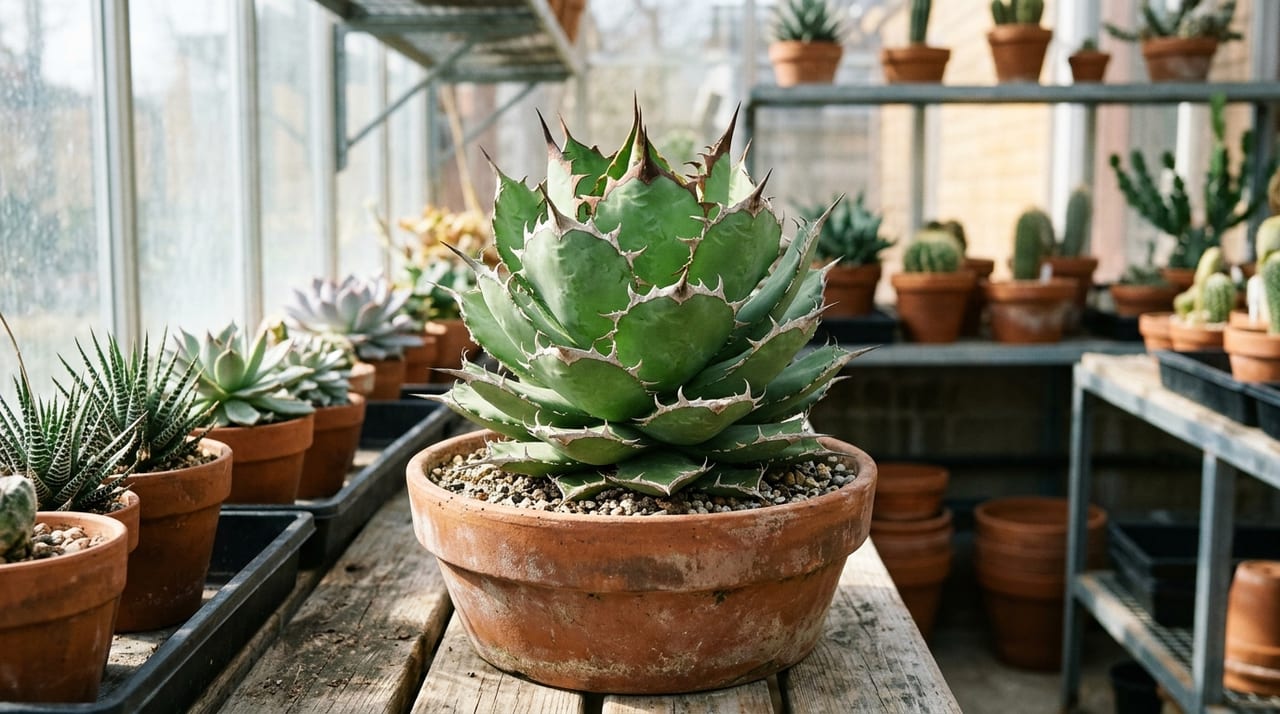
- Titanota (Agave titanota): Can tolerate around 0°C at the lower limit. This popular variety is characterized by narrow leaf tips and sharp spines, but leaves are prone to discoloration and soft rot when exposed to frost. It is best to move it indoors once temperatures drop below 5°C.
- Horrida (Agave horrida): Can tolerate temperatures around −5°C. While relatively cold-hardy, direct exposure to frost or cold rain requires careful management.
- Parry (Agave parryi): Can tolerate temperatures around −20°C—an exceptionally cold-hardy variety. If proper drainage is ensured, it can even overwinter outdoors.
- Americana (Agave americana): Can tolerate around −5°C. Mature plants grow extremely large, so if container-grown, arrange indoor storage well in advance.
- Kissho-ten (Agave potatorum): A safe range is 0–5°C. Because of its high ornamental value, cold injury to leaves takes time to recover.
If variety is unknown, management aimed at maintaining temperatures above 0°C will generally prevent major failures. For large plants placed outdoors, it is reassuring to review drainage preparations before winter by also consulting Large Agave Outdoor Placement Guide | Drainage Security, Wind-Resistant Anchoring, and Seasonal Adjustments.
Three Key Points for Winter Indoor Management
Bringing agave indoors requires more than simply "bringing it inside." Attending to three points—location, temperature, and air circulation—will maintain the plant's condition for strong growth after spring.
1. Secure as Much Light as Possible
The biggest challenge of indoor management is reduced light. Agave loves strong light, and insufficient light causes "etiolation," where spacing between leaves widens and the plant shape becomes distorted. Prioritize a south-facing window sill and choose a location where it receives ample sunlight from morning into afternoon. For solutions when a window sill alone provides insufficient light, see Indoor Agave Cultivation and Light Deficiency Management.
2. Be Careful of Heating Unit Drafts and Drying
Direct warm air from air conditioners or oil heaters can cause extreme leaf desiccation, resulting in resinous secretions or leaf-tip dieback. Place the plant away from heaters, and if needed, use a humidifier to maintain indoor humidity at around 30–40%, which is ideal.
3. Minimum Temperature Control
Even indoors, window sills can become cold at night. Particularly for low-cold-hardiness varieties like Titanota and Kissho-ten, ensure nighttime temperatures do not drop below 10°C. Building a habit of placing a thermometer near the plant to monitor actual temperature provides peace of mind.
Watering Control Holds the Key to Successful Overwintering
In agave overwintering, water management is one of the most critical factors. Many beginners experience the failure of "overwatering and causing root rot." Root rot signs and recovery methods are explained in detail in Complete Agave Disease, Pest, and Root Rot Prevention Guide | How to Identify Symptoms and Recovery Methods, so if you notice any concerning symptoms, refer to that as well.
Why Withholding Water Is Necessary
Agave growth nearly stops in winter. Giving water during this dormant period causes roots to be unable to absorb it fully, leading to root rot when combined with low temperatures. Additionally, withholding water increases sugar concentration within cells, which has the physiological benefit of enhancing frost resistance by making freezing less likely.
Specific Watering Schedule
- October–November: Gradually reduce watering frequency. Aim for once or twice per month.
- December–February: Nearly withhold water. Water only lightly after waiting 1–2 weeks following complete soil drying, or withhold water completely.
- March onward: Gradually resume watering while confirming rising temperatures. Do not suddenly give large amounts of water; acclimate slowly.
Note that even during water withholding, if the soil becomes extremely dry due to indoor heating and the plant becomes shriveled, misting (lightly spraying leaves with a spray bottle) is also an effective remedy.
LED Supplemental Lighting Prevents Etiolation and Maintains Beautiful Plant Form
Winter brings shorter daylight hours, and even at a window sill, light is often insufficient. If you have experienced "it somehow became leggy while I wasn't paying attention," plant growth LED lights are recommended.
Basic LED Supplemental Lighting Setup
- Lighting duration: Aim for about 12 hours per day. Using a timer outlet makes management easier.
- Distance: 20–30 cm from the leaves is appropriate. Too close risks leaf burn; too far reduces effectiveness.
- Color temperature: Products in the 5,000–6,500K range (daylight white to daylight) are suitable for growth. Dedicated red and blue combination types are also recommended.
By using LED lights, you can resolve winter light deficiency that window light alone cannot compensate for and maintain a tight, well-defined plant form with compact leaf spacing. Particularly for varieties like Titanota or Himigen-ryu, where the spine shape is a feature of enjoyment, preventing etiolation directly affects ornamental value.
Summary: Agave Overwintering in Three Points—"Dry It Out, Provide Light, Avoid Excessive Cold"
The basic principle for successful agave overwintering is simple: "Dry it out, provide light, avoid excessive cold." By grasping the cold tolerance temperature of your variety, determining the right timing to transition to indoor management, and combining water withholding with supplemental lighting, you can welcome vigorous new shoots in spring.
When given the right environment, agave is extremely hardy and relatively easy for beginners to overwinter successfully. Once you master the technique, winter care becomes effortless year after year.
GrowerDirect specializes in purchasing healthy, rooted agave directly from growers. Since you can consult directly with growers about winter management and cultivation methods for each variety, both beginners and advanced collectors can enjoy agave growing with confidence. Be sure to find your favorite specimen.