How to Grow Agave utahensis | Mastering the Hardiest Agave
Explains the cultivar characteristics and growing methods of Agave utahensis. We introduce subspecies such as nevadensis and eborispina, the possibilities of in-ground planting, and management precautions.
Key Takeaways
Explains the cultivar characteristics and growing methods of Agave utahensis. We introduce subspecies such as nevadensis and eborispina, the possibilities of in-ground planting, and management precautions.
Related Species
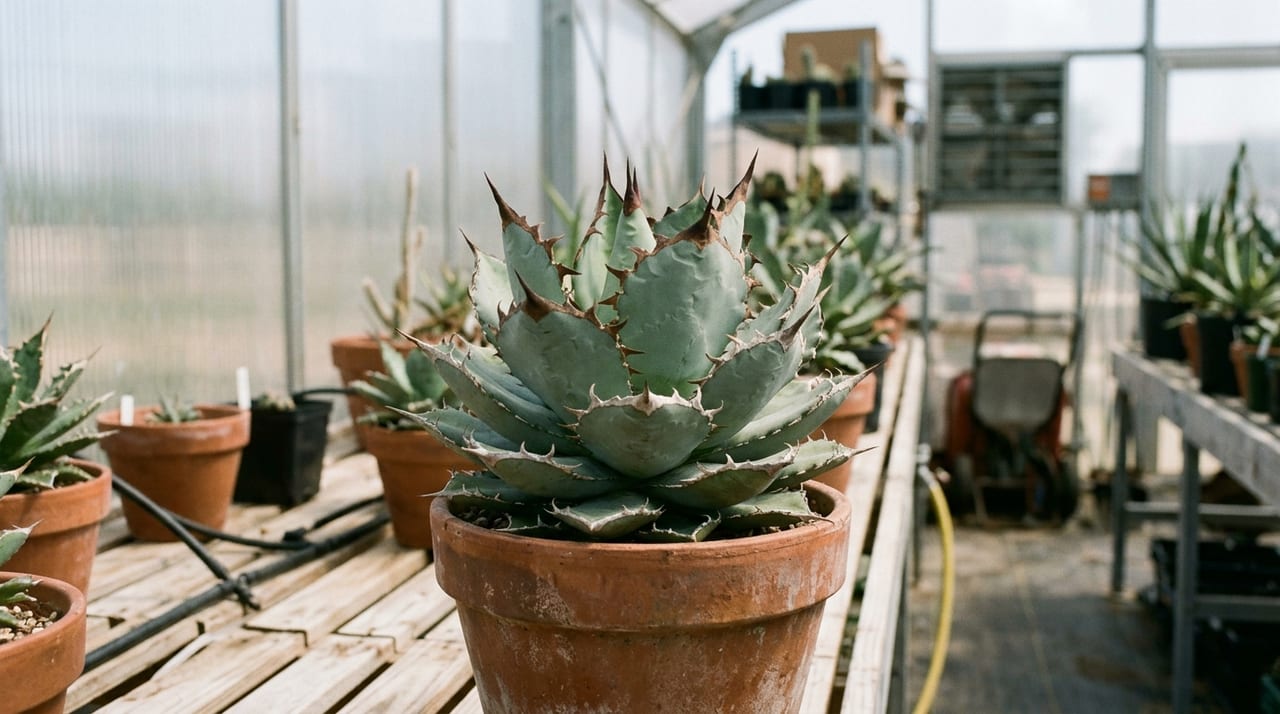
Agave utahensis (Agave utahensis) is an agave native to the desert regions of southwestern United States, known as "the cold-hardiest agave" due to its cold hardiness down to -15°C. Its compact rosette form lined with sharp spines has a wild beauty, making it a cultivar popular among collectors. Here we explain in detail the characteristics of utahensis and key management points.
Subspecies and Cultivar Variations of Utahensis
Agave utahensis has several subspecies, each with distinct characteristics.
| Subspecies | Native Habitat / Characteristics |
|---|---|
| Agave utahensis var. nevadensis | A variety native to Nevada, characterized by its extremely compact plant form. Small rosettes measuring 15–25 cm in diameter topped with white fibrous filaments create a beautiful appearance. Among the subspecies, this has the highest cold hardiness, reportedly withstanding -20°C or lower |
| Agave utahensis var. eborispina | The most popular subspecies, characterized by long ivory-colored spines as its name suggests. Spines reach 5–10 cm in length, with a uniquely curved form that possesses a sculptural beauty unlike other agaves. Growth is extremely slow, taking over 10 years to reach maturity |
| Agave utahensis var. kaibabensis | A variety native to the Grand Canyon region, growing slightly larger. Leaves are broad, and spines are short but thick and striking in appearance |
| Agave utahensis var. utahensis (basic subspecies) | The original type native to Utah, prized for its medium size and well-balanced plant form |
All subspecies reflect the environment of their native habitats, being extremely resistant to drought and cold while tending to struggle in high heat and humidity. Cultivation in Japan is possible, but humidity management during the rainy season through summer is the greatest challenge. When it is difficult to distinguish between subspecies, refer to the agave species identification guide.
Sunlight and Placement
Utahensis is a plant that grows in direct desert sunlight, so maximum light exposure is essential.
Outdoors with direct sunlight year-round is the ideal management location. Shading is basically unnecessary, and conversely, insufficient light causes etiolation and produces a loose, poorly-formed rosette. However, since Japan's humid, muggy rainy season through summer differs greatly from the native habitat, ensuring good air circulation is the highest priority.
During summer, move the plant to a location with rain protection. Exposure to prolonged rain increases the risk of root rot and rot from moisture buildup in the center of the rosette. Management under a simple polycarbonate roof or under eaves is practical.
For winter management, due to its high cold hardiness, outdoor overwintering is possible in regions west of the Kanto region. However, in the case of potted plants, if the pot freezes solid, roots will be damaged, so cold protection measures such as placing the pot in a styrofoam box are effective. With in-ground planting, the risk of root freezing is significantly reduced. Specific winter protection procedures for overwintering are compiled in agave winter management | cold-hardy varieties and winter protection guide.
Indoor management is basically not recommended. It is prone to etiolation due to insufficient light, and indoor humidity is far removed from the dry environment of the native habitat. If you must manage it indoors, measures such as providing grow lights for 12 hours or more and maintaining constant air circulation with a fan are necessary.
Watering and Soil Mix
The watering of utahensis is kept even more minimal than that of typical agaves. This is a plant adapted to an arid desert environment with little rain, and in Japan's climate, overwatering is the greatest risk.
- Spring (March–May) / Autumn (September–November): Growing season. Water 3–5 days after the soil is completely dry. A pace of 2–3 times per month is the guideline—water generously once and confirm that water drains from the bottom of the pot.
- Summer (June–August): Water more sparingly during this hot, humid period. One to two times per month is sufficient, watering in the cool evening hours. Complete withholding of water during the rainy season is fine. This is when rot from excess moisture is most likely to occur.
- Winter (December–February): Water once monthly with a light application in the morning on a sunny day. If there is risk of freezing, cease watering entirely.
Utahensis is extremely resistant to drought, so watering can be neglected without consequence.
Use a substrate with ultra-high drainage. The basic mix is 3 parts pumice : 2 parts volcanic sand : 2 parts hard akadama clay : 2 parts pumice-based soil : 1 part charred rice husk. Avoid organic matter entirely—use mineral-based components only for safety. Choose a pot with drainage slits or terracotta to ensure maximum air circulation.
In-Ground Planting Possibility and Method
Utahensis is one of the few agaves in Japan suitable for in-ground planting. You can use its high cold hardiness to advantage by placing it as an accent in your garden's rock garden or flower bed.
Regions suitable for in-ground planting are those where the winter minimum temperature drops to about -10°C. In regions west of the Kanto region on the Pacific side, overwintering is nearly trouble-free. Even in snowy regions, the plant can withstand moderate snow cover that provides protection, though care is needed to avoid sustained deep snow, which can lead to excessive moisture at the roots.
The ideal planting location is a well-drained hillside or elevated area with good sunlight. When planting in flat ground, elevate the planting area by about 30 cm to ensure drainage. Thick mulching with pumice or gravel around the base improves drainage and suppresses weeds.
Dig a planting hole about 40 cm in diameter and 30 cm deep. Mix the excavated soil with approximately 30% each of pumice and sand, then backfill. With clay-based soils that have extremely poor drainage, consider mixing in more pumice or planting in a raised bed format.
Spring (April–May) is the optimal planting time. Establishing roots before the rainy season prepares the plant for summer heat and humidity as well as winter cold.
Growth Expectations and Tips for Long-Term Cultivation
Utahensis is an agave with extremely slow growth. The secret to success lies in taking a patient, long-term approach to cultivation.
The growth rate from seedling is roughly as follows.
- 1 year: diameter 2–3 cm
- 3 years: diameter 5–8 cm
- 5 years: diameter 10–15 cm
For eborispina, the ivory-colored spines do not develop in earnest until year 3–5 after germination or later. Over 10 years are required to reach what can be called maturity.
To accelerate growth, provide slightly more generous watering and modest fertilization in spring and autumn. However, since utahensis develops better spines and a compact, beautiful form when grown with restrained vigor, you must balance growth rate against sculptural beauty.
Offsets emerge from mature plants, but the frequency of offset production is lower than in Agave titanota. Seed propagation is the mainstream method, with seeds typically imported from overseas.
The most important consideration for long-term cultivation is Japan's hot, humid rainy season through summer. Successfully navigating this period every year is the greatest challenge in utahensis cultivation. Strictly implement three practices—rain protection, good air circulation, and careful water management—to protect the plants you have cultivated over many years.
Utahensis has limited market availability, and eborispina in particular is a cultivar where supply cannot keep up with demand. On GrowerDirect, you can purchase seedling-grown utahensis from growers who cultivate them, and you can receive accurate cultivar information and growing advice.