Rare Cryptocoryne Types and Care Guide | The Appeal of Rare Species and Cultivation Tips
Explanation of rare Cryptocoryne types and cultivation methods. Introduction of characteristics by origin, water quality requirements, and countermeasures for the leaf-melting phenomenon.
Key Takeaways
Explanation of rare Cryptocoryne types and cultivation methods. Introduction of characteristics by origin, water quality requirements, and countermeasures for the leaf-melting phenomenon.
Related Species
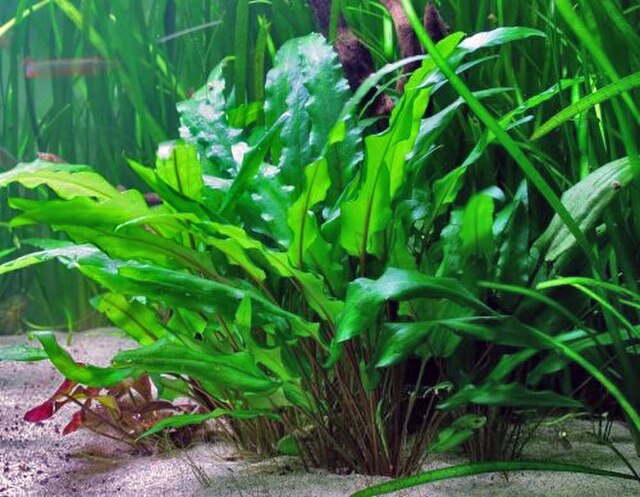
Cryptocoryne is an aquatic plant of the Araceae family distributed mainly in Southeast Asia, affectionately known as "crypto" in the aquarium hobby. Native to rivers on the island of Borneo and the Malay Peninsula, the same species exhibits dramatically different leaf colors and patterns depending on their locality (origin), making them extremely popular among collectors. While many species are hardy and easy to cultivate, some rare varieties are difficult to obtain, and purchasing directly from specialist growers is often the most practical way to acquire them. This article provides an easy-to-understand explanation covering everything from the characteristics of rare species favored by collectors to daily management practices.
Rare Cryptocoryne Species That Attract Collectors
Over 100 species of Cryptocoryne are known worldwide, with most being endemic to limited regions in Southeast Asia. The following are particularly popular rare varieties.
C. nurii (Cryptocoryne nurii)
A medium-sized species native to rivers in Kelantan State, Malaysia, characterized by deep reddish-brown leaves. The leaf surface is covered with fine wrinkles, displaying a velvety texture depending on light exposure. Leaf color and patterns vary significantly by locality, and locality specimens sold under names like "Rosen Maiden" are especially prized. This species is sensitive to changes in water quality, so maintaining a stable environment is key to achieving beautiful coloration.
C. griffithii (Cryptocoryne griffithii)
A large species widely distributed throughout the Malay Peninsula, which can exceed 30 cm in leaf length when mature. Individual variation in leaf patterns is significant, with each plant showing different markings and leaf colors even from the same locality, making it a highly collectible species. Growth is relatively slow, but once acclimated to its environment, it develops vigorously and commands presence in the aquarium.
C. keei (Cryptocoryne keei)
Endemic to Sarawak on the island of Borneo, this species is prized for its highly distinctive appearance featuring a metallic sheen on the leaf surface. The leaves shimmer from green to copper tones depending on light angle, making it a valued accent plant in aquascaping. With its limited natural range, this species is rarely found in circulation and even specialist shops rarely stock it.
C. ferruginea (Cryptocoryne ferruginea)
"Ferruginea" means "rust-colored" in Latin, and true to its name, it features a unique reddish-brown to rust-like leaf coloration. Native to Borneo and relatively compact in size, it is well-suited for foreground to midground placement. Its distinctive color, unlike other Cryptocorynes, adds depth and richness to aquascapes.
C. ideii (Cryptocoryne ideii)
An extremely rare, small species endemic to only certain regions of Borneo. Reaching heights under 10 cm, it displays delicate leaves in dense form. Circulation in the trade is extremely limited, with few opportunities to obtain it domestically. It is ideal for small aquariums or as an accent point in nature aquascapes, and commands high demand among collectors.
Crypto Melt (Leaf Dissolution Phenomenon): Causes and Solutions
One essential aspect of cultivating Cryptocoryne is understanding the "crypto melt," a leaf dissolution phenomenon. When leaves rapidly dissolve following purchase or introduction to a new tank, it can be shocking for first-time experiences, but proper management can bring the plant back to recovery.
Primary Causes
- Sudden changes in water quality: The greater the difference in pH, hardness, and water temperature from the previous environment, the more likely this occurs
- Light changes: Both excessively strong or weak light, and rapid changes, can trigger this phenomenon
- Transplanting stress: Root damage or incorrect depth of substrate placement
- Water change timing: Performing large water changes at once can cause rapid water quality shifts
Solutions and Recovery Indicators
When leaves begin to dissolve, remain calm and carefully trim away dissolved leaves with scissors to prevent water quality deterioration. What matters most is whether the roots and rhizomes remain alive. If roots are clearly white and healthy, new shoots will emerge within 2-4 weeks. During this period, prioritize environmental stability, avoiding sudden changes in water change frequency or light intensity.
Prevention Tips
- After purchase, acclimate the plant gradually by matching water temperature before planting, rather than introducing it immediately
- Perform water changes once weekly at approximately 1/3 of tank volume, maintaining a consistent, gradual schedule
- When changing substrate, stagger the timing with replanting to distribute environmental changes
Setting Up the Ideal Cultivation Environment
Cryptocoryne is relatively hardy once its environment is stable, but with rare species especially, recreating water conditions close to their native habitats will bring out more vibrant coloration and healthier growth.
Substrate and Fertilizer
Cryptocoryne primarily absorbs nutrients through its roots, making nutrient-rich aquasoil the optimal choice. Using bottom substrate fertilizers containing potassium and trace elements significantly enhances leaf coloration. If using gravel-based substrates, burying substrate fertilizer tablets near the roots is an effective approach.
Light Intensity
Strong light intensity is not essential; in fact, most species prefer moderate to low light intensity (approximately 20-40 μmol/m²/s). Excessive light promotes algae growth and can cause the delicate leaf patterns to fade. Treating them as shade-loving plants and positioning them in the shade of other plants is also effective.
CO2 Addition
CO2 supplementation effectively increases growth rate and improves coloration, but most species can be cultivated without it—this is a major strength of Cryptocoryne. Even rare species can usually be maintained without CO2, making them accessible to beginners. However, if you wish to bring out beautiful leaf coloration, a low-pressure CO2 system is recommended.
Water Quality
Most species prefer slightly acidic to neutral water (pH 6.0-7.2) and soft to moderately hard water. Rare species from Malaysia and Borneo in particular tend to show better coloration in soft water environments. By combining RO water or softening filters, you can recreate conditions close to their native habitats. Optimal water temperature ranges from 24-28°C; avoid sudden temperature fluctuations.
Utilizing Rare Cryptocoryne in Aquascape Layouts
Rare Cryptocorynes can serve as focal point plants in aquascape layouts, showcasing their beautiful leaf colors and unique texture.
- Midground to background placement: Large species like C. griffithii create depth when positioned in the background
- Group planting: Using multiple specimens from the same locality recreates natural plant communities
- Combination with stone and driftwood: Red-brown species pair well with dark volcanic rock or driftwood
- Solo accent planting: Small rare species like C. ideii stand out when planted as focal points in the foreground
GrowerDirect's Reliable and Safe System
The greatest challenge in obtaining rare Cryptocoryne is finding specimens with accurate locality information and in good condition. On net auctions and at general shops, plants often circulate with unknown origins.
On GrowerDirect, you can purchase directly from growers who actually cultivate rare Cryptocoryne, offering these advantages:
- Confirm locality (origin) information directly from the seller
- Ask growers about cultivation environment and water quality conditions
- Careful packaging to minimize transport damage
- Operational support for issues before and after purchase
Whether you are a collector wishing to carefully nurture specimens with accurate locality information or a beginner tackling Cryptocoryne for the first time, GrowerDirect is a platform where you can trade with confidence. From an abundant selection of listings, find your perfect Cryptocoryne variety.