Bonsai Jin and Shari Techniques | Advanced Techniques for Expressing the Beauty of Decay
This article explains the meaning of jin and shari in bonsai, the steps for creating them, suitable tree species, and how to apply lime sulfur compound.
Key Takeaways
This article explains the meaning of jin and shari in bonsai, the steps for creating them, suitable tree species, and how to apply lime sulfur compound.
Related Species
Jin and shari are among the most striking techniques in bonsai. They artificially create bleached, skeletal sections on dead branches and trunks, expressing the refined appearance of ancient trees that have survived harsh natural environments. This technique, which recreates the form of trees that have endured the wind and snow of high mountains within a bonsai, can be said to be the essence of bonsai art.
What are Jin and Shari?
Jin is the result of stripping the bark from a dead branch to expose the white wood beneath. In nature, this corresponds to branches broken by lightning, strong winds, or snow, with the bark stripped away and the wood bleached white. Jin gives bonsai a sense of age and wildness, serving as an important element that tells the history of the tree.
Shari is the result of stripping the bark from a section of the trunk to expose the wood beneath. The contrast between the white wood running across the trunk and the bark of the living portion expresses the vitality of a tree that has survived a harsh environment. Shari is typically positioned to face the front of the trunk, becoming an important element that defines the "face" of the bonsai.
Both jin and shari are techniques that mimic natural weathering. In the bonsai world, a distinction is made between "created jin and shari" and "natural jin and shari," with the natural variety being particularly highly valued; however, artificially created jin and shari develop a natural appearance as time passes.
Suitable Tree Species
Jin and shari cannot be applied to all tree species. Suitable species are primarily conifers with dense hardwood that resists decay.
| Tree Species | Suitability for Jin and Shari |
|---|---|
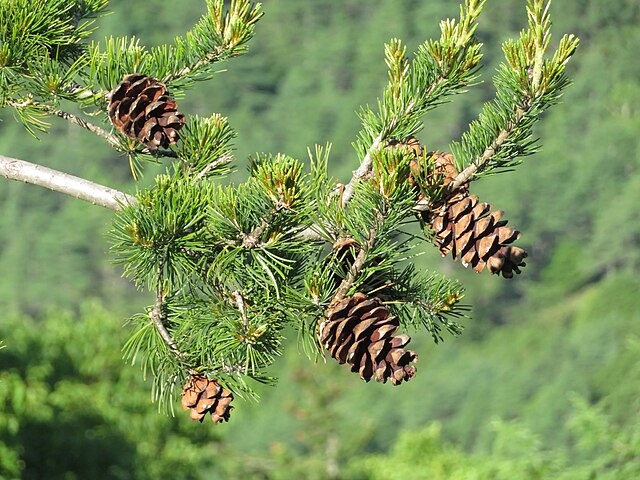
| Shinpaku (Japanese white pine) | The representative species for jin and shari. The wood is extremely dense and maintains its white appearance over many years. In nature, shinpaku growing on rocky terrain often has natural shari, and in bonsai styling, forms that emphasize jin and shari are the mainstream. |
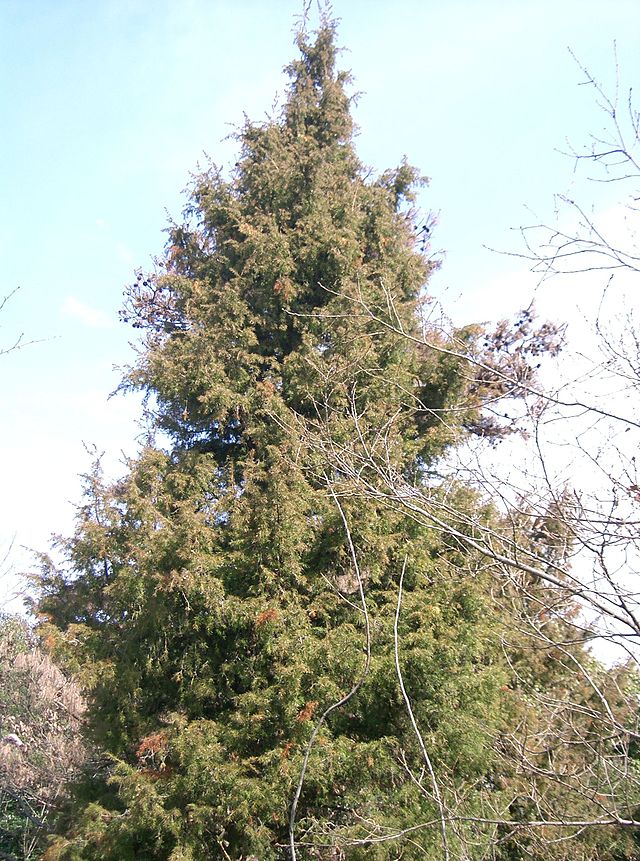
| Tosho (Chinese juniper) | A species equally well-suited to jin and shari as shinpaku. It has the property of twisting trunks in complex patterns, making it possible to create highly dynamic compositions when combined with shari. |
| Goyo matsu (Five-needle pine) | Jin can be created, but since the wood is not as dense as shinpaku, it tends to decay somewhat more easily. |
| Kuro matsu and Aka matsu (Black pine and Red pine) | Jin is rarely applied, but unwanted branches can be retained as jin to create a sense of heaviness and depth in the tree. |
| Broad-leaved trees | The wood is soft and rots easily, making it impossible to maintain the white appearance over a long period, so they are not suitable for jin and shari. |
How to Create Jin
The procedure for creating jin is explained below. The best time for this work is spring through early summer (April to June), when sap flow is most active.
- Select the branch: It is most natural to make jin from unwanted or dying branches. If you make jin from a living branch, select one within a range that will not affect the tree's health. Breaking or cutting the branch partway and then splitting the tip with pliers creates a natural-looking break. Avoid making cuts with shears, as a clean cross-section looks artificial.
- Strip the bark: Pinch and peel away the bark using jin carving tools. Spring through early summer is an easy time to work because the bark, being moisture-laden, peels off readily. Make sure to cleanly remove the cambium layer (the thin layer between bark and wood). If any remains, the bark will regenerate.
- Carve the wood: Use a carving tool or knife to sculpt the wood and create a natural appearance. Like weathered wood, make grooves along the grain and add surface texture. The key is to work gradually to avoid an unnatural result—overdoing it will look artificial.
How to Create Shari
Shari is created by stripping bark from a section of the trunk, but this requires more careful work than jin. If too much bark is removed, the tree will weaken; therefore, it is essential to leave enough of the living portion (the water-conducting tissue) intact.
- Determine position and mark lines: Decide where to place the shari and mark the outline with a marker. A safe range is about one-third to one-half of the trunk's circumference. Removing two-thirds or more of the bark places too much stress on the tree.
- Strip the bark: Make incisions in the bark with a knife, then peel it away using carving tools. The edges of the shari should form natural curves; avoid making them linear. Natural shari in the wild has an irregular shape, so intentionally varying the line will look more realistic.
- Create grooves and texture in the wood: Use a carving tool to add grooves and texture to the wood, creating a weathered appearance. Carving along the grain of the trunk results in a finish that takes advantage of the natural wood grain.
Application and Maintenance of Lime Sulfur Compound
After creating jin or shari, apply lime sulfur compound. This has antimicrobial and bleaching effects on the wood and is essential for maintaining a beautiful white appearance over the long term.
Apply lime sulfur compound neat or diluted with a small amount of water using a brush. Never apply it to living bark—it can cause damage if it comes into contact with the bark. Masking the living bark with painter's tape before application is an effective precaution.
Apply once or twice per year. It is customary to reapply in spring and autumn, reviving darkened areas to white. Perform application work outdoors and wear gloves and a mask—lime sulfur compound is strongly alkaline and can irritate skin and mucous membranes.
As time passes, jin and shari undergo weathering and develop a more natural appearance. However, soft wood can eventually decay, so rotted areas may need to be removed and treated with wood hardener for reinforcement.
Common Beginner Mistakes and How to Avoid Them
Mistake 1: Making too many living branches into jin at once Killing many water-conducting branches at once will also weaken the corresponding roots. Jin and shari should be created gradually over several years; do not try to complete the tree's form in a single session.
Mistake 2: Cutting through the water-conducting tissue (living bark strip) Expanding the shari too far will sever the water path to the leaves, causing branches to die. Always confirm which strip supplies which branch before beginning work.
Mistake 3: Getting lime sulfur compound on living bark The compound will damage living bark if it contacts it. Protect the area before application and work on a windless, cloudy day. Avoid direct sunlight immediately after application.
Discover Jin and Shari Bonsai on GrowerDirect
Beautiful jin and shari bonsai are the result of years of skill and time. On GrowerDirect, you can purchase bonsai directly from specialist growers who have mastered jin and shari techniques. Find a bonsai that captures your heart among these powerful specimens that seem to embody nature's harshness.