Bottle Garden and Terrarium Cultivation Methods for Carnivorous Plants (Closed Containers)
How to cultivate carnivorous plants in closed containers using bottle gardens and terrariums. This article explains the mechanism for maintaining high humidity and basic structure, how to select and arrange suitable species, tips for bottom watering and ventilation, light and temperature management, cleanliness management to prevent mold, and beginner-friendly construction methods.
Key Takeaways
How to cultivate carnivorous plants in closed containers using bottle gardens and terrariums. This article explains the mechanism for maintaining high humidity and basic structure, how to select and arrange suitable species, tips for bottom watering and ventilation, light and temperature management, cleanliness management to prevent mold, and beginner-friendly construction methods.
Related Species
Bottle Garden Cultivation of Carnivorous Plants
Cultivating carnivorous plants in bottle gardens or terrariums is an entirely different approach from conventional pot cultivation. By utilizing the microclimate within a closed container, it is possible to achieve high humidity and stable temperatures, making this method particularly effective when growing carnivorous plants in Japan's dry indoor environments.
Tropical carnivorous plants such as Nepenthes rafflesiana grow in their native habitats in high-humidity and misty rain environments. While reproducing this environment in ordinary indoor management is difficult, bottle gardens and terrariums can easily achieve relative humidity of 80–90%.
Basic Structure of Bottle Gardens and Terrariums
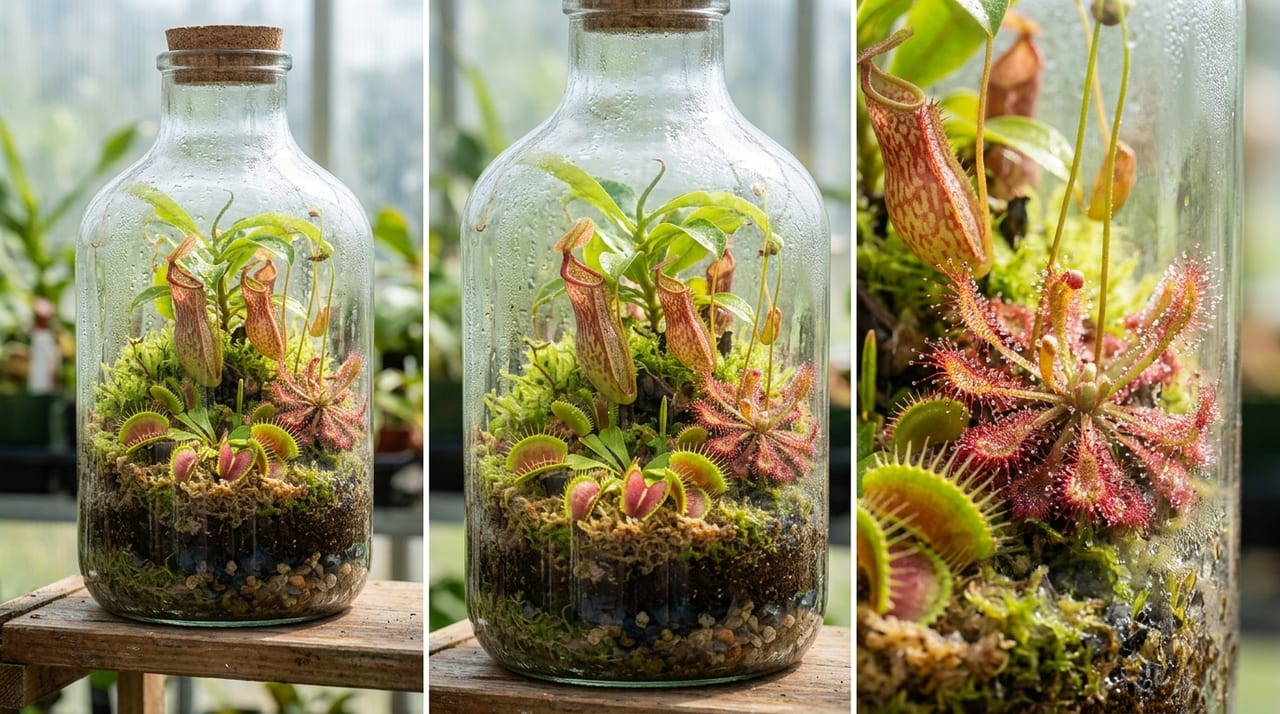
A bottle garden is a cultivation method using a wide-mouth bottle (3–10 L). Place 3 cm of red ball clay soil for drainage at the bottom, layer 5 cm of sphagnum moss and peat moss mixture (1:1) above it, and then layer cultivation soil on top. The container is kept sealed, and water vapor evaporates and condenses on the container walls, creating a water cycle that returns to the soil.
A terrarium is a smaller cultivation method using glass display cases or acrylic cases than a bottle garden. It has higher air circulation than a bottle garden and requires regular misting to increase humidity. Both methods share the common feature of utilizing the sealed container environment to create the high-humidity conditions that carnivorous plants require.
Selection and Placement of Carnivorous Plant Species
Suitable for bottle gardens are small tropical and subtropical species that prefer high humidity and do not require winter dormancy.
- Sundew (Drosera): Such as adelae, capensis, and spathulata. When humidity is high, the glandular hairs produce plenty of sticky secretions, making them easy to grow in containers
- Butterwort (Pinguicula): Mexican species. Since they dislike excessive moisture, plant them in a location where the soil surface dries slightly more easily
- Bladderwort (Utricularia): Terrestrial species such as sandersonii. They produce small flowers on wet sphagnum moss
- Small varieties of Pitcher Plant (Nepenthes): Limited to sizes that fit in the container; move to pot cultivation once vines begin to extend
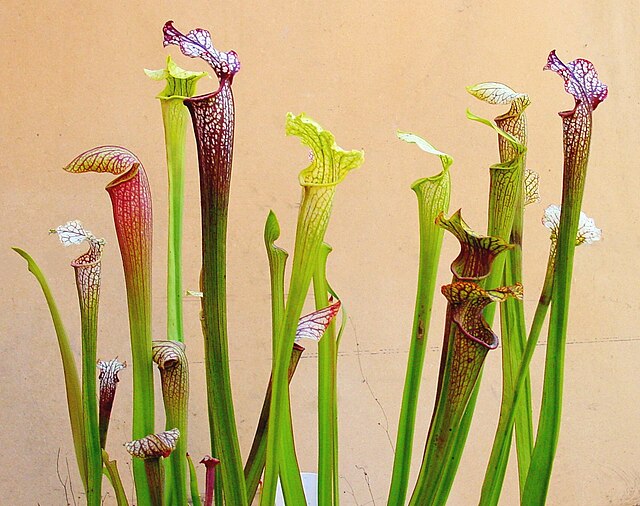
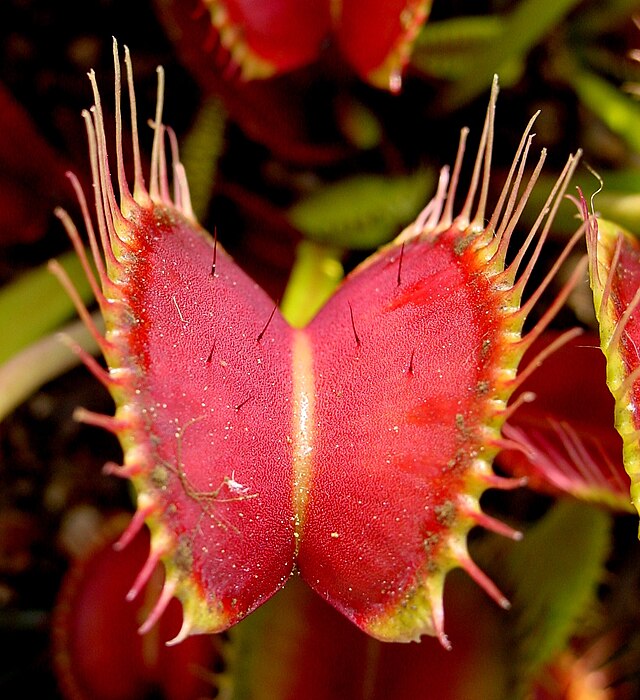
Conversely, temperate species native to North America, such as Venus flytraps and Sarracenia, require cold dormancy in winter and prefer strong sunlight, making them unsuitable for cultivation in closed containers.
It is effective to arrange plants vertically by utilizing different microclimates: those with the highest humidity requirements at the bottom, those preferring moderate humidity in the middle, and those favoring air circulation at the top. However, to avoid competition within the container, avoid mixing species of very different sizes, and stick to combinations of similarly-sized species.
Tips for Bottom Watering and Ventilation
Bottom watering (or watering from below) is a method where the bottom of a pot is submerged in water. Since carnivorous plant roots prefer a constantly moist state, bottom watering is the optimal management method. In a bottle garden, the lower portion of the soil layer is kept constantly moist, so additional bottom watering is unnecessary. In a terrarium, bottom watering is achieved by maintaining 1–2 cm of water at the container bottom.
Ventilation is the greatest challenge in closed containers. Since excessive condensation can cause disease, it is important to open the lid of the container 1–2 times per week and ventilate for 15–30 minutes. At this time, measure the humidity inside the container and confirm that the relative humidity is maintained in the 80–90% range. Seasonal adjustment is necessary; reducing ventilation frequency in winter and increasing it in summer is an effective approach.
Light and Temperature Management
Carnivorous plants generally require high light levels. Bottle garden and terrarium cultivation are no exception. A bright location near a window is optimal, but care must be taken as direct sunlight can cause container temperatures to exceed 50°C. In summer, use thin lace curtains to shade direct sunlight during the day and maintain high relative humidity.
For tropical sundews and pitcher plants, 18–28°C is a reasonable target. The temperature inside a bottle garden exhibits a moderating effect against external environmental changes, providing protection against rapid temperature fluctuations. In winter, it is important to place the container near a south-facing window or use a simple heater to prevent temperatures from dropping below 10°C.
Pest Control and Sanitation Management
Closed containers provide ideal conditions for pathogen proliferation. To prevent rot caused by mold and bacteria, cleaning inside the container about once a month is necessary in addition to weekly ventilation. It is important to promptly remove dead leaves and fallen insect carcasses.
Pests such as aphids and spider mites also proliferate rapidly in closed containers. If pests are discovered, it is recommended to immediately remove the affected plant from the container and treat it in a separate isolated environment. The use of pesticides should be avoided as much as possible, as it disrupts the microclimate within the container.
Beginner's Guide to Building a Bottle Garden
For beginners, a bottle garden of 3–5 L in size is appropriate for the first attempt. Select a 5 L wide-mouth bottle and create a layered structure: 3 cm of drainage layer (red ball clay soil), 5 cm of sphagnum moss layer (moistened), and 7 cm of cultivation soil (peat moss and sphagnum moss 1:1). Place 3–4 carnivorous plants inside the container and lightly water to complete.
During the first month, confirm that the microclimate inside the container stabilizes through daily observation and twice-weekly ventilation. When relative humidity is maintained at 80–90%, mold does not develop, and the carnivorous plants begin to produce new leaves, these are signs that bottle garden cultivation has succeeded.