Carnivorous Plant Collection: Arrangement, Display & Presentation Guide | How to Create Stunning Exhibitions
From "growing" to "displaying" carnivorous plants. Learn how to beautifully display distinctive carnivorous plants with their unique shapes, colors, and textures, master placement techniques as interior décor, and discover how to compose photographs that make your collection shine.
Key Takeaways
From "growing" to "displaying" carnivorous plants. Learn how to beautifully display distinctive carnivorous plants with their unique shapes, colors, and textures, master placement techniques as interior décor, and discover how to compose photographs that make your collection shine.
Related Species
The Philosophy Behind Carnivorous Plant Display
Carnivorous plants are, in a sense, "plants grown to be displayed." The sparkling glow of sundew's sticky tentacles backlit by sunlight, the dynamic moment when a Venus flytrap's leaves snap shut, the exotic cascading pitchers of Nepenthes—all of these take on many times their natural beauty with proper presentation.
The key is to "make the plant's ecological characteristics the axis of your display." Thoughtful layout that considers three elements—light, humidity, and elevation—is the first step toward creating a visually striking collection.
Layout Design Using Light
Most carnivorous plants favor intense light. This characteristic is a significant advantage for display purposes.
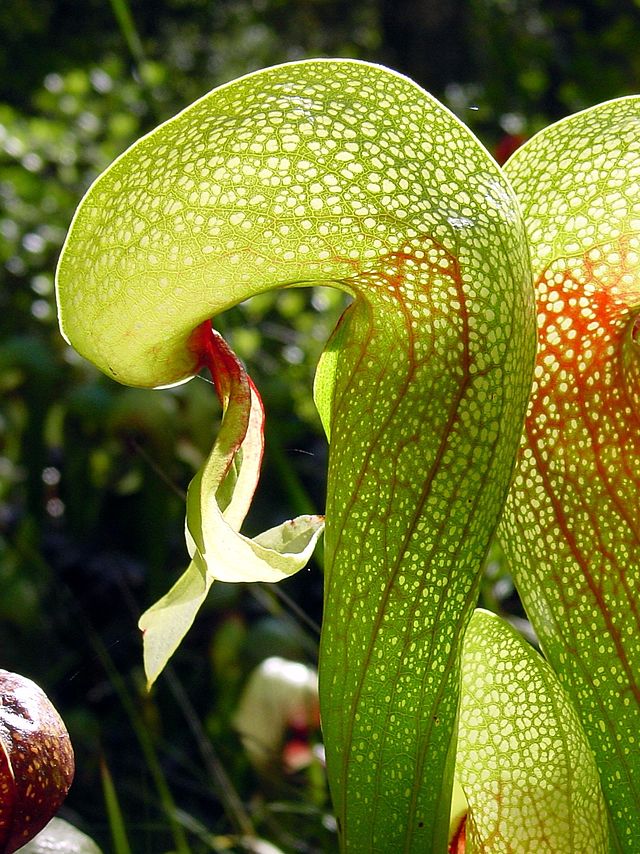
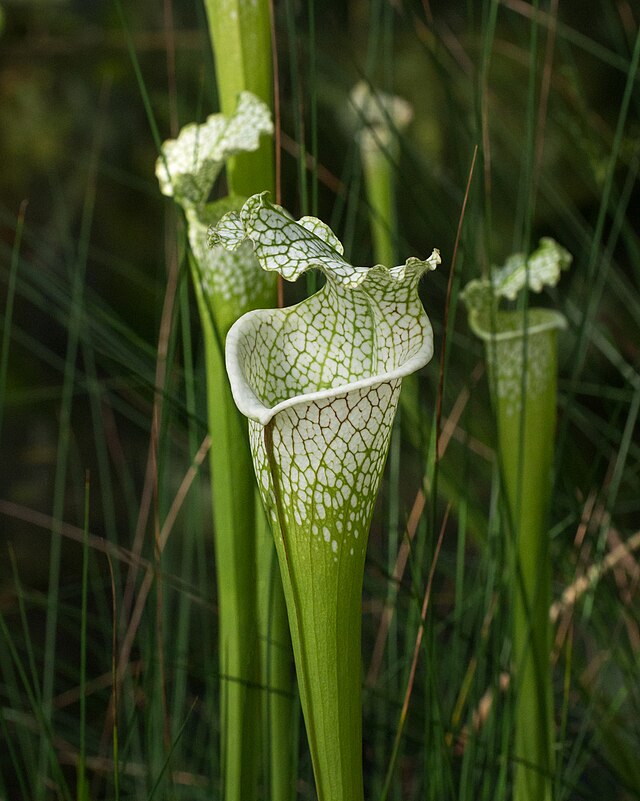
Backlighting is particularly effective for sundews (Drosera) and Sarracenia. By placing the plant with a window at its back, the sticky tentacles and leaf veins float into view through transmitted light, creating an atmosphere like museum displays. Install a shelf 60–80 cm in front of a south-facing window and use the gentle morning light hours as your "golden time."
Spotlight illumination is also a technique widely used by collectors. By directing an LED growth light (approximately 6500K, PAR value 100–200 μmol/m²/s) at a 45-degree angle above a Nepenthes pitcher, the pitcher's internal structure and coloration become three-dimensional. Simply pairing a commercial clip-on spotlight with red-blue mixed LEDs yields sufficient display effect even indoors.
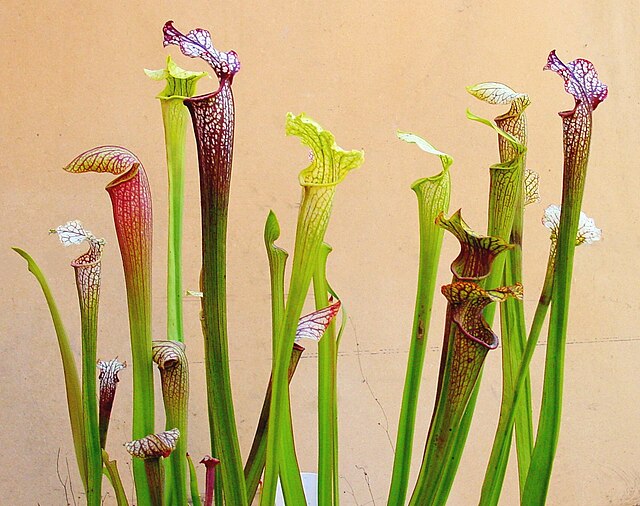
Tall tubular-leaf plants such as Heliamphora and Darlingtonia californica create a "rhythm of height" and visual depth when multiple specimens are grouped at varying elevations.
Unifying Aesthetic Through Substrate and Container Selection
Choosing the right pots and substrates is essential for creating visual cohesion in your collection.
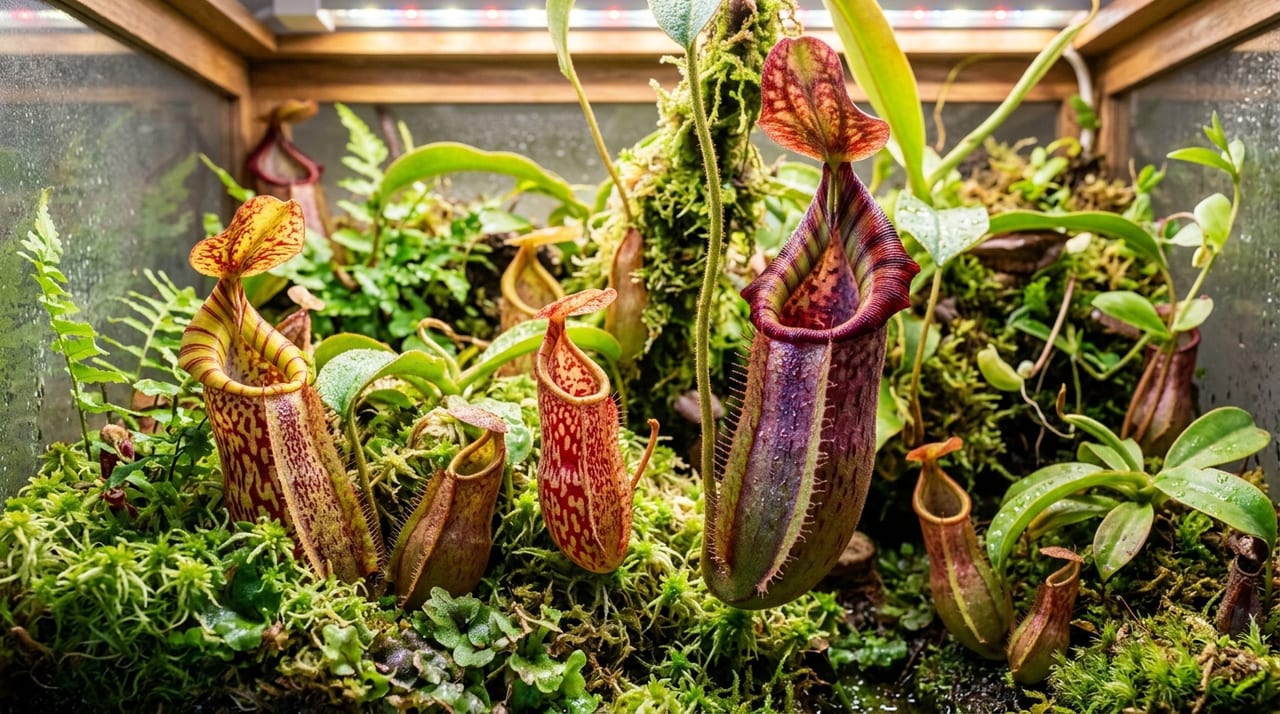
Terrariums and glass containers suit high-humidity species (lowland Nepenthes, Cephalotus-type Drosera, etc.). Since roots and water levels are visible through the glass, you can observe and appreciate simultaneously. In particular, a "paludarium" style—using a rectangular glass aquarium (approximately 30×20×25 cm) laid horizontally—has recently garnered attention as an ecosystem diorama combining moss, driftwood, and carnivorous plants.
Terracotta pots suit Sarracenia and Venus flytraps, which tolerate drier conditions. The texture of terracotta creates a natural atmosphere and pairs well with outdoor displays and wooden stands. However, terracotta's high porosity can cause rapid drying, so use passive watering (submerging the pot base 1–2 cm in water) alongside it.
The basic principle is to coordinate pot color with foliage. Pairing red-toned Sarracenia leucophylla with dark pots creates contrast, and matching deep-green Nepenthes with natural wood planters enhances visual refinement.
Creating Depth Through Elevation and Viewing Flow
Simply arranging pots on a flat surface diminishes half the collection's appeal. Layout that considers elevation dramatically enhances the viewing experience.
Varying stand heights is effective.
| Plant Type | Placement |
|---|---|
| Pitcher-bearing species like Nepenthes | Use hanging baskets or ceiling hooks to suspend above eye level for dramatic impact |
| Small species such as Venus flytraps or pygmy sundews | Place at eye level (on upper shelves) for close observation |
| Tall species like Sarracenia | Position on the floor to showcase natural form |
A three-tier framework (ceiling-hung, upper shelf, floor level) creates a layered "living wall" with depth.
Ensure clear viewing paths as well. By creating a natural flow around the plants, visitors can enjoy views from the side and back in addition to the front. The structure of trap leaves—particularly the underside and position of nectar glands—often become apparent only from a side angle.
Showcasing Seasonality and Growth Stages
Carnivorous plants change dramatically with the seasons. Advanced enthusiasts also enjoy making this "transformation" itself a display theme.
Early spring Sarracenia begin unfurling tubular new leaves that fill out toward summer. Recording and displaying this growth progression monthly on the same plant becomes educational content for visitors. When growers display at events or open houses, simply adding a label explaining "the current growth stage" significantly changes visitor response.
Fall and winter dormancy makes a Venus flytrap's above-ground portions die back and look dull, but displaying the roots in a transparent pot to showcase the "dormant corm (bulb)" offers another approach. Showing all ecological stages deepens understanding and affection for the plant.
Conveying Value Through Labeling and Storytelling
Finally, "providing explanation and context" is equally important as physical arrangement.
Collector-made labels should minimally include the following information:
- Scientific name
- Origin/habitat
- Collector or source
- Year of acquisition
This builds trust among fellow enthusiasts and makes the value of rare specimens clearer. Unifying label fonts and materials elevates the overall presentation.
When growers display for sales purposes, adding a brief description of each specimen's traits (e.g., "clone with exceptionally large trap pitchers," "pure white-flowering individual") directly influences purchase intent. Because much of a carnivorous plant's value lies in its ecological and rarity "story," consider verbal presentation as part of the display.
By combining these five elements—proper light, containers, elevation, seasonality, and words—a carnivorous plant collection transforms from "plants being grown" into "an exhibition that speaks."