The Differences Between Highland and Lowland Nepenthes and How to Create Cultivation Environments
This article explains the differences between highland and lowland species of Nepenthes, the temperature, humidity, and light conditions required for each, and how to create cultivation environments suitable for Japanese homes.
Key Takeaways
This article explains the differences between highland and lowland species of Nepenthes, the temperature, humidity, and light conditions required for each, and how to create cultivation environments suitable for Japanese homes.
Pitcher plants (Nepenthes genus) are the most diverse and visually appealing group among carnivorous plants with bag-shaped insect-trapping leaves. More than 160 species are known to inhabit tropical Asia (Borneo, Sumatra, Philippines, Malay Peninsula, etc.), with habitats ranging from coastal lowlands to alpine zones above 3,000 m elevation.
The most important concept in Nepenthes cultivation is the distinction between "highland (high-altitude species)" and "lowland (low-altitude species)." These two groups have significantly different temperature and humidity requirements, making their cultivation methods completely different. Failure to understand this distinction can result in plants that should produce beautiful pitchers producing none, or in extreme cases, the plant dying altogether.
Lowland (Low-altitude Species)
Habitat: Tropical lowlands at approximately 0–1,000 m elevation. Native habitats are primarily the lowland jungles and coastal forests of the Malay Peninsula, Borneo, and Sumatra.
Representative species: Nepenthes rafflesiana, N. mirabilis, N. ampullaria, N. bicalcarata, and others.
Climate characteristics: Hot and humid. Temperatures are maintained year-round at 27–35°C during the day and 20–25°C at night. Humidity is 80–95% or higher. Seasonal variation is minimal, with nearly constant hot, humid conditions persisting throughout the year.
Cultivation Conditions for Lowland Species
| Item | Condition |
|---|---|
| Daytime temperature | 28–35°C (around 30°C is ideal) |
| Nighttime temperature | 20–25°C or above |
| Humidity | 70–90% or higher |
| Light level | Medium to strong (30–50% shading recommended) |
| Watering | Keep soil constantly moist |
Cultivation suitability in Japan: Lowland species are easy to manage both outdoors and indoors during Japan's summer (June–September). The challenge is winter, when heating is necessary during periods when temperatures drop below 20°C. Take advantage of warm rooms near windows, greenhouses, or insulated cases.
Highland (High-altitude Species)
Habitat: Tropical highlands at 1,000 m elevation or above (most at 1,500–3,000 m or higher). Native habitats include Mount Kinabalu and the Muller Range on Borneo, the Bukit Barisan range on Sumatra, and the highlands of Mindanao in the Philippines.
Representative species: Nepenthes rajah, N. lowii, N. veitchii, N. villosa, N. edwardsiana, and others.
Climate characteristics: Cool and humid. Daytime temperatures are around 18–24°C, dropping to 8–15°C at night. The large diurnal temperature range is an essential factor for highland species growth. Mist is frequent and humidity is constantly high (80–100%).
Cultivation Conditions for Highland Species
| Item | Condition |
|---|---|
| Daytime temperature | 18–24°C |
| Nighttime temperature | 8–15°C |
| Humidity | 80–95% or higher |
| Light level | Medium (avoid direct sunlight) |
| Watering | Maintain high humidity; keep soil moist |
Cultivation difficulty in Japan: Summer in Japan is the biggest challenge for highland species. Conditions of 20–24°C during the day and 10–15°C at night are impossible to achieve naturally under the natural conditions of Honshu's summer (June–September). Some form of cooling is essential.
Intermediate Species (Intermediate)
Species inhabiting the intermediate elevations (500–1,500 m) between highland and lowland are called "intermediate species."
Representative species: N. ventricosa, N. sibuyanensis, N. truncata, and others.
Characteristics: They are adapted to conditions of around 25–28°C during the day and 15–20°C at night. Their conditions are similar to Japan's spring and autumn climate, making them the easiest group to cultivate. Year-round cultivation is possible by managing them in air-conditioned rooms during summer and in warm windowsills during winter.
How to Grow Highland Species in Japanese Homes
Cooling highland species during summer is a challenge that collectors approach with various innovative methods.
Air-conditioned Room Management
This is the most reliable method. During summer, set a dedicated room's air conditioning to around 20–22°C and manage highland species there. Lower the temperature to around 18°C at night to create a diurnal temperature range.
Advantages: Stable temperature management is possible. Humidity is also easy to control with a humidifier
Disadvantages: Electricity costs are incurred. A dedicated space is required
Modified Water-cooling Cooler Box
A method of creating a sealed space using ice packs or cold water. For small collections, this is a cost-effective approach.
Basements or Storehouses
Basements and storehouses, where temperatures remain relatively stable year-round, are advantageous for highland cultivation. LED lighting is essential to ensure adequate light, but the burden of temperature management is reduced.
Relocation to Higher Elevations (Summer)
Some enthusiasts practice managing their plants by relocating them during summer to cooler mountainous areas (1,000 m elevation or above) such as vacation homes, farms, or mountain cottages. Although this requires cost and effort, it allows for highland management in a natural-like environment.
Which is Best for Beginners?
For beginners in carnivorous plants starting with Nepenthes, it is best to begin with intermediate species. In particular, the following varieties are recommended as they are relatively easy to manage in typical Japanese home environments.
- N. ventricosa: Intermediate. Has beautiful red-tinged pitchers and is robust and easy to grow
- N. x miranda: A hybrid between lowland and intermediate species. Vigorous growth and readily produces pitchers
- N. alata: Intermediate. Characterized by slender pitchers. Heat-tolerant
- N. maxima: Highland to intermediate. Produces impressively large pitchers. Relatively robust
Differences in Pitchers Between Highland and Lowland Species
Beyond cultivation conditions, the form, size, and function of pitchers (insect-trapping leaves) differ significantly between highland and lowland species.
Lowland species pitchers: Generally show a prominent difference in form between upper and lower pitchers. Most are large and sturdy. The digestive fluid is relatively weak
Highland species pitchers: Many species have complex decorations (frills, hairs, color patterns). Species such as N. rajah form exceptionally large pitchers, and their digestive fluid is highly viscous. Some species are reported to have symbiotic relationships where they utilize mammal feces as "fertilizer," in addition to small mammals and insects
Humidity Management in Practice
Both groups require high humidity. In typical Japanese homes (indoor humidity 40–60%), humidity is often insufficient, so the following methods are used to maintain humidity.
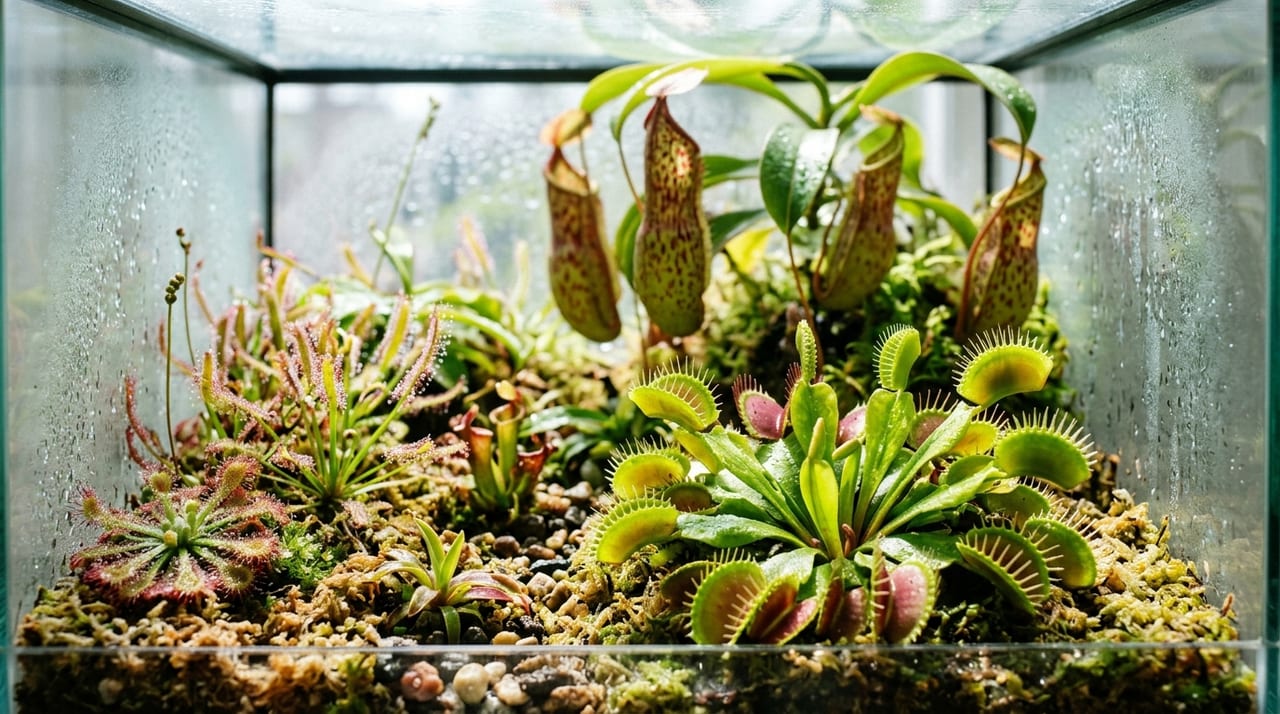
- Terrarium (sealed or semi-sealed container): Maintains the highest humidity. Suitable for small to medium-sized species
- Misting: Mist leaves and soil 1–2 times daily. Provides immediate effect but low duration
- Using a humidifier: Place an ultrasonic humidifier near the plants. However, be careful to avoid mineral accumulation
- Sphagnum moss insulation: Laying sphagnum moss on the soil surface helps maintain humidity through reduced soil evaporation
Finding Nepenthes on GrowerDirect
GrowerDirect features growers who specialize in Nepenthes, offering varieties from each of the highland, lowland, and intermediate groups. Many listings include detailed cultivation environment information (temperature, humidity, light level), making it easy to select varieties suited to your management environment.
Rare highland species tissue culture seedlings can sometimes be obtained, making it an attractive source for collectors. First, understand your cultivation environment (summer maximum temperature and availability of cooling equipment), then select the optimal group and enjoy growing Nepenthes.