Humidity Management Techniques for Carnivorous Plants: From Terrariums to Open Cultivation
Explains the basics of humidity management for carnivorous plants, the differences between terrarium and case cultivation versus open cultivation, humidity requirements by species, and the balance between humidification and ventilation.
Key Takeaways
Explains the basics of humidity management for carnivorous plants, the differences between terrarium and case cultivation versus open cultivation, humidity requirements by species, and the balance between humidification and ventilation.
Related Species
Most carnivorous plants grow naturally in wetlands and humid tropical environments, making humidity management a critical concern in cultivation. However, treating humidity management as simply "carnivorous plants = high humidity" often leads to failure. Different species have vastly different humidity requirements, and management methods vary widely. Here, we explain practical techniques for managing humidity in carnivorous plant cultivation.
Know Humidity Requirements by Species
Carnivorous plants have significantly different humidity requirements depending on the species. First, understand how much humidity the plants you are growing need.
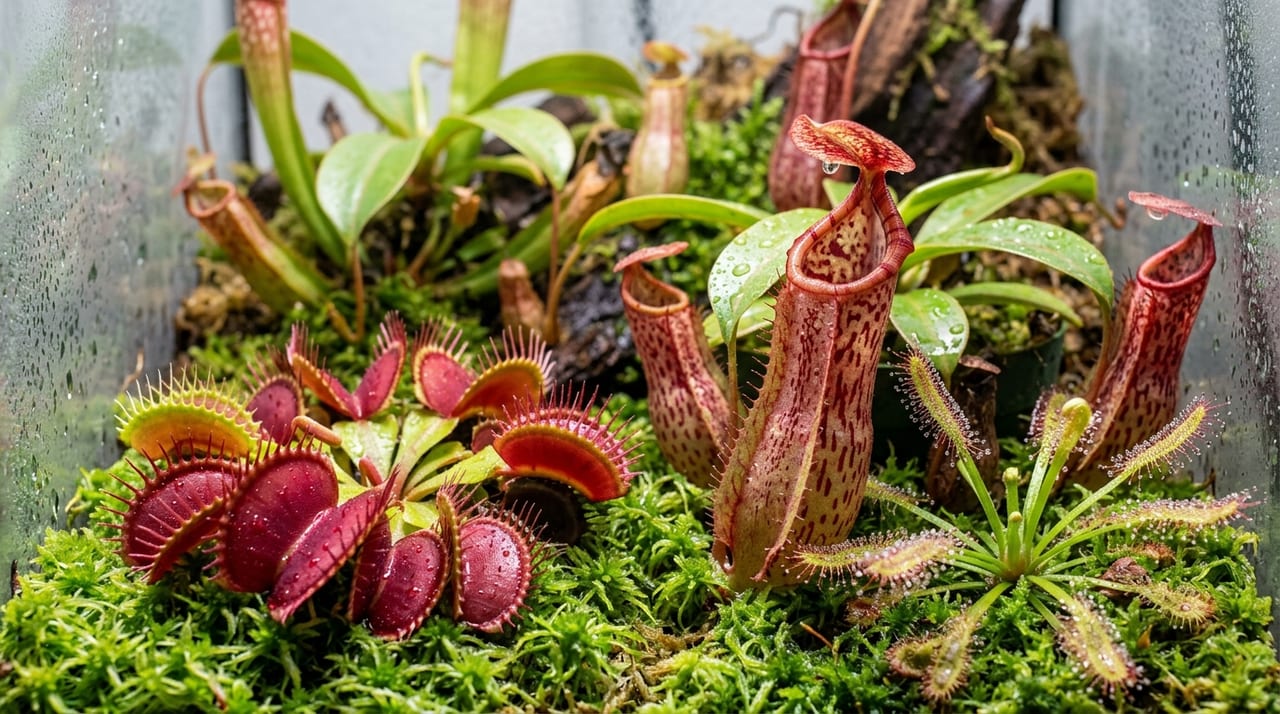
Species requiring high humidity include Nepenthes (particularly highland species), Cephalotus, and Heliamphora. These generally prefer 70–90% humidity, and when humidity falls below 50%, their pitchers dry out or growth stalls. Terrarium or case cultivation is the standard approach.
Species that grow well with moderate humidity include most Sundews, lowland Nepenthes, and Butterwort. 50–70% humidity is sufficient, and a humidifier or humidity tray can meet their needs.
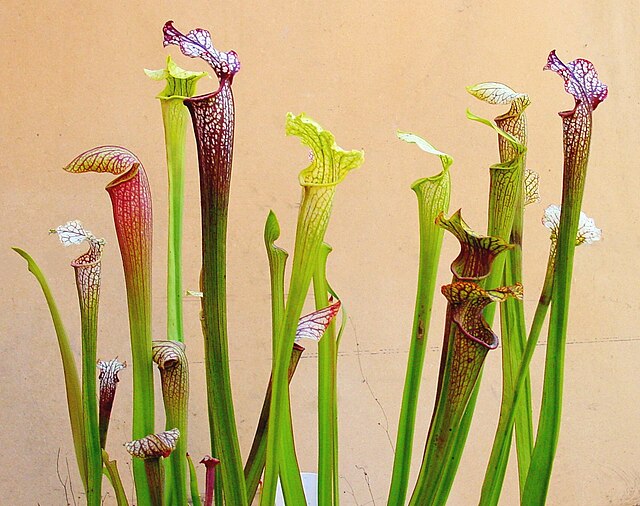
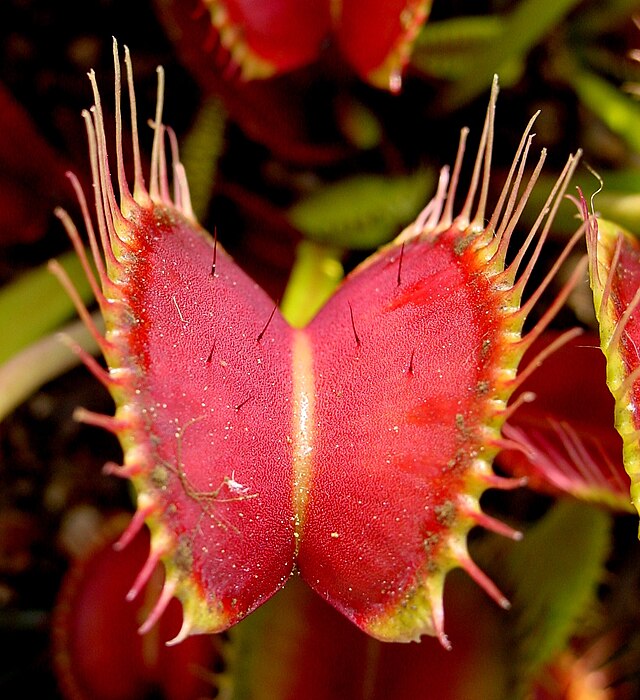
Species that tolerate relatively low humidity include Venus Flytrap, Sarracenia, and some Sundews (such as Capensis). If you maintain moisture at the base of the roots through water-tray cultivation, these plants grow without issue even when air humidity is around 40%. These are well-suited to open-environment cultivation.
Tips for Terrarium and Case Cultivation
Species requiring high humidity are effectively managed in terrariums or Wardian cases. Within a sealed container with high airtightness, you can easily maintain 80–95% humidity.
However, there is a pitfall with complete sealing. Without ventilation, air becomes stagnant, increasing the risk of mold growth, bacterial proliferation, and root rot. Open the lid at least once daily for ventilation, or install a small fan to keep air circulating constantly.
Lighting within the terrarium is also important. When using LED grow lights, choose ones that produce minimal heat. When heat builds up inside a case, it creates a harsh environment for the plants. Use a timer to maintain a lighting duration of 12–14 hours as a standard.
A two-layer structure is recommended for terrarium bottoms: place lightweight stones or hydroton on the bottom, then arrange growing medium on top. Water collecting in the lower layer gradually evaporates to maintain humidity, while the growing medium itself does not become waterlogged.
Humidity Management in Open Cultivation
Species like Venus Flytrap and Sarracenia, which tolerate relatively low humidity, can be grown in open environments. In this case, water-tray cultivation becomes the basic technique for maintaining humidity.
Water-tray cultivation involves placing a pot in a tray filled with water so it absorbs water constantly from the bottom. This keeps the growing medium constantly moist and also slightly raises humidity around the plant through evaporation from the water surface. A water depth of 1–3 cm is appropriate; too deep risks root rot.
In indoor open environments with insufficient humidity, you can create a microclimate by placing humidity trays around the pots or grouping multiple plants together. When using a humidifier, position it near the plants and operate it intermittently with a timer for efficiency.
When cultivating outdoors, natural humidity is often sufficient. However, direct summer sunlight can heat the pot, warming the water in the tray and potentially damaging roots. A double-pot method (placing a pot inside a slightly larger pot with moist sphagnum moss between them) provides insulation.
Seasonal Humidity Management Strategy
Spring brings naturally rising humidity as temperatures increase, making it a comfortable season for most carnivorous plants. When condensation in the terrarium increases, raise ventilation frequency.
Summer presents the challenge of dry indoor air from air conditioning use. When cultivating in a cooled room, using a humidifier in combination is essential. Conversely, outdoor cultivation benefits from Japan's naturally high summer humidity, which suits carnivorous plants well, though watch for mold growth from excess moisture.
Autumn sees decreasing humidity, but it is also when many temperate carnivorous plants enter dormancy, so extreme humidification is unnecessary. Venus Flytrap and Sarracenia actually benefit from experiencing natural drying trends before entering proper dormancy.
Winter causes indoor humidity to drop sharply due to heating. Tropical species (such as Nepenthes) are safest when managed in terrariums or cases. Temperate species are dormant in winter, so minimal care that prevents the growing medium from completely drying out is sufficient.
Recommendation for Hygrometers and Automation
For accurate humidity management, we strongly recommend installing a digital hygrometer. Models that record maximum and minimum values are convenient and help you understand trends in your growing environment. Installing a temperature and humidity data logger in a terrarium or growing room enables long-term data analysis.
For more serious cultivation, you can use smart plugs or timers to automatically control humidifiers and fans. A humidity-sensor-equipped smart humidifier will automatically activate when humidity drops below your set level and stop when it is reached, achieving ideal humidity management without excess or deficiency.
Comparison of Humidity Management Methods
| Method | Cost | Effectiveness | Maintenance | Recommended for |
|---|---|---|---|---|
| Humidifier | Medium–High | High | Low | Managing plants in large rooms |
| Terrarium | Low–Medium | High | Low | Managing small species |
| Pebble Tray | Low | Medium | Low | Simple measures |
| Plastic Bag | Very Low | High | Medium | Temporary moisture retention |
| Plastic Container | Low | High | Low | Managing multiple pots at once |
Key Points for Seasonal Humidity Management
Spring: Natural humidity rises, making this an easy season to manage. Maintain adequate humidity while ventilating by opening windows.
Summer: Pay attention to the dehumidifying effect of air conditioning. During cooling, either use a humidifier in combination or manage plants in a terrarium.
Autumn: Air becomes drier, so maintain water-tray water level and consider starting humidifier use as needed.
Winter: Heating-induced dryness is the biggest challenge. Run humidifiers at full capacity, and consider managing plants in terrariums or plastic containers for peace of mind.
Carnivorous plants have different ideal humidity levels depending on species. Venus Flytrap has no problem with 40–60% humidity, but highland Nepenthes require 70% or higher.
Common Mistakes and Solutions
Mistake 1: Believing higher humidity is always better Even with high humidity, if air is not moving, mold and decay occur. Humidity and airflow must go together—always pair sealed cases with a small fan or regular ventilation.
Mistake 2: Relying on misting as the main humidity strategy Leaf misting dries within minutes and contributes almost nothing to humidity. What actually works is water-tray cultivation, humidity-tray methods, and containment with containers. Treat misting as supplementary.
Mistake 3: Only increasing humidity in winter while ignoring temperature Low temperature combined with high humidity is a breeding ground for gray mold. In winter, it is safer to shift toward ensuring adequate temperature and avoiding excess moisture rather than simply raising humidity.
Start Growing Carnivorous Plants with GrowerDirect
On GrowerDirect, you can purchase a wide variety of carnivorous plants directly from specialist growers. Before purchasing, consulting about your home's growing environment allows growers to recommend species suited to your setup. Especially for humidity-sensitive species, practical advice from growers can be the shortcut to successful cultivation.