Carnivorous Plants: Sunlight and Lighting Guide | Light Intensity and Management by Species
Explains the required light intensity for various carnivorous plants including Venus flytraps, pitcher plants, and Nepenthes. Covers outdoor cultivation vs. indoor LED growing, lighting setup in terrariums, and summer sun protection strategies.
Key Takeaways
Explains the required light intensity for various carnivorous plants including Venus flytraps, pitcher plants, and Nepenthes. Covers outdoor cultivation vs. indoor LED growing, lighting setup in terrariums, and summer sun protection strategies.
Related Species
One of the first challenges in cultivating carnivorous plants is "how to provide light." Even among carnivorous plants, a Venus flytrap (Dionaea) and a pitcher plant (Nepenthes) require very different light intensities. Excessive light causes leaf burn, while insufficient light causes the trapping leaves to degenerate and lose their carnivorous ability. Understanding the natural habitat environment of each species and implementing appropriate lighting management tailored to each is the key to cultivating healthy carnivorous plants long-term.
Light Intensity by Species | Learning From Native Habitats
Carnivorous plants grow wild in diverse environments around the world, and the light intensity they require varies greatly by species. Before cultivating, identify which group your chosen species belongs to.
High-light lovers (direct sunlight required)
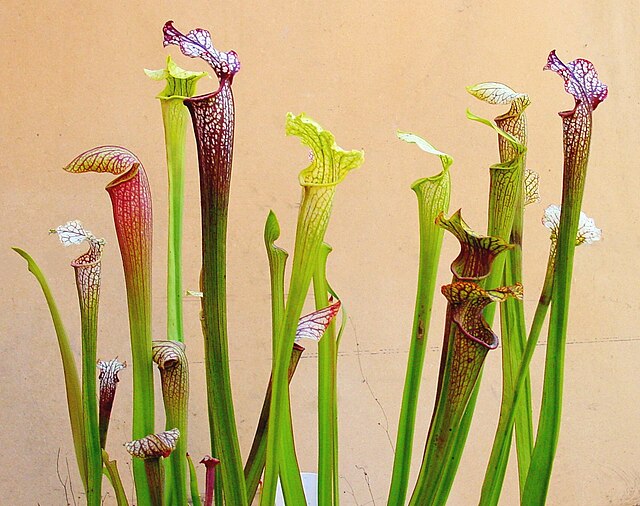
Venus flytraps (Dionaea), sundews (Drosera), pitcher plants (Sarracenia), and other sun-loving carnivorous plants all naturally grow in sunny, open habitats such as wetlands and grasslands. Ideally, they need 6+ hours of direct sunlight daily, and outdoor cultivation is the standard. With sufficient light, leaves develop a reddish tint and trapping organs grow vigorously. Insufficient light causes rapid etiolation and plant decline.
Moderate-light lovers (bright dappled shade)
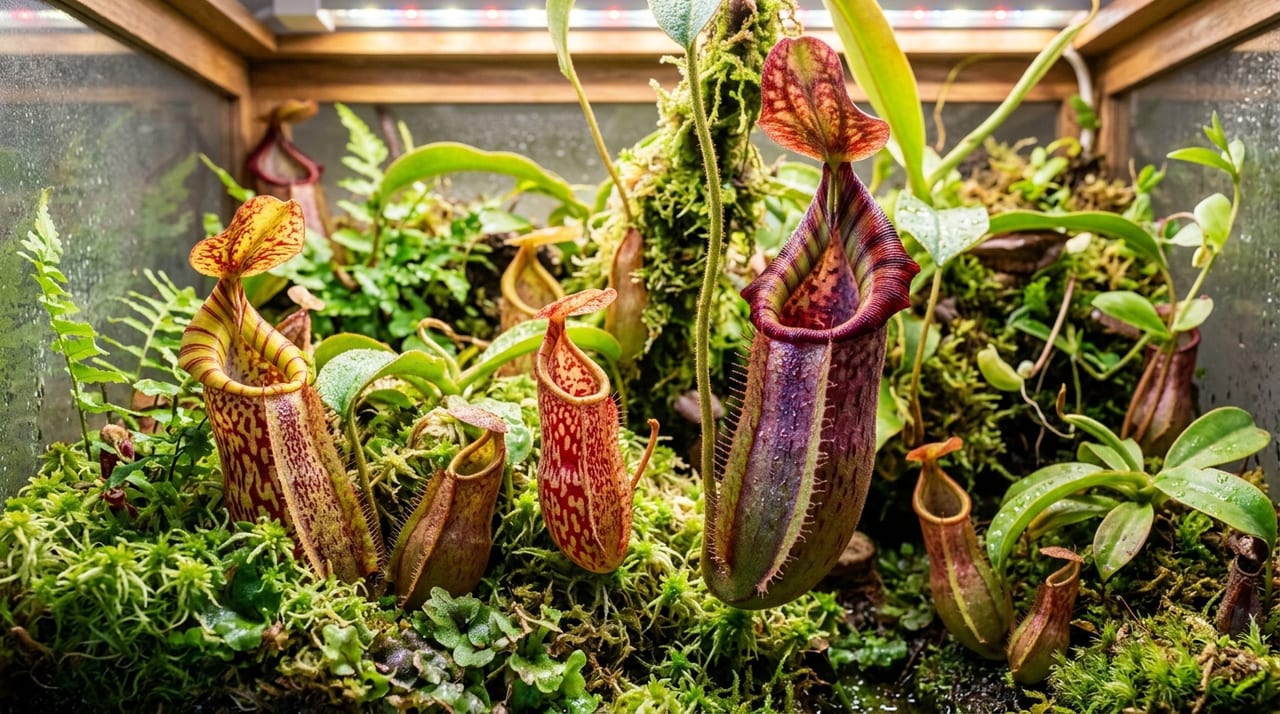
Highland Nepenthes naturally grow in the misty forest margins of tropical mountains. They prefer dappled sunlight or overcast-day brightness; strong direct sunlight causes leaf burn. Outdoors, shade cloth works well; indoors, a bright windowsill is ideal.
Shade-tolerant species (bright indoor light)
Lowland Nepenthes and some Heliamphora can adapt to relatively dim environments. However, "surviving in shade" differs from "preferring shade." Bright indoor light should be maintained while avoiding direct sun—too much darkness causes trapping leaves to shrink or degenerate.
Outdoor Light Management | Seasonal Adjustments
When growing light-loving species outdoors, choose a south-facing location with no obstructions. However, Japanese summers often exceed the temperatures of native habitats, and the combination of strong light and heat can cause leaf burn and heat stress. Adjust your management seasonally.
- Spring (March–May): Mild sunlight and active growth period. Provide full direct sun to maximize photosynthesis. Gradually acclimate overwintering plants to light.
- Summer (June–August): The most critical period. Use shade cloth (30–50% shade) to reduce light intensity, preventing leaf burn and excessive drying. Ventilate carefully, especially in sealed greenhouses where temperatures can spike rapidly.
- Fall (September–November): Sunlight becomes gentler again; remove shade cloth and provide direct sun without concern. This is a vital period to strengthen plants before dormancy.
- Winter (December–February): Daylight hours decrease; move plants to the sunniest available location. Species that lose leaves or enter dormancy (Venus flytraps, pitcher plants) don't require extra light during this period, but evergreen types should maintain adequate light exposure.
Indoor and Artificial Lighting | LED Growing Tips
Even in apartments or low-light environments, artificial lighting allows you to cultivate carnivorous plants successfully. Full-spectrum plant-growth LED lights are now affordable and widely available, expanding indoor cultivation options significantly.
Recommended lights and light intensity guidelines
Full-spectrum LED lights designed for plant growth are most suitable. Choose lights that balance blue light (440–470 nm) and red light (640–680 nm) to promote efficient photosynthesis. Light intensity guidelines are:
- High-light lovers: 10,000–20,000+ lux
- Moderate-light lovers: 5,000–10,000 lux
- Shade-tolerant species: 3,000–6,000 lux
Light duration and distance settings
Aim for 12–16 hours of daily light exposure. Using a timer maintains consistent rhythm, stabilizing the plant's circadian cycle and promoting growth. Lighting distance varies by fixture output; LEDs generate minimal heat, allowing closer placement. If holding your hand under the light feels warm, leaf burn is possible—adjust to 15–30 cm distance as a guideline.
Signs of Insufficient or Excessive Light | Spotting Problems Early
Daily observation helps catch management issues before they escalate. Remember these telltale signs.
Signs of insufficient light
- Leaf color fades to pale yellow-green
- Trapping leaves (pitchers, sticky tentacles, fangs) develop poorly and remain small
- Stems and leaves become spindly and etiolate
- Varieties expected to redden show no color development
Signs of excessive light and leaf burn
- Brown or white spots appear on leaf surfaces
- Leaf margins brown and dry out
- Entire leaves turn yellow, then wither
If you notice changes, first review your setup and lighting distance. Burned leaves won't recover, but new growth will be healthy with proper environmental adjustment. Patience in adjusting conditions is key.
GrowerDirect's Safe and Reliable Platform
In the carnivorous plants category, you can purchase healthy specimens directly from experienced growers who cultivate with care. Because GrowerDirect mediates the transaction, you can buy with confidence—no uncertainties of private sales.
Before purchasing, we recommend asking the grower about their "current cultivation environment (outdoor, indoor, type of lighting)." Plants grown in similar environments experience less transplant stress and adapt more smoothly to your home. Likewise, sharing your growing conditions (lighting type, light intensity, placement) with the grower allows them to recommend species and specimens perfectly suited to your setup.
Whether new to carnivorous plants or already experienced, consult with GrowerDirect's growers and discover your ideal plant.