Sarracenia Outdoor Growing Guide | How to Grow Healthy Plants in Japan's Climate
Explains outdoor cultivation methods for Sarracenia (pitcher plants). Introduces species selection suited to Japan's climate, choosing substrate and pots, seasonal management, and pest control specific to outdoor growing.
Key Takeaways
Explains outdoor cultivation methods for Sarracenia (pitcher plants). Introduces species selection suited to Japan's climate, choosing substrate and pots, seasonal management, and pest control specific to outdoor growing.
Related Species
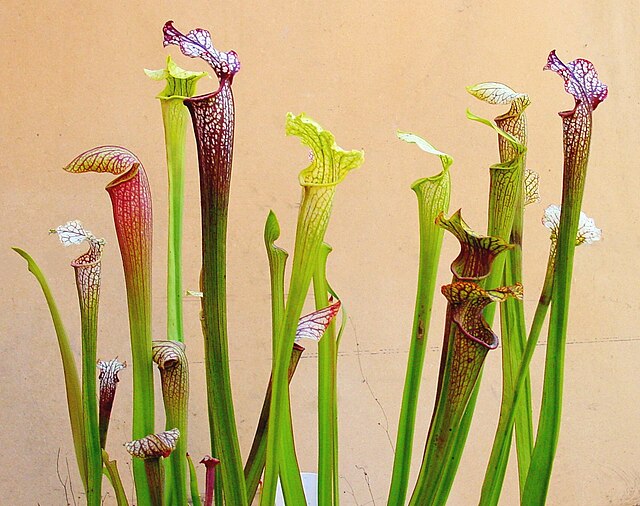
Sarracenia (pitcher plants) are carnivorous plants native to North America, characterized by tubular insect-catching leaves. They are very cold hardy and love sunlight, making them extremely well-suited to outdoor cultivation in Japan. In fact, they thrive better outdoors than indoors and develop more beautiful pitcher leaves.
Why Sarracenia is Suited for Outdoor Cultivation
- Prefers strong sunlight: Sarracenia requires more sunlight than most carnivorous plants. It grows most beautifully in direct sunlight
- Cold hardy: Originally from temperate regions in eastern North America, it can withstand Japanese winters
- Rain resistant: Its native habitat is wetlands. No problem with being exposed to rain
- Good air circulation: Natural outdoor breezes prevent dampness and promote healthy growth
Species Suitable for Outdoor Growing
For Beginners (Hardy and Easy to Grow) - S. purpurea (Purple Pitcher Plant): The most cold hardy. Has stocky, pouch-shaped pitcher leaves. Can overwinter outdoors even in Hokkaido - S. flava (Yellow Pitcher Plant): Tall yellow-green tubular leaves. Striking appearance. Cold hardy - S. leucophylla (White Trumpet Pitcher): Beautiful white markings. Somewhat cold sensitive, but can overwinter outdoors in the Kanto region and westward
For Intermediate Growers - S. oreophila (Green Pitcher Plant): High-altitude species, somewhat delicate. Requires careful drainage management - S. minor (Hooded Pitcher Plant): Unique pitcher leaves covered with a hood. Compact, suitable for pot cultivation
Hybrid Varieties - Many hybrid varieties combine cold hardiness with beautiful appearance - Hybrids are recommended for beginners. They are hardy and come in vibrant colors
Choosing Substrate and Pots
Substrate - Basic mix: Peat moss + perlite (7:3) - Alternative mix: Sphagnum moss alone is acceptable (though it can break down easily) - Using Kanuma soil: Peat moss + Kanuma soil (6:4) also offers good drainage and is recommended - Avoid general-purpose potting soil or leaf mold (nutrient content is harmful)
Pots - Plastic pots are easiest to use (terracotta pots may dry out too quickly) - Choose pots at least 15 cm deep (roots grow long) - Prepare with a saucer, as water tray management will be used
Location
Sunlight - Ideal is 6+ hours of direct sunlight daily - A south-facing balcony or garden is optimal - With insufficient light, pitcher leaves fade in color and tubes become thin - Summer afternoon sun from the west can cause leaf scorch, so afternoon shade is an option
Air Circulation - No problem if there's natural air movement outdoors - Avoid walls and crowded areas where dampness accumulates easily
Seasonal Management Calendar
Spring (March-May) - New shoots begin to emerge. Ideal time for repotting - Begin water tray management and provide plenty of sunlight - Fertilizer is generally unnecessary, but if you want to promote growth, apply very dilute liquid fertilizer once a month
Summer (June-August) - Period of most vigorous growth. Pitcher leaves continuously unfold - Be careful the water tray doesn't get too hot. Use double pots or place the saucer in shade - Watch for drying out. On hot days, you may need to water twice daily (morning and evening) - Enjoy watching insects being captured continuously
Fall (September-November) - Some species display beautiful pitcher leaves in fall (such as S. leucophylla) - Growth gradually slows - Some species flower (most bloom in spring, but some in fall)
Winter (December-February) - Above-ground parts wither and the plant enters dormancy - Remove dead leaves at the base - Lower the water level in the tray, but keep the substrate moist - In freezing areas, protect with mulch or move to a sheltered location
Pest and Disease Management for Outdoor Growing
Aphids - Tend to appear on new shoots in early spring - Wash them off with water or remove with a brush as soon as found - For heavy infestations, use horticultural insecticide (diluted)
Slugs and Snails - Feed on pitcher leaves at night - Apply slug repellent around the pot - Beer traps are also effective for capture
Gray Mold - Tends to occur during rainy season - Regularly remove dead leaves and ensure good air circulation - Preventive fungicide sprays are effective
Root Rot - Can be caused by high water temperature in summer - Change the water in the tray frequently - Use double pots to prevent root temperature rise
Biotope-Style Outdoor Growing
Creating a mini wetland in a garden or balcony and growing Sarracenia in biotope style is also popular.
- Line shallow planters or containers with peat moss
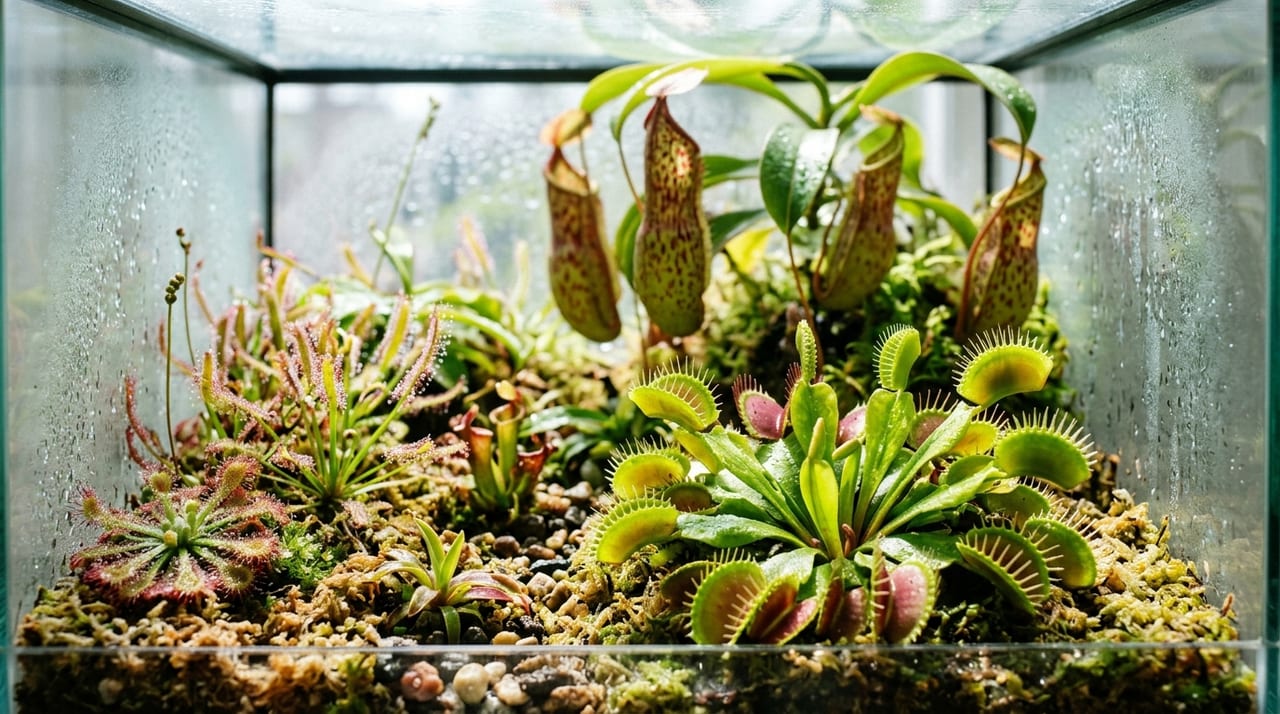
- Plant Sarracenia and arrange sundew and bladderwort around it
- Fill with water to recreate a wetland environment
- Visually beautiful and allows you to enjoy multiple species at once
Annual Management for Sarracenia Outdoor Growing
| Month | Management Tips |
|---|---|
| Jan-Feb | Dormancy period. Keep in cool conditions without freezing. Remove dead pitchers at the base |
| Mar | Ideal time for repotting. Change substrate before new shoots emerge |
| Apr-May | New pitchers unfold. Ensure plenty of water tray management and sunlight. No fertilizer needed |
| Jun-Aug | Peak growth period. Watch for drying out. No shade needed (direct sunlight OK) |
| Sep-Oct | Growth slows. Prepare for winter. Gradually reduce water level |
| Nov-Dec | Dormancy begins. Can overwinter outdoors (most varieties withstand around -10°C) |
Important Points for Outdoor Growing
Water Quality: Sarracenia prefers acidic soft water. Rainwater is ideal over tap water. If using tap water, let it sit and dechlorinate before use.
Substrate: Acidic soil made from a 1:1 mix of peat moss and Kanuma soil (or perlite) is suitable. Avoid alkaline soil at all costs.
Pest Control: Aphids and spider mites can occur outdoors. When using pesticides on carnivorous plants, avoid systemic insecticides and use contact-type products instead.
Environment Checklist for Growing Healthy Carnivorous Plants
To prevent failures in carnivorous plant cultivation, regular environment checks are essential. Make it a habit to check the following items at least once a week.
- [ ] Is there sufficient sunlight (4+ hours of direct sunlight daily or equivalent LED light)
- [ ] Is the substrate adequately moist (check water tray level)
- [ ] Is the water quality appropriate (using rainwater or distilled water)
- [ ] Are there no pests (aphids, scale insects, spider mites)
- [ ] Is there no mold or fungal growth
- [ ] Are dead leaves being removed
- [ ] Is seasonal management being done properly
Common Mistakes and How to Fix Them
Mistake 1: Continuously using tap water as-is Chlorine and minerals in tap water damage the roots of carnivorous plants. Collect and use rainwater, or purchase distilled water. Simply letting tap water sit does not remove mineral content.
Mistake 2: Applying fertilizer Regular fertilizer is strictly forbidden for carnivorous plants. It damages roots and causes death. Nutrition comes from captured insects, so in outdoor management insects are naturally captured.
Mistake 3: Insufficient light Most carnivorous plants need strong sunlight. Even bright indoor windowsills often have insufficient light, so consider installing LED lighting. Venus flytraps and Sarracenia in particular suffer significantly from insufficient light.
Finding Sarracenia at Botachoku
At Botachoku, you can purchase hardy Sarracenia suited for outdoor cultivation directly from specialist growers. A major advantage is being able to ask growers directly about species characteristics and management methods suited to your growing region. Find Sarracenia to brighten your garden or balcony at Botachoku.