Carnivorous Plant Soil Guide | Recommended Peat Moss & Sphagnum Moss Mix Recipes
A guide to soil types and recommended potting mix recipes for carnivorous plants. Learn how to use peat moss, sphagnum moss, perlite, and Kanuma soil, why nutrient-free substrate is essential, and key tips for managing bottom-watering cultivation.
Key Takeaways
A guide to soil types and recommended potting mix recipes for carnivorous plants. Learn how to use peat moss, sphagnum moss, perlite, and Kanuma soil, why nutrient-free substrate is essential, and key tips for managing bottom-watering cultivation.
Related Species
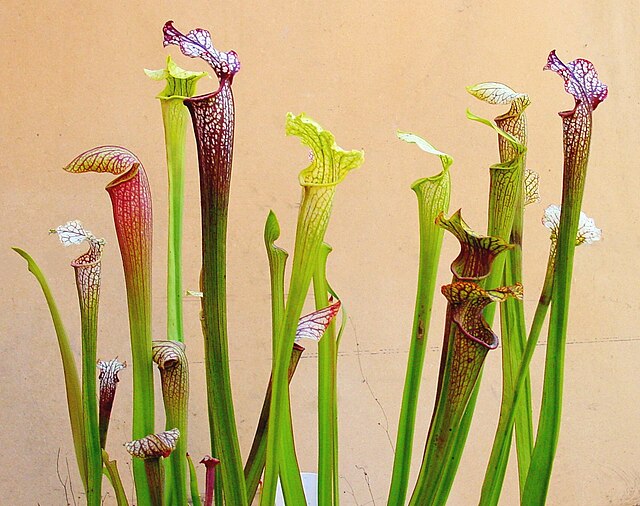
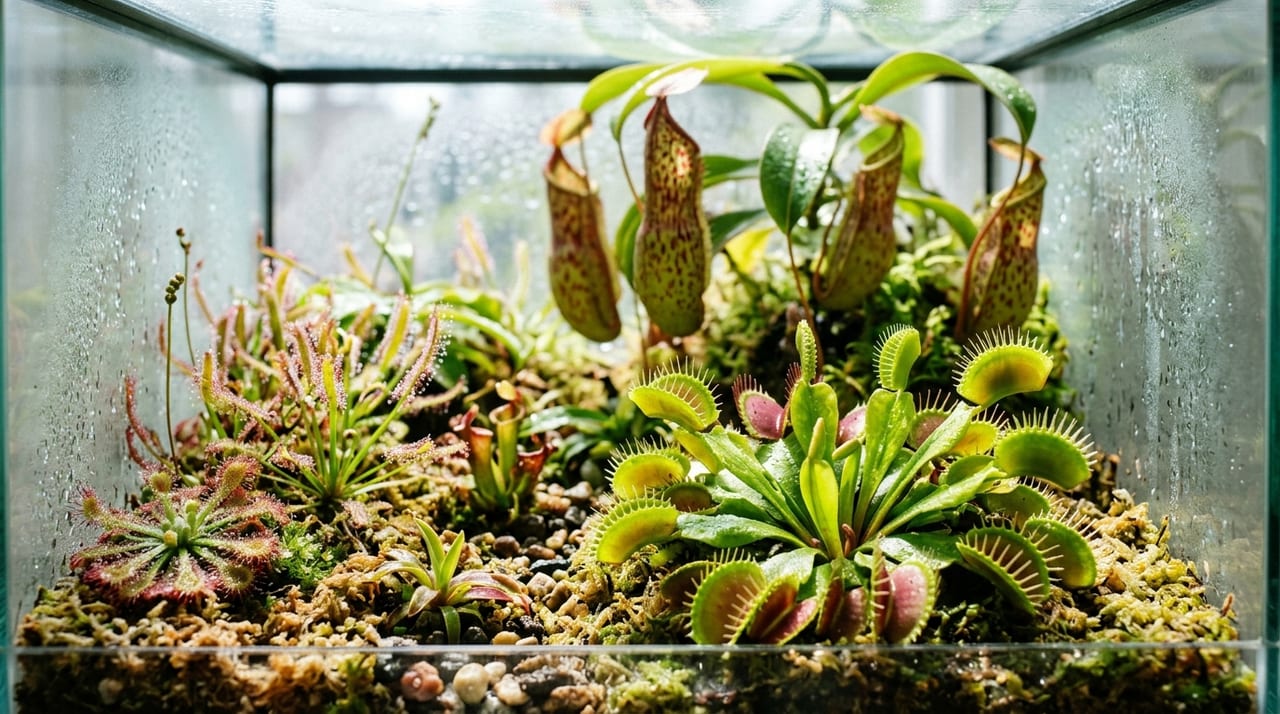
Choosing the right potting mix is the most critical factor determining success or failure when growing carnivorous plants. Many growers make the mistake of using commercial potting soil, thinking "any soil should work," only to watch their plants wither within weeks—these cautionary tales are all too common. This is because carnivorous plants require a completely different soil environment than typical plants. This guide starts with understanding the native habitats of carnivorous plants, then systematically explains the types, mixes, and management methods for proper substrate preparation.
Soil Conditions Required for Carnivorous Plants
Carnivorous plants are native to diverse environments: wetlands in North America, tropical rainforests in Southeast Asia, and sandy regions in South Africa. While these seem vastly different, the soils they grow in share a common characteristic: they are "extremely nutrient-poor and strongly acidic."
Carnivorous plants' ability to trap and digest insects and small animals is an evolutionary adaptation to compensate for this nutrient-poor soil environment. Unable to absorb nutrients efficiently through their roots, they employ a unique survival strategy: extracting nitrogen and phosphorus from captured prey.
Therefore, potting mix must meet four essential conditions:
- Low nutrient content: Fertilizer content should be virtually zero. Commercial potting soils contain leaf mold and organic fertilizers, which can damage roots.
- Strongly acidic: pH 4.0–5.5. Carnivorous plants cannot function in the neutral to slightly acidic soils preferred by typical plants.
- Balanced water retention and aeration: The substrate must remain consistently moist but never waterlogged—a delicate balance.
- Pesticide and chemical fertilizer-free: Potting substrate must not contain any pesticides or synthetic fertilizers.
Nearly no commercial products meet all four conditions. This is why selecting and mixing your own substrate is essential.
Characteristics and Selection of Major Substrate Materials
Peat Moss
Peat moss is made from peat—decomposed sphagnum moss and other vegetation accumulated over many years. It is strongly acidic and nutrient-poor, making it ideal for carnivorous plant cultivation.
When purchasing, always verify whether it is "unadjusted." Some products have been treated with lime for agricultural use and are labeled "lime-adjusted." These products have a pH closer to neutral and cannot be used for carnivorous plants. Check the package carefully and always choose unadjusted peat moss.
Sphagnum Moss (Water Moss / Sphagnum)
Sphagnum moss is dried sphagnum plant material and one of the most widely used substrates for carnivorous plant cultivation. It excels in balancing water retention and aeration, making it resistant to root rot. It also possesses natural antimicrobial properties that help suppress unwanted microorganism growth.
It is often used on its own and pairs exceptionally well with pitcher plants (Nepenthes) and epiphytic carnivorous plants. Quality varies significantly, so choose material with longer stems and sturdy fibers for easier potting and longer-lasting results.
Perlite and Sand
Perlite is a white, granular material made by heating obsidian and similar volcanic glass at high temperatures to expand it. It is used to improve aeration and drainage. It is lightweight, easy to handle, and does not compress around roots; it is typically mixed with peat moss.
When using sand, choose low-mineral types such as "fine-grade hard Kanuma soil" or "river sand (fertilizer-free)." Be cautious, as some gardening sands contain limestone, which can raise pH.
Recommended Mix Recipes by Plant Type
Different carnivorous plant genera originate from different habitats, so potting mix composition should be adjusted accordingly. Refer to the following and customize based on your plants:
Quick Reference Table: Mixes by Species
| Species | Native Habitat | Recommended Mix |
|---|---|---|
| Dionaea & Sarracenia | North American wetlands (wet) | Peat moss 7: Perlite 3 / Sphagnum moss alone |
| Drosera | Worldwide | Peat moss 5: Perlite 5 / Sphagnum moss alone |
| Nepenthes | Tropical & humid | Sphagnum moss alone / Peat 3: Perlite 3: Pumice 4 |
| Heliamphora & Darlingtonia | Highland & cool | Peat 4: Perlite 4: Sand 2 |
※Common requirements: low nutrient, strongly acidic (pH 4.0–5.5), pesticide-free. Commercial potting soil cannot be used.
Dionaea (Venus Flytrap) & Sarracenia
Native to North American wetlands, these genera are relatively hardy to temperature fluctuations. They prefer constantly moist conditions, so mixes with high water retention are essential.
- Peat moss 7: Perlite 3 (standard mix)
- Sphagnum moss alone (easy starter option)
Drosera (Sundew)
Widely distributed globally, preferences vary somewhat by species. Common species (D. spatulata, D. capensis, etc.) do well with this mix:
- Peat moss 5: Perlite 5 (when emphasizing drainage)
- Sphagnum moss alone (for small species or those preferring high humidity)
Nepenthes (Pitcher Plant)
Tropical and humidity-loving, these plants are prone to root rot. A highly aerated mix is ideal.
- Sphagnum moss alone (most reliable)
- Peat moss 3: Perlite 3: Pumice 4 (for large specimens or vigorous rooters)
Heliamphora & Darlingtonia
These highland species from South and North America prefer cool conditions. Prioritize drainage.
- Peat moss 4: Perlite 4: Sand 2
Bottom-Watering Management and Water Quality Considerations
Most carnivorous plants use "bottom watering" as their primary watering method. This involves placing the pot in a shallow saucer filled with water, keeping roots from drying out while maintaining proper humidity levels.
Key points for implementation:
- Use distilled water, rainwater, or RO water: Tap water often contains chlorine and minerals that vary by region; over time, these can raise substrate pH. Collecting rainwater or using water filtered through an RO membrane is ideal.
- Water level should be 2–3 cm from the pot bottom: If too deep, roots can remain submerged and become oxygen-deprived.
- Daily refilling is necessary in summer: High temperatures increase evaporation; check the saucer frequently.
- Some species benefit from reduced or stopped bottom watering in winter: Temperate species like Venus flytraps and Sarracenia enter dormancy and should have watering reduced or stopped during this period.
Substrate Replacement Timing and Refresh Methods
Sphagnum moss and peat moss are consumable materials. Over repeated seasons, they gradually deteriorate, losing water retention and aeration—leading to root rot. A general rule is to replace substrate every 1–2 years.
Consider replacing substrate when you notice:
- Sphagnum moss color fading from bright green or yellow-green to brown, losing its spongy texture
- Water draining slowly from the pot bottom after watering (reduced drainage)
- Algae and moss colonizing the substrate surface, turning it green
- Severe root binding, with roots protruding heavily from drainage holes
Spring (March–May) is the ideal time for repotting. By timing this with the plant's growth resumption after dormancy, you minimize stress. Carefully remove old substrate and repot into fresh mix, taking care not to damage roots.
GrowerDirect's Commitment to Safety and Quality
Even with solid soil knowledge, poor-quality plants at purchase will undermine your success. At GrowerDirect's carnivorous plant category, you can buy healthy plants directly from growers who maintain them with proper substrate and conditions year-round.
You can message growers to ask questions like "What substrate do you use?" or "Do you use bottom watering?" Getting answers directly from the seller gives you confidence as you begin care after purchase. Direct communication with knowledgeable growers provides practical advice that books and internet resources alone cannot offer.
Preparing proper substrate and sourcing healthy plants from a trusted grower is the first step toward a long and rewarding carnivorous plant journey.