5 Carnivorous Plant Insect-Catching Mechanisms | Snapping, Sticking, Dropping, Suction, Flicking
5 mechanisms of how carnivorous plants catch insects explained in detail. Introducing the snapping of Venus flytraps, the stickiness of sundews, the pitfalls of pitcher plants, the suction of bladderworts, and the flicking of waterwheel plants with photos.
Key Takeaways
5 mechanisms of how carnivorous plants catch insects explained in detail. Introducing the snapping of Venus flytraps, the stickiness of sundews, the pitfalls of pitcher plants, the suction of bladderworts, and the flicking of waterwheel plants with photos.
Related Species
Carnivorous plants survive in nutrient-poor environments by catching insects and small animals to supplement their nutrition. The mechanisms by which they capture insects vary significantly by species and can be classified into five main categories.
1. Snap Trap (Active Trap)
Representative Species: Venus Flytrap (Dionaea muscipula)
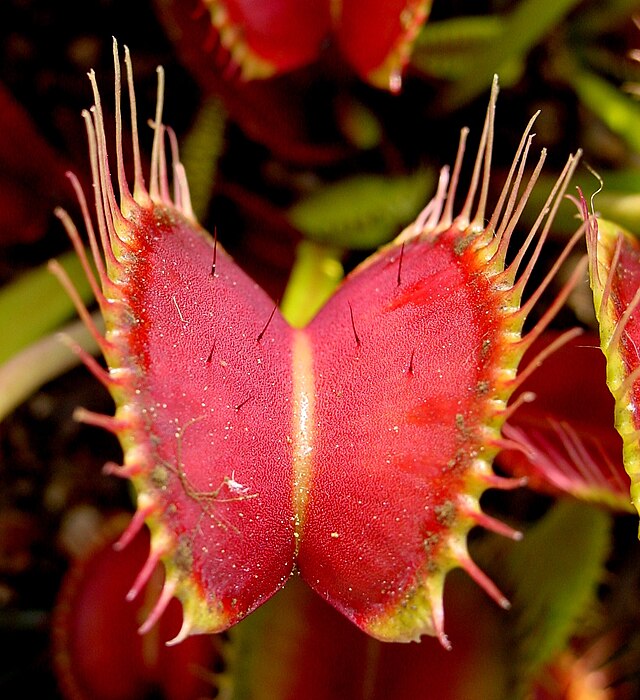
The leaf opens like a clam shell, with trigger hairs on the inner surface. When the trigger hairs are stimulated two or more times in quick succession, the leaf snaps shut at high speed. The tooth-like protrusions along the leaf margins interlock, trapping the insect so it cannot escape.
After closing, the leaf secretes digestive fluid that dissolves the prey, and nutrients are absorbed over several days to two weeks before the leaf reopens. The leaf has a limit to how many times it can digest, and typically wilts after 3 to 5 opening-closing cycles.
False triggers (such as touching with a finger) shorten the leaf's lifespan, so it is best to minimize direct observation.
2. Sticky Trap (Passive Trap)
Representative Species: Sundew (Drosera), Butterwort (Pinguicula)
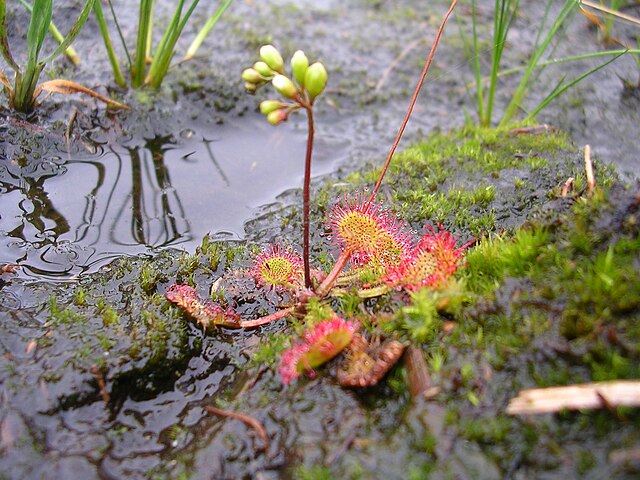
The leaf surface bears glandular hairs that secrete sticky mucus from their tips. When an insect touches the mucus, it becomes trapped and cannot escape. The leaf gradually curls inward, bringing more glandular hairs into contact with the prey and advancing digestion and absorption.
The genus Drosera is the world's largest genus of carnivorous plants, with over 190 known species. They range in size from the small Drosera rotundifolia to the large Drosera gigantea, which exceeds 60 cm.
Butterworts (Pinguicula) have leaves entirely covered with smooth, sticky mucus, and they trap small flying insects and gnats.
3. Pitfall Trap (Passive Trap)
Representative Species: Pitcher Plant (Nepenthes), Sarracenia (Sarracenia), Cephalotus (Cephalotus)
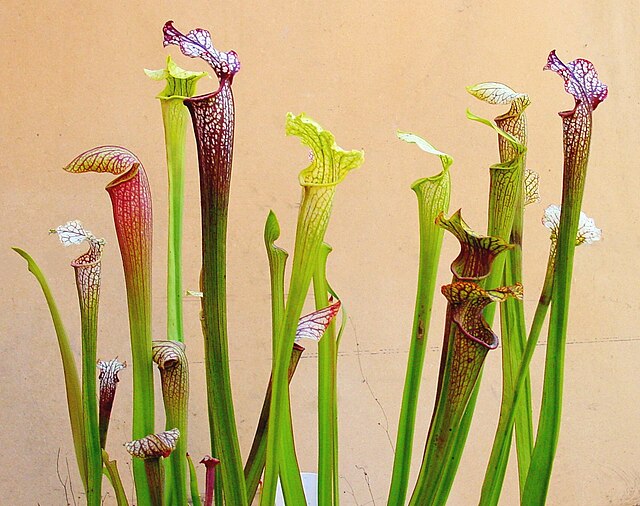
These plants form tube- or urn-shaped insect-catching leaves (pitchers) with digestive fluid inside. Insects and small animals slip on the waxy inner wall and fall into the digestive fluid, where they are dissolved.
- Pitcher Plant (Nepenthes): Native to Southeast Asia to northern Australia. Divided into lowland and highland species, they capture insects ranging from small species to large ants, and some large varieties even capture small rodents or birds.
- Sarracenia (Sarracenia): Native to eastern North America. Characterized by upright tube-shaped leaves with downward-pointing hairs on the inner wall, making it difficult for insects to escape.
- Cephalotus (Cephalotus follicularis): Endemic to southwestern Australia and a monotypic genus. Forms small, squat pitchers.
4. Suction Trap (Active Trap)
Representative Species: Bladderwort (Utricularia)
Small, bladder-like trap sacs are present in water or wet soil. The interior is maintained at negative pressure (near vacuum), and when prey touches a trigger, the door opens instantly and sucks in water and prey. This action occurs in 10 milliseconds or less, making it one of the plant kingdom's fastest movements.
The genus Utricularia is known to comprise about 200 species with diverse habitats spanning aquatic, semi-aquatic, and terrestrial environments. Aquatic bladderworts cultivated in tanks capture bloodworms and microscopic aquatic organisms.
5. Flicking Trap (Active Trap)
Representative Species: Waterwheel Plant (Aldrovanda vesiculosa)
An aquatic carnivorous plant closely related to the Venus flytrap. In water, it captures small aquatic insects and crustaceans with clamshell-like closing leaves. The world contains only one genus and one species, and in Japan it is designated as Critically Endangered.
The leaf closes faster than the Venus flytrap, at approximately 0.02 seconds. It is characterized by lacking roots and drifting through the water as it grows.
Insect-Catching Mechanisms and Cultivation Tips
Understanding the differences between these mechanisms makes cultivation precautions easier to grasp.
- Active Traps (Venus Flytrap, Bladderwort, Waterwheel Plant): Repeatedly firing the trap without success weakens the plant through digestive costs. Avoid unnecessary stimulation.
- Passive Traps (Sticky and Pitfall Types): Essentially wait for insects on their own. Place them outdoors in an insect-rich environment, or indoors you can supplement with feeding approximately once a month.
The Evolutionary Background of Insect-Catching Mechanisms
Carnivorous plants evolved to catch insects as an adaptation to nutrient-poor environments. Most carnivorous plants grow naturally in peatlands and sandy areas where nitrogen and phosphorus are extremely scarce. While ordinary plants absorb nutrients through their roots, carnivorous plants compensate for deficient nitrogen and phosphorus by capturing and digesting insects.
Interestingly, carnivorous plants still carry out photosynthesis normally. Insect capture is an "additional means" of nutrient acquisition, and photosynthesis remains the primary energy source. Therefore, in carnivorous plant cultivation, ensuring adequate light is even more important than feeding insects.
Cultivation Tips by Trap Type
Snap Trap (Venus Flytrap): The trap leaves have a limited number of opening-closing cycles, so avoid touching and playing with them. Each leaf loses function after approximately 3 to 5 opening-closing cycles.
Pitfall Trap (Sarracenia, Nepenthes): Because water collects inside the pitcher, exposure to heavy rain can dilute the digestive fluid. Eaves or shelter are suitable for outdoor cultivation.
Sticky Trap (Sundew): Mucus secretion requires adequate sunlight and humidity. Insufficient light reduces mucus production and lowers insect-capturing ability.
Suction Trap (Waterwheel Plant, Bladderwort): These capture microscopic aquatic life in water. Water quality management is key to cultivation, and soft water with minimal minerals is ideal.
Common Mistakes and Solutions
Mistake 1: Stimulating Trap Leaves by Touching Them Venus flytrap leaves consume considerable energy when opening and closing, and the number of cycles is limited. Closing them for play shortens that leaf's lifespan. Observe without moving the plant.
Mistake 2: Artificially Feeding Insects Too Often Inserting large insects that cannot be fully digested causes leaves to blacken and rot. If feeding, keep insect size to one-third of the leaf or less, and for outdoor plants, feeding is unnecessary altogether.
Mistake 3: Interpreting Lack of Insect Capture as Poor Health It is natural for plants not to capture insects in insect-free environments and is unrelated to plant health. Judge plant condition by whether new leaves are emerging, not by whether insects have been captured.
Shop with Confidence at GrowerDirect
It is most reliable to purchase species with rare insect-catching mechanisms from specialist growers. GrowerDirect features growers experienced in cultivating various carnivorous plants, and you can discuss cultivation before purchase.