How to Grow Adenium and Tips for Blooming
Learn the basics of Adenium (Desert Rose) care and tips for sunlight, fertilizer, and pruning to encourage blooms.
Key Takeaways
Learn the basics of Adenium (Desert Rose) care and tips for sunlight, fertilizer, and pruning to encourage blooms.
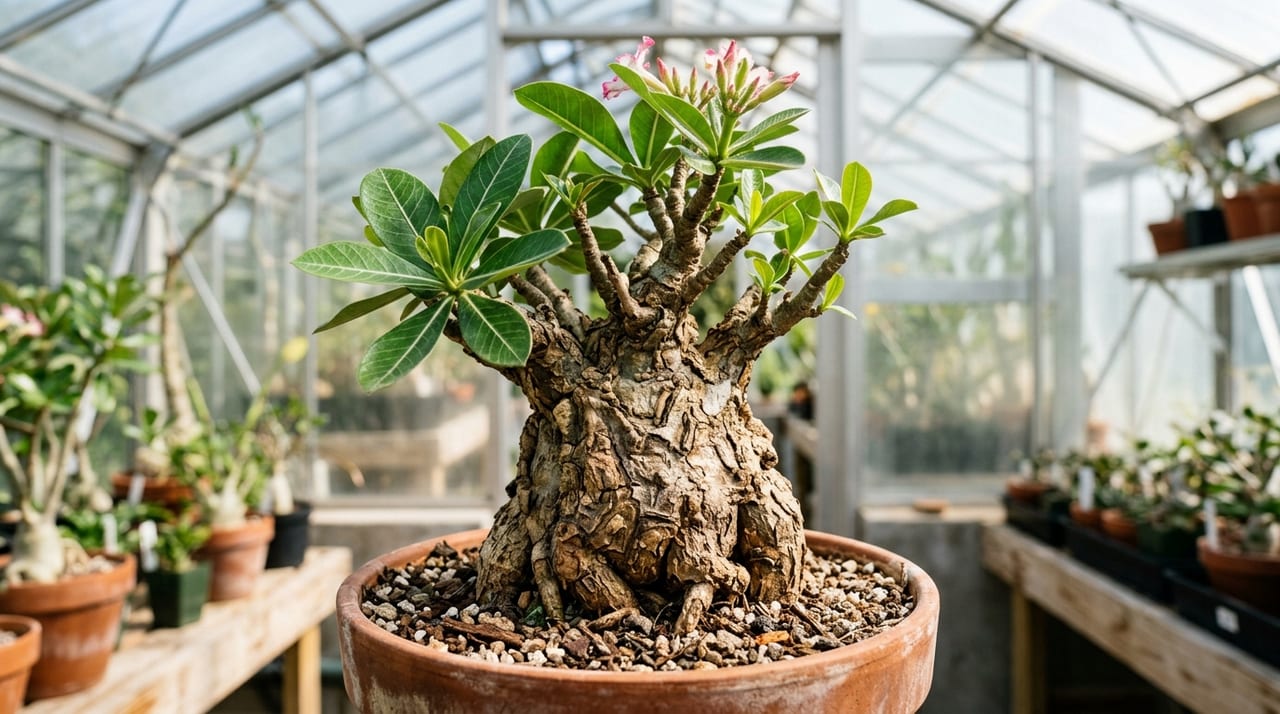
Adenium (Adenium), also known as the Desert Rose, is a caudex plant featuring a plump trunk and vibrant pink or red flowers as its main attraction. Among caudex plants, it is relatively easy to grow, and with proper care, you can enjoy beautiful flowers even in Japan's climate.
Basic Information about Adenium
Adenium is a plant in the Apocynaceae family, native to East Africa through the Arabian Peninsula. The most commonly available species is Adenium obesum (A. obesum), with numerous hybrid varieties also in circulation.
Characteristics
- The plump, swollen trunk (caudex) is a highly ornamental feature
- Flowers have five petals and measure approximately 5–8 cm in diameter, with diverse colors including pink, red, white, and bicolors depending on variety
- With proper care, it can flower several times per year
- The sap is toxic, so wear gloves when pruning
Basic Care
Sunlight Adenium loves sunlight. Place it where it receives at least 6 hours of direct sunlight daily. Insufficient light is the primary reason blooms won't appear. Spring through fall, an outdoor location in bright sunshine is ideal.
Watering During the growing season (May–October), water thoroughly when the soil dries. Since Adenium stores water in its succulent trunk, lean toward drier conditions rather than wetness. Avoid letting water accumulate in saucers.
Temperature The ideal growing temperature is a warm 25–35°C. It is frost-sensitive; move it indoors when nighttime temperatures drop below 15°C. Sustained temperatures below 10°C cause leaf drop, and exposure below 5°C risks frost damage.
Soil Use well-draining soil. A recommended blend is red pumice (small grain) 4 parts, volcanic ash 3 parts, perlite 2 parts, and charcoal 1 part. Commercial succulent and cactus soil is also acceptable.
Tips for Encouraging Blooms
To enjoy Adenium blooms, several key points must be addressed.
Ample Sunlight is Critical This is the most important condition for flowering. Without sufficient light, the plant produces foliage but no flower buds. Extended direct sun outdoors is ideal.
Phosphorus and Potassium-Rich Fertilizer Excess nitrogen promotes only leaf growth and reduces flowering. During the growing season (spring–fall), apply phosphorus and potassium-rich fertilizer (such as bloom-promoting liquid fertilizer) approximately twice monthly.
Moderate Water Stress Drier conditions encourage better flowering than consistently moist soil. Maintain a watering cycle where you allow soil to dry thoroughly before watering again.
Winter Dormancy and Spring Awakening Allow proper winter dormancy; as spring temperatures and daylight increase, flower buds form more readily. Manage winter with minimal water; resuming watering in spring encourages bud emergence.
Pruning Pruning encourages branching, and more branches yield more flowers. Cut back overgrown stems before spring growth begins (March–April); multiple shoots will emerge below each cut. Apply fungicide to cut surfaces.
Winter Care
Timing for Indoor Relocation Switch to indoor care around October when nighttime temperatures fall below 15°C.
Leaf Drop and Dormancy As temperatures drop, Adenium drops leaves and enters dormancy—a normal response requiring no concern.
Minimal Watering After leaf drop, nearly stop watering. Monthly, lightly mist on warm days if needed. If the trunk shrivels excessively, give a small amount of water.
Warmth Keep it in a warm indoor spot (15°C or above). Window sills cool at night, so move it toward the room's center before bed for safety.
Repotting
Repot every 2–3 years in spring (April–May). Gently break up the root ball, trim old roots, and plant in fresh soil. Hold off watering for about a week after repotting.
Enjoying Varieties
Adenium has numerous hybrid varieties with diverse flower colors and forms. Single, double, bicolor, and picotee blooms make it highly collectible. Thailand leads in breeding, with new varieties appearing annually. Popular as a blooming plant, Adenium ranks high on the popular caudex plant ranking.
Common Beginner Mistakes and Solutions
Mistake 1: Pruning When Flower Buds Are Emerging Adenium's flower buds form at the tips of newly grown shoots. Pruning to shape the tree before bloom will remove all flowers for the year. Finish pruning by early spring after dormancy ends; once buds appear, leave shoot tips untouched.
Mistake 2: Excessive Nitrogen in Fertilizer This is the classic "all foliage, no flowers" scenario. Switching to phosphorus-rich liquid fertilizer during the growing season dramatically improves flowering. Avoid leaving slow-release fertilizer in place; using liquid fertilizer during bloom season offers better control.
Mistake 3: Winter Drought Delays Spring Growth Inducing dormancy through leaf drop is correct, but months of complete drying kills fine roots and delays spring growth. If you can maintain temperatures above 10°C, water the base lightly (about half a cup) once monthly to keep roots alive; this advances flowering.
Find Adenium on GrowerDirect
On GrowerDirect, you can purchase proven-blooming Adenium directly from specialist growers. Tell them your color and shape preferences, and they'll recommend the perfect specimen. You can also ask growers directly for blooming care tips—a great advantage.