Display and Appreciation Guide for Caudex Plants | How Display Methods Bring Out Their Changing Appeal
An explanation of display methods for more beautifully showcasing caudex plants. Introduces pot selection, display stones, shelving composition, and lighting techniques.
Key Takeaways
An explanation of display methods for more beautifully showcasing caudex plants. Introduces pot selection, display stones, shelving composition, and lighting techniques.
Related Species
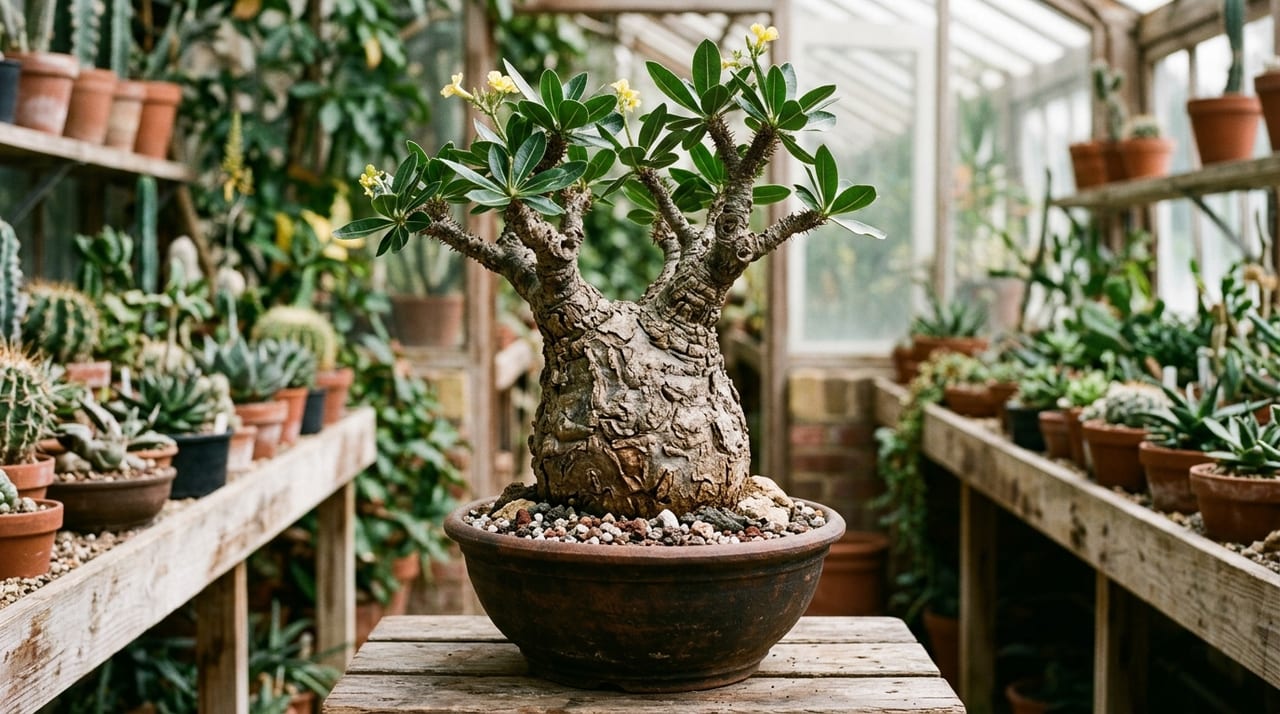
Caudex plants are plants that possess sculptural presence in themselves. However, depending on how you display them, their appeal can be drawn out many times over. Conversely, even a wonderful specimen left in a plastic nursery pot is like treasure going to waste. Here we explain display techniques for showing caudex plants in a more beautiful and appealing way.
Pot Selection Determines 90% of Appeal
Pot selection is the most important factor in displaying caudex plants.
- Japanese Pots Traditional Japanese bonsai pots and artist-made pots pair exceptionally well with caudex plants. The subtle, earthy texture of Shigaraki or Tokoname ware brings out the wild character of caudex plants. Pairing round caudex with round pots and spreading specimens with oval pots—selecting based on the plant's form creates a cohesive look.
- The World of Artist Pots In recent years, more ceramic artists have begun creating pots specifically for caudex plants. One-of-a-kind artist pots offer the pleasure of selecting based on each plant's personality, and matching pot to plant creates depth to your collection. Popular artists' pots sometimes command premium prices.
- Size Balance Select pots that are neither too large nor too small for the plant. Generally, a pot with an interior diameter of roughly 1.3 to 1.5 times the diameter of the caudex balances aesthetics with care. Pots that are too deep make the caudex appear sunken, so choosing a slightly shallower pot is key to displaying the caudex beautifully.
Display Stone and Surface Treatment Techniques
After the pot, what most influences the impression is surface treatment of the soil.
| Display Stone | Characteristics |
|---|---|
| Black Fuji Sand | The most popular; works with any specimen. |
| White Display Stone | Creates a bright impression and photographs well. |
| Red Ball Soil or Kiryu Sand | Creates a natural atmosphere. |
Selecting display stone that forms a complementary color relationship with the plant's color makes the specimen stand out through contrast.
Laying Tips While it is standard to lay display stones uniformly, you can also intentionally mix large and small stones to create a natural landscape. Placing fine particles around the base of the caudex and larger particles along the pot's rim creates good balance.
Using Moss Laying mountain moss instead of display stone creates a Japanese bonsai-like atmosphere. However, since moss retains moisture, you will need to adjust watering frequency. It may not suit drought-loving caudex plants, so decide based on your variety.
Shelving and Arrangement Composition Techniques
When displaying multiple specimens as a collection, arrangement is important.
- Create Height Variation Rather than lining up all pots at the same height, use shelves or stands to create height differences. Placing large specimens low and small ones high makes the entire display easier to view.
- Leave Negative Space By leaving appropriate spacing between pots, each individual specimen's presence stands out. Packing them tightly creates a cluttered impression and individual appeal gets lost.
- Grouping Gathering specimens of the same genus or placing similarly-sized plants nearby creates a cohesive display. One approach is to divide into sections—a Pachypodium corner, an Adenium corner, and so on.
- Background Considerations White walls or concrete walls make the caudex plant's form stand out. Using wooden boards or brick as a background creates a natural atmosphere.
Bring Out Appeal with Lighting
How you use lighting dramatically changes how caudex plants appear.
- Spotlights Shining spotlights on your favorite specimens creates a museum-like effect. Overhead spots create shadows in the stem's texture, emphasizing three-dimensionality. Warm-colored lights show the caudex plant's texture beautifully.
- Indirect Lighting Positioning indirect lighting beneath or behind shelves creates a dreamlike atmosphere with silhouettes emerging. It is popular as an effect to enjoy during relaxing nighttime hours.
- Dual-Purpose Grow LED For indoor care, grow LED light can also serve as appreciation lighting. Full-spectrum LEDs have high color rendering and illuminate plants with colors close to natural light.
Photography Techniques for Photogenic Display
Photography tips for recording and sharing your collection.
- Photograph in Natural Light Natural light captures the caudex plant's texture most beautifully. Soft morning light is ideal; avoid direct sunlight as it creates harsh shadows. Overcast days also work well with flat light that photographs the subject uniformly.
- Keep Background Simple Using white paper or gray fabric as a background makes the plant's form stand out. Be careful that everyday objects don't appear in the background.
- Photograph at Eye Level Caudex plants are most appealing viewed from the side. Rather than shooting down from above, positioning the camera at the same height as the plant creates a photograph that conveys the stem's impact.
On GrowerDirect, you can purchase photogenic, quality specimens directly from specialist growers. Because growers themselves sometimes sell specimens potted in their chosen pots, the appeal of GrowerDirect is that you can fully enjoy both the pot and plant coordination.