LED Cultivation Guide for Caudex Plants | Growing Healthily Indoors with Light Intensity and Environmental Settings
Complete guide to indoor cultivation of caudex plants using LED lights. Explains the necessary light intensity (PPFD) targets, how to choose LED lights, setting illumination duration, and creating an indoor cultivation environment.
Key Takeaways
Complete guide to indoor cultivation of caudex plants using LED lights. Explains the necessary light intensity (PPFD) targets, how to choose LED lights, setting illumination duration, and creating an indoor cultivation environment.
Related Species
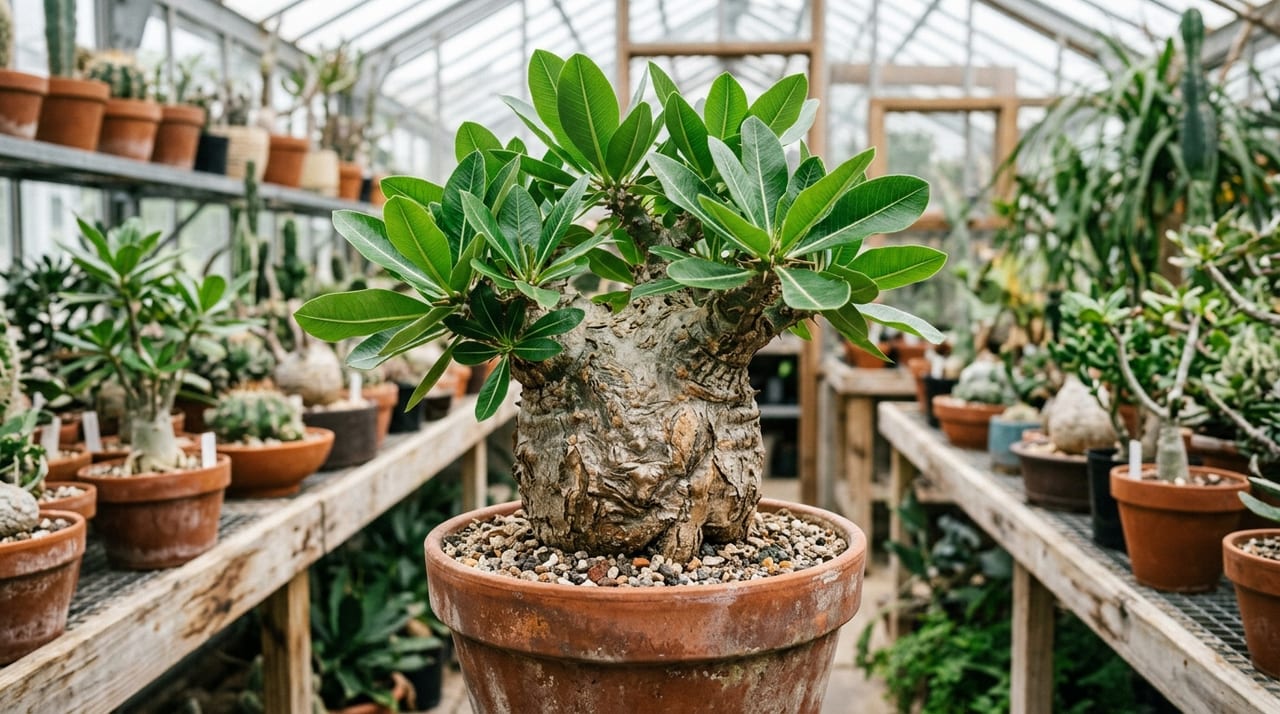
More and more plant enthusiasts are cultivating caudex plants indoors using LED lights. Even without a location with good natural sunlight, you can grow healthy caudex plants with the right LED light. Here, we explain the knowledge necessary for LED cultivation and practical setup methods.
Why LED Cultivation is Getting Attention
- Environmental constraints: Growing is possible in apartments or north-facing rooms
- Stable light environment: Provides consistent light intensity without being affected by weather or seasons
- Compatibility with temperature management: Can secure light while avoiding cold air near windows in winter
- Prevention of etiolation: By ensuring sufficient light intensity, plants grow into compact, beautiful specimens
- Collection expansion: Effective use of indoor space allows management of many plants
Basic Knowledge of Light Needed for Plant Growth
PPFD (Photosynthetic Photon Flux Density) A unit indicating the amount of light that plants can utilize for photosynthesis, expressed in μmol/m²/s. The PPFD targets necessary for caudex plants are as follows:
- Minimum maintenance: 200–300 μmol/m²/s
- Healthy growth: 400–600 μmol/m²/s
- Optimal growth: 600–800 μmol/m²/s
Species like Pachypodium and Adenium that prefer strong light should ideally reach 600 μmol/m²/s or higher.
Color temperature and spectrum
- Red light (620–700 nm) and blue light (400–500 nm) are especially important for plant cultivation
- Full-spectrum LED is the most user-friendly
- A white color temperature of 4000–6500 K is easy to work with and allows for easy plant condition checking
Choosing LED Lights
Characteristics by type
- Panel type: Provides uniform illumination over a wide area. Best for mounting on top of shelves
- Bar type (linear): Slim shape, easy to install between shelf levels
- Spot type (bulb type): E26 base for easy introduction. Ideal for pinpoint illumination
Checklist when choosing
- Are actual PPFD values disclosed? (Values at different illumination distances are best)
- Efficiency of power consumption and PPFD (PPE: μmol/J)
- Does the illumination area match your cultivation space?
- Heat generation and fan noise level
- Presence or absence of dimming function
Recommended configurations by budget
- Beginner (¥10,000–20,000): 2–3 commercial plant-growing LED bulbs. Suitable for small collections
- Intermediate (¥30,000–50,000): One panel-type LED. Sufficient for one shelf level of cultivation
- Advanced (¥50,000+): High-efficiency panel LED + dimming controller. Professional operation with multiple shelf levels
Setting Illumination Duration
Illumination duration targets for LED cultivation of caudex plants:
- Growth period: 12–14 hours/day
- Pre-dormancy period: Gradually shorten to 8–10 hours/day
- Dormancy period: Illumination not necessary (though a weak light for management purposes is acceptable)
Using a timer to automate on/off at the same time daily is standard. Irregular illumination disrupts the plant's circadian rhythm, leading to poor growth and dormancy cycle disruption.
Indoor Cultivation Environmental Setup
Success depends on setting up the entire indoor environment, not just LED light.
Air circulation
- Keep air moving constantly with a circulator fan or USB fan
- In a windless environment, the risk of mold and root rot increases
- Rather than directing wind directly at the plants, aim for circulating air throughout the room
Temperature management
- During growth period, 25–30°C daytime and 18–22°C nighttime is ideal
- A moderate day-night temperature difference helps develop compact caudex plants
- Placing a heating mat under pots efficiently raises root-zone temperature
Humidity management
- Caudex plants dislike excessive moisture, but extreme dryness is also undesirable
- Room humidity of 40–60% is the target
- Adjust use of humidifiers and dehumidifiers by season
Common Failures in LED Cultivation and Solutions
Leaf burn If the LED is too close or light intensity too strong, leaf burn occurs. When introducing new lights, start at a distance from the plant and gradually bring them closer over 1–2 weeks.
Etiolation Insufficient light causes the stem to become leggy and etiolated. Measure actual light intensity with a PPFD meter and, if insufficient, adjust illumination distance or add additional lights.
Root rot Indoor soil dries more slowly than outdoors. Take longer intervals between waterings and ensure good air circulation to promote soil drying.
Circadian rhythm disruption Irregular light on/off creates plant stress. Manage strictly with a timer. Ensuring complete darkness at night is also important.
Practical Shelf Setup for LED Cultivation
A metal rack (steel rack) setup is the standard for efficient LED cultivation.
Basic configuration
- Metal rack (approximately 90 cm wide × 45 cm deep × 180 cm tall)
- Panel-type or bar-type LED mounted on each shelf
- Shelf height adjusted to plant height + distance from LED (30–50 cm)
- Heating mat placed on the bottom shelf to secure root-zone temperature
Electricity cost estimate
- One 100 W LED panel used 12 hours/day: approximately ¥1,000–1,500/month
- Four panels used on 4-shelf setup: approximately ¥4,000–6,000/month
- Also account for electricity from circulator fans and heating mats
Cost-benefit LED cultivation requires initial investment, but maintaining plants in a stable growing environment keeps them in good condition, greatly reducing the risk of losing expensive plants. When thought of as "insurance" for safely managing expensive caudex plants, it is a worthwhile investment.
Practical Techniques to Transform Plants Through Improved Light Environment
Providing proper light environment is directly connected to plant health and beauty. Optimize your light environment with the following practical techniques.
Measuring and recording light intensity allows you to objectively determine whether the current environment is sufficient for your plants. Using a smartphone illuminance meter app enables simple measurement. Since light intensity by windows varies greatly with weather and season, measure multiple times to grasp average values.
Using reflective boards is an easy and effective way to increase light intensity. By placing a white wall or aluminum sheet behind plants, you can reflect light to provide even illumination to the whole plant. Particularly effective in window cultivation where light comes from only one direction.
Rotating pots is a basic technique to prevent etiolation from uneven light. By rotating pots 90–180 degrees once or twice weekly, plants receive even light from all directions and grow into well-balanced specimens.
Switching light management by season is also important. In summer, when sunlight is intense, shading may be necessary, but in winter, with shorter daylight hours and weaker light intensity, remove shading to ensure maximum light. Also, window glass dirt reduces light intensity, so clean regularly.
Finding Indoor-Suitable Plants on GrowerDirect
On GrowerDirect, you can purchase caudex plants directly from growers with rich experience in LED cultivation. You can also receive specific advice on management methods in indoor environments and LED setup. Begin exploring the world of indoor cultivation free from natural light conditions with GrowerDirect.