Summer Cultivation Management for Caudex Plants | Summer Heat Care Guide
Most caudex plants are summer-growers and enter their growth period; however, excessive heat and poor ventilation cause root rot. This guide explains the key summer management points: adjusting watering frequency, providing shade, and ensuring air circulation.
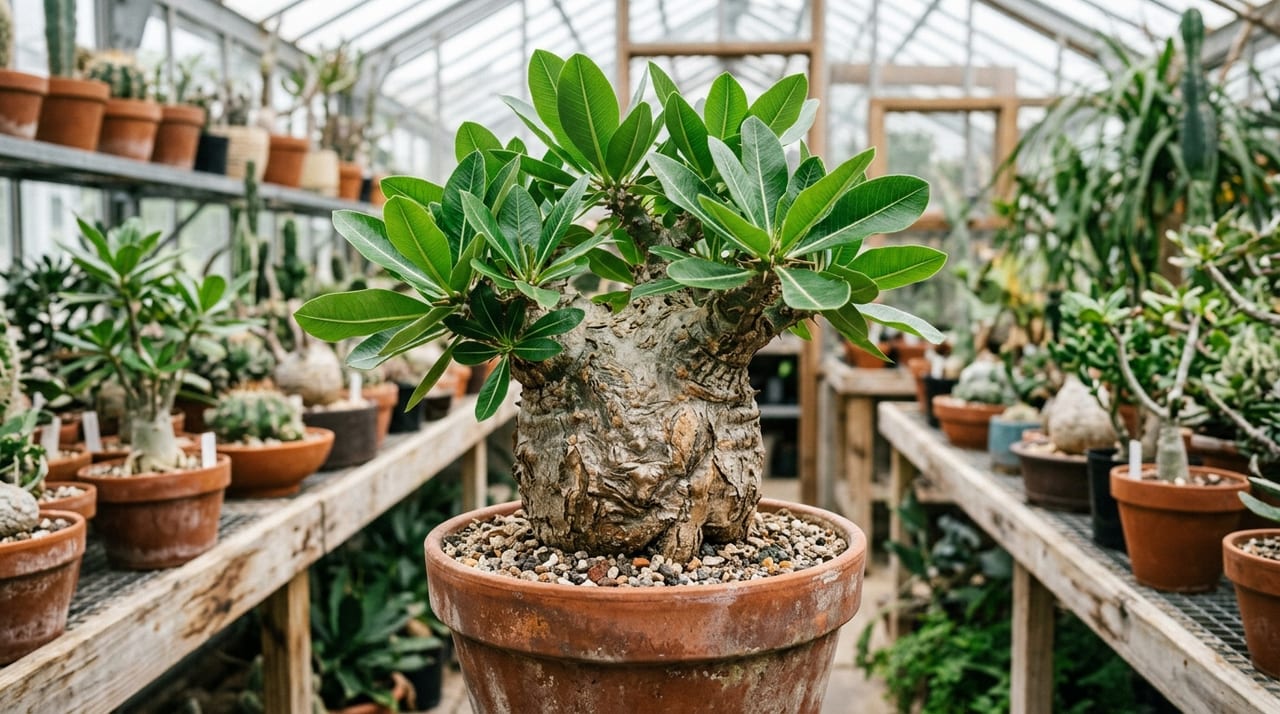
Key Takeaways
Most caudex plants are summer-growers and enter their growth period; however, excessive heat and poor ventilation cause root rot. This guide explains the key summer management points: adjusting watering frequency, providing shade, and ensuring air circulation.
Related Species
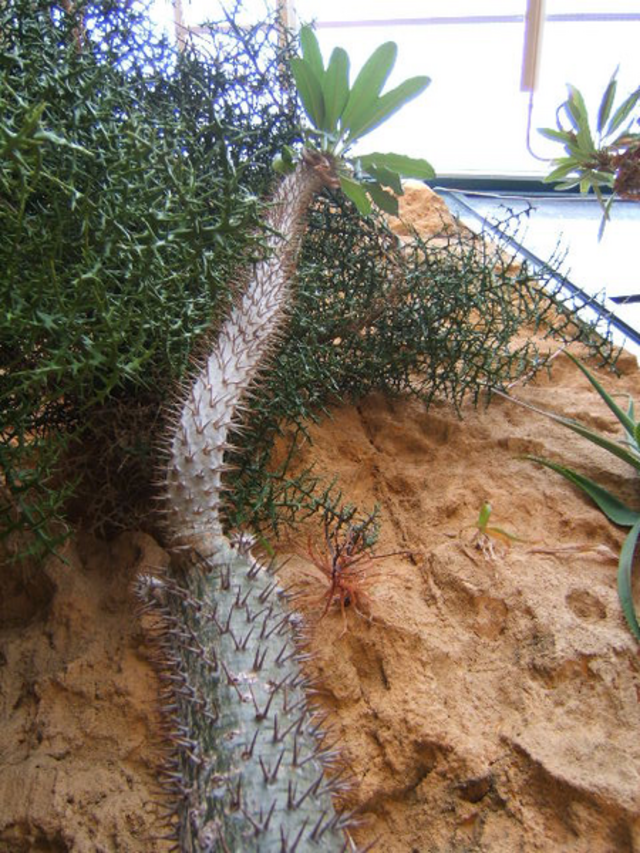
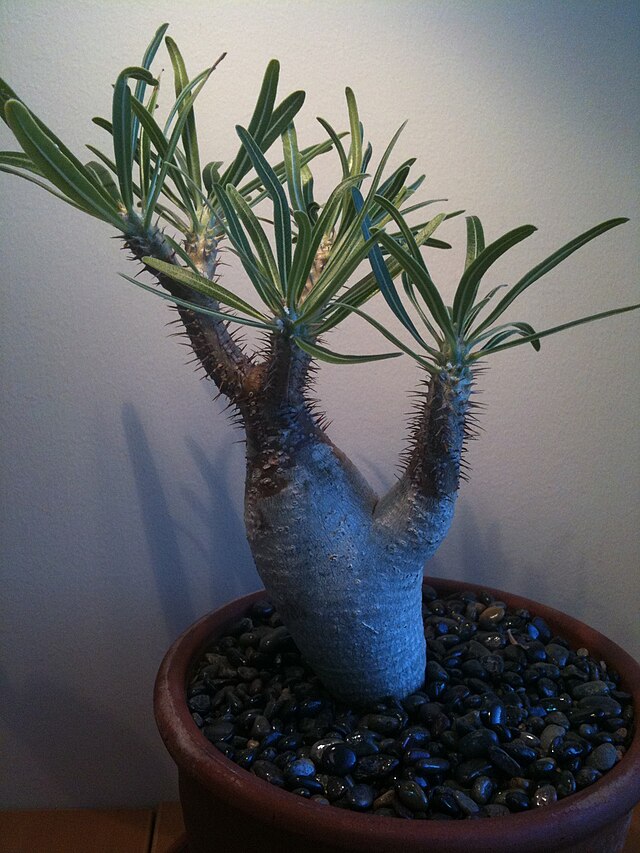
Maximizing the Growth Period of Summer-Growing Caudex Plants
Many caudex plants, such as Pachypodium, Adenium, and Operculicarya, are summer-growers. They grow actively from spring through autumn, and summer in particular is the year's most critical growth period. How well you can develop the plant during this time directly affects next year's flower count, the thickness of the caudex, and the plant's vigor for winter survival.
To thicken the caudex in summer, three essential conditions must be in place. Conversely, if any one is missing, growth will slow and the plant risks becoming weak by autumn.
- Abundant light
- Appropriate watering
- Moderate fertilization (apply liquid fertilizer approximately once every two weeks; for slow-release fertilizer, the standard practice is to mix it into the soil during spring repotting or place it as top dressing at the pot's edge)
During the growth period, actively use liquid fertilizer and slow-release fertilizer to ensure the plant never lacks the nutrients it needs. Plants managed carefully through summer will have a well-developed caudex even when entering winter dormancy, and will awaken earlier in spring. It is no exaggeration to say that the overall success of cultivation through the seasons depends on how the plant is cared for during this summer.
Watering Frequency and Timing
Summer, being the growth period, is a time to water generously. Once the soil surface has dried, water thoroughly until water flows clearly from the pot's drainage holes. However, this assumes that you are using soil and a pot with excellent drainage. Watering heavily in soil with high water retention will cause root rot.
The basic principle is to water late afternoon onward. Watering during midday heat causes the pot interior to become like a steam bath, potentially damaging the roots. By watering from late afternoon into the evening, the roots can absorb water more readily during the cool nighttime hours.
It is important to note that watering preferences vary by species. Being mindful of a variety's native climate will help inform your watering decisions.
| Variety | Watering Tendency |
|---|---|
| Pachypodium gracilipes and Ebisu Warai (Madagascar natives) | Prefer considerable water during the growth period |
| Adenium | Tolerate being somewhat dry; actually tend to dislike excessive moisture |
A simple and reliable method is to lift the pot—if it feels light, it's time to water.
Shading and Light Management
Caudex plants are fundamentally sun-loving plants. Place them where they receive ample light, and let them soak up plenty of sunshine. Caudex development is said to be proportional to light exposure; insufficient light makes etiolation—thin, elongated growth—likely. Etiolation is a classic sign of insufficient light, so consider relocating the plant or adjusting the shading level.
However, for the intense midday sun of peak summer, applying 20–30% shade cloth offers peace of mind. Particularly for plants immediately after repotting or imported unrooted plants, manage them in bright indirect light to allow their roots to recover from damage. Sudden exposure to strong light can cause leaf scorch and stress the plant.
A practical approach to light management is to adjust by time of day as follows.
- Morning: provide steady sunlight with gentle intensity (promoting photosynthesis)
- Afternoon: shade only the intense western sun (avoiding damage from harsh afternoon rays)
Using shade cloth (cold-weather netting) allows you to adjust the shading level flexibly.
Preventing Rot and Basic Soil and Pot Selection
Japan's summers are hot and humid, making root rot the greatest risk for caudex plants. Since most originate in arid climates, Japan's humid rainy season and summer represent a drastically different environment. The key to prevention is air circulation. Use fans or air circulators to keep air constantly moving, and prevent moisture from accumulating around the pots. Maintaining adequate spacing between plants and avoiding crowding is equally important.
The soil mix and pot material also directly impact rot prevention.
| Material | Characteristics | Handling |
|---|---|---|
| Red loam, pumice, volcanic soil | Basic soil emphasizing drainage | Use these as the primary components |
| Leaf mold and other organic matter | High water retention, prone to rot | Minimize the proportion or avoid entirely |
| Terracotta pot | High breathability, resistant to root rot | A proven choice that works well with caudex plants |
| Plastic pot | High water retention | Adjust watering frequency to be slightly less frequent |
Place drainage stones firmly in the pot's base to ensure a clear drainage path. Also, avoid leaving plants exposed to rain; manage them in sheltered locations or under a roof for safety. During the rainy season especially, prolonged rain easily leads to waterlogging, so use rain protection as needed.
Repotting and Rooting Management in Summer
Summer is also a suitable time for repotting caudex plants. Plants with root-bound conditions have reduced water absorption efficiency and slower growth, making early summer (June to July), the beginning of the growth period, the ideal time for repotting.
Summer is also the season when rooting management of imported unrooted plants succeeds most readily. Higher temperatures promote root generation more easily, and rooting speed increases.
| Task | Ideal Timing | Method |
|---|---|---|
| Repotting | June to July, early in the growth period | After repotting, withhold water for 2–3 days to allow damaged roots to dry and form callus, then resume watering |
| Rooting unrooted plants | Warm summer months | Place in bright indirect light, use water-tray or bottom watering while waiting patiently for white roots to appear |
Once rooting is confirmed, gradually acclimate the plant to sunlight while transitioning to regular care.
GrowerDirect's Safe and Reliable System
GrowerDirect is a platform where you can purchase caudex plants and other living plants directly from specialized growers.
- Since you purchase directly from the grower—bypassing distributors—you can verify the plant's condition and care history in detail before bringing it home
- You can ask growers whether a plant has been managed through rooting and how long it has been grown domestically, so even beginners can start growing caudex plants after understanding the plant's condition
- You can ask growers directly via message about any care questions
As you prepare for the summer growth period of caudex plants, explore GrowerDirect to find plants from trusted growers. Starting with a well-established plant is the first step to enjoying your collection for years to come.