Introduction to Foliage Plant Terrariums: Creating Small Green Worlds in Glass Containers
Learn how to create terrariums by planting foliage plants in glass containers. We introduce the necessary materials, how to choose suitable plants, step-by-step instructions for making them, and daily care tips.
Key Takeaways
Learn how to create terrariums by planting foliage plants in glass containers. We introduce the necessary materials, how to choose suitable plants, step-by-step instructions for making them, and daily care tips.
Related Species
Terrarium is indoor greenery created by planting plants inside a glass container to recreate a small natural landscape. It is popular with those who have limited space to grow plants or who want to enjoy greenery indoors, as it requires relatively little space and simple care. This article explains how to create terrariums using foliage plants.
Types and Characteristics of Terrariums
Terrariums are broadly divided into "closed terrariums" and "open terrariums."
| Item | Closed Terrarium | Open Terrarium |
|---|---|---|
| Container | Sealed container with lid | Container without lid |
| Characteristics | Creates a small ecosystem with circulating moisture inside | Good ventilation |
| Watering Frequency | Extremely infrequent (approximately once every few weeks to months) | More frequent than closed terrariums |
| Suitable Plants | Moisture-loving plants | Drought-tolerant plants such as succulents and air plants |
| Other | Condensation on the inside of the lid is normal | Low risk of root rot from excessive moisture |
Closed terrariums are recommended for beginners. Once the environment is stable, they require almost no effort, and since moisture circulates within the container, management failures are rare. Glass containers are also beautiful as decor, and simply placing them on a desk or shelf brings moisture and beauty to the space.
Plants Suitable for Terrariums
Plants suitable for closed terrariums are those that prefer high humidity, are small, and grow slowly.
- Fittonia (Nerve Plant) is a small plant with beautiful red or white leaf veins and is a classic choice for terrariums. It pairs excellently with sealed containers as it prefers high humidity.
- Selaginella (a type of spikemoss) has a delicate fern-like appearance and forms a green carpet.
- Pilea glauca has charming small round leaves and grows slowly, making it unlikely to disrupt the layout.
- Mosses such as hair cap moss and button moss are essential as ground cover to blanket the ground.
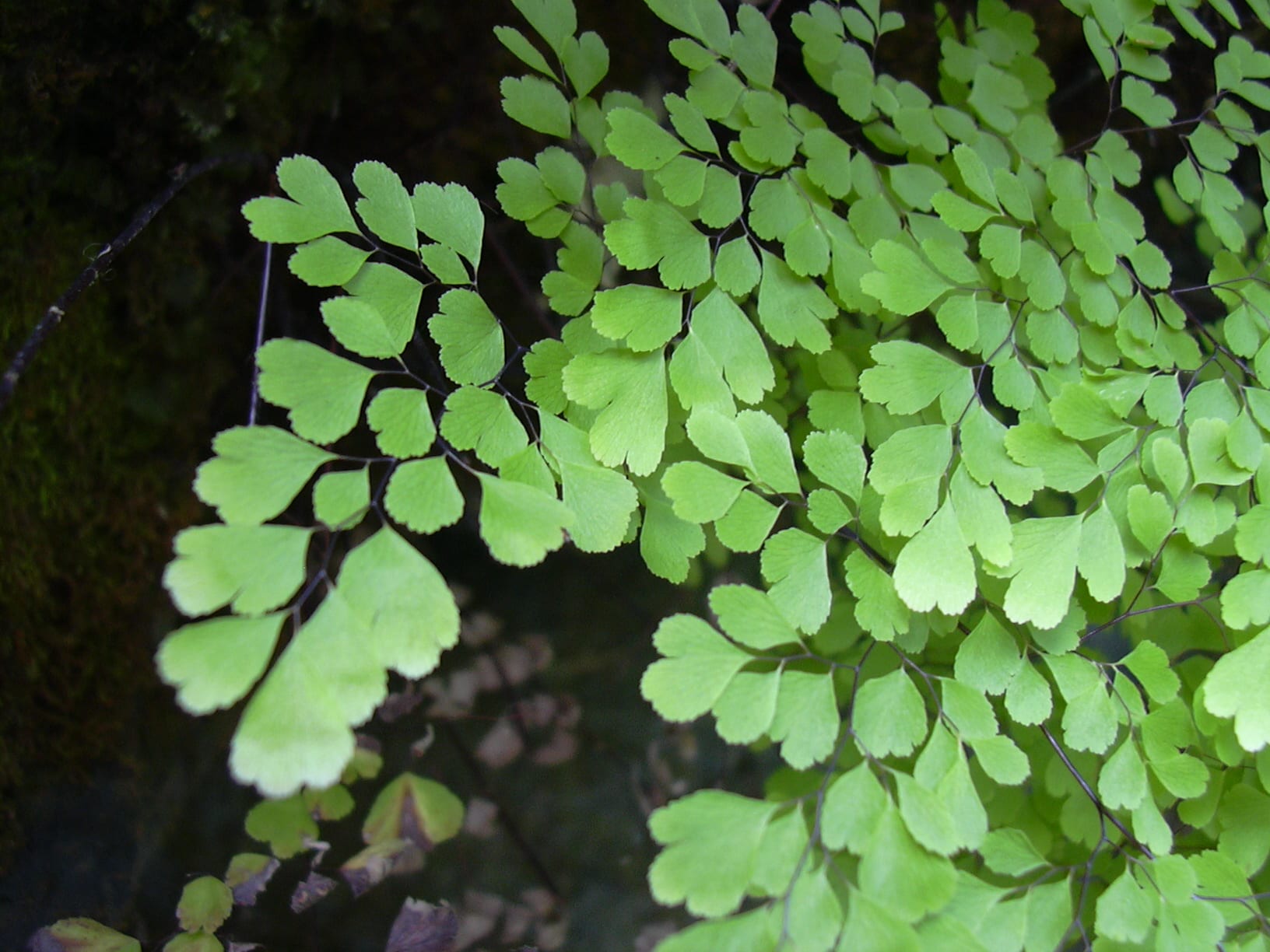
- Small ferns (such as Pteris and small varieties of Adiantum) also prefer humidity and add a natural atmosphere to the terrarium.
Avoid fast-growing plants or plants that become large, as they will quickly fill the container. Succulents and cacti will rot at the roots in high-humidity closed terrariums, so use them in open terrariums instead.
How to Make a Terrarium
The required materials are as follows.
- Glass container
- Pumice or hydroton (for the drainage layer)
- Activated charcoal (for the purification layer)
- Sphagnum moss or netting (for the separation layer)
- Terrarium soil or mixed soil
- Plants
- Decorative stones and driftwood
- Tweezers
- Spray bottle
The steps for making it are as follows.
- Spread 2–3 cm of pumice on the bottom of the glass container to create a drainage layer. Excess water collects here, preventing root rot.
- Spread a thin layer of activated charcoal to purify the water and prevent odors.
- Spread a thin layer of sphagnum moss on top to prevent soil from falling into the drainage layer.
- Add 3–5 cm of soil and create topography. Making the back higher and the front lower creates a sense of depth.
- Plant the plants with tweezers and arrange stones and driftwood.
- Finally, mist the entire setup with water, put on the lid, and you're done. If using moss, place it last to cover the soil surface.
Daily Care and Troubleshooting
Daily care of closed terrariums is very simple. Place it in a bright location away from direct sunlight, and maintain a state where there is moderate condensation on the inside of the lid. If there is no condensation at all, it is a sign of insufficient moisture, so add a small amount of water with a spray bottle. Conversely, if there is too much condensation and the inside cannot be seen, open the lid for a few hours to ventilate. Watering is sufficient once every few weeks to months, depending on the condensation state. If plants grow too tall, trim them lightly with scissors and reshape them. Remove trimmed parts with tweezers, as they may rot if left alone. A common problem is mold growth. It is caused by excessive moisture or poor ventilation; if found, remove it with tweezers and open the lid to ventilate. Promptly remove dead leaves and rotted parts, and keeping the container clean is the basis of mold prevention.
Tips for Long-Term Maintenance of Terrariums
To enjoy terrariums in good condition for a long time, both daily care and regular maintenance are necessary.
Moisture management is most important. In sealed terrariums, evaporated water condenses and circulates on the glass surface, so additional watering is almost never necessary. If there is too much condensation on the glass surface, open the lid slightly to adjust the humidity.
Light adjustment should be managed with indirect to weak light to prevent plants inside the terrarium from becoming leggy. Direct sunlight is strictly prohibited as it creates a greenhouse effect through the glass, causing the interior to become very hot.
Pruning and trimming should be done regularly as plants grow. Cut branches and leaves that grow too long and maintain balance within the terrarium. Promptly remove dead plants to prevent mold growth.
Regular reset: Once every six months to a year, perform major maintenance. Replace old plants and refresh soil to revitalize the terrarium's beauty.
Common Mistakes Beginners Make and How to Avoid Them
Mistake 1: Filling the container with plants If you plant densely from the start, air will not circulate as the plants grow, causing them to become steamed. If the finished terrarium looks "a bit sparse," it will be just right after six months.
Mistake 2: Adding water daily to a sealed container In sealed terrariums, water circulates, so watering is almost never necessary. If the interior fog does not clear all day, there is too much water. Fogging only in the morning that clears by afternoon is the standard for the right amount.
Mistake 3: Placing it on a sunny windowsill Glass containers become hot like a greenhouse, causing plants to cook in a short time. Place it in a bright location behind a lace curtain or under a grow light.
Find Terrarium Plants on GrowerDirect
There are many types of small foliage plants suitable for terrariums, but many varieties are difficult to find at regular garden centers. On GrowerDirect, you can purchase from growers who specialize in cultivating small plants and mosses suitable for terrariums, and you can also receive advice on varieties suitable for terrariums. We invite you to experience the joy of creating your own small green world.