Lithops (Living Jewels) Cultivation and Propagation ~ Complete Guide to Seasonal Management and Division Techniques
A succulent plant with a unique form—Lithops. It requires a unique seasonal pattern and advanced soil and moisture management. We'll explain in detail the professional techniques to multiply beautifully, organized by category.
Key Takeaways
A succulent plant with a unique form—Lithops. It requires a unique seasonal pattern and advanced soil and moisture management. We'll explain in detail the professional techniques to multiply beautifully, organized by category.
Related Species
Lithops' True Identity: Looks Like a Jewel, Essence is a Desert Cipher
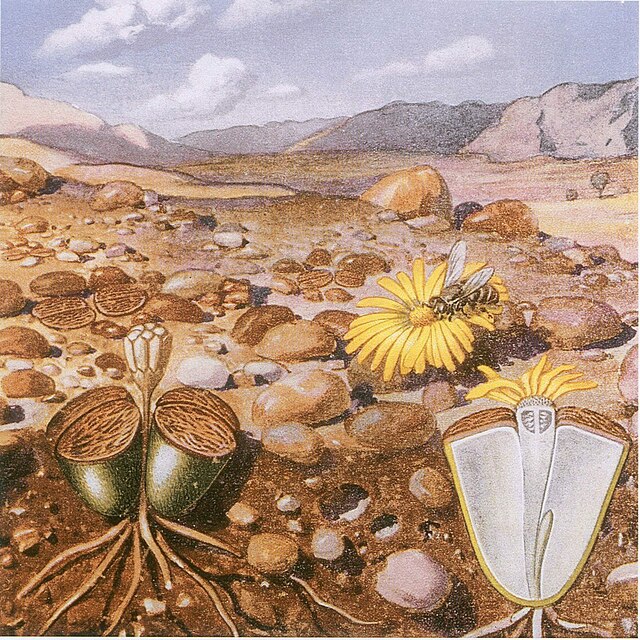
Lithops is an extraordinarily unique succulent plant that evolved in the deserts of South Africa. With its appearance, it is called "living jewels," and has many enthusiasts, but the difficulty of cultivation is high. Among collectors, it is so recognized as a challenging plant that it's called the "ultimate succulent plant."
The greatest characteristic of Lithops is that the seasons are reversed. Cultivation adjusted to Japan's spring, summer, autumn, and winter will surely fail. Lithops lives by "Southern Hemisphere seasons." Without this fundamental understanding, long-term cultivation is impossible.
Understanding Lithops' Annual Cycle
Lithops' life follows a unique annual cycle. If you don't understand this, no matter how many years you grow them, you won't succeed.
September to November (Autumn): Growth Period This period corresponds to Lithops' "spring." New leaves begin to appear, and at the same time, flowers bloom. Watering is about once per week, after the soil has completely dried. Stocks in this period are active, and weekly observation becomes a joy.
December to February (Winter): Flowering and Ripening Period Lithops bloom in winter. White or yellow flowers can be seen around October to January (Hyponex "How to Grow Lithops"). Reduce watering to once or twice a month, and stop completely when the temperature drops below 10°C. This flower is the greatest reward of Lithops cultivation.
March to May (Spring): Molting and Slow Growth Period The most mysterious time. The old leaves wither, and a "molting" occurs where new leaves emerge from the inside. During this time, stop watering completely. Once the temperature rises above 15°C, apply only light misting about once a month. The sight of molting is truly mysterious.
June to August (Summer): Complete Dormancy This is Lithops' "winter." Because the temperature is too high, all activities stop. Watering during this period is a direct cause of rot. Keep it completely dry, in a cool place indoors. Think of summer as a "dormancy agreement" with Lithops.
Soil: "Sand" is the Key
Lithops' soil requires the most drying among succulents.
Recommended Mix:
- Large-grain red soil 40%
- Pumice 30%
- Coarse sand (horticultural sand) 20%
- Activated charcoal 10%
What is important here is the "ratio of coarse sand." Commercially available succulent soil lacks sand, and even slight overwatering causes root rot. Adding sand yourself is essential. Red soil and pumice alone have too high water retention and are unsuitable for Lithops.
Sunlight: The "Duality of Direct Sunlight and Shading"
Lithops is "fond of light in appearance," but in reality, there are the following nuances.
Growth Period (September to November):
- 4 to 5 hours of direct sunlight daily is essential
- Insufficient sunlight during this period hinders blooming the following year
- Morning sun is important; prioritize morning sunlight
Dormancy Period (June to August):
- Direct sunlight is strictly forbidden
- Bright indoor daytime light (reflected light by the window) is sufficient
- Leaf burn risk: direct sunlight in high temperatures creates black spots on the leaves
Secrets of Propagation: Division and Leaf Propagation
Lithops have a habit of naturally dividing (the stock increases to two). Use this skillfully to expand your collection.
Division Process:
- From the second year onward, in spring (March to May), two new leaves may appear from the old leaves (normally just one)
- Do nothing at this point. Division is not yet complete
- When autumn comes and the growth period begins, a "division line" becomes visible from the center of the stock. This is a sign of division!
- The following spring, the old leaves disappear completely, and two new leaves are ready to separate
- Only at this stage can you divide the stock with a knife
Division Tips:
- Always perform in spring (April to May)
- Repot in fresh soil
- Keep completely dry for 2 weeks after division
- After that, observe with light misting only
When division succeeds, the following year the divided stocks each bloom, and you get twice the joy.
Propagation by Leaf Insertion: Lithops are difficult to propagate by leaf insertion, and it is common to propagate by division or seed. For beginners, waiting for division is more reliable. Leaf insertion should be considered a propagation method for advanced users.
Common Failures and Solutions
Failure 1: "The flower doesn't bloom in winter, so I water heavily in spring" The worst failure. Spring is the molting period, and watering at this time causes rot of old leaves and suffocation of new leaves. Watering during molting is absolutely forbidden.
Failure 2: Growing in summer without shading Leaf burn and internal rot occur simultaneously. Particularly dangerous in environments exceeding 30°C. If you accidentally expose it to direct sunlight, the stock turns completely black within a few weeks.
Failure 3: "Purchase a rare-colored variety and water, ignoring the season" The beauty of Lithops' color exists because of "correct seasonal management." If you purchase based only on color, cultivation will fail. The rarer the variety, the more strict seasonal management is required.
Minimum Management List for Beginners
If you grow Lithops, just follow these minimum rules.
- September to November: Water once per week
- December to February: Water once per month
- March to May: No watering (misting only)
- June to August: No watering at all
By repeating this cycle twice, flowers bloom, division occurs, and you first realize that Lithops cultivation has succeeded. Even veterans need trial and error with new varieties. Always maintain a willingness to learn.