Tips for Beautiful Succulent Autumn Colors | Management Methods to Bring Out Seasonal Colors and Variety Selection
The secrets of succulents that color beautifully in fall and winter. We explain in detail the mechanism of color development, light, temperature, and watering management to bring out beautiful autumn foliage, and variety selection that colors most vibrantly.
Key Takeaways
The secrets of succulents that color beautifully in fall and winter. We explain in detail the mechanism of color development, light, temperature, and watering management to bring out beautiful autumn foliage, and variety selection that colors most vibrantly.
Related Species
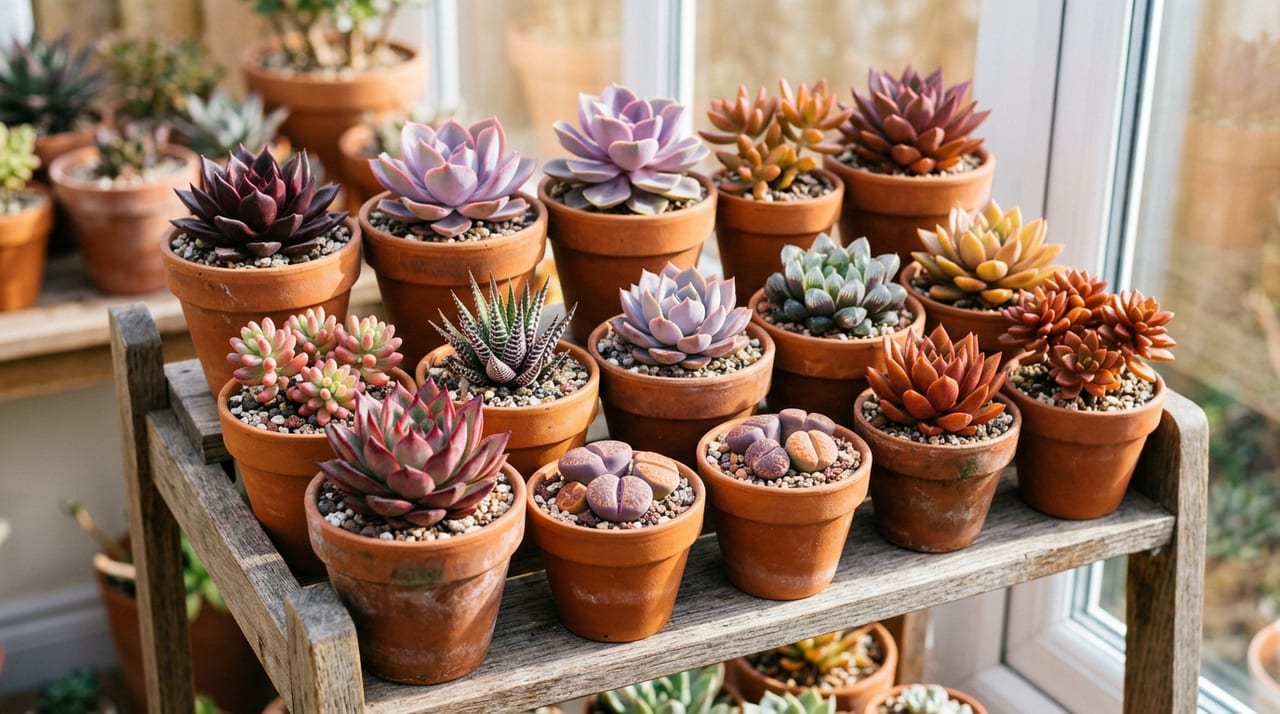
The most popular season among succulent enthusiasts is fall and winter. The reason is that succulents color beautifully during the cooler season. Succulents that change from green to red, pink, yellow, and purple become particularly striking in an indoor environment. However, this beautiful coloring is not something everyone can achieve successfully. In this article, we will explain in detail the mechanism of succulent autumn foliage and the cultivation management needed to bring out coloring to the maximum.
The Mechanism of Succulent Color Development
The reason succulents color in fall and winter lies in the plant's self-defense mechanism. As temperatures drop, succulents generate large amounts of pigments (such as anthocyanin) to protect themselves from ultraviolet radiation and cold stress. This leads to the red and purple coloration.
The Role of Anthocyanin Pigments Anthocyanin accumulates in succulent cells and prevents tissue damage by absorbing ultraviolet radiation. At the same time, because this pigment creates distinctive colors, autumn foliage functions in both coloration and protection.
Yellow and Orange Coloration from Carotenoid Pigments In varieties that color yellow or orange, a pigment called carotenoid plays the main role. This is also an important component with ultraviolet protection and antioxidant properties.
The 3 Key Elements to Bring Out Beautiful Coloring
To achieve successful autumn foliage in succulents, the following 3 elements are essential.
- Light (Ultraviolet) Supply: Light has the greatest impact on coloring. In particular, it is important to avoid weak fall and winter light and provide at least 5-8 hours of direct sunlight per day as much as possible. Outdoor placement is ideal, but indoor management on a south-facing windowsill can also be effective. Windows with transparent vinyl film that blocks ultraviolet rays will hinder succulent coloring. If possible, we recommend placing them outdoors and allowing them to receive plenty of ultraviolet radiation.
- Temperature Drop: Cold temperatures in fall and winter are the biggest factor in triggering the succulent coloring switch. The greater the temperature difference between day and night, the more beautiful the coloring tends to be. If possible, it is ideal to provide an environment that is warm during the day and cools to around 10°C at night. If you cannot adjust the temperature indoors, placing them in naturally cooler locations such as near windows or at entryways is effective.
- Proper Watering Management: During fall and winter foliage season, it is important to water sparingly. If there is too much moisture, succulents will not feel stressed and coloring will become dull. Conversely, by providing moderate drought stress, pigment production becomes more active, resulting in more vivid colors. From late October through February, we recommend switching to watering just lightly, approximately 5-7 days after the soil is completely dry.
Succulent Varieties That Color Easily
Not all succulents color equally. We will introduce varieties particularly known for beautiful coloring.
| Color | Representative Varieties | Characteristics |
|---|---|---|
| Red | Echeveria "Tipiforme," "Black Prince," Crassula "Festival Fire," and others | They turn vivid red in fall and winter. These are also popular varieties for beginners. |
| Purple | "Purple Moon," "Purple Majesty," and others | Varieties that turn purple are particularly popular. They display vibrant purple and are highly valued among collectors. |
| Yellow/Orange | "Rainbow Jade," "Heart of Love," and others | They color from yellow to orange, giving a bright and vibrant impression. |
| Pink/Yellow Mix | "Maiden Heart," "Famous Moon," and others | They change to a beautiful color where multiple colors appear mixed together. |
Techniques to Accelerate Coloring
In addition to basic care, there are ways to further accelerate coloring.
- Using Metal Racks or Aluminum Shelves: When succulents are placed on metal shelves, reflected light from the floor increases and light intensity improves. This has been reported to accelerate coloring.
- Compost and Fertilizer Adjustment: By reducing nitrogen fertilizer supply from early fall and increasing the proportion of phosphorus and potassium fertilizers, pigment production is promoted. However, excessive fertilizer should be avoided.
- Using Misting (Spray Bottle): When succulents experience drought stress in the low humidity of fall and winter, coloring accelerates. However, excessive misting can lead to root rot, so light misting in the early morning is the guideline.
Peak Coloring and Management Tips
The peak coloring for succulents is from November to January. By continuing outdoor placement during this period, you can maintain the most beautiful colors. From February onward, as temperatures begin to rise, they gradually return to their original green color.
If you want to enjoy coloring for longer, maintaining a cool and well-lit environment until March, when temperatures begin to warm, is effective.
Summary: Coloring is Evidence of Good Management
Beautiful autumn foliage in succulents is the result of proper cultivation management. By being mindful of the three basic elements—light, temperature, and watering—and adjusting management for fall and winter, your garden or balcony becomes a vibrant space filled with colorful succulents. By observing the changes in coloring with each season year after year, the joy of succulent cultivation will deepen even further.