7 Common Mistakes for Succulent Plant Beginners | Solutions Explained
We introduce 7 common mistakes made by succulent and cactus beginners. This article explains frequent failures and how to prevent them, including overwatering, insufficient light, soil selection errors, and leaf burn.
Key Takeaways
We introduce 7 common mistakes made by succulent and cactus beginners. This article explains frequent failures and how to prevent them, including overwatering, insufficient light, soil selection errors, and leaf burn.
Related Species
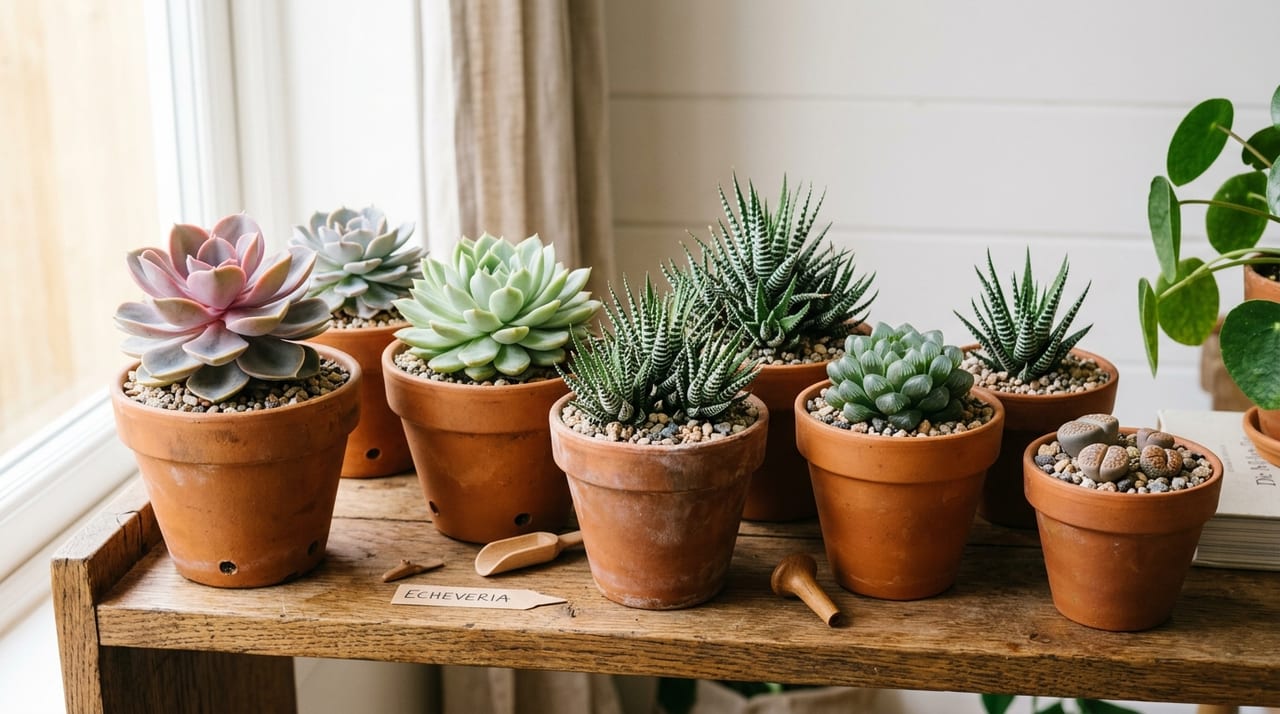
Succulents have an image of being hardy and easy to grow, but beginners actually have several common points of failure. While they can bring long-term enjoyment if the basics are mastered, preconceptions and lack of care can become issues. This article introduces 7 common failures and how to prevent them. Many failures occur from small discrepancies in daily judgment, such as placement and watering timing. If you know the causes and solutions beforehand, you can handle problems calmly when they arise.
Failure 1: Overwatering (Root Rot)
The majority of succulent deaths are caused by root rot from overwatering. If you mistakenly think "lack of vigor = lack of water" and continue watering, the condition will actually worsen.
Common Patterns
- Watering small amounts every day
- Watering even when the soil is not dry "just to be safe"
- Not noticing water collecting at the bottom of the pot
Solutions
- Water 2-3 days after the soil surface dries (keep it intentionally dry)
- Water generously until it drains from the bottom hole, and discard water from the saucer immediately
- Significantly reduce watering in summer and winter (Summer: late afternoon, Winter: small amounts on warm days in daytime)
Signs of Root Rot
- The base and stem turn dark and feel mushy when touched
- Lower leaves gradually become translucent and fall off easily
- The pot doesn't feel lighter when lifted, and the soil remains wet
If you're uncertain about watering timing, you can also insert a wooden stick or bamboo skewer into the soil to check if moisture remains. While you're building confidence in your judgment, it's safer for succulents to observe them in a state where you feel they might be a bit too dry.
Failure 2: Etiolation from Insufficient Light
Placing plants in a poorly lit location causes the stem to stretch, resulting in "etiolation" with a spindly appearance. Etiolated plants lose ornamental value and their health deteriorates.
Common Patterns
- Leaving them in a dimly lit place indoors
- Placing them far from the window thinking they will decorate the room
- Exposing them to direct sunlight through glass to give them light (risk of leaf burn)
Solutions
- Place near a bright south or east-facing window (at least 4-6 hours of sunlight per day)
- For indoor cultivation, use grow lights (12-14 hours of light per day)
- If etiolation occurs, use "beheading" to reshape the plant
Once etiolation begins, it cannot return to its original form, but by cutting the growth point and reshaping, you can develop the plant into a compact form. Also, if you consistently expose only one side to light, the plant will tend to lean in that direction, so occasionally rotating the pot to evenly expose all sides to light is also effective.
Failure 3: Using Soil with Poor Drainage
Using commercially available "flower and vegetable potting soil" and similar products can result in water retention that is too high, making root rot more likely.
Common Patterns
- Using leftover general-purpose flower soil on hand
- Choosing potting soil high in organic matter that is said to be "good for succulents"
Solutions
- Use succulent and cactus-specific potting soil
- When making your own, a typical ratio is 4 parts small red volcanic soil : 4 parts pumice : 2 parts leaf mold
- Add drainage material (pumice, perlite, etc.) to the bottom of the pot
You can also check drainage quality by observing how quickly water drains from the bottom hole when poured in. If water flows out quickly, drainage is good; if water sits on the soil surface for a while, it indicates poor drainage. Repotting is best done during the active growing season when roots are actively growing, as this places less stress on the plant.
Failure 4: Leaf Burn
Suddenly exposing plants grown indoors to direct sunlight causes cell damage, resulting in leaf burn. It's common in spring to suddenly place them in strong sunlight thinking "let's move them outside."
Common Patterns
- Suddenly switching from indoor cultivation in winter to outdoor management in spring
- Direct sunlight through glass (creating a greenhouse effect with higher-than-actual temperatures)
Solutions
- When changing location, gradually acclimate to sunlight over 1-2 weeks (hardening off)
- During peak summer, use shade cloth (30-50%) to protect from direct sunlight
- Burned leaf portions cannot recover, but the plant can be reshaped once new growth appears
Leaf burn is more likely to occur in plants not acclimated to direct sunlight, and symptoms tend to appear especially on outer and upper leaves. Once a leaf is burned, its color and texture cannot return to normal, so taking time for gradual acclimation without rushing is ultimately the quickest way to keep the plant healthy.
Failure 5: Choosing the Wrong Pot Size
Using a pot that is too large for your succulent makes the soil slow to dry and increases the risk of root rot.
Common Patterns
- Choosing an oversized pot thinking "larger pots will promote better growth"
- Using overly deep pots when wanting to create a composition with multiple plants
Solutions
- A pot size of plant diameter plus 1-2 cm is a good guideline
- Unglazed clay pots (terracotta) are ideal due to their high breathability and drainage
- Avoid vessels without drainage holes (such as decorative pots from gift shops), or compensate by adding extra gravel
The basic rule when selecting a pot is to choose one with a drainage hole at the bottom. If you can only use a pot without drainage holes, you need to water more sparingly than usual and observe the soil dryness more carefully. When creating a composition planting, it also helps to be mindful that the pot is not too large relative to the root mass of each plant.
Failure 6: Neglecting Winter Care
Assuming "they're hardy so they'll be fine in winter" can result in frost damage or cold injury.
Common Patterns
- Leaving them outside in the cold (frost damage)
- Placing them indoors with heating but allowing them to become extremely dry
Solutions
- Bring indoors before temperatures drop below 5℃ (cold hardiness varies by variety)
- Indoor heating tends to dry the air in winter, so reduce watering to about once per month
- Some cold-hardy varieties (such as Sedum and Haworthia) can tolerate temperatures around 0℃
There are succulent types that grow actively in summer and those that grow actively in winter, and the appropriate watering frequency changes depending on the growing season. If there are tags or descriptions at purchase, checking the growing season information will make seasonal management less confusing.
Failure 7: Delayed Response to Pests and Diseases
While succulents are relatively resistant to pests and diseases, scale insects and mealybugs can proliferate in large numbers without being noticed.
Common Patterns
- Observing too long when "they seem a bit unwell"
- Overlooking white, fluffy mealybugs
- Continuing to keep an infested plant with others, allowing spread
Solutions
- Regularly inspect the undersides of leaves and the base of the plant
- Upon discovery, remove them with anhydrous alcohol (if you use a pesticide, check the label for one registered for scale insects)
- Newly purchased plants should be isolated for observation
Poor air circulation environments are more prone to pests and diseases, so spacing plants apart to prevent moisture accumulation also helps prevent problems. When you find pests, address them early before damage spreads, and consider removing heavily affected leaves and stems.
Frequently Asked Questions When Unsure About Care
What should I do when I'm not sure about watering frequency?
When in doubt, use the standard "can I wait a few more days?" rather than "should I water today?" This makes it easier to avoid overwatering. If you're unsure whether the soil is fully dry, develop the habit of lifting the pot to check its weight.
Can I no longer enjoy an etiolated plant?
The etiolated portions cannot return to their original form, but you can reshape them as new plants through beheading or leaf propagation. By allowing cut surfaces to dry thoroughly before placing or inserting into soil, you can, with time, grow them back into compact plants.
How do I prevent pests and diseases in newly purchased plants?
Rather than immediately placing a newly purchased plant alongside your other plants, isolate it and observe it for a while. If pests happen to be present, this prevents them from spreading to your other plants. The undersides of leaves and the base of stems are easily overlooked, so it's reassuring to give them a thorough initial inspection.
The appeal of succulents lies in their resilience—even after failure, they can recover. Many cases can be reshaped through beheading, leaf propagation, or division, so enjoy them without fear of mistakes. At GrowerDirect, you can purchase succulents from expert growers with cultivation advice included.