Top 10 Succulents for Beginners | Expert Selection of Echeveria, Haworthia, Sedum, Aloe & More
For beginners growing succulents for the first time, we've carefully selected 10 easy-to-grow species. We explain in detail the characteristics, care tips, and availability of popular varieties like Echeveria, Haworthia, Sedum, Aloe, and Kalanchoe from a beginner's perspective.
Key Takeaways
For beginners growing succulents for the first time, we've carefully selected 10 easy-to-grow species. We explain in detail the characteristics, care tips, and availability of popular varieties like Echeveria, Haworthia, Sedum, Aloe, and Kalanchoe from a beginner's perspective.
Related Species
Introduction: Are Succulents Really Beginner-Friendly?
"Succulents are easy to grow" is a common saying, but the difficulty level of care varies greatly depending on the species. Some varieties are perfect for people who tend to forget watering, while others are advanced-level plants requiring specific temperatures and light levels.
In this article, from the perspective of succulent and cactus experts, we carefully select and introduce 10 truly easy-to-grow and visually rewarding varieties for beginners. This content will also be helpful for those starting to grow succulents for the first time in 2026.
Selection Criteria
We selected species that meet all of the following conditions:
- Easy to obtain: Available for purchase at garden centers and nurseries
- Easy to grow: Can tolerate minor watering mistakes and insufficient light
- Visually appealing: Attractive colors, shapes, and textures with high ornamental value
- Affordable: Available for a few hundred to a few thousand yen
#1: Echeveria (Echeveria)
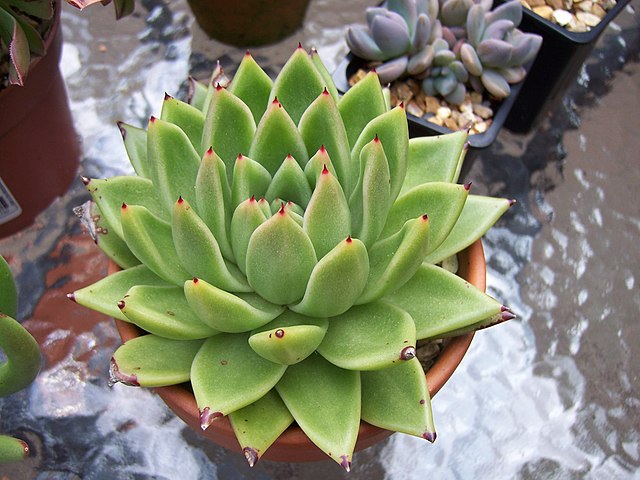
Recommended varieties: Echeveria elegans / Echeveria agavoides, etc.
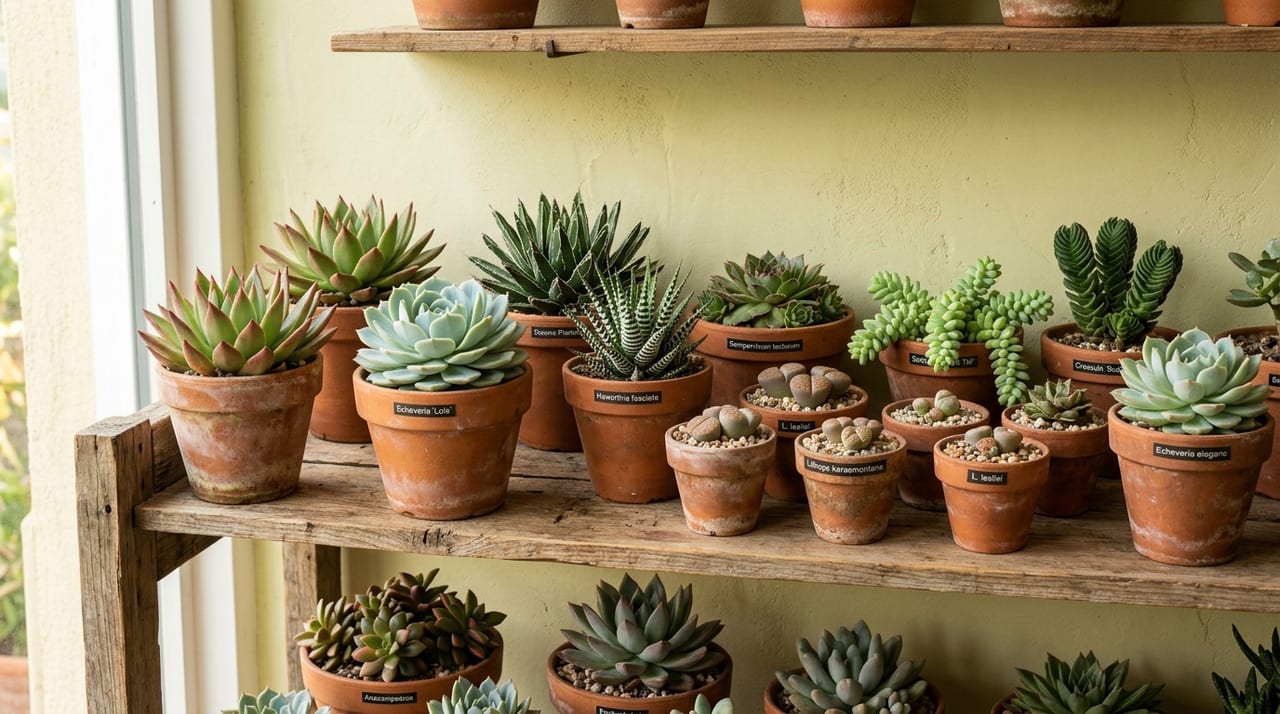
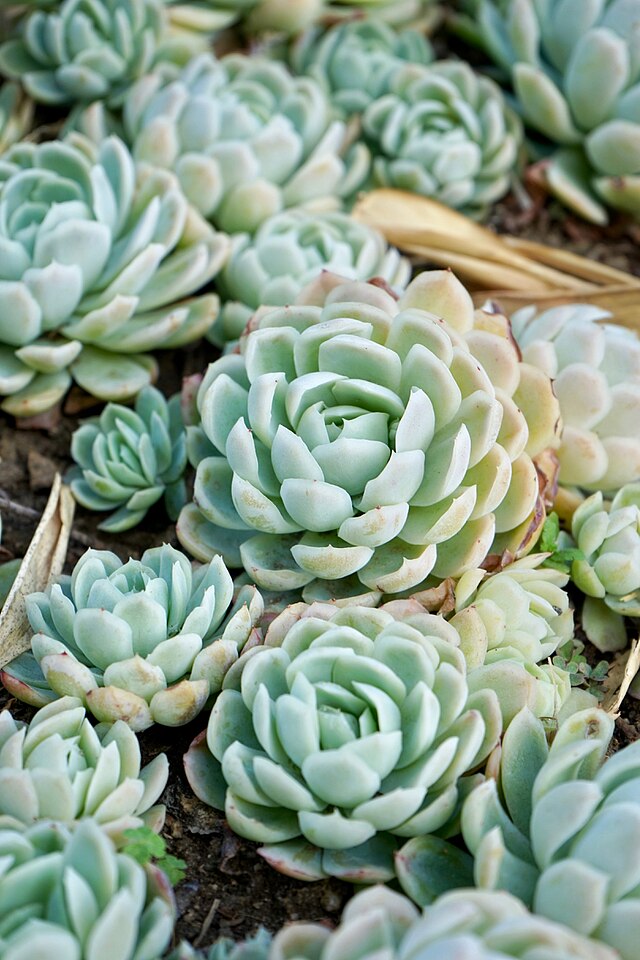
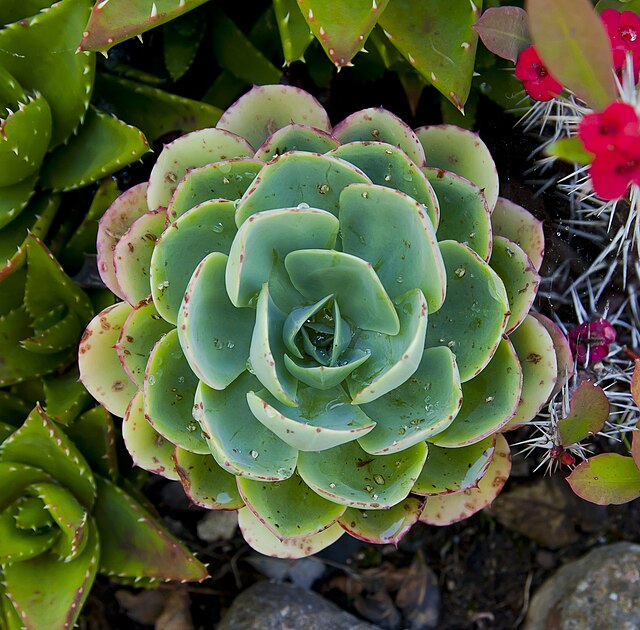
Echeveria is particularly popular among succulents, with beautiful rosette-shaped leaves that resemble rose petals. Echeveria elegans in particular is a classic favorite with translucent pale green leaves, while Echeveria agavoides is prized for its beautiful red-tipped edges on the leaves. Both are frequently chosen as the first plant for beginners.
Characteristics
- Leaves form a dense rosette shape
- Leaf colors are diverse: green, purple, pink, pale blue, and more
- Seasonal color changes (leaves turn red in fall) provide year-round interest
Care Tips
- Best placed on a sunny windowsill or outdoors
- Spring to fall: water when soil is dry (about once or twice per week)
- Winter: reduce to once or twice per month
- Susceptible to rot; keep away from rain during the rainy season
Beginner-Friendliness: ★★★★★
#2: Haworthia (Haworthia)
Recommended varieties: Haworthia obtusa / Haworthia fasciata, etc.
Haworthia is one of the few succulents that can be grown in semi-shade. Since it can be managed indoors with sufficient light, it's enjoyable even in rooms with poor natural light. Haworthia obtusa in particular is famous for its translucent "windows" at the leaf tips that puff out perfectly round like jewels and has maintained popularity for years.
Characteristics
- Many varieties have transparent "windows" at the leaf tips
- Prefers bright shade over direct sunlight
- Slow-growing but extremely hardy
Care Tips
- Direct sunlight can cause leaf scorching; be careful
- A bright window with sheer curtain filtering is ideal
- Water less frequently than Echeveria—about once or twice per month is fine
- Growth slows in mid-summer and mid-winter
Beginner-Friendliness: ★★★★★
#3: Sedum (Sedum)
Recommended varieties: Sedum pachyphyllum (Rainbow Bean) / Sedum pallida (Maiden Heart) / Sedum rubrotinctum (String of Pearls), etc.
Sedum (Stonecrop) is prized for its small, round leaves and fall color changes, and is also popular as a material for mixed plantings.
Characteristics
- Plump, round, pea-like leaves
- Leaves turn red, yellow, or orange in fall and winter
- Many varieties spread across the ground
Care Tips
- Prefers sunny locations (outdoors is ideal)
- Very cold-hardy; can overwinter outdoors in frost-free regions
- Keep somewhat dry and avoid excessive moisture
- Easily propagated from fallen leaves (leaf propagation)
Beginner-Friendliness: ★★★★★
#4: Aloe (Aloe)
Recommended varieties: Aloe barbadensis (Aloe vera) / Aloe nobilis (Gold Tooth Aloe), etc.
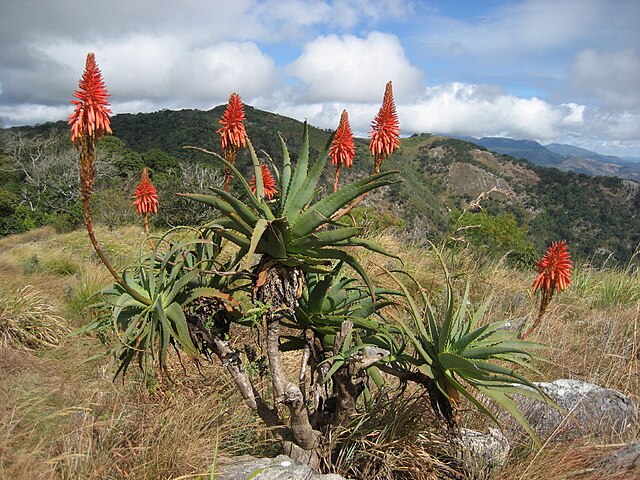
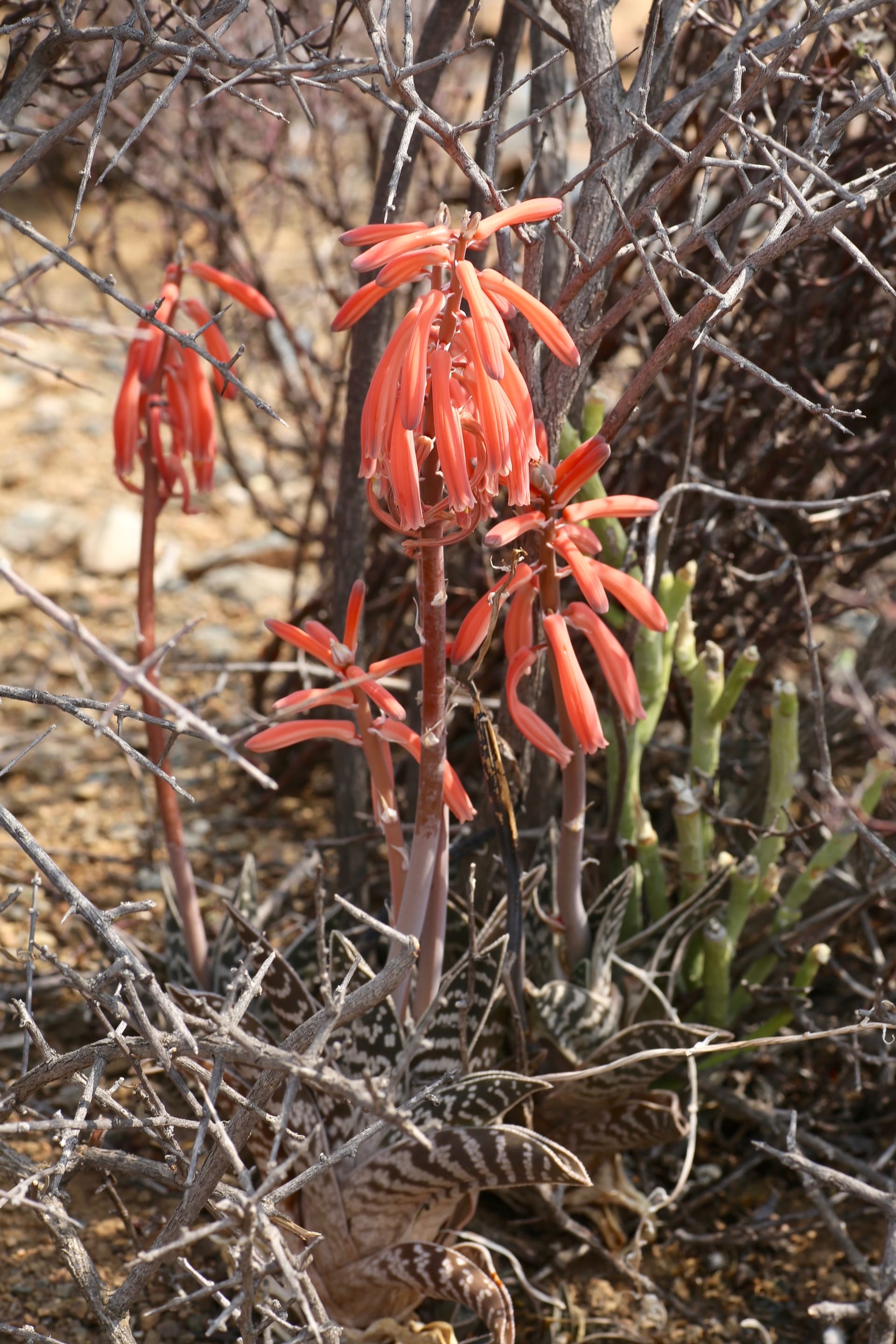
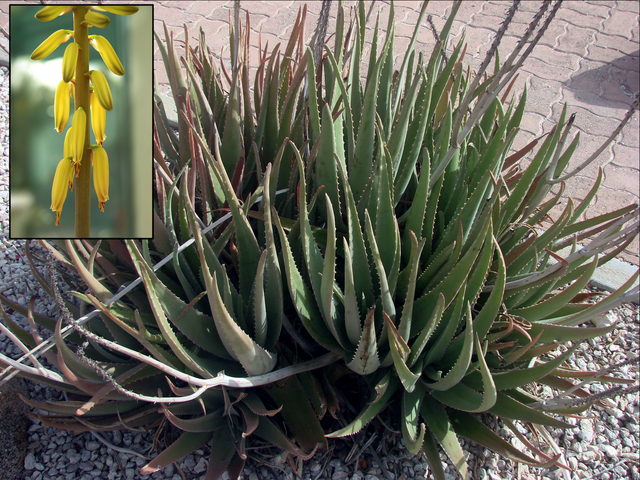
Aloe has been familiar in Japan for ages as an "at-home doctor." Its greatest charm is hardiness that thrives even with minimal care. Aloe vera in particular is well-known for the gel inside its leaves, which is used medicinally and in cosmetics.
Characteristics
- Thick, fleshy leaves with serrated edges
- Aloe vera: the gel inside leaves has medicinal and cosmetic applications
- Large varieties grow into impressive specimens
Care Tips
- Nearly maintenance-free in a sunny location
- Water about once or twice per month
- In regions where temperatures drop below 0°C in winter, keep indoors
- Produces many offsets, making propagation by division easy
Beginner-Friendliness: ★★★★☆
#5: Kalanchoe (Kalanchoe)
Recommended varieties: Kalanchoe beharensis / Kalanchoe tomentosa (Panda Plant), etc.
Kalanchoe encompasses varieties that produce vibrant flowers and varieties with adorable fuzzy leaves.
Characteristics
- Flowering Kalanchoe is one of the most commonly seen succulents at garden centers
- Varieties like Panda Plant are covered in velvety fuzz
- Relatively fast-growing
Care Tips
- Best in a sunny location
- Short-day treatment after flowering can encourage re-blooming
- Susceptible to excess moisture; water only after soil is dry
- Somewhat cold-sensitive (5°C or above recommended)
Beginner-Friendliness: ★★★★☆
#6: Crassula (Crassula)
Recommended varieties: Crassula perforata (String of Buttons) / Crassula 'Jade Necklace', etc.
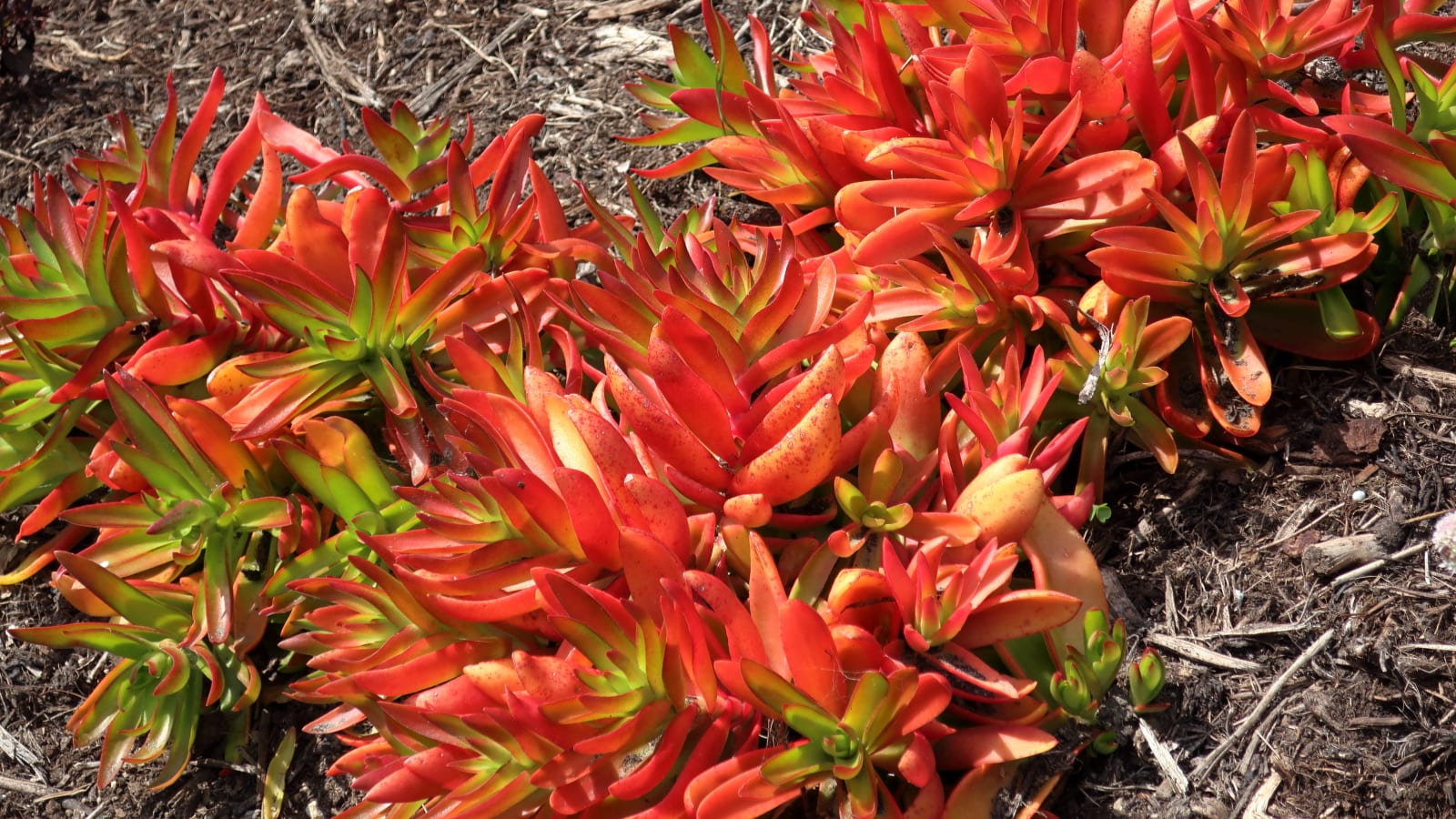
Crassula includes many species with beautiful fall color changes. The "Flame Bush" variety in particular is extremely popular, turning brilliant red like flames in autumn.
Characteristics
- Many varieties develop vibrant colors in fall and winter
- Diverse size options from small to large
- Easily propagated via leaf cuttings or stem cuttings
Care Tips
- The sunnier the location, the more brilliant the color change
- Temperature differences between day and night in winter enhance coloring
- Be careful of rot during the rainy season through summer; ensure good air circulation
- Relatively cold-hardy (some varieties can tolerate temperatures near 0°C)
Beginner-Friendliness: ★★★★☆
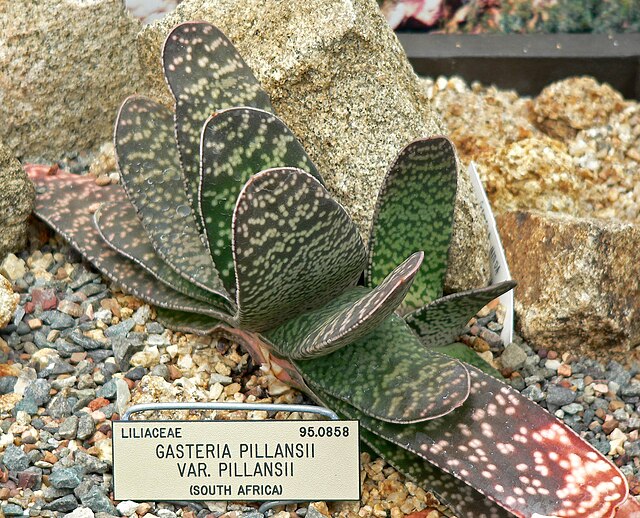
#7: Gasteria (Gasteria)
Recommended varieties: Gasteria carinata (Tongue Aloe) / Gasteria armstrongii (Cow Tongue Aloe), etc.
Gasteria shares Haworthia's shade tolerance while offering uniquely distinctive shapes. It's a fascinating genus for collectors.
Characteristics
- Hard, thick leaves arranged symmetrically in two rows
- Tolerates semi-shade
- Slow-growing but extremely hardy
Care Tips
- Best in bright shade or morning sun only
- Water sparingly, similar to Haworthia
- Avoid direct summer sun
Beginner-Friendliness: ★★★★☆
#8: Pachyphytum (Pachyphytum)
Recommended varieties: Pachyphytum oviferum (Moon Cactus / Moonstones), etc.
Pachyphytum is prized for its chubby, round leaves and rivals Echeveria in popularity.
Characteristics
- Charming, perfectly round, thick leaves
- Leaves have a frosted, powdery-white appearance
- "Pachiveria," a cross between Pachyphytum and Echeveria, is also in circulation
Care Tips
- Prefers a sunny location
- Note: the powder doesn't return once rubbed off, so handle gently
- Excess moisture is strictly prohibited; water only after soil is completely dry
- Easily propagated via leaf propagation
Beginner-Friendliness: ★★★★☆
#9: Sempervivum (Sempervivum)
Recommended varieties: Various Sempervivum species (Cobweb Houseleek, etc.)
Sempervivum resembles Echeveria in its rosette form but is exceptionally cold-hardy, making outdoor overwintering possible.
Characteristics
- Can overwinter outdoors even in frost and snow (some varieties tolerate -20°C)
- Vigorously produces runners (offsets) for propagation
- Rosette-form; parent plants die after flowering (monocarpic)
Care Tips
- Ideal for garden beds or rock gardens
- Peak weakness: heat and humidity in mid-summer; provide partial shade then
- Very drought-tolerant; minimal watering required
- Survives winter unattended
Beginner-Friendliness: ★★★☆☆ (requires summer care attention)
#10: Graptoveria (Graptoveria)
Recommended varieties: Graptoveria 'Debbi' / Graptoveria 'Autumn Joy', etc.
Graptoveria is a hybrid of Echeveria and Graptopetalum, inheriting the best traits of both parents—hardiness and beauty.
Characteristics
- Somewhat hardier than Echeveria
- Beautiful rosette form
- Easily propagated via leaf propagation
Care Tips
- Best in a sunny location
- Echeveria-style care works well
- More tolerant of excess moisture than Echeveria, sometimes easier to manage in humid conditions
Beginner-Friendliness: ★★★★★
Summary: Which Succulent Should Beginners Start With?
For complete beginners, we recommend starting with either Haworthia obtusa or Echeveria. Haworthia is easy to grow indoors, while Echeveria offers exceptional visual beauty. Among Echeveria varieties, Echeveria elegans and Echeveria agavoides are widely available and easy to select as your first plant.
If you have adequate outdoor space with sufficient sunlight, Sedum (Stonecrop) and Sempervivum are especially recommended as they require almost no maintenance. Starting with a practical variety like Aloe vera is also an excellent choice.
The charm of succulents lies in their remarkable diversity. On GrowerDirect's online catalog, you can purchase succulents directly from growers, so start expanding your collection from your very first plant.