How to Keep Haworthia Windows Clear | Window Transparency by Variety and Cultivation Without Fogging
Haworthia window transparency is determined largely by variety; cultivation can only prevent fogging. This guide explains four causes of clouding and indentation, the difference between deep planting to emphasize windows and etiolation, and how to select varieties by transparency, such as Obtusa.
Key Takeaways
Haworthia window transparency is determined largely by variety; cultivation can only prevent fogging. This guide explains four causes of clouding and indentation, the difference between deep planting to emphasize windows and etiolation, and how to select varieties by transparency, such as Obtusa.
Related Species
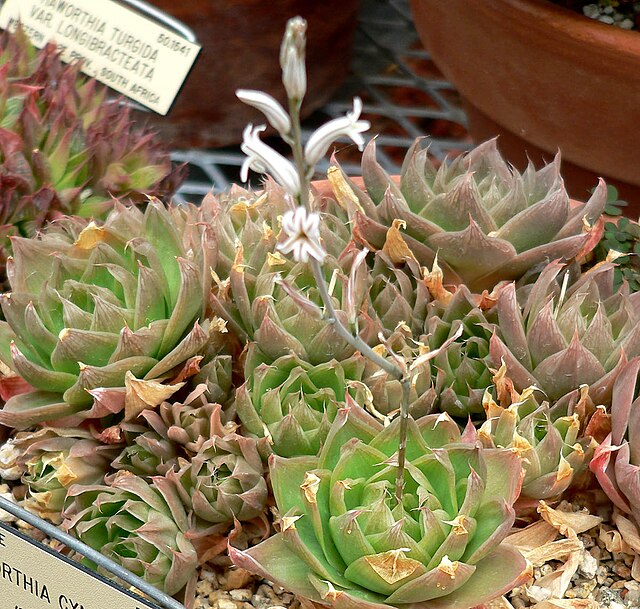
Haworthia window varieties are succulents with semi-transparent "windows" at the leaf tips that transmit light. These windows evolved in their native habitat as a mechanism to maximize photosynthesis while keeping most of the plant body buried underground, with only the window exposed at the soil surface. Their gem-like transparency is uniquely beautiful among succulents, and collector interest grows each year. Here we explain the representative window-form Haworthia varieties and cultivation techniques to bring out the windows' transparency to the fullest.
Representative Window-Form Haworthia Varieties and Their Characteristics
Haworthia window varieties exist in many forms, but here are the key representatives to know first.
Obtusa (H. cooperi var. truncata) The most popular window-form variety. It has a large window on the rounded leaf tip that shimmers blue-green when lit. Relatively hardy and easy to grow even for beginners, making it ideal as a starter species. In recent years, color variants such as 'Purple Obtusa' and 'Black Obtusa' have also gained popularity.
Comptoniana (H. comptoniana) A variety with large windows, and since the window patterns differ from individual to individual, it has very high collector appeal. The leaves are flat and triangular, with reticulated mesh-like patterns in the windows. Growth is somewhat slow, but it is a rewarding species to grow.
Splendens (H. splendens) A variety where large windows stand out against the dark green body color. The windows have high transparency and glow like jewels when backlit. Somewhat pricey, but the visual impact is outstanding.
Picta (H. picta / H. emelyae) A group of varieties with distinctive reticulated patterns in the windows. Among collectors, there is a culture of evaluating individuals by their window pattern, and specimens with superior patterns command extremely high prices.
How to Keep Windows Clear—What Cultivation Can and Cannot Do
Many people ask "How can I make my Haworthia's windows more transparent?", but there's an important premise to understand first. Window transparency is determined almost entirely by variety and individual genetic potential and cannot be created from scratch through cultivation. What cultivation can do is bring out the transparency the plant inherently possesses without letting it become cloudy. Hard-leaf type Haworthias that do not naturally have semi-transparent windows will never become transparent through management.
The causes of lost transparency can be organized into four main factors:
- Excessive light: Windows become white and cloudy, or leaves turn reddish-brown. This is the most common cause.
- Drought stress: Windows become indented, lose their turgidity, and look dull. Recovery occurs within days of watering.
- Outer leaf aging: Lower leaves gradually become opaque. This is natural senescence, so judge the condition by looking at new leaves toward the center of the plant.
- Surface dirt and mineral deposits: Hard water sprayed from above leaves white mineral deposits. Remove with a soft brush or rinse with soft water.
If you want the windows to appear larger, the quickest approach is to recreate their native habitat conditions. Haworthias naturally keep most of their body buried with only the windows exposed at the soil surface. With slightly deeper planting and weaker light, the leaves stretch upward and the exposed window area increases. However, if the leaves are thin, pale, and stretching, that is etiolation, not window development. Distinguish by observing whether the leaves maintain thickness as they stretch.
Variety Selection Guide by Transparency
| Variety | Window Transparency | Window Size | Ease of Growth |
|---|---|---|---|
| Obtusa | High | Large and rounded | Easy |
| Kyō-no-Hana | High | Slender and narrow | Easy |
| Splendens | Very high | Large | Somewhat difficult |
| Comptoniana | Medium–High (reticulated pattern) | Large and flat | Moderate |
| Picta | Medium (pattern-focused) | Medium | Moderate |
| Banshō | Medium (pattern appreciation) | Flat window surface | Difficult |
| Gyokusen | Medium (pattern appreciation) | Fan-shaped window surface | Difficult |
If you want to enjoy transparency itself in the shortest time, starting with Obtusa or Kyō-no-Hana is a sure choice. Banshō and Gyokusen are in a different lineage—they emphasize the patterns on the window surface rather than window transparency itself. For basic care of Haworthias in general, also see Haworthia Complete Growing Guide.
Light Management to Bring Out Window Transparency
The transparency—the main attraction of window-form Haworthias—changes dramatically with light management.
Direct sunlight is strictly forbidden Direct sun causes window-form Haworthia windows to become white and cloudy or causes leaf burn. Remember that in their native habitat, they live buried underground in weak light. Soft light through sheer curtains is ideal.
Bright shade is best A location receiving 2–4 hours of indirect light daily is optimal. A north-facing windowsill or a spot some distance from a south-facing window works well. When using LED grow lights, keep the light intensity to about half that used for other succulents.
Signs of excessive light Reddish-brown leaf discoloration or whitish, opaque windows signal too much light. Conversely, thin, stretched leaves indicate insufficient light. Observe the plant and find the optimal location.
Watering and Humidity Management Techniques
Window transparency is closely tied to water status.
Watering frequency During the growing season (spring and autumn), water thoroughly 2–3 days after the soil has dried completely. They prefer slightly more water than typical succulents, but overwatering causes root rot.
Window turgidity and water status Adequate water makes windows plump and increases transparency. Water shortage causes windows to become indented and dull. This is a signal from the plant, so using window turgidity as a watering guide makes management easier.
Summer and winter care During summer dormancy, limit watering to 1–2 light waterings per month. Complete drought kills roots, so maintain a slight moistness. Winter growth also slows, so reduce watering frequency.
Soil Mix and Pot Selection
Since window-form Haworthias have thick, delicate roots, soil mix and pot selection are critical.
Soil mix composition Balance between drainage and water retention is key. The basic ratio is: red clay pellets (small) 4, Kanuma soil (small) 2, pumice (small) 2, and leaf mold 2 parts. A convenient alternative is to add red clay pellets to a commercial succulent soil mix to increase water retention.
Pot size and material Since roots are thick and grow long, a slightly deeper pot is appropriate. Choose a pot about 1.5 times the plant's diameter. Terracotta dries too quickly due to excessive airflow, so plastic pots or glazed ceramic pots are recommended.
Repotting timing Repot once a year in spring or autumn. Gently arrange the roots without damaging the thick ones. After repotting, withhold water for about a week to allow root wounds to dry, then resume watering.
How to Propagate Window-Form Haworthia
There are several ways to propagate your favorite varieties.
Offsets The most reliable method. When offsets appear at the base of the parent plant and grow to reasonable size, separate them. Offsets that still have roots attached are more likely to establish.
Leaf propagation Some varieties such as Obtusa can be propagated from leaves. Cleanly remove a leaf at the base, dry it, then place it on moist soil. However, success rates vary greatly by variety and can take several months.
Beheading With large specimens, you can cut the plant horizontally to create two sections for propagation. The upper section is dried then planted, while the lower section usually sprouts multiple offsets.
Window-form Haworthia offers the joy of backlit viewing—a truly meditative experience. On GrowerDirect, you can purchase Haworthias carefully selected for window transparency and patterns directly from specialist growers. Beyond photos, you can ask the growers directly about window characteristics and cultivation tips, so you can find a specimen you're truly satisfied with.