Complete Guide to Succulent Plant Photography | How to Take Shots That Pop on SNS
Learn how to use natural light, choose backgrounds, shoot macro photographs, and bring out the beauty of autumn coloring and clustered plants.
Key Takeaways
Learn how to use natural light, choose backgrounds, shoot macro photographs, and bring out the beauty of autumn coloring and clustered plants.
Related Species
Succulents derive their charm from their plump forms, delicate colors, and distinctive sculptural beauty. However, conveying that beauty through photography is surprisingly difficult. A slight change in lighting or background choice can completely transform how the same plant appears. This article explains succulent photography techniques that shine on social media in an easy-to-understand way for beginners. The tips apply equally to smartphone and digital SLR photography.
Master Natural Light, Master Succulent Photography
Light is the most critical element in succulent photography. Flash and indoor lighting alone cannot capture the unique translucence and color depth that succulents possess.
- Soft morning light is best: The area near an east-facing window between 8 and 10 a.m., or outdoors on a lightly overcast day, is ideal. Strong direct sunlight creates harsh shadows and washes out texture
- Light through lace curtains: When shooting indoors, diffused light filtered through lace curtains is ideal and beautifully captures the plumpness of the leaves
- Use backlighting and sidelighting: When light comes from behind or to the side of the subject, the leaf edges glow and add dimensionality. The windows of Haworthia and the leaf tips of Echeveria become beautifully highlighted
- Use a white reflector: Simply placing a sheet of A4 copy paper on the shadowed side lifts the shadows and creates a soft finish
Light quality changes significantly with the season and time of day. Comparing shots of the same plant under different conditions is a key to improvement. Winter's low-angle sunlight is particularly effective at creating beautiful gradations on the succulent's surface.
Background Selection and Basic Styling
Background and styling have a major impact on a photograph's impression. A cluttered background buries the delicate form of succulents. Choosing a simple background is the first step toward advanced photography.
- Use solid backgrounds as your foundation: Simple fabrics or poster board in white, gray, or black are recommended. Pale-colored succulents benefit from dark backgrounds, while deeply colored ones pop against light backgrounds
- Embrace the texture of wood and concrete: Natural material tables and reclaimed wood boards pair beautifully with the natural aesthetic of succulents
- Keep accessories minimal: Adding just one or two small items like a mist bottle or tweezers creates a gardening atmosphere. Too many props blur the main subject
- Be mindful of negative space: Leaving adequate space around the subject gives the photograph "breathing room"
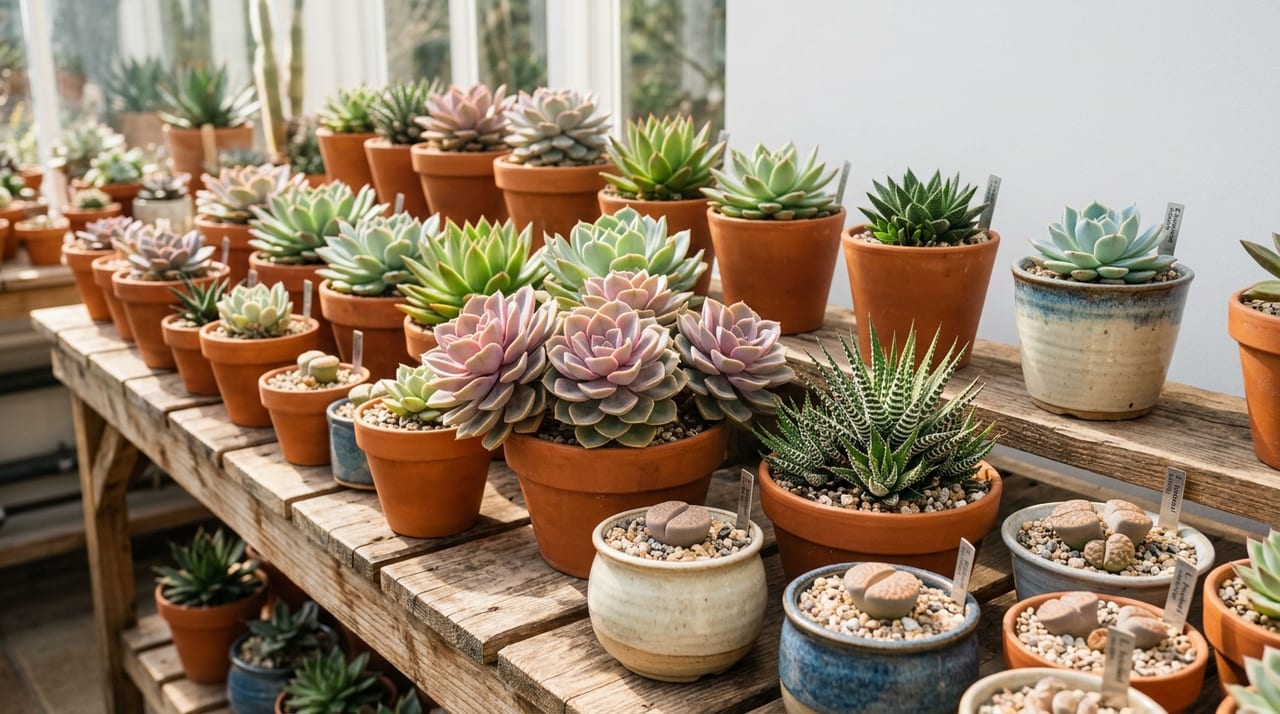
- Coordinate your pot: Terracotta and cement pots photograph well. Pots in muted tones make the succulent's colors stand out
Composition and Angle Techniques
Even the same succulent looks completely different when shot from different angles or with different compositions.
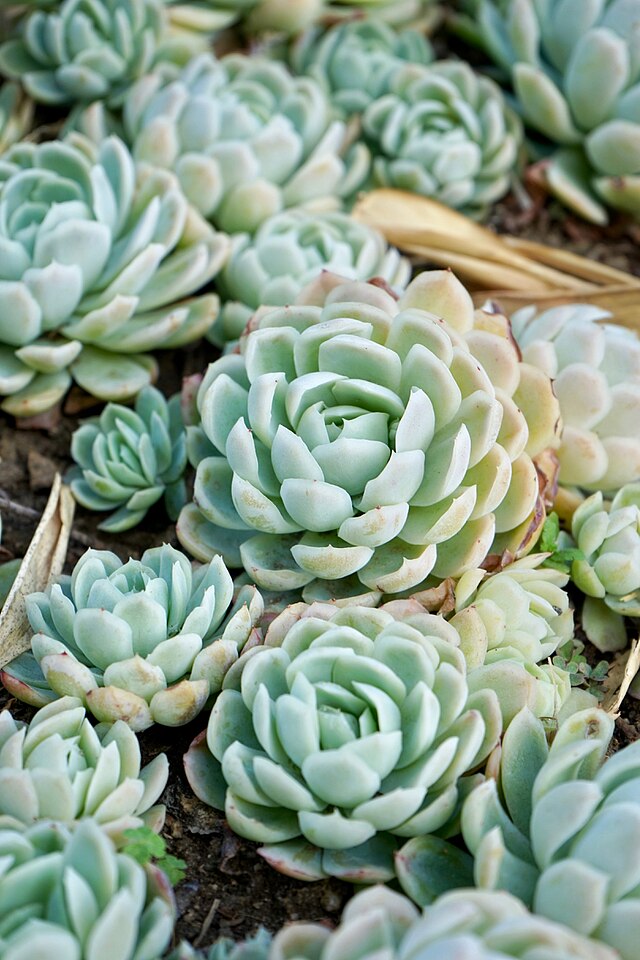
- From directly above (overhead shot): Perfect for capturing the overall form of Echeveria rosettes or mixed plantings. This angle shows spreading forms most beautifully. Keep your phone horizontal and ensure shadows don't fall on the subject
- 45-degree angle: The most conventional and forgiving angle. It captures both the pot's shape and the plant's dimensionality simultaneously
- Low angle from the side: Effective when you want to emphasize the impact of clustered plants. Shooting just above ground level creates a powerful image
- Use the rule of thirds: Divide the frame into thirds vertically and horizontally, placing the subject at an intersection point for a well-balanced composition
- Know when to zoom in and when to pull back: Use close-ups to convey texture, wider shots to show the whole plant. Shooting both gives you more options for social media posts
Macro Photography: Capturing Delicate Details
Succulents have subtle details that the naked eye often misses. Incorporating macro photography opens up new discoveries and experiences.
- Use smartphone macro lenses: Clip-on macro lenses are available for around 1,000 yen. They let you magnify the powder (farina) on leaf surfaces and the window patterns of Haworthia
- For SLR and mirrorless cameras, a macro lens is ideal: A focal length of 90–100mm is recommended. It allows sufficient distance from the subject, minimizes shadow interference, and produces beautiful background blur
- Use manual focus: Autofocus struggles with macro work, so manual focus is more reliable
- What to photograph: Leaf-edge contours, farina texture, new growth development, and flower bud formations. Beautiful details hide in the parts we usually overlook
Photographing Autumn Color, Clusters, and Flowers
Succulents have especially photogenic moments. Don't miss the chance to capture them.
- Photographing autumn color: The season when plants color from fall through winter is peak shooting time. Morning light faithfully reproduces the colors of colored foliage
- The appeal of clustered plants: Overhead shots convey density, while slightly angled shots create depth and dimension
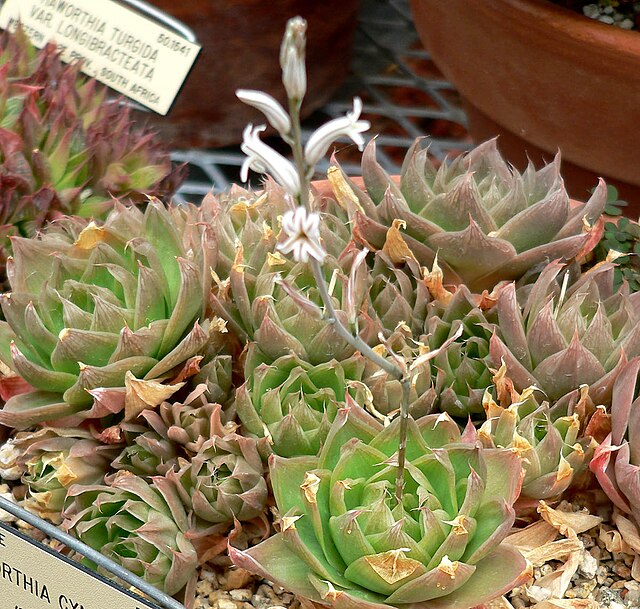
- Photographing flowers: Succulent flowers are small, so macro photography really shines here
- Before and after: Comparison photos from purchase to maturity generate high engagement on social media
- Add water droplets: Mist water droplets on the plant before shooting for a fresh, dewy look. However, avoid doing this in direct summer sunlight, as it can cause leaf scorch
- Growth time-lapse documentation: Regular photos from the same angle with consistent lighting reveal growth progression and make engaging content
One-Point Tips for Smartphone Photography
You can take beautiful photos with just a smartphone, even without an expensive camera. The three basics are: wiping the lens with a soft cloth before shooting, using portrait mode for background blur, and displaying grid lines for composition stability. Set exposure slightly bright to bring out the translucence of succulents. When editing, resist oversaturating colors and stick to subtle adjustments in brightness and contrast.
Frequently Asked Questions and Practical Advice
Q. Can I take good photos with just a smartphone? A. Yes. Light matters far more than equipment when photographing succulents, and diffused light from an overcast day outdoors or filtered through lace curtains near a bright window is the easiest to work with. Direct sunlight creates overly harsh shadows, and indoor fluorescent lights cause color casts.
Q. The color doesn't match the actual plant. A. In most cases, the white balance is on automatic and the photo is taken under warm incandescent lighting. Switching to cool daylight or natural light will make a huge difference. For photos intended for resale, avoid compensating by boosting saturation during editing.
Q. Any tips for photographing clustered plants beautifully? A. Shoot both an overhead view and a side shot at the plant's height; together they convey both form and density. For the background, simply lay down a sheet of plain paper or felt—this removes clutter from the pot and floor, making the plant stand out.
Beautifully Document Succulents from GrowerDirect
Photographing succulents expands the joy of growing them. Photos are essential not just as growth records but also for sharing on social media and managing your collection. Photography skills improve with practice, so start experimenting with your own plants today. At GrowerDirect, you can purchase high-quality plants directly from specialist growers who raise them with care. You'll find rare varieties and beautifully colored specimens that are sure to shine on social media.