Guide to Venus Flytrap Flowering, Seed Propagation, and Colony Cultivation | Developing Flower Buds from Seed Collection, Sowing, and Group Cultivation
A propagation guide for Venus flytraps covering flowering conditions, from seed collection and sowing to colony cultivation. Detailed explanation of winter dormancy, seed propagation, and group cultivation techniques.
Key Takeaways
A propagation guide for Venus flytraps covering flowering conditions, from seed collection and sowing to colony cultivation. Detailed explanation of winter dormancy, seed propagation, and group cultivation techniques.
Related Species
Preparing for Venus Flytrap Flowering — Winter Dormancy Management
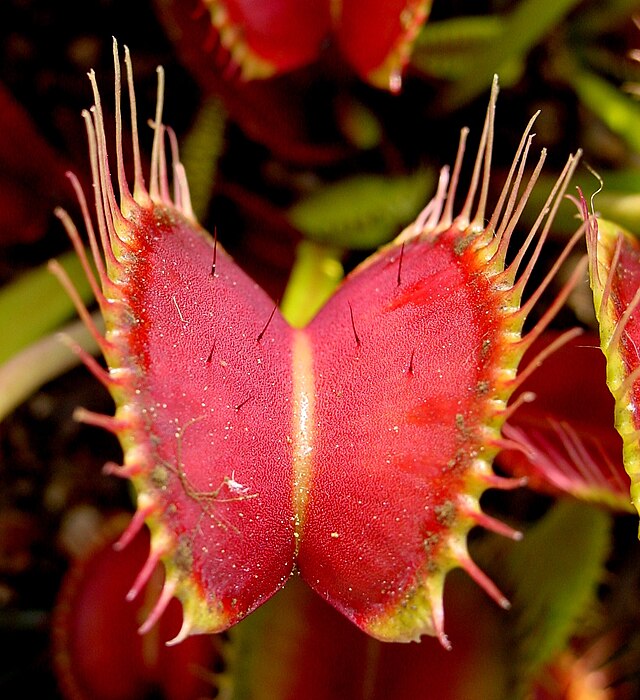
Venus flytrap (Dionaea muscipula) is a carnivorous plant native to coastal wetlands in the southeastern United States. In its natural habitat, summers are distinctly hot and humid while winters are cold, and this temperature difference greatly governs the plant's physiological cycle. The first key point in aiming for flowering and fruit production is to properly subject the plant to winter cold dormancy.
Keep the following points in mind during dormancy management.
- Period: Approximately three months from late November to early February
- Temperature: A cool environment around 5–10°C (unheated greenhouse, under an outdoor eave, top of a refrigerator, etc.)
- Watering: Do not water completely; instead, give a light watering once or twice per month just enough to prevent the growing medium from drying out completely.
- Light: Low light is acceptable during the cold period, but avoid complete darkness.
During dormancy, leaves shrivel and the traps become less responsive. This is not a sign of weakness but rather a normal state where the plant reduces its metabolism in preparation for the next growth phase. Plants that experience a proper dormancy period will shoot vigorously in spring and produce flower buds more readily.
Conversely, if the plant is kept in a warm room throughout winter, dormancy remains incomplete and flower buds are less likely to form the following spring. If you want to enjoy flowering, providing cold conditions in winter is the most important preparation of all.
Flower Bud Development and Pollination in Practice
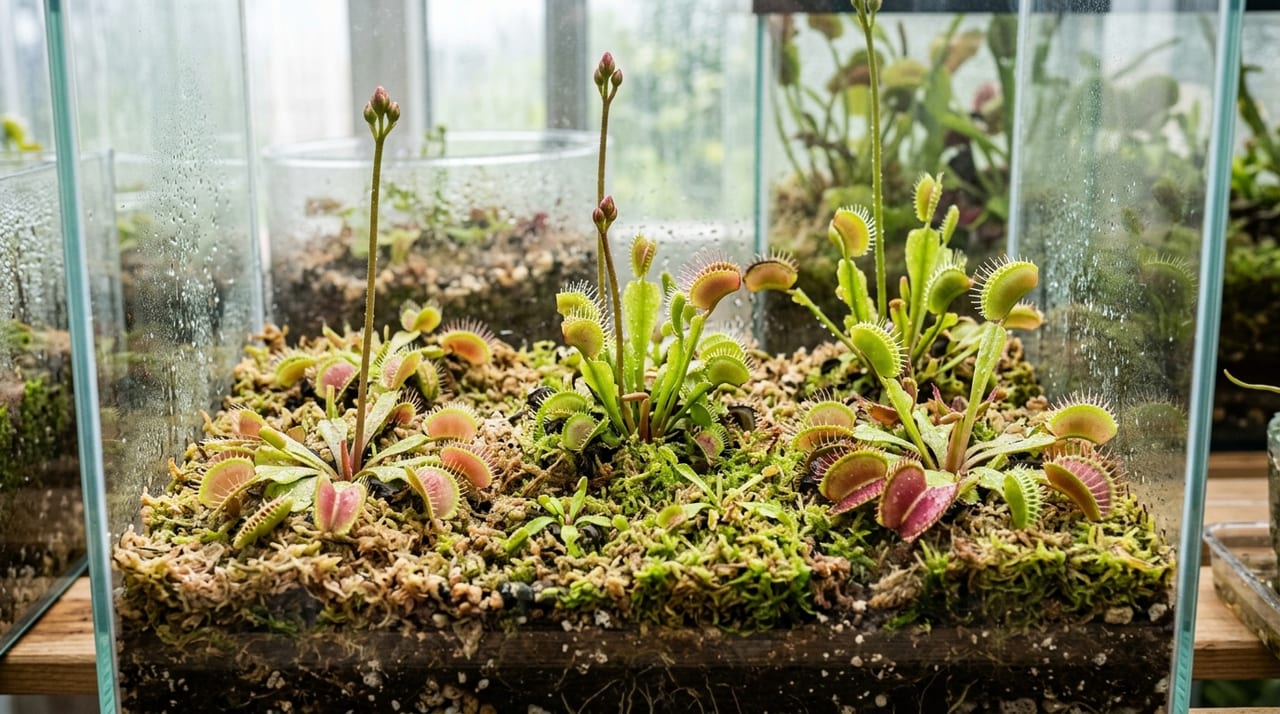
As temperatures begin to rise from late February through March, thin flower stalks emerge from the center of the plant. The flower stalks gradually elongate and form a compound umbel of white flowers, ranging from a few to dozens. Because flowers bloom sequentially, the flowering period typically lasts about 2–3 weeks per plant.
Venus flytrap flowers are typically cross-pollinated. In indoor cultivation where insect pollination is unlikely, hand pollination is an effective way to promote fruit set. The method is simple: use a cotton swab or fine brush to gently transfer pollen from one plant's flowers to the stigma of another plant's flowers. Pollinating between multiple different plants also ensures genetic diversity.
When pollination is successful, the ovary begins to swell, and a few weeks after flowering, small brown seed pods form. When the fruit becomes dark and dried, it signals that the seeds have matured. Be careful not to overwater during this period, as excess moisture can cause the fruit to rot.
Seed Collection, Storage, and Sowing Procedure
Once the fruit is fully dried, cut off the entire flower stalk and gently crumble it on clean white paper with your fingertips. Shiny black seeds will emerge. Because the seeds are extremely small, careful handling is essential.
The storage procedure for collected seeds is as follows.
- After collection, dry the seeds further for 1–2 days in a dry place at room temperature.
- Place them in an airtight container (such as a small zip-lock bag) together with dried silica gel.
- Store in the vegetable compartment of a refrigerator (2–5°C).
Cold storage preserves seed viability until the optimal sowing time. The best sowing periods are autumn (September–October) or early spring (February–March); autumn sowing has the advantage of leveraging natural cold periods to achieve uniform germination.
The specific sowing procedure is as follows.
- Mix washed peat moss and perlite in approximately a 7:3 ratio and moisten thoroughly with water.
- Fill a shallow tray or small pot with the medium and level the surface.
- Scatter the seeds on the surface of the medium; cover with just a very thin layer of medium or leave uncovered.
- Cover with clear plastic wrap or a lid, maintain humidity, and keep in bright partial shade.
- Keep at a temperature of 15–25°C and use bottom watering to prevent the medium from drying out.
Germination typically takes about 2–4 weeks, and another 1–2 months pass before the first tiny trap leaves appear. During the seedling stage, be especially careful to avoid sudden drying and excessive direct sunlight.
Seedling Development and Transition to Colony Cultivation
After germination, once seedlings reach a diameter of 1–2 cm, carefully pot them individually. At this stage, the roots are delicate, so use tweezers or a thin bamboo stick to lift the seedling with its growing medium. After repotting, keep the seedlings in shade for a while, then gradually increase light exposure.
The key points in caring for plants from seedling to maturity boil down to four essentials throughout the year.
- Light: At least 6 hours of sunlight per day is ideal. A south-facing windowsill or outdoor placement works well.
- Water: Keep the growing medium consistently moist. Use pure water, rainwater, or distilled water; avoid tap water.
- Growing medium: Peat moss-based, low-nutrient, high-water-retention mix. Do not use commercial leaf mold or general-purpose potting soil.
- Fertilizer: Do not fertilize as a rule. Nutrient supply can be provided naturally by allowing the plant to capture insects.
Colony cultivation, where multiple plants are grown together in one container, is a technique that combines visual impact with management efficiency. In a shallow pot at least 30 cm wide, lay down a thick layer of peat moss and plant with 5–8 cm spacing between plants. Overcrowding reduces air circulation and increases the risk of fungal disease, so maintain adequate spacing and thin out plants as needed.
In a colony, plants compete for soil moisture, so water dries out faster than in individual pots; keep this in mind. Using a bottom watering tray to maintain a consistent water supply greatly improves management stability.
Troubleshooting by Problem and Long-Term Care Tips
Here are common problems encountered during cultivation and their solutions.
If no flower buds appear, the cause is usually inadequate dormancy. Review where you place the plant in winter and ensure it experiences proper cold conditions the following year. Also, if the plant is young (1–2 years from seed), it may not yet be of flowering age. Prioritize building up the plant's vigor rather than rushing.
If pollination occurs but no fruit sets, hand pollinating a single plant tends to produce unreliable results. Try pollinating between different plants or varieties. Sudden drought stress during flowering also disrupts fruit set, so be especially careful to avoid drying out during this period.
If seedlings die partway through, the greatest risk during the seedling stage is alternating between drying and overwatering. Maintain stable moisture with bottom watering, and gradually acclimate seedlings to outside air by removing cover incrementally—this "hardening off" period improves survival rates.
Moss and algae growth on the medium is a difficult-to-avoid phenomenon in moist peat-based management. If growth becomes so dense that it hinders seedling development, gently remove the surface growth.
Venus flytraps are relatively hardy among carnivorous plants, but the key to long-term cultivation success lies in three principles: do not fertilize, do not use tap water, and cool them in winter. By experiencing the full cycle of flowering, fruit production, and seed propagation, you gain a deeper appreciation for the plant's vitality and its rhythm with the seasons. I encourage you to enjoy this seasonal journey of cultivation for the long term.