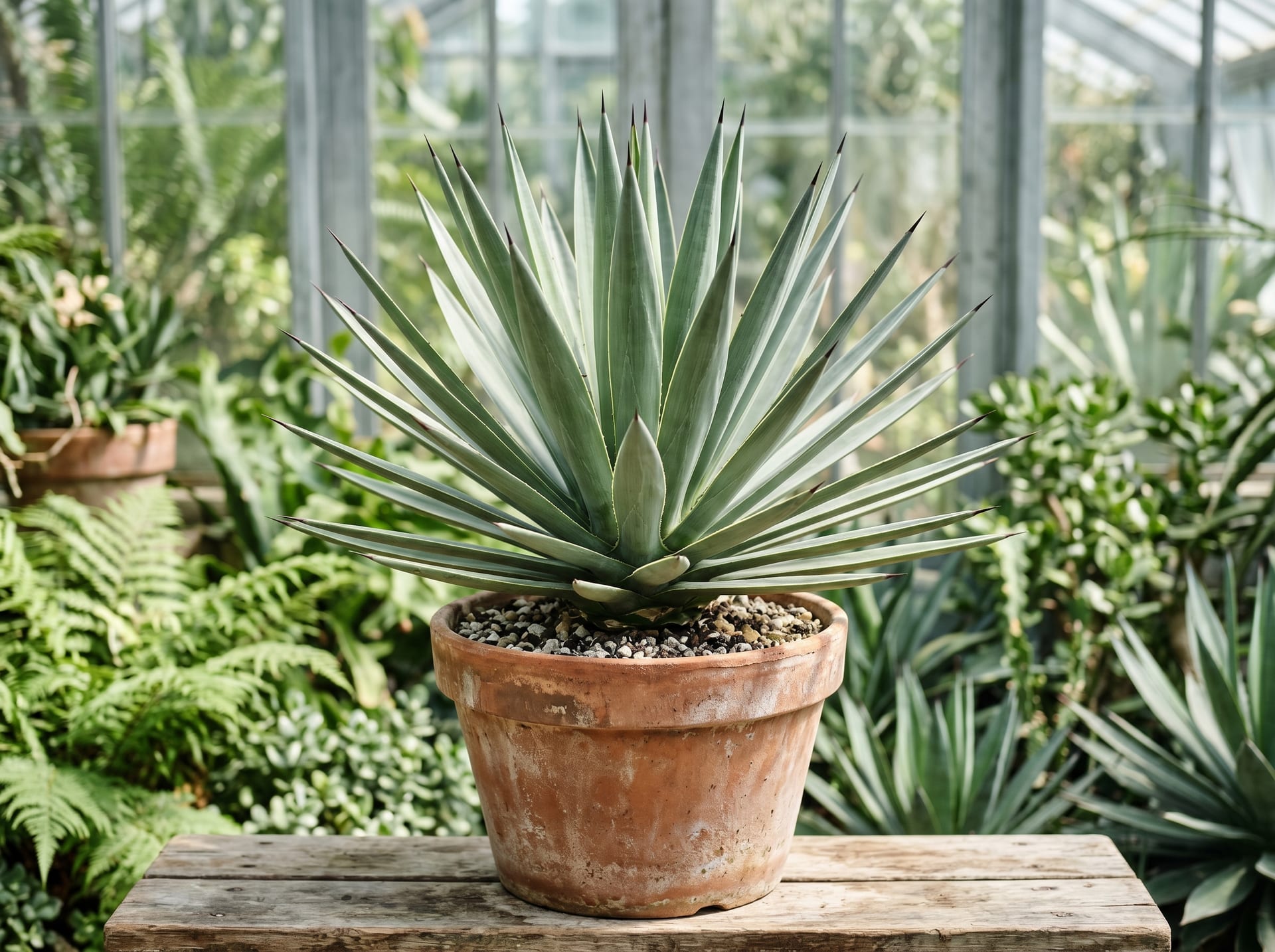
AI-generated image
Agave Sisalana (Sisal)
BeginnerAgave sisalana
One of the world's largest natural fiber crops. Strong 'sisal' fibers from its leaves are widely used for rope, sacks, and carpets. From Mexico, now cultivated widely in Africa and Southeast Asia.
About
Agave sisalana (sisal) is a large agave believed to originate from Mexico's Yucatán Peninsula, widely cultivated throughout tropical and subtropical regions as one of the most economically important agave species for fiber production. Its sword-shaped dark green leaves reach 1–1.5 m in length, are rich in fiber, and have smooth margins (or very small teeth) with a stout terminal spine. Mature rosettes reach 1.5–2 m in diameter, with flower stalks exceeding 6 m. Sisal fiber has traditionally been used for ropes, sacks, carpets, and dartboards, though its economic importance has declined with the rise of synthetic fibers. Ornamentally, the neat sword-like foliage makes an attractive tropical garden accent.
Lifespan of the Agave Sisalana (Sisal)
The Agave Sisalana (Sisal) lives 7-15 years.
Size of the Agave Sisalana (Sisal)
The Agave Sisalana (Sisal) grows to 100-200cm (rosette diameter).
Temperature & humidity for the Agave Sisalana (Sisal)
The Agave Sisalana (Sisal) tolerates temperatures of 0〜40℃. Ideal humidity is 20〜60%.
Cold hardiness is relatively low, requiring protection below 0°C.
Basic Info
Origin
Yucatán Peninsula, Mexico (origin)
Lifespan
7-15 years
Size
100-200cm (rosette diameter)
Temperature
0〜40℃
Humidity
20〜60%
Growing Tips
Light & Placement
It prefers direct sun. With a rosette reaching 1.5-2 m across, it is best planted out in a spacious spot such as a tropical garden.
Watering
Highly drought tolerant. Moderate water promotes growth
Temperature & Overwintering
Cold tolerance is fairly low, with a working range of 0-40°C. Where temperatures fall below 0°C, protect it in winter.
Soil & Repotting
Use a fast-draining mix. Its leaves reach 1-1.5 m long, so move potted plants to a large container early or plant them out.
Pests & Cautions
The margins are nearly toothless, but the hard terminal spine is sharp, so plant it away from walkways and protect your eyes when working.
Agave Sisalana (Sisal) FAQ
QWhat is the growing difficulty level for Agave Sisalana (Sisal)?
Beginner. A variety suitable for beginners. No special equipment or experience is required—you can grow it without problems by setting up a basic cultivation environment.
QWhat temperatures can Agave Sisalana (Sisal) tolerate?
Agave Sisalana (Sisal) tolerates temperatures of 0〜40℃. Recommended humidity is 20〜60%. This is the tolerated range, not the ideal growing temperature. Keep conditions well inside it and avoid sudden temperature changes.
QWhat is the lifespan of Agave Sisalana (Sisal)?
The average lifespan of Agave Sisalana (Sisal) is 7-15 years. With proper cultivation environment and nutrient management, you can keep it healthy for a long time.
QHow large does Agave Sisalana (Sisal) get?
The mature size of Agave Sisalana (Sisal) is 100-200cm (rosette diameter). This may vary slightly depending on cultivation environment and individual differences.
QWhat is the typical price for Agave Sisalana (Sisal)?
The price of Agave Sisalana (Sisal) varies significantly by variety, characteristics, size, and lineage. Please check GrowerDirect's price guide for the latest market information.
Last updated: September 25, 2026
References & Sources
Edited & verified by: GrowerDirect Editorial Team
The classifications, regulations, and growing data on this page are created and verified based on the primary information database below.
Taxonomy & Authority
Regulations & Conservation Status
Sources: CITES Appendices (List of species protected by CITES Appendix II) / Ministry of the Environment Designated Invasive Species List (confirmed Agave non-applicable)
Regulations may change. Always verify the latest information with the relevant authorities.
Related Species
Find listings for this species
Related Articles
Preventing Leaf Burn in Agave and Light Management | Transition Strategy from Indoor to Outdoor Cultivation
Light management strategy to prevent agave leaf burn completely while successfully transitioning from indoor to outdoor environments. This article explains practical methods including gradual light intensity adjustment, seasonal placement changes, and UV protection measures.
Tips for Cultivating White Variegated Agave Varieties
Tips for Cultivating White Variegated Agave Varieties
Complete Care Guide for Agave oteroi | Tips for Training Beautiful Large Rosettes
We explain the characteristics and cultivation of Agave oteroi, a large agave native to Oaxaca, Mexico. From placement location and soil to watering and overwintering—a practical guide for those beginning to cultivate this species.
The Deep Connection Between Agave and Tequila | The Secret of a Distilled Spirit Born from Century Plant
Tequila is made from only Agave tequilana among the Agave genus. This essay explains the ecology of century plants, the Jalisco region as a production area, and the differences from ornamental agaves.
🩺 Common diseases
Can't find the plant you're looking for?
Post your wishes for free and growers with matching plants will contact you with introductions.