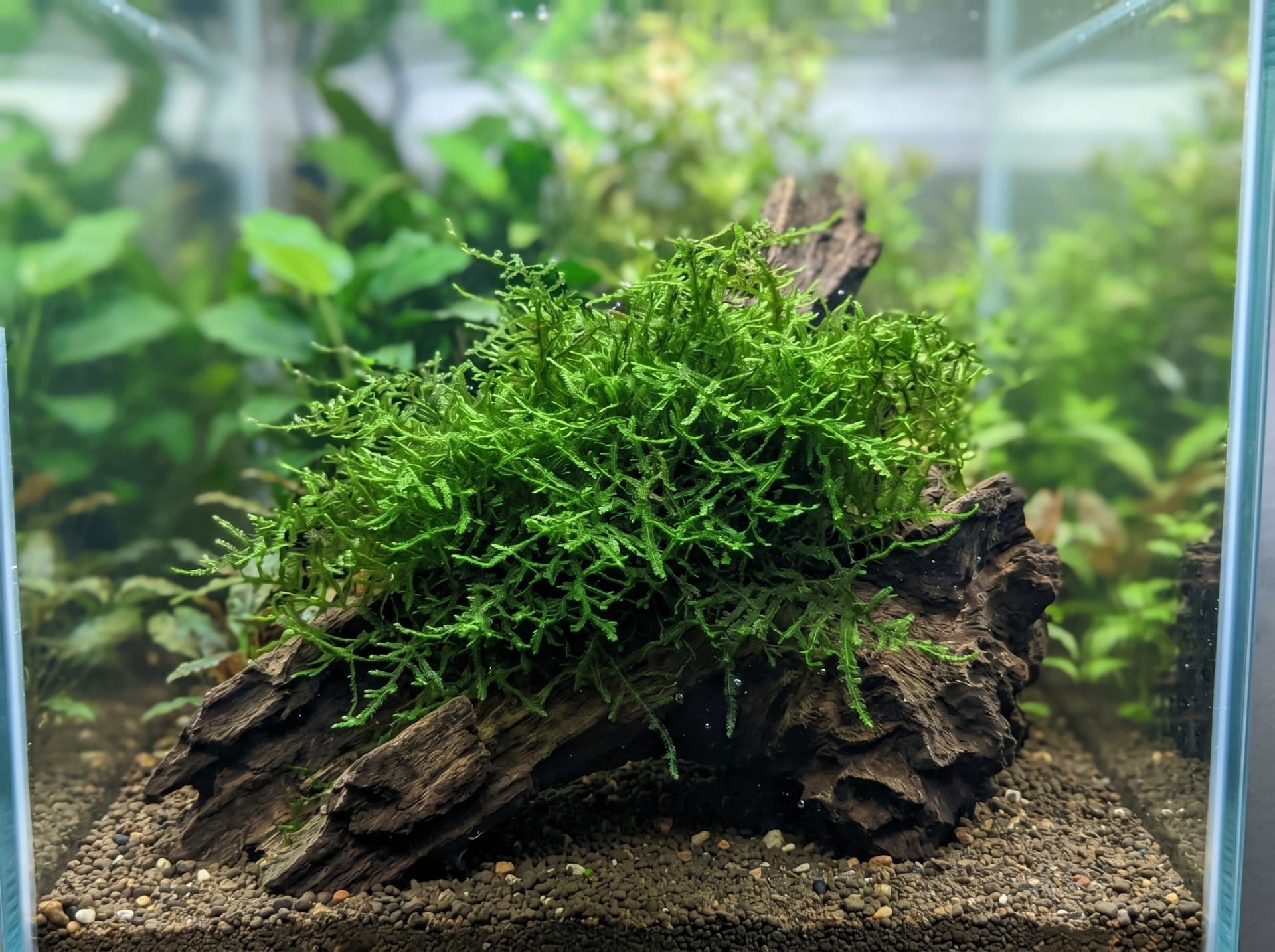
AI-generated image
Java Moss
BeginnerEctropothecium barbieri
The most widely used moss in aquascaping. Simply attach to driftwood or rocks for a natural look. Ideal hiding spot for shrimp fry. Perfect for absolute beginners.
About
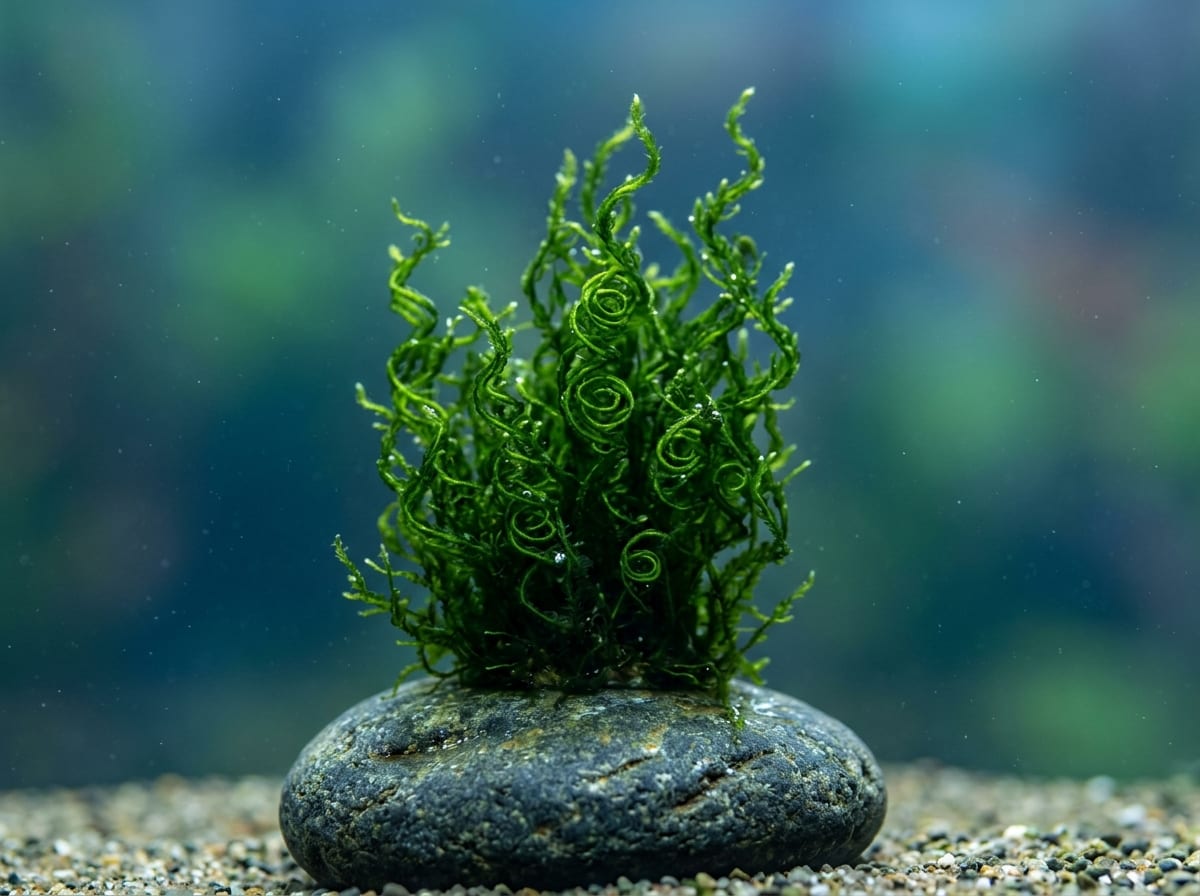
Java Moss (Taxiphyllum barbieri) is a moss plant in the family Hypnaceae, native to Southeast Asia, and the most widely used aquarium moss. Wound around driftwood, rocks, or mesh and allowed to attach, it forms beautiful green thickets when fully grown. It functions as shelter and spawning ground for shrimp and fish fry, while also contributing to water quality improvement. Its greatest appeal is hardiness—growing without CO2 under low lighting—making it universally used by aquarists from beginners to experts. Higher light promotes denser growth, and 'pearling' bubble release during photosynthesis can be enjoyed. It grows without fertilizer, but small amounts of liquid fertilizer accelerate growth. Regular trimming is necessary to maintain shape, as it becomes disheveled if left unattended.
Size of the Java Moss
The Java Moss grows to 2-5cm (thickness).
Temperature & humidity for the Java Moss
The ideal temperature for the Java Moss is 18〜30℃.
Basic Info
Origin
Southeast Asia
Size
2-5cm (thickness)
Temperature
18〜30℃
Watering & Fertilizer
Almost none needed. Liquid fert boosts growth
Growing Tips
Attachment
Tie to driftwood/rocks with fishing line or super glue
Lighting
Grows in low light. High light attracts algae
CO2 & Fertilizer
Grows without CO2 and needs almost no fertiliser. A small dose of liquid fertiliser promotes growth.
Water Temperature & Quality
Tolerates a wide water temperature range of 18-30°C. It helps purify the water and is easy to grow in a tank with shrimp and fry.
Trimming
Trim when overgrown. Neglect invites algae growth
Notes
Place in low-flow areas to prevent die-off
Java Moss FAQ
QWhat is the growing difficulty level for Java Moss?
Beginner. A variety suitable for beginners. No special equipment or experience is required—you can grow it without problems by setting up a basic cultivation environment.
QWhat is the ideal temperature for Java Moss?
The ideal temperature for Java Moss is 18〜30℃. Avoid sudden temperature changes and maintain a stable environment.
QHow large does Java Moss get?
The mature size of Java Moss is 2-5cm (thickness). This may vary slightly depending on cultivation environment and individual differences.
QHow should I water and fertilize Java Moss?
Java Moss: watering & fertilizer — Almost none needed. Liquid fert boosts growth. Aim for appropriate frequency and amount.
QWhat is the typical price for Java Moss?
The price of Java Moss varies significantly by variety, characteristics, size, and lineage. Please check GrowerDirect's price guide for the latest market information.
Last updated: September 25, 2026
References & Sources
Edited & verified by: GrowerDirect Editorial Team
The classifications, regulations, and growing data on this page are created and verified based on the primary information database below.
Taxonomy & Authority
Accepted name: Ectropothecium barbieri (Cardot & Copp.) J.T.Wynns
Synonyms: Taxiphyllum barbieri (Cardot & Copp.) Z.Iwats.
Authority databases: GBIF
Nomenclature follows global taxonomic authority databases.
Regulations & Conservation Status
Sources: Ministry of the Environment Designated Invasive Species List (Invasive Species Act) / CITES Appendix II listed plant taxa (family and genus level)
Regulations may change. Always verify the latest information with the relevant authorities.
Related Species
Find listings for this species
Related Articles
Aquatic Moss Types and Attachment Techniques | From Willow Moss to Premium Moss
Explaining aquatic moss types and attachment methods. Introducing attachment techniques using thread, adhesive, and stainless steel mesh.
Bonsai Moss Guide — Species, Application, Care & Seasonal Management Basics
A complete guide to using moss in bonsai: its role and visual impact, major species such as Hypnum, Racomitrium, and Leucobryum, step-by-step application, seasonal care, and common failure points.
Bonsai Moss Application Techniques | Choosing Species and Tips for Successful Establishment
This guide explains the types of moss used in bonsai moss application, collection methods, application techniques, and management practices for successful establishment.
Moss Poles & Stakes Guide for Foliage Plants | Creating Beautiful Vining Plant Displays
Learn about types of stakes and how to choose them for vining foliage plants like Monsteras and Philodendrons. This guide introduces DIY moss pole methods, coco fiber poles, trellises, and other ways to train your plants.
🩺 Common diseases
Can't find the plant you're looking for?
Post your wishes for free and growers with matching plants will contact you with introductions.