Aquatic Plant Encyclopedia
Encyclopedia of popular aquatic plants with care guides, traits, and aquascaping tips.
Showing 15 of 127 species
 © Krzysztof Ziarnek, Kenraiz / CC BY-SA 4.0
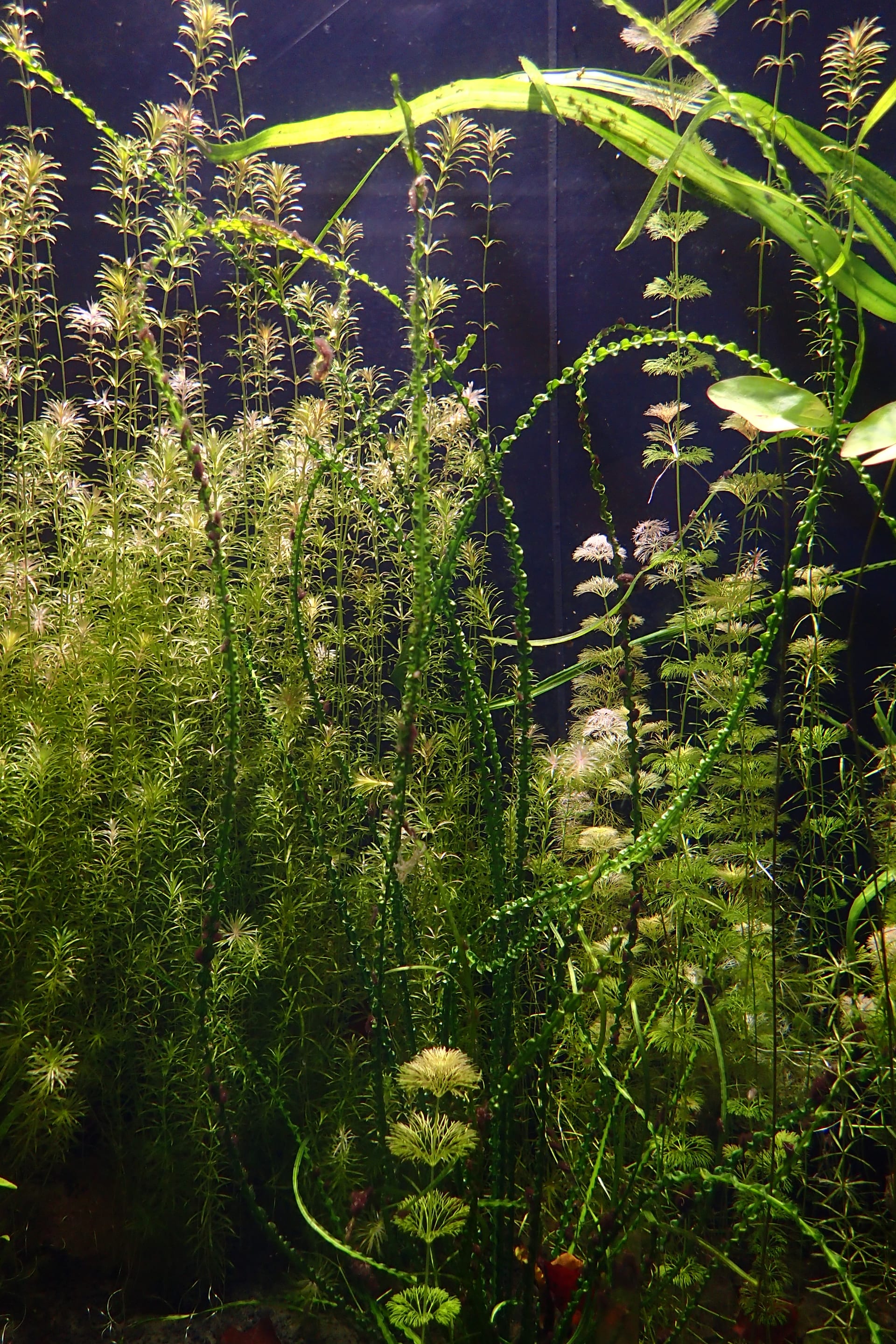
African onion plant
Crinum calamistratum
A Cameroonian aquatic plant that grows long, narrow, crinkled dark green ribbon leaves from a small bulb. Leaves reach 40–120 cm in aquaria and stream in the current. Slow but tough, and herbivorous fish leave it alone.
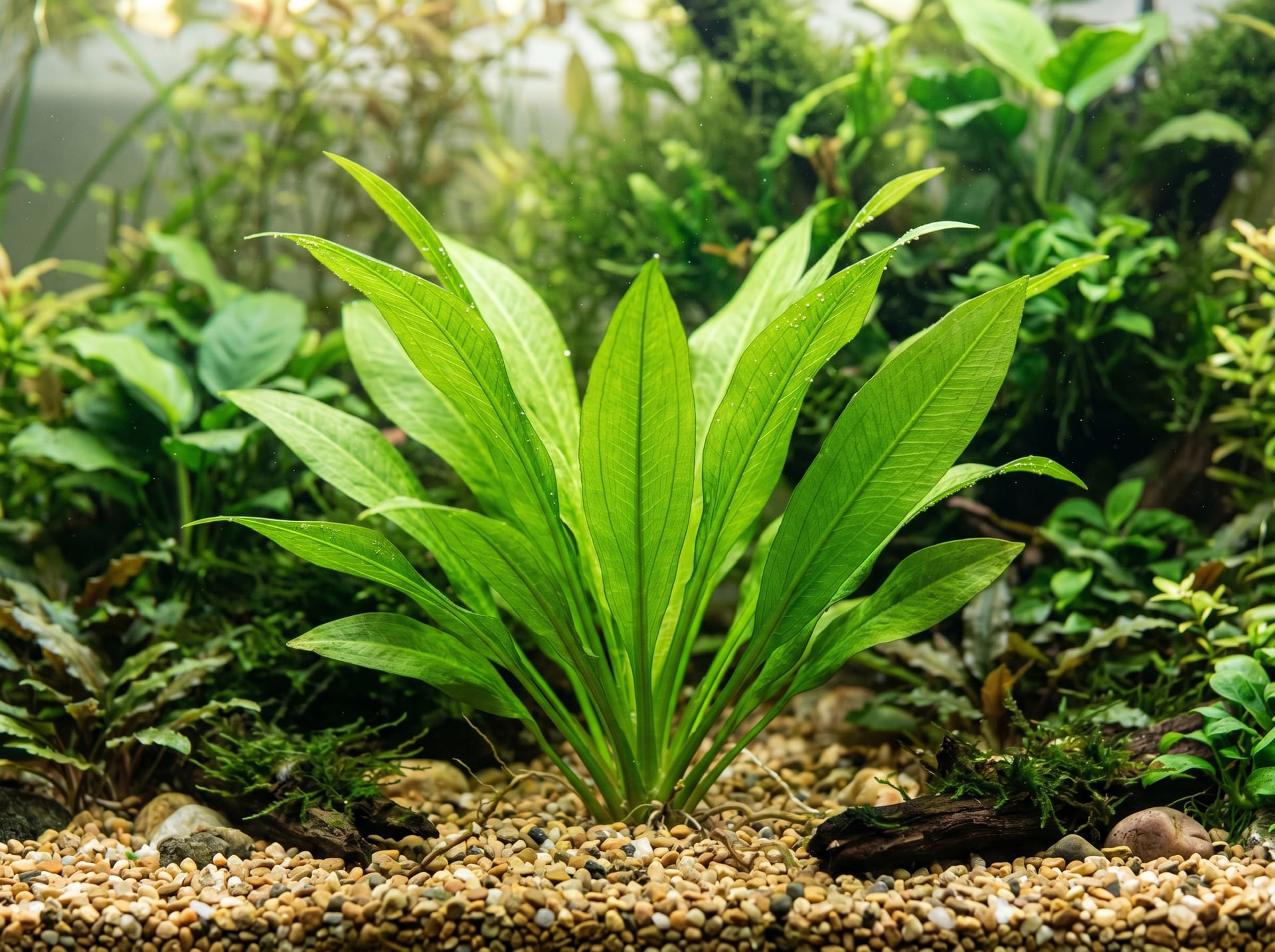
Amazon Sword
Aquarius grisebachii
A representative aquatic plant with large sword-shaped leaves. Gives strong presence as background centerpiece.
 © kajuko / CC BY-SA 3.0
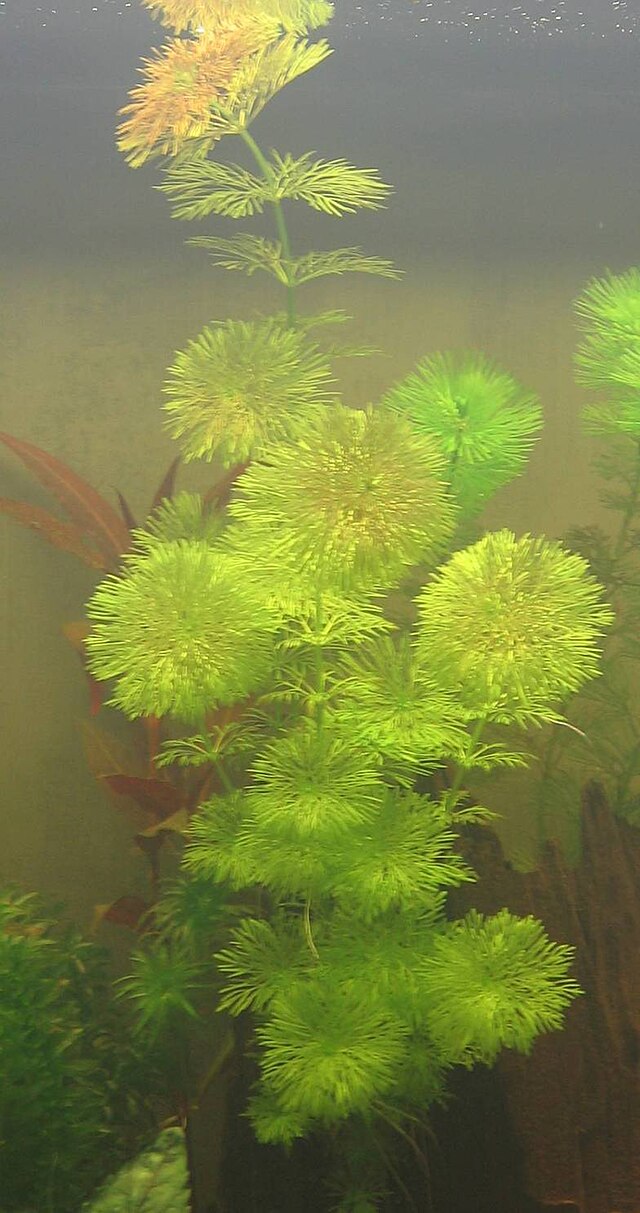
Ambulia
Limnophila sessiliflora
A hardy background stem plant that grows without added CO2. To propagate, cut the top 5-10cm of a stem, strip the lower leaves and push it back into the substrate; it roots readily. Its feathery whorled leaves give a soft look.
 © Krzysztof Ziarnek, Kenraiz / CC BY-SA 4.0
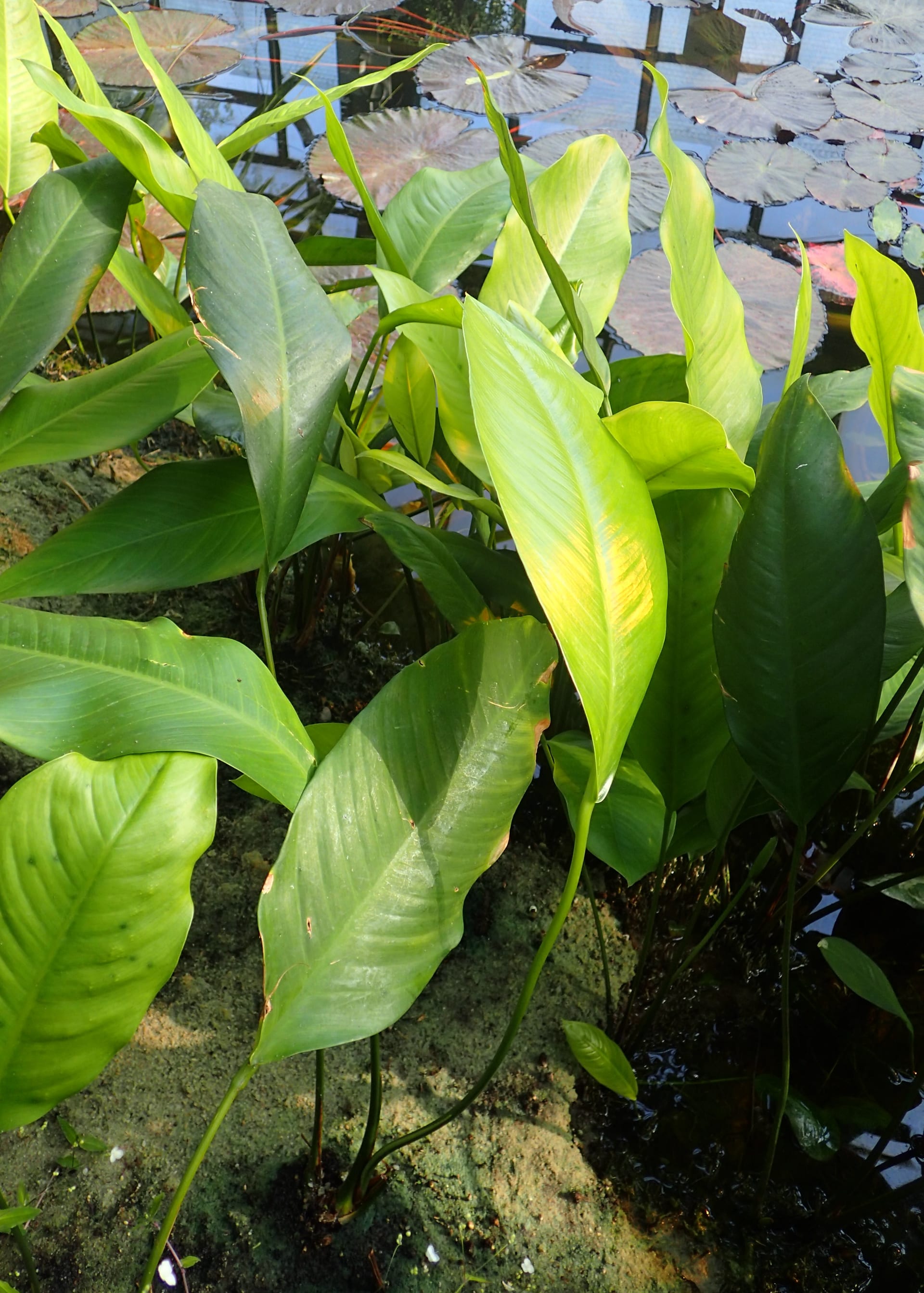
Anubias heterophylla
Anubias heterophylla
A large Anubias carrying elliptic to lanceolate leathery blades on long petioles, the margins often somewhat wavy. Naturally a marsh plant, it grows permanently submerged too, staying smaller than on land.
 © Drhyperlaur at English Wikipedia / Public domain
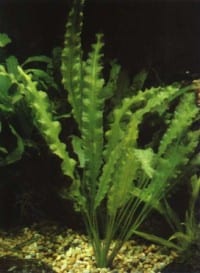
Aponogeton crispus
Aponogeton crispus
A large Sri Lankan aquatic plant that grows a rosette of long, wavy-edged leaves from a tuber. It needs no dormant period in aquaria and often flowers, but its leaves can reach the surface, so it suits larger tanks.
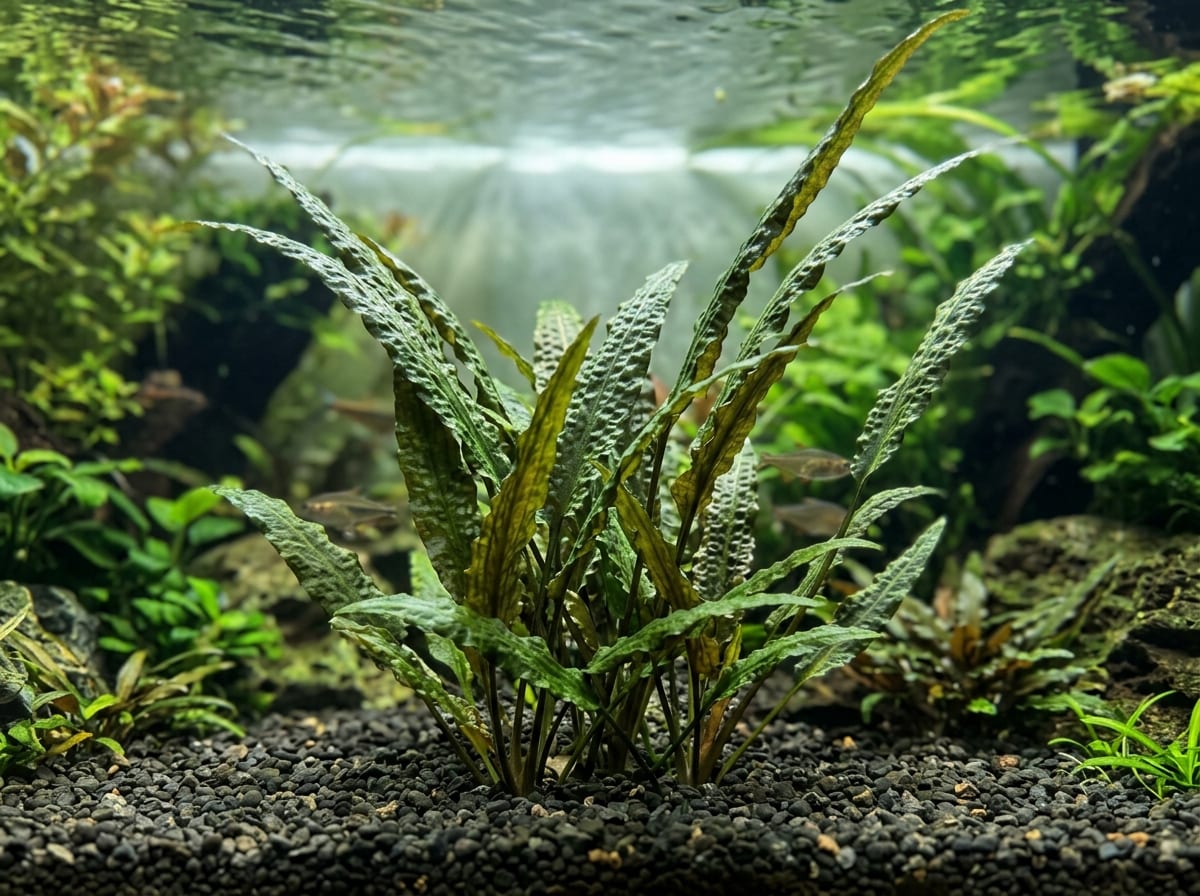
Cryptocoryne crispatula var. balansae
Cryptocoryne crispatula var. balansae
A Cryptocoryne with long, strap-like, strongly hammered leaves that can exceed 50 cm, used as a background thicket. Native to hard limestone waters, it shows twisted leaves when short of calcium.
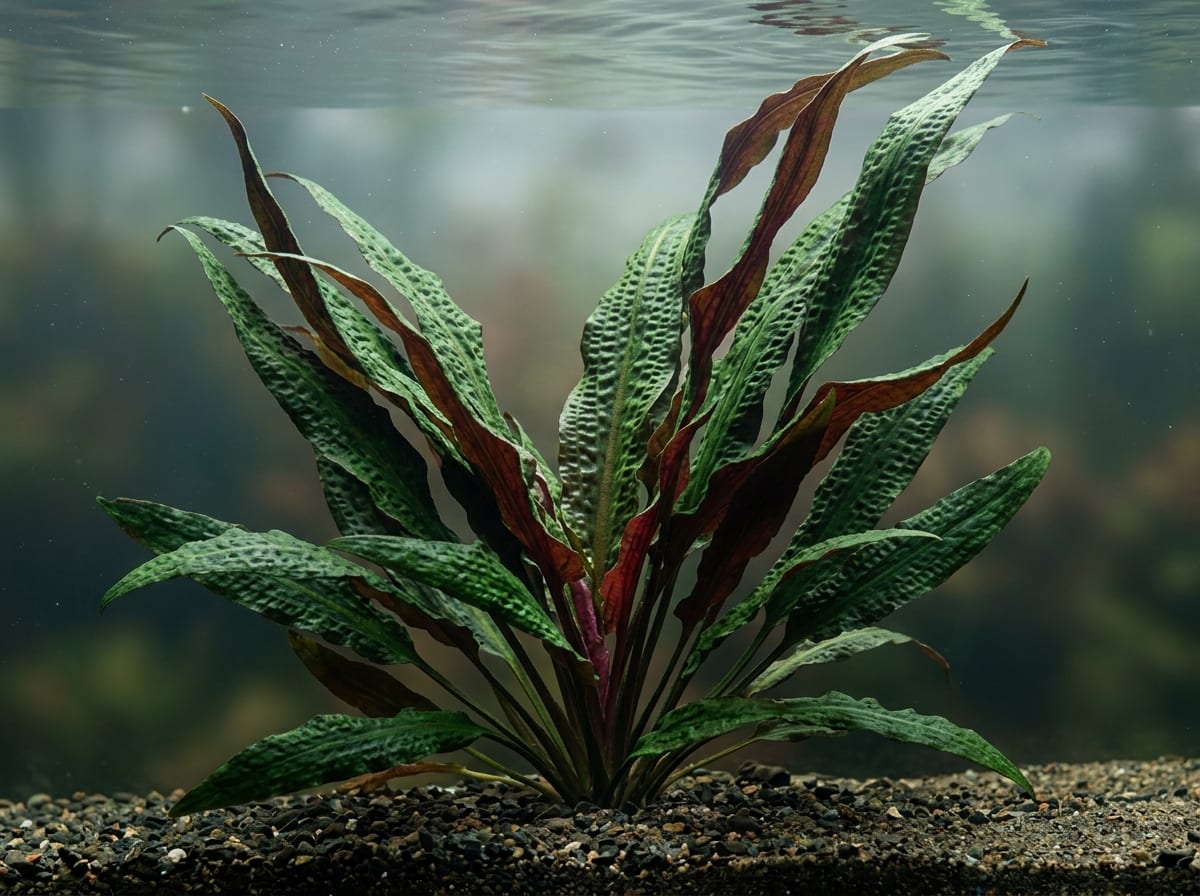
Cryptocoryne usteriana
Cryptocoryne usteriana
A large Cryptocoryne from Guimaras in the Philippines. Its embossed leaves, 3–5 cm wide, grow beyond 50 cm and turn wine-red beneath under good light and fertilisation. It likes hard water and is not eaten by fish.
Echinodorus 'Rubin'
Echinodorus 'Rubin'
A large hybrid sword plant with long, leathery leaves up to about 60 cm. Young leaves are vivid red-brown with conspicuously pale veins. Bred by Hans Barth of Dessau.
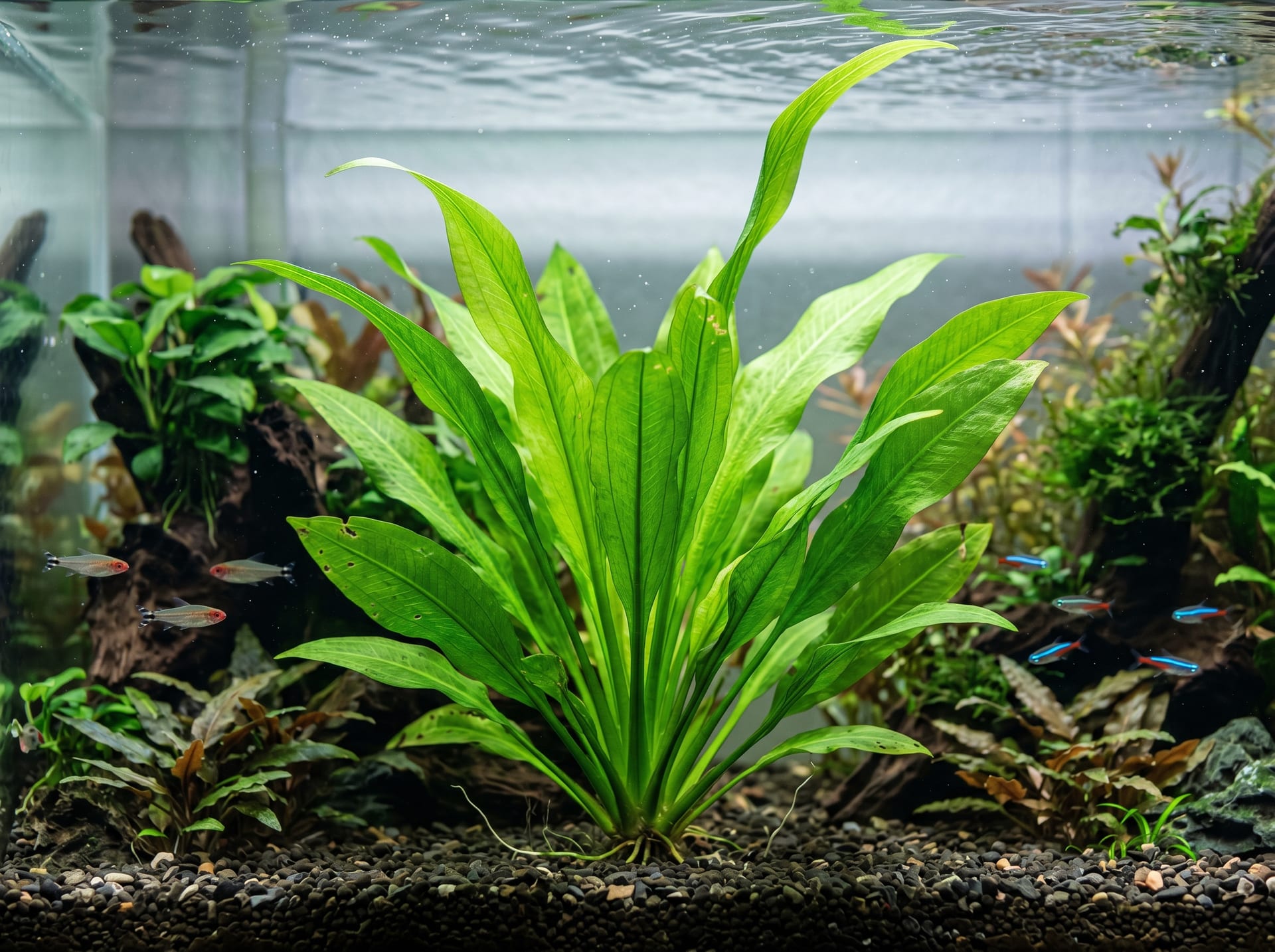
Echinodorus (Amazon Sword)
Echinodorus
Representative large aquatic plant also called Amazon Sword. Ideal for mid to background. Propagates by runners, easy for beginners.
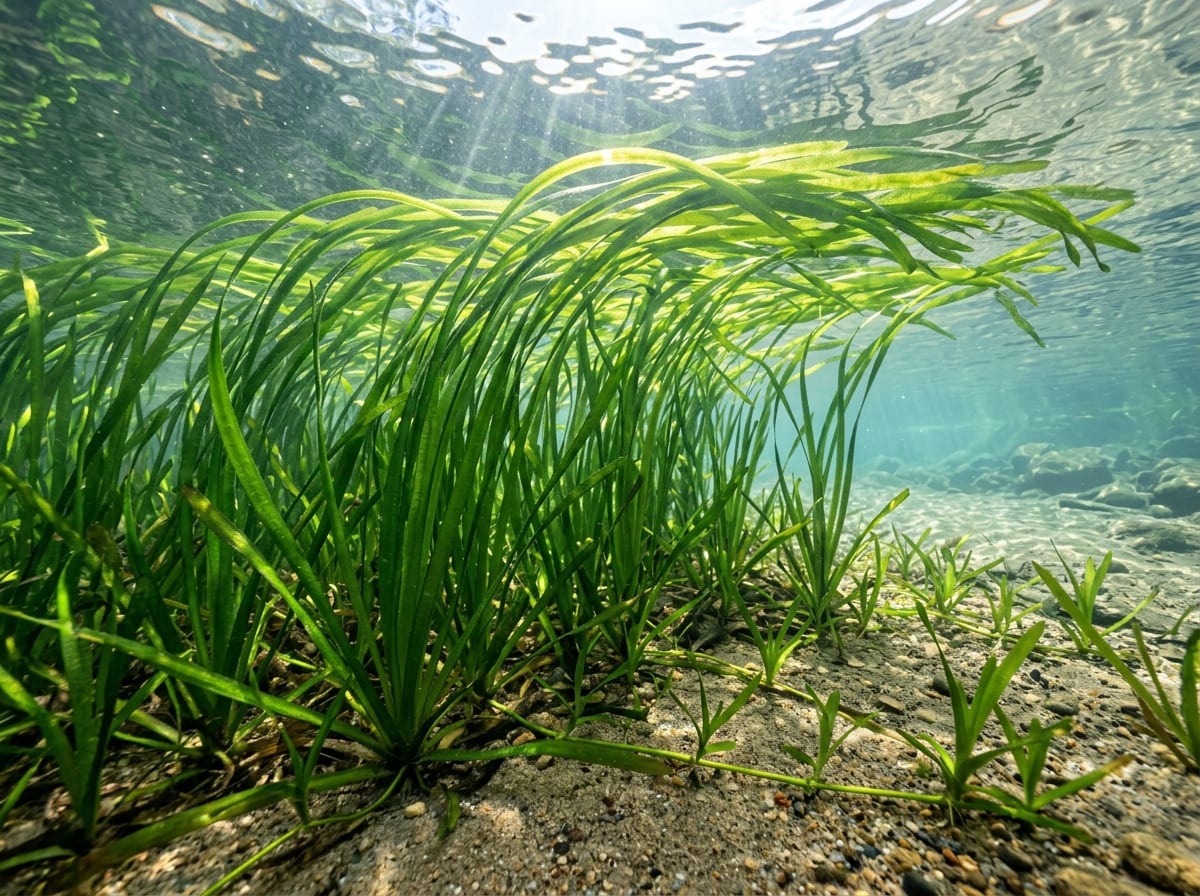
Giant vallisneria
Vallisneria australis
A large vallisneria with tough ribbon leaves about 2 cm wide that grow over 1 m long and spread across the surface. It multiplies freely by runners and resists herbivorous fish. Naturalised in Japan and listed as a Priority Control Alien Species.
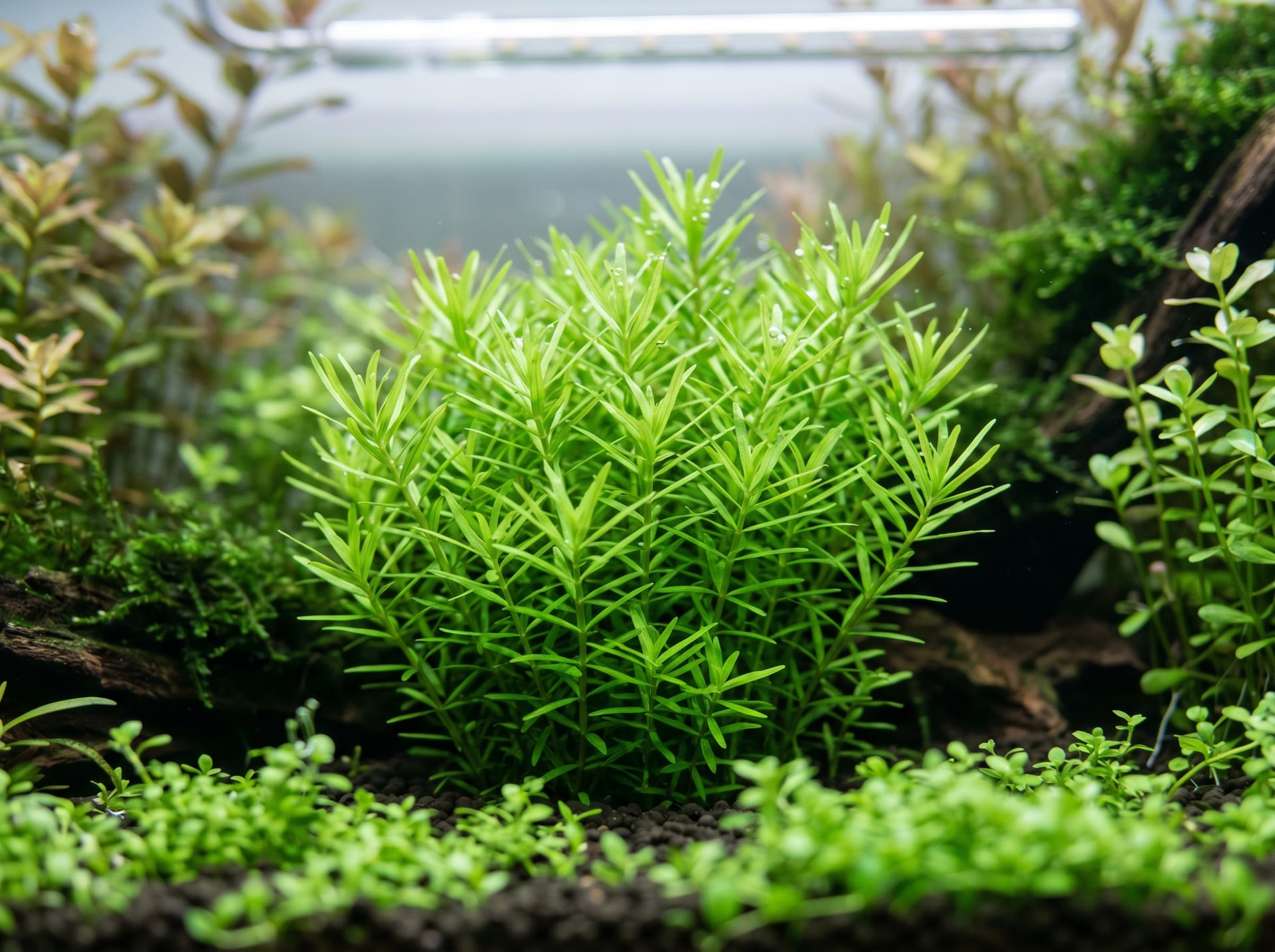
Green Rotala
Rotala rotundifolia 'Green'
A green variety of Rotala rotundifolia. Dense bright green leaves create lush background bushes. Easier than red varieties. Replant trimmings to increase density.
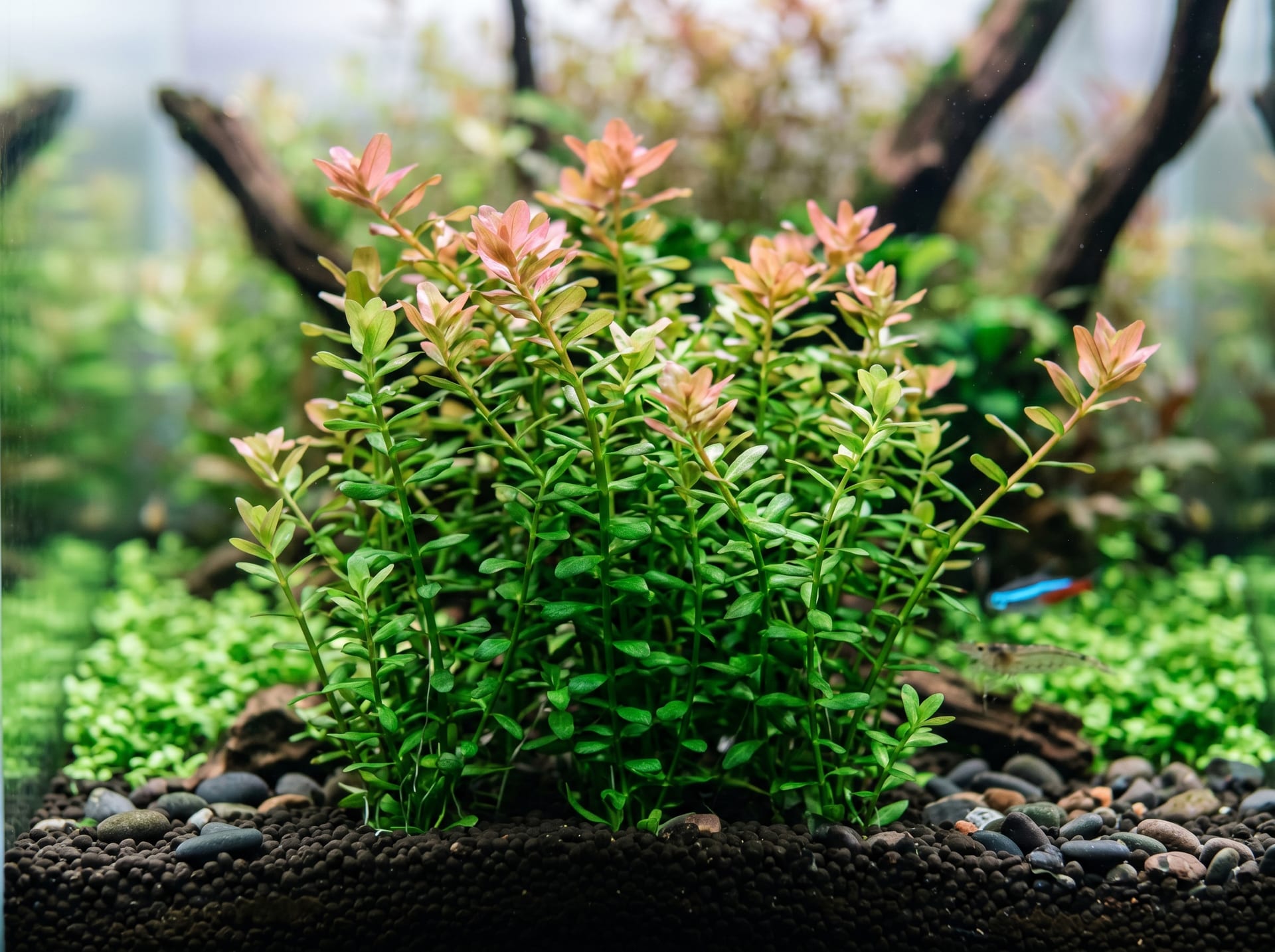
Rotala
Rotala spp.
Essential background stem plant genus. Many species including R. rotundifolia and R. indica. Beautiful red coloration and dense bushes achievable through trimming.
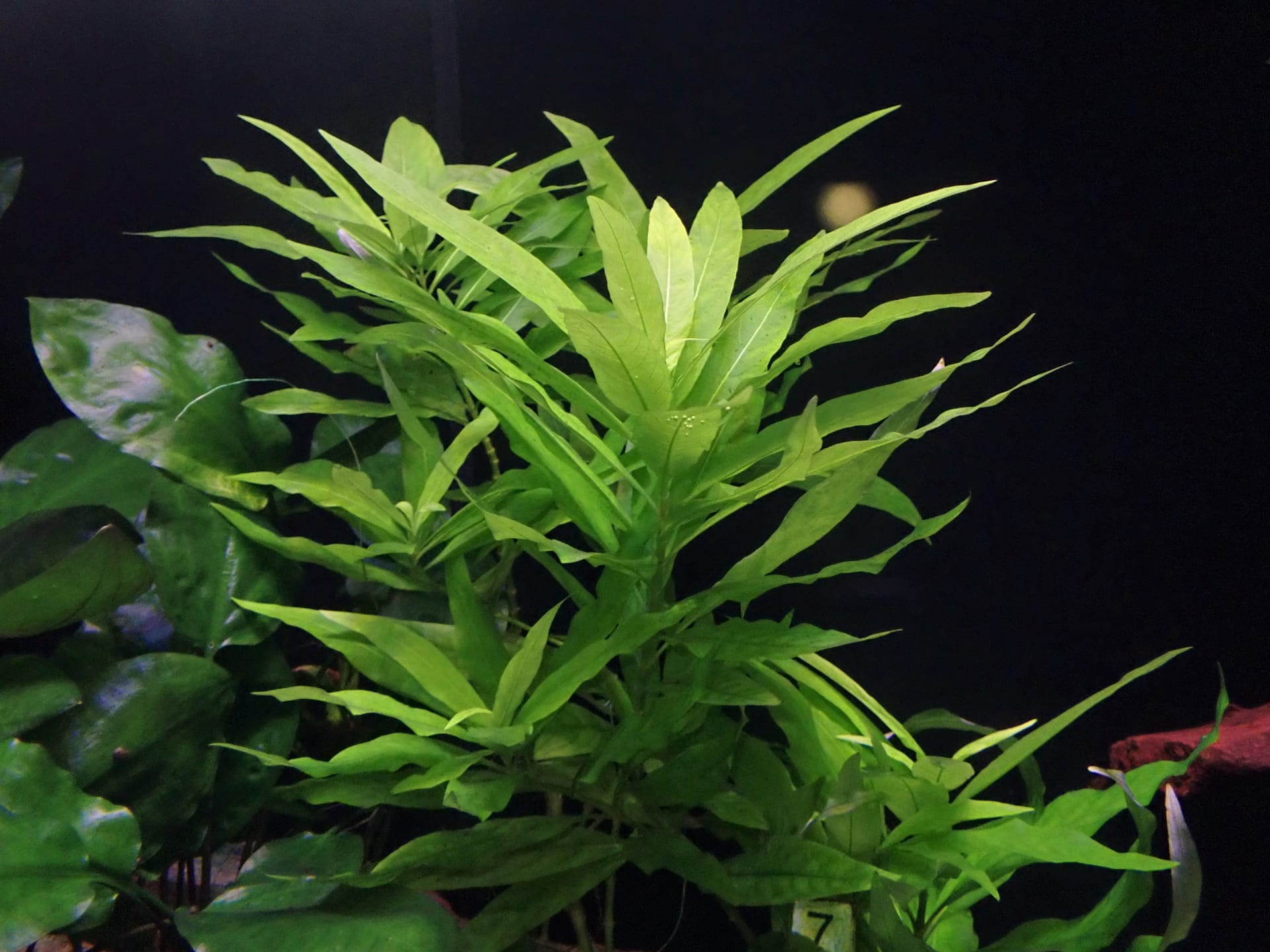 © Krzysztof Ziarnek, Kenraiz / CC BY-SA 4.0
Temple plant (Hygrophila corymbosa)
Hygrophila corymbosa
A large stem plant with long, broad, bright green opposite leaves. Fast-growing and bushier after trimming, it bears fragrant purple flowers when grown out of the water. Many forms such as 'Siamensis' exist.
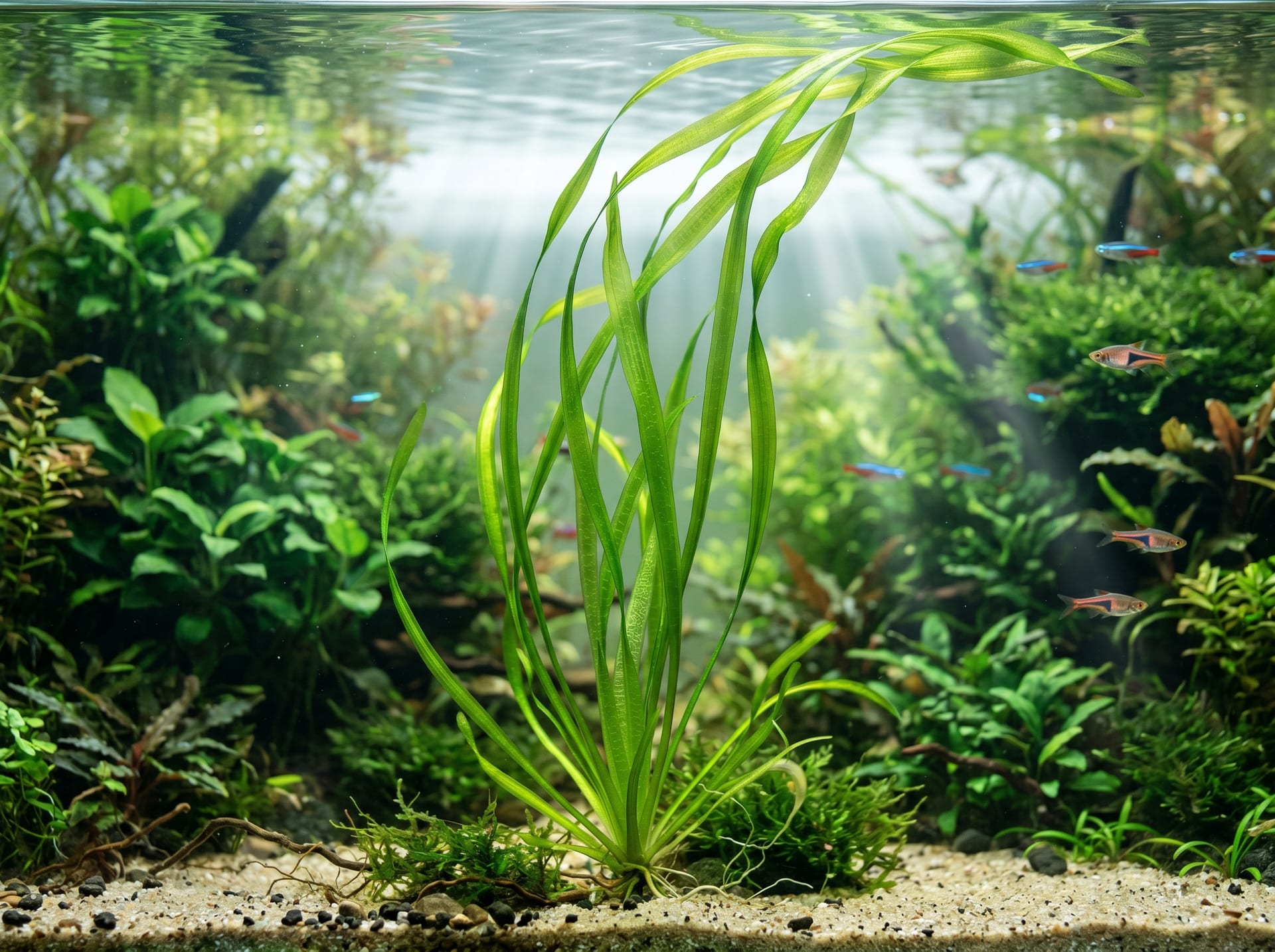
Vallisneria spiralis
Vallisneria spiralis
A background plant with long ribbon-like leaves that wave in water current. Propagates abundantly by runners, creating a natural river scene. Hardy in low light without CO2. Often used in goldfish tanks.
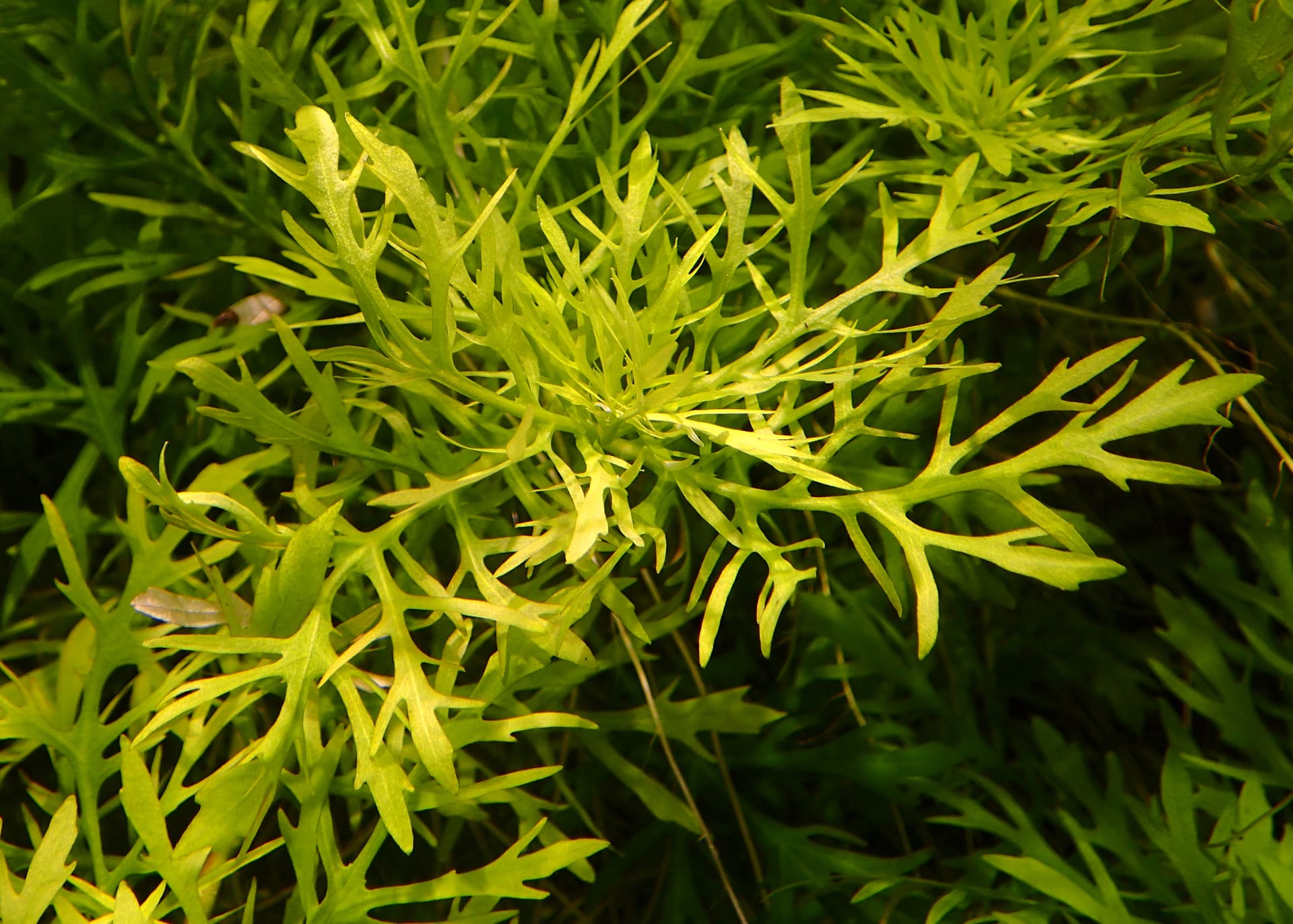 © Krzysztof Ziarnek, Kenraiz / CC BY-SA 4.0
Water wisteria
Hygrophila difformis
A stem plant with striking heterophylly: deeply pinnatifid leaves underwater and undivided, toothed leaves above water. Very fast-growing, it soaks up excess nutrients in newly set-up tanks.
Related Content
Aquatic Plant FAQ
- How much do aquatic plants cost?
- Common Rotala and Anubias cost 300-1,000 yen, Bucephalandra 1,000-5,000 yen, and rare wild-collected specimens 5,000-20,000+ yen depending on species.
- Can beginners grow aquatic plants?
- Anubias Nana and Java Moss require no CO2 injection and grow in low light, making them ideal for beginners. Start with hardy shade-loving plants.
- What equipment is needed for aquatic plants?
- A tank, LED light, filter, and aqua soil are the basics. For advanced layouts, CO2 injection and high-performance lighting significantly improve growth and coloration.
- What should I check when buying aquatic plants?
- Ensure leaves are green and healthy, not melting or dying, and free of snails or pests. Tissue-cultured cups are pest-free and reliable.
- Why do aquatic plants die?
- Insufficient light, CO2, or nutrients are the main causes. Each species has different requirements, so matching the environment to your specific plants is essential.