Carnivorous Plant Encyclopedia
Encyclopedia of popular carnivorous plants with care guides, trapping mechanisms, and cultivation tips.
Featured Carnivorous Plant
Showing 9 of 140 species
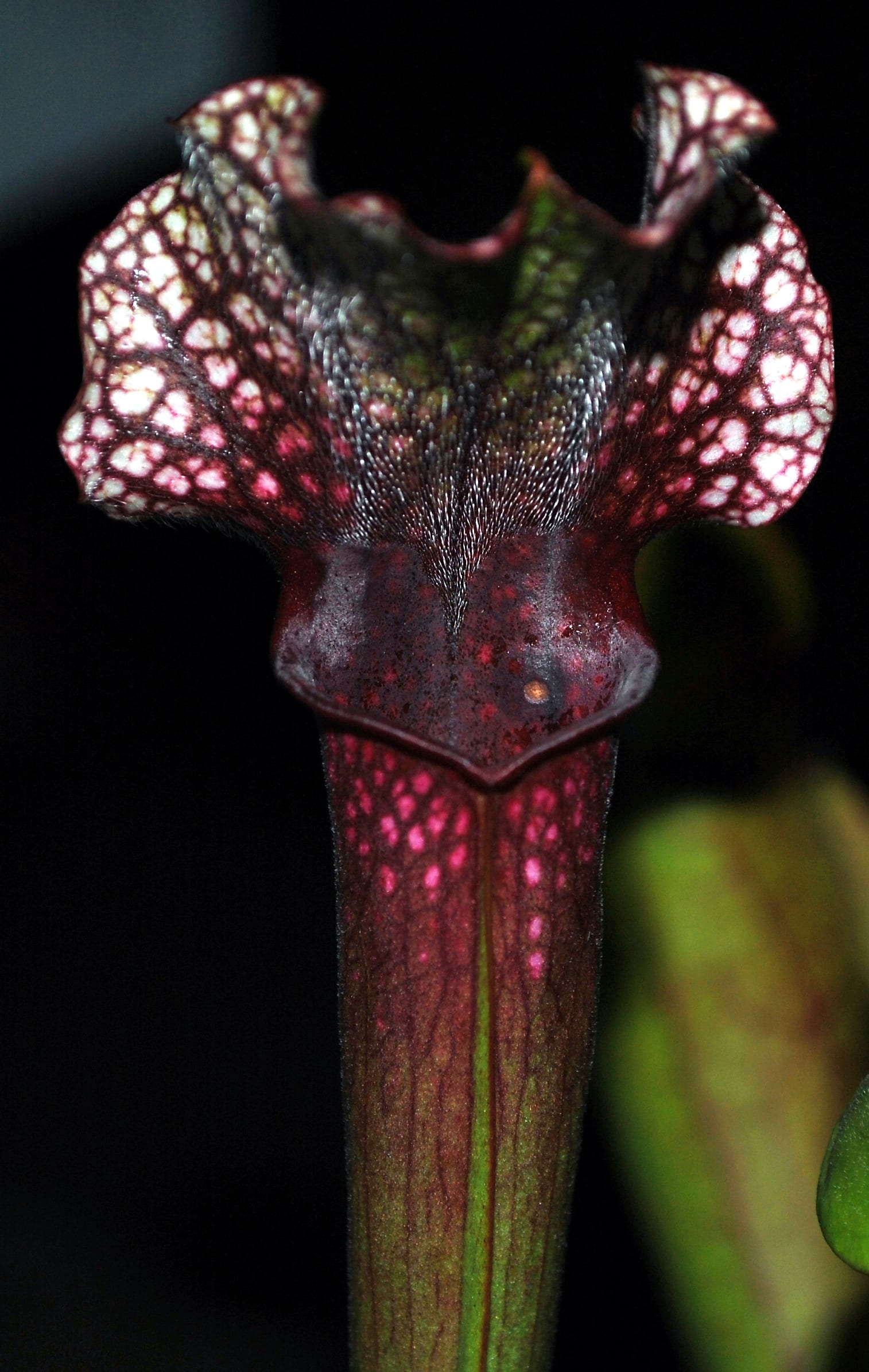 © Aaron Carlson from Menomonie, WI, USA / CC BY-SA 2.0
Sarracenia 'Judith Hindle'
Sarracenia 'Judith Hindle'
A three-species Sarracenia hybrid raised by Alan Hindle. Pitchers open green laced with yellow in spring and turn deep plum red by late summer, topped by a ruffled hood mottled white, yellow and green.
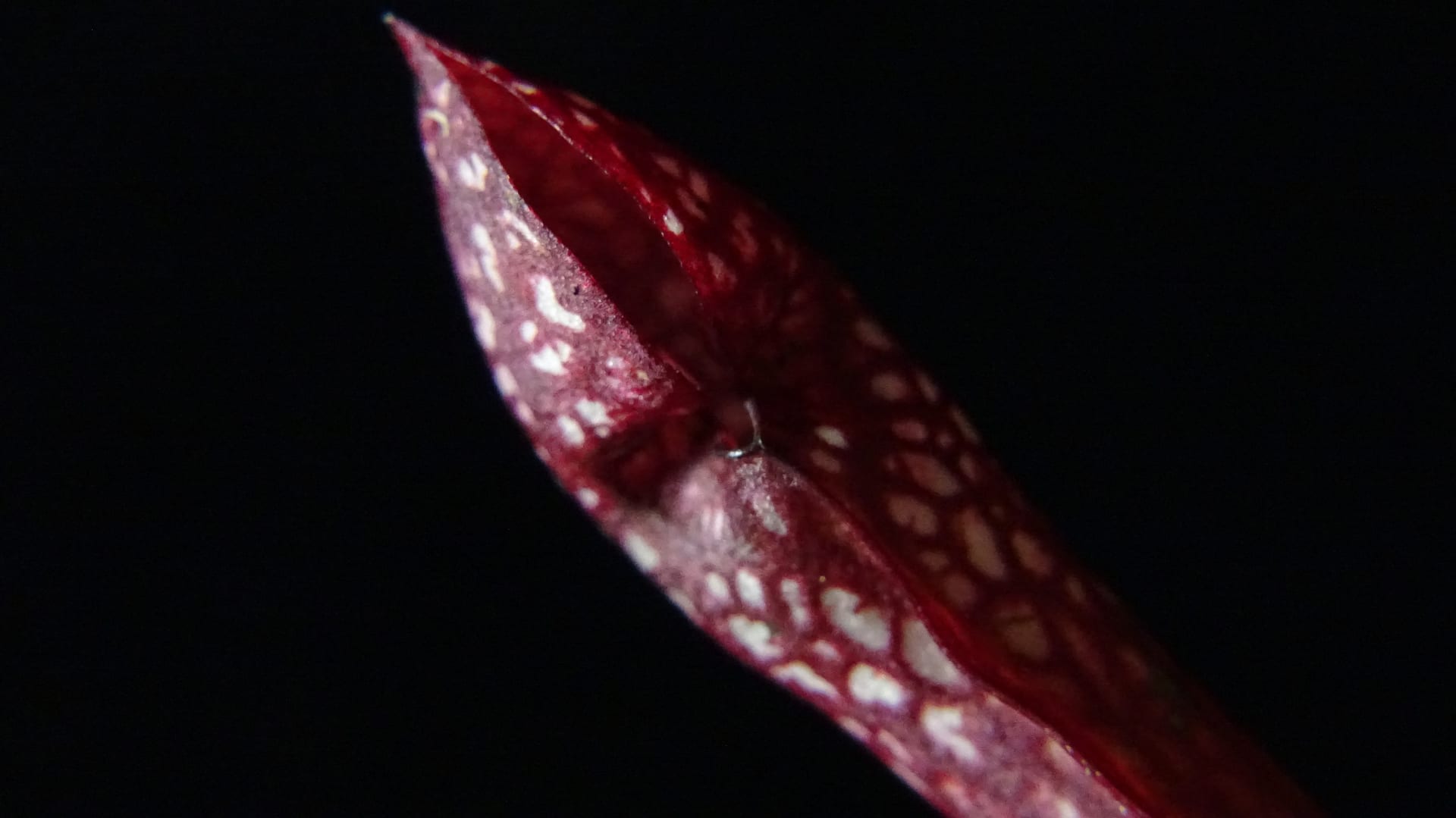 © Tippitiwichet / CC BY 2.0
Sarracenia 'Scarlet Belle'
Sarracenia 'Scarlet Belle'
An American cultivar from S. leucophylla × S. psittacina. Numerous vivid scarlet pitchers up to 40 cm tall turn their mouths toward the centre of the plant, and its vigour and good colour even in part shade have made it widespread.
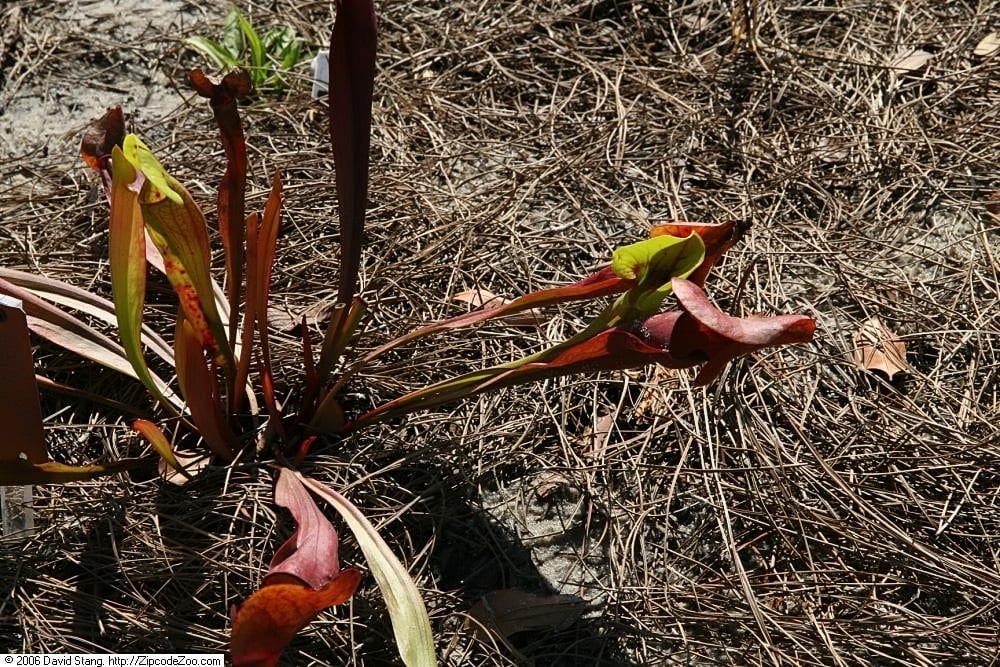 © Photo by David J. Stang / CC BY-SA 4.0
Sarracenia × catesbaei
Sarracenia × catesbaei
The natural hybrid between tall S. flava and squat S. purpurea. It is intermediate between them, with pitchers stouter than S. flava and more upright than S. purpurea. One of the long-known classic Sarracenia hybrids.
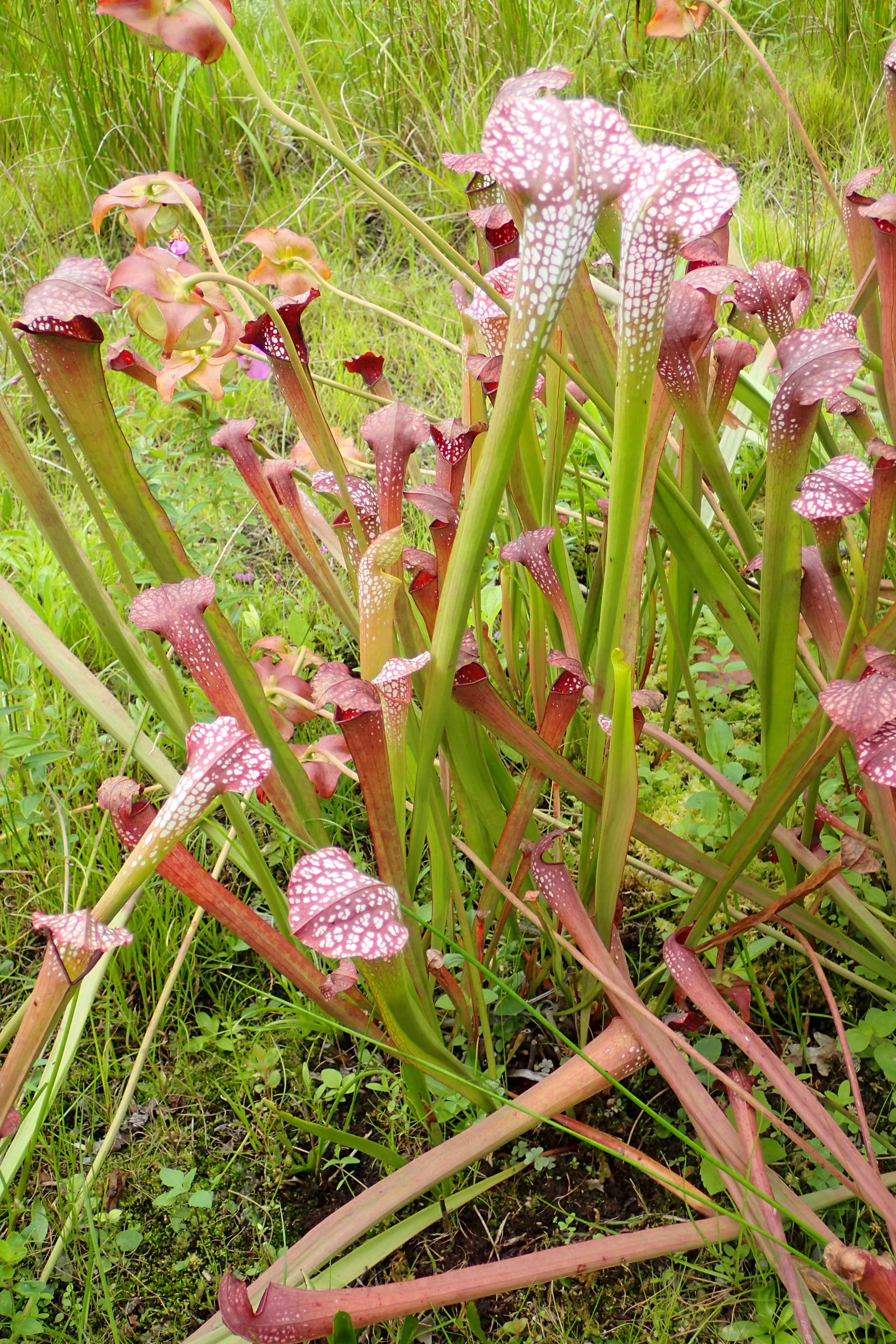 © Krzysztof Ziarnek, Kenraiz / CC BY-SA 4.0
Sarracenia × excellens
Sarracenia × excellens
The natural hybrid between white-topped S. leucophylla and hooded S. minor. White colouring and a frilly lid from S. leucophylla combine with an overhanging hood and white spots from S. minor.
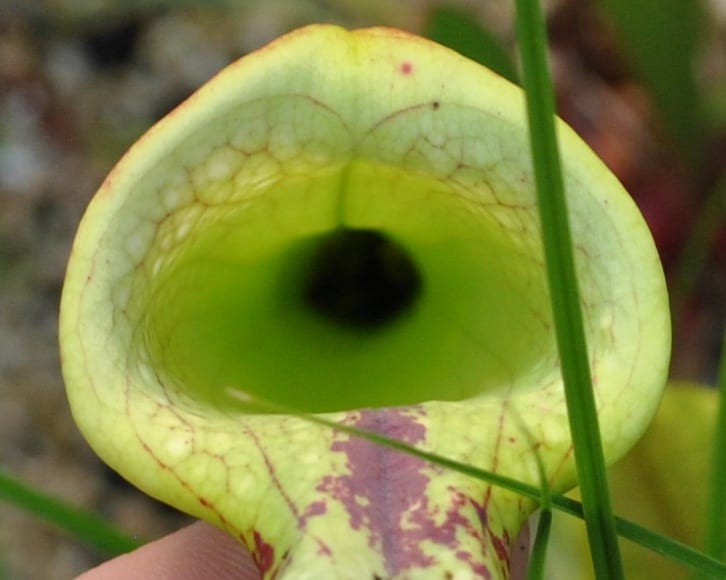 © Aaron Carlson from Menomonie, WI, USA / CC BY-SA 2.0
Sarracenia × moorei
Sarracenia × moorei
The natural hybrid between yellow S. flava and white-topped S. leucophylla. It raises tall pitchers intermediate between the parents, with white patches on the upper pitcher and a frilly lid margin showing its S. leucophylla ancestry.
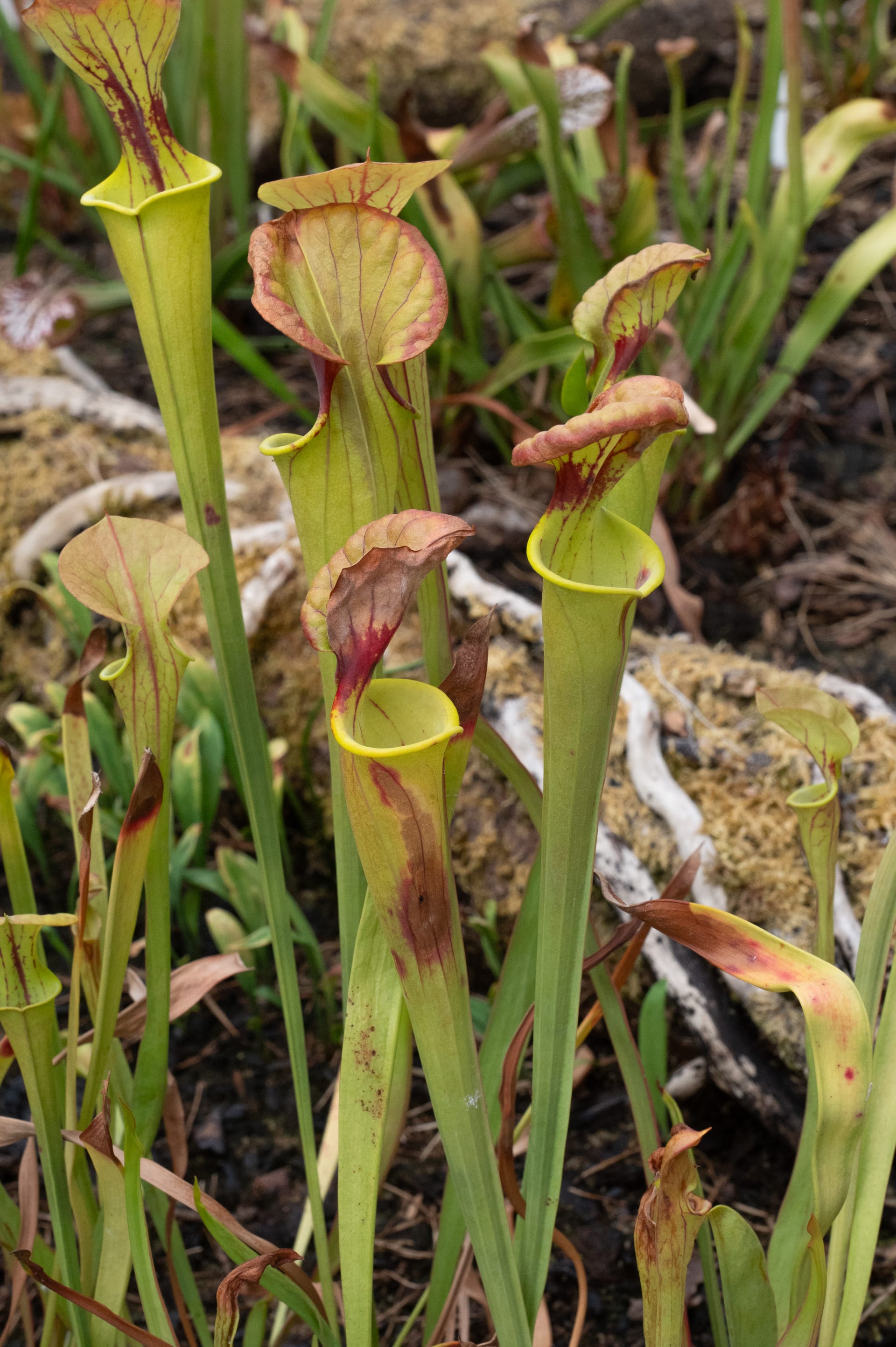 © Mickaël Schauli / CC BY-SA 4.0
Sarracenia flava var. cuprea
Sarracenia flava var. cuprea
A variety of the yellow pitcher plant, S. flava, with a reddish copper lid on a green to yellow tube. The copper lid against the tube is its charm, though on some clones the lid colour fades later in the season.
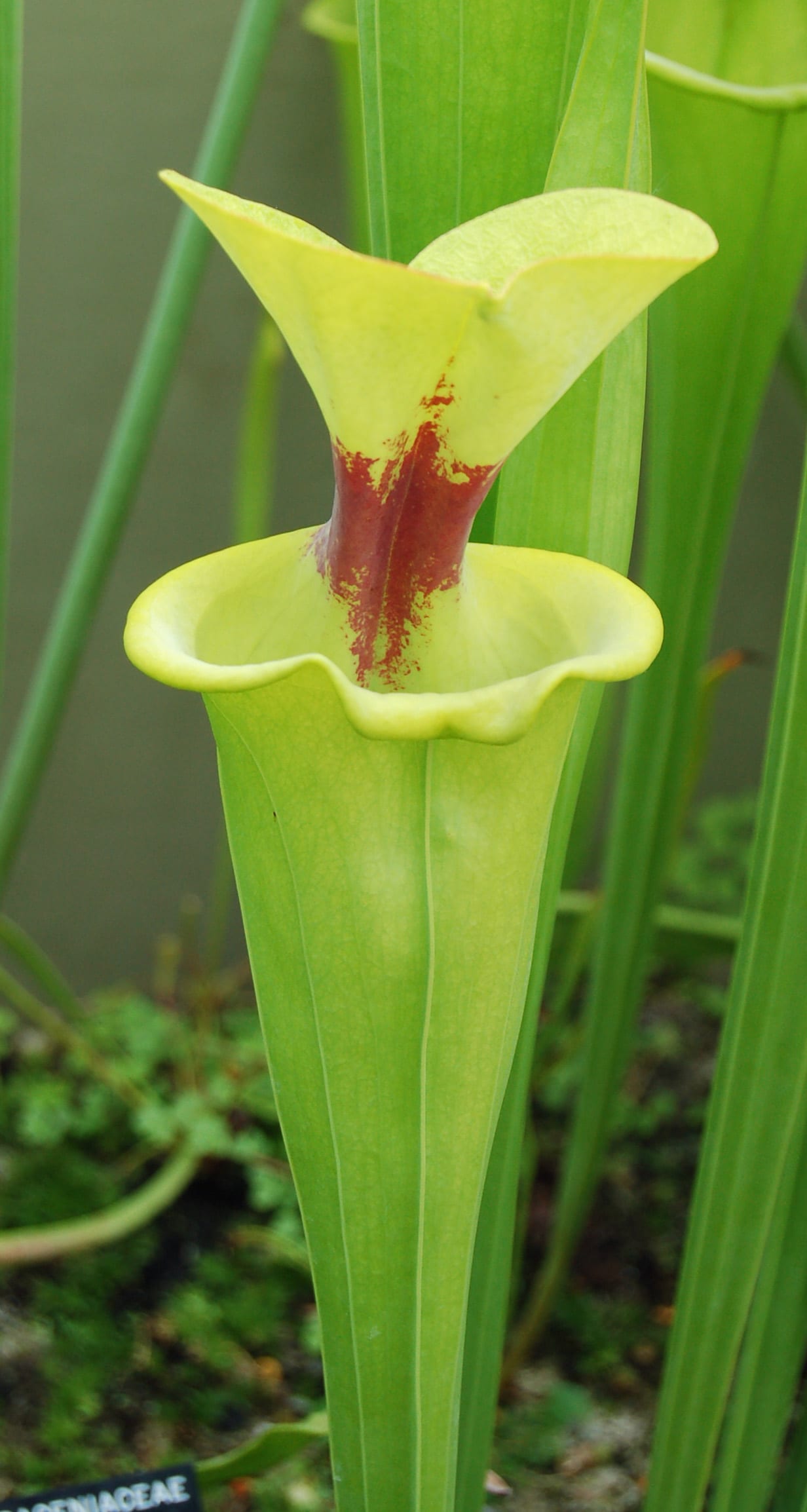 © Alex Lomas / CC BY 2.0
Sarracenia flava var. maxima
Sarracenia flava var. maxima
A variety of the yellow pitcher plant, S. flava, with pure green to yellow-green pitchers entirely lacking red. Despite a name meaning 'largest' it is of normal size, and it is often confused with var. rugelii, which has a red throat patch.
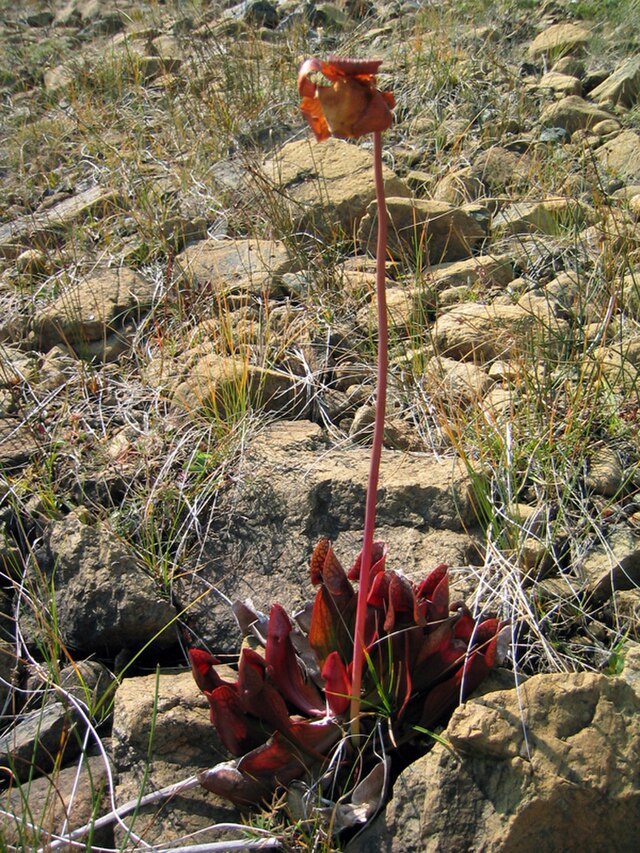 © Shipguy / Public domain
Sarracenia Purpurea
Sarracenia purpurea
The most widespread North American Sarracenia with short tubular red-purple pitchers, very cold hardy.
 © Tippitiwichet / CC BY 2.0
Southern purple pitcher plant
Sarracenia purpurea ssp. venosa
The southern subspecies of the purple pitcher plant, S. purpurea. Its squat pitchers are rough-surfaced outside, with a large hood whose side lobes overlap when pinched together, and it tolerates warmer climates than the northern subspecies.
Related Content
Carnivorous Plant FAQ
- How much do carnivorous plants cost?
- Venus Flytraps cost 500-2,000 yen, Nepenthes 1,000-10,000 yen, and rare highland Nepenthes can exceed tens of thousands of yen depending on species and size.
- Can beginners grow carnivorous plants?
- Venus Flytraps, Sundews, and Sarracenia are relatively easy and beginner-friendly. Keep them in a tray of water for humidity and place in a sunny spot.
- How long do carnivorous plants live?
- Venus Flytraps can live 10+ years with proper care, and Sarracenia are similarly long-lived. Nepenthes can grow for decades in the right conditions, getting progressively larger.
- What should I check when buying carnivorous plants?
- Check that leaves and traps are healthy with no root rot. For Nepenthes, choose specimens with pitchers. Avoid sudden environment changes after purchase and acclimate gradually.
- Do I need to feed insects to carnivorous plants?
- They grow fine through photosynthesis alone without feeding. Insects are supplemental nutrition and don't need to be force-fed. Outdoor plants catch bugs naturally, which is fun to observe.