Carnivorous Plants Winter Care & Cold Protection Guide
Venus flytraps and Sarracenia require winter dormancy, while Nepenthes need warmth. This guide explains species-specific winter management, the importance of dormancy, and indoor warming techniques.
Key Takeaways
Venus flytraps and Sarracenia require winter dormancy, while Nepenthes need warmth. This guide explains species-specific winter management, the importance of dormancy, and indoor warming techniques.
Related Species
Carnivorous plants captivate many plant enthusiasts through their unique ecology of trapping insects for nutrition. However, it's also true that many people struggle with the question "How should I manage them in winter?" when they start growing them.
The biggest reason why winter care for carnivorous plants is considered difficult is that different species require opposite approaches. While some species need to be exposed to cold and allowed to enter dormancy, others will weaken and die if subjected to low temperatures. Failing to understand this difference and applying the same care to all species can result in the unfortunate loss of your precious plants by spring.
This article provides detailed explanations of winter care methods for major carnivorous plant species. We'll also share specific temperature management techniques and watering tips so that even first-time growers can confidently implement these methods.
Understanding "Dormancy" Before Winter Care
First, it's important to understand the concept of "dormancy." Many carnivorous plants native to temperate regions stop growing in winter and enter a state of minimal metabolism. This is dormancy.
In human terms, it's like sleep that allows a tired body to heal. By undergoing dormancy, plants store energy for the following spring and can develop vigorous new growth. Conversely, if kept in a warm indoor environment without dormancy, plants will continue to deplete their energy reserves, resulting in severely stunted growth the following year.
- Species requiring dormancy: Venus flytrap, Sarracenia, temperate sundews, etc.
- Species requiring warmth: Nepenthes (pitcher plants), tropical sundews, etc.
Determine which category your species belongs to before you begin preparing for winter.
Winter Care for Species Requiring Dormancy
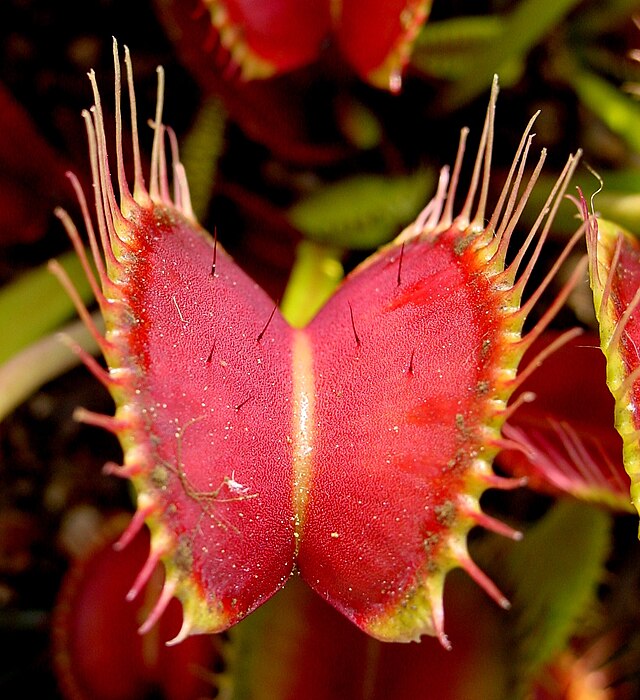
Venus Flytrap (Dionaea muscipula)
The Venus flytrap is native to the Carolinas in North America and is a temperate carnivorous plant. It requires 3-4 months of dormancy in cold temperatures of 0-10°C during winter.
In winter, the above-ground leaves may appear to turn brown and die, but this is normal. The rhizome (underground portion) is still alive, so don't panic and discard the plant.
Watering Tips
Venus flytraps are typically managed using watering trays (placing the entire pot in water), but during dormancy, reduce the water amount. Lower the water level in the tray to about half its normal level, maintaining just enough moisture so the soil doesn't completely dry out. Be careful, as excessive moisture can cause root rot.
Ideal Placement
- Outdoors: A sheltered eaves area or cold greenhouse protected from frost
- Indoors: An unheated hallway, entryway, or window sill (even a north-facing window works)
As spring arrives and temperatures rise, new trapping leaves will begin to emerge from the center. At this point, restore the watering tray to its normal water level and move the plant to a brightly lit location.
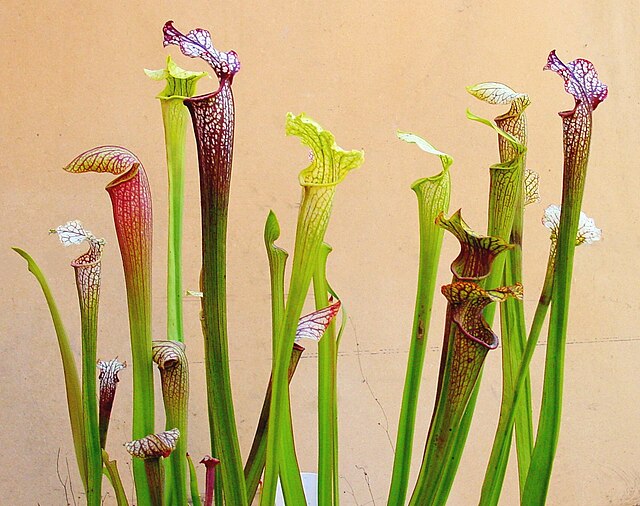
Sarracenia (Sarracenia species)
Sarracenia is also a temperate carnivorous plant native to North America and requires winter dormancy. The target management temperature is 0-10°C.
Like the Venus flytrap, old trapping leaves will die off in winter. While the appearance may seem sparse, the rhizome is still alive and well, so there's no problem. Regularly removing dead leaves helps prevent disease.
Outdoor Management
Sarracenia is relatively cold-hardy and can tolerate some frost and snow. Outdoor winter survival is possible in environments that don't freeze solid. However, be cautious of extremely cold conditions where the pot itself might freeze completely.
Temperate Sundews (Drosera species)
Sundews have both temperate and tropical varieties with different care requirements. Temperate varieties (such as D. rotundifolia and D. anglica) require winter dormancy in cold conditions, just like Venus flytraps and Sarracenia.
Overwinter them in a location protected from outdoor frost or in an unheated indoor space. Growth stops during winter and leaves may form a compact rosette shape, but they'll resume growth when spring arrives.
Winter Care for Species Requiring Warmth
Nepenthes (Pitcher Plant)
Nepenthes is a tropical carnivorous plant native to Southeast Asia and tropical Africa. It's characterized by its distinctive pitcher-shaped trapping leaves and is one of the most popular carnivorous plant species.
As a tropical species, maintaining a minimum temperature of 15°C or higher is essential for winter survival. If temperatures drop below 10°C, leaves and pitchers will begin to deteriorate, and the plant may die in the worst case.
Indoor Management Tips
- Bring indoors to a heated room
- Maintain humidity at 50-60% or higher (the plant is sensitive to dry conditions)
- Window sills cool down at night, so ensure cold drafts don't blow directly on the plant
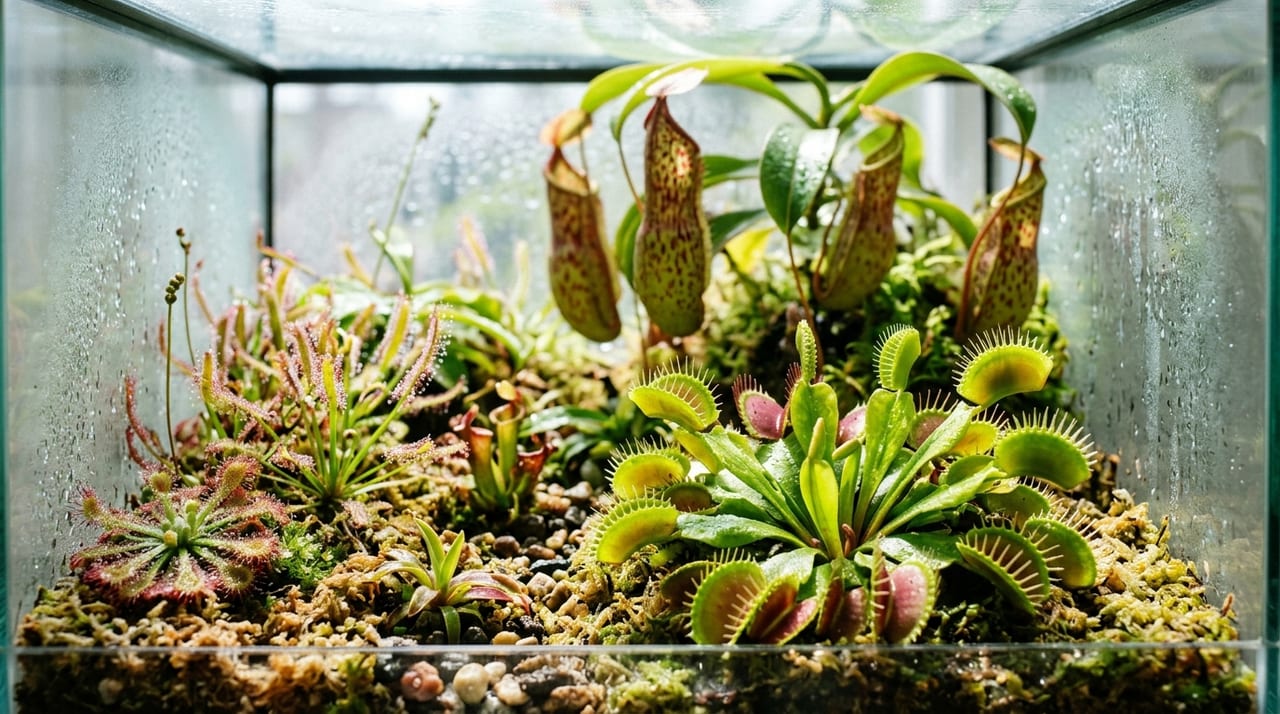
If you want to cultivate them more seriously, using a terrarium (glass enclosure) or simple greenhouse will help stabilize temperature and humidity. Using a humidifier in conjunction will help maintain proper humidity levels indoors during the dry winter months.
Tropical Sundews (Drosera species)
Tropical varieties (such as D. adelae and D. capensis) grow year-round. Even in winter, maintain temperatures above 15°C and don't allow them to go dormant.
These are relatively hardy and easy to grow, making them popular with beginners, but they're sensitive to cold temperatures so care is needed. Manage them in a bright window area in a heated room and continue watering tray irrigation year-round.
Common Precautions for Carnivorous Plant Winter Care
Regardless of species, pay attention to the following points during winter:
Don't Apply Fertilizer
Applying fertilizer to dormant plants can damage the roots. Resume fertilization after the growing season begins in spring.
Watch Out for Soil Drying
Even during dormancy, completely dry soil is not acceptable. Especially when using watering trays, regularly check to ensure the water doesn't disappear completely.
Avoid Sudden Temperature Changes
Rather than abruptly moving plants to cold locations in fall and winter, gradually acclimate them to cooler temperatures to minimize plant stress. Similarly, avoid sudden changes when repotting or relocating plants in spring.
Check for Pests and Diseases
Winter is when plants are more vulnerable and fungal infections and pests are more likely to occur. Regularly remove dead leaves and ensure good air circulation.
GrowerDirect's Safety & Assurance System
To grow healthy carnivorous plants, it's very important to select healthy, reliable plants at the time of purchase. Weak plants or those in poor condition significantly increase the difficulty of winter survival.
GrowerDirect is a platform where growers and buyers can connect directly. Because you can purchase directly from carnivorous plant specialists, you can be confident that the plant's condition and history are clear and reliable.
- Ask growers directly: You can ask the person who raised the plant about winter care methods and management tips
- Purchase healthy plants: Plants carefully cultivated by specialists have strong adaptability to different environments and are hardy
- Find rare varieties: Uncommon carnivorous plants with limited distribution are also available
Whether you're just starting to grow carnivorous plants or you're an enthusiast looking to expand your collection, GrowerDirect will help you find the perfect plant for you. If you're worried about winter care, ask the grower about management methods at the time of purchase. Expert growers will provide you with thoughtful support.