Summer Care for Carnivorous Plants | Direct Sunlight, Shading, and Water Temperature Management in Terrarium Growing
While most carnivorous plants thrive in warm, humid conditions, they require careful attention to intense summer sun and rising water temperatures. This guide explains water temperature management in terrarium growing, the use of shade cloth, and Nepenthes summer care.
Key Takeaways
While most carnivorous plants thrive in warm, humid conditions, they require careful attention to intense summer sun and rising water temperatures. This guide explains water temperature management in terrarium growing, the use of shade cloth, and Nepenthes summer care.
Related Species
Summer Cultivation Guide for Carnivorous Plants | Heat Management
Summer is a season of vigorous growth for carnivorous plants, yet poor management during this period carries a high risk of serious plant damage. Rising water temperatures in terrarium growing, intense direct sunlight, and increased pest and disease problems from heat and humidity create multiple challenges. This article provides an in-depth guide to summer cultivation management, addressing the specific needs of different plant types to help you navigate the season successfully.
The Pitfall of Terrarium Management | Preventing Water Temperature Rise
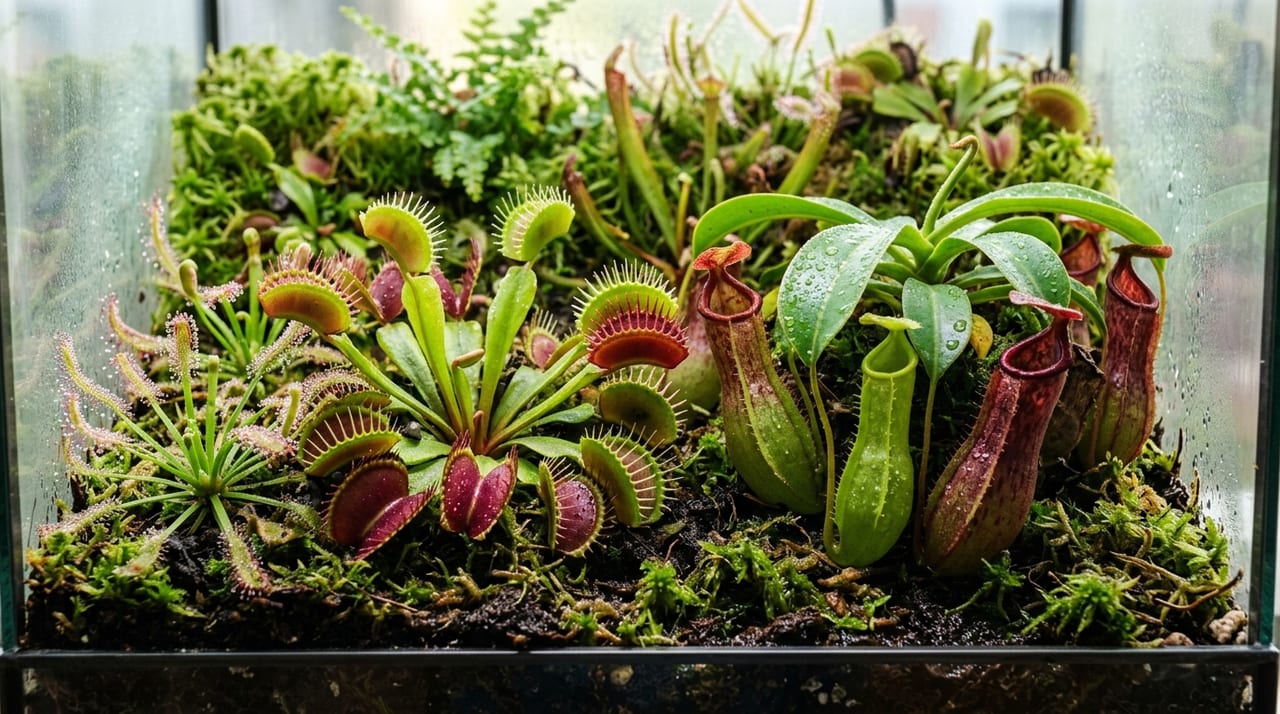
Most carnivorous plants are managed using terrarium cultivation (maintaining a water level in a tray). While this method keeps roots consistently moist—a convenient approach—summer presents a significant challenge. In environments with direct sunlight, water temperature in the tray can climb to nearly 40°C (104°F), and such high temperatures damage roots and can ultimately kill the entire plant.
Here are effective measures to prevent water temperature rise:
- Choose light-colored trays: Black trays absorb solar heat easily, so switching to light colors like white or gray can substantially slow temperature increase.
- Use foam boards: Floating a sheet of Styrofoam on the water surface reduces water temperature rise from direct sun exposure. These boards are affordable and readily available at home improvement stores.
- Change water frequently: Aim to do a complete water change every 2–3 days during summer. Old water becomes a breeding ground for fungi and bacteria, so rinse away any slime buildup from the tray bottom each time.
- Use quality water: Always use dechlorinated water or rainwater. If using tap water directly, let it sit for at least half a day before adding it to the tray.
The water depth in terrarium growing should be 1–3 cm. Overly deep water can create oxygen deficiency. Rather than topping up when water runs low, prioritize complete water changes; this habit makes it easier to maintain a clean environment.
Shading Management by Plant Type | Providing the Right Light for Each Species
Carnivorous plants have widely varying light requirements. Rather than applying a blanket approach of "bright location" or "shade," species-specific shading management is essential.
Sarracenia and Venus Flytrap (Temperate Species)
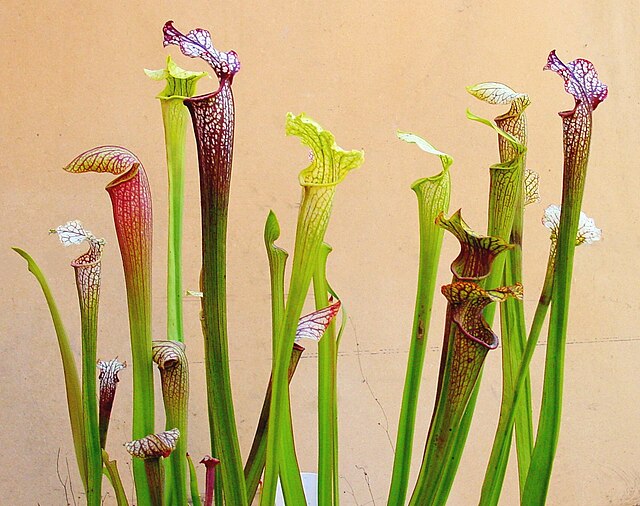
These two species love sunlight, but scorching summer sun can cause leaf burn and raise water temperature. Applying approximately 30% shade cloth preserves adequate light while reducing excessive heat. An effective alternative is to allow gentle morning sunlight while blocking only the intense afternoon western sun.
Nepenthes (Pitcher Plants)
Nepenthes dislike direct sun and thrive in bright shade to partial shade. Strong sunlight causes pitcher traps to wither and fall off, making shade cloth essential. Indoors, light filtered through sheer curtains is ideal.
Sundew (Drosera)
Light requirements vary by variety, but most prefer bright partial shade to sunny locations. Many varieties are sensitive to intense summer sun, so adjust conditions carefully with shade cloth. Maintaining high humidity is especially critical; in dry environments, mucus secretion drops and the plant's ability to trap prey diminishes.
When installing shade cloth, position it 10–20 cm above the plant. Placing it directly against the foliage creates a heat pocket, counteracting your efforts. Always ensure good air circulation.
Nepenthes Summer Care | Maintaining High Humidity for Pitcher Development
Most tropical Nepenthes species actually thrive during the warm, humid summer season. As long as you avoid direct sun and drying conditions, summer is actually one of the easiest periods to manage these plants.
The primary cause of failed pitcher development is inadequate humidity. Even indoors during summer, air conditioning can dry things out, so implement these measures:
- Mist foliage daily: Spray the entire leaf surface 1–2 times per day. Maintaining humidity above 70% encourages new pitchers to unfurl continuously.
- Use terrariums or plastic growing cases: Placing plants in an enclosed environment naturally maintains high humidity. However, install ventilation openings to ensure air flow.
- Apply dilute liquid fertilizer: Summer growth is vigorous, so with adequate light and humidity, pitchers will develop naturally. Carnivorous plants are sensitive to fertilizer, and feeding the roots can cause fertilizer burn. Instead, try placing a few drops of diluted liquid fertilizer directly inside the pitcher—this method is often effective.
Nepenthes encompasses many species, divided into lowland types (heat-tolerant) and highland types (preferring cooler environments). When purchasing, determine which category your plant falls into; this knowledge simplifies summer temperature management considerably.
Summer Stress Management for Temperate Species | Gentle Care is Key
Temperate carnivorous plants like Sarracenia and Venus Flytrap slow their growth and show paler leaves during extended heat waves. This is a temporary stress response by the plant itself—not cause for alarm—but you should review your management approach.
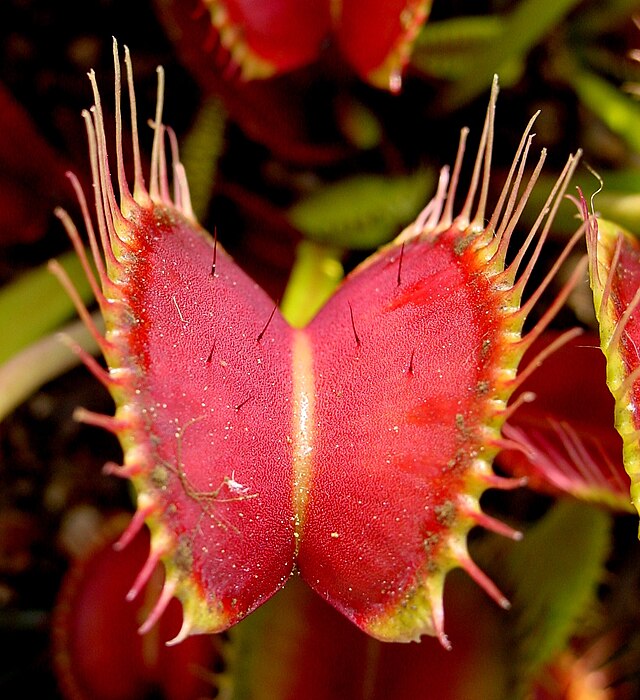
Venus Flytraps commonly exhibit these summer stress symptoms:
- Traps become smaller
- Trap closure speed decreases
- New leaf emergence slows or stops
When these symptoms appear, stop feeding insects. Digestion consumes energy, further weakening the plant. As temperatures drop in autumn, the plant naturally recovers. During summer, focus on careful water and light management rather than feeding.
Fertilizer is also unnecessary during summer stress. Applying fertilizer to a weakened plant risks fertilizer burn to the roots. Wait until the plant has recovered before resuming fertilization.
Summer Pest and Disease Management
The warm, humid summer season creates ideal conditions for pests and diseases on carnivorous plants. Proper prevention and early intervention are key to protecting your plants.
Fungal and Bacterial Diseases
Dirty terrarium water or irregular water changes can allow mold to develop on roots or soil surface. If you spot mold, immediately perform a complete water change and sanitize the tray. In severe cases, remove the plant from its pot, inspect the roots, remove any rotted portions, and repot in fresh growing medium.
Good air circulation is also effective in preventing mold. Space plants apart rather than clustering them together so air can flow freely.
Slugs and Aphids
In outdoor cultivation, slugs may feed on new growth. Since slugs are nocturnal, check plants after sunset. Effective slug controls include copper tape around the tray's perimeter or commercial slug repellents placed around the pot.
Aphids gather on new shoots and tender leaves, sucking plant sap and stunting growth. If you find them, rinse them off with water or treat them early with a systemic insecticide such as Ortran.
Secure Growing at GrowerDirect
Obtaining healthy plants from a trusted source is essential for successful carnivorous plant cultivation. GrowerDirect is a grower-direct platform where you can purchase vibrant, carefully cultivated carnivorous plants directly from specialized producers.
A unique advantage of GrowerDirect is the ability to consult directly with growers about summer care, variety selection, and other cultivation questions. Whether you're asking "I'm growing Nepenthes for the first time—which is easier, lowland or highland types?" or "I'm worried about summer stress on my Venus Flytrap," the person who grew the plant will answer, giving you confidence to get started even as a beginner.
Obtaining a healthy plant from the outset is the shortcut to successful carnivorous plant cultivation. Purchasing from a producer means you gain ongoing advice to support your success. Explore GrowerDirect and find the perfect carnivorous plant match for you.