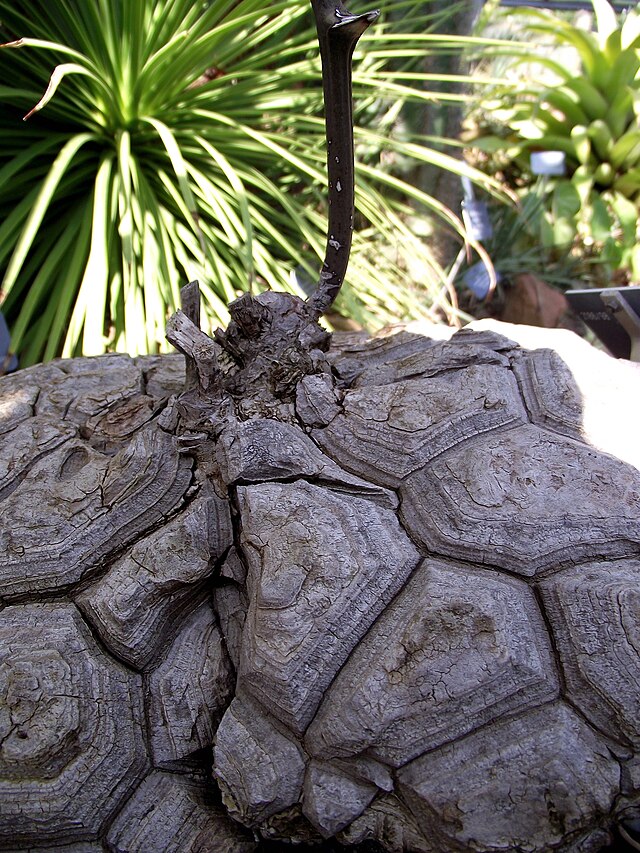
Source: Wikimedia Commons
Dioscorea Mexicana
IntermediateDioscorea mexicana
Called Mexican Tortoise Plant with rounder caudex, summer-growing unlike the African species.
About
Dioscorea mexicana is native to tropical and subtropical regions from Mexico through Central America. Often called the Mexican Tortoise Plant, its caudex is rounder and smoother than the geometrically ridged D. elephantipes, though it shares the family's characteristic swollen storage organ. Unlike its African relative, it is a summer grower, producing twining stems with heart-shaped to three-lobed leaves during warm months and going dormant in winter. Growth is somewhat faster than D. elephantipes, with reasonable caudex development over time. During the growing season (spring through autumn), it appreciates full sun to bright partial shade and generous watering. Winter dormancy calls for near-complete drought. While less dramatically patterned than its African cousin, its round, charming caudex and summer-growing nature make it a popular and manageable choice.
Lifespan of the Dioscorea Mexicana
The Dioscorea Mexicana lives 50+ years.
Size of the Dioscorea Mexicana
The Dioscorea Mexicana grows to Caudex 10-25cm.
Temperature & humidity for the Dioscorea Mexicana
It is less cold-hardy than the African species, preferring temperatures above 10°C.
Basic Info
Origin
Mexico and Central America
Lifespan
50+ years
Size
Caudex 10-25cm
Temperature
10〜35℃
Growing Tips
Light & Placement
A summer grower: from spring to autumn, keep it in full sun to bright partial shade. Choose a spot where the vines get good light.
Watering
From spring to autumn, water thoroughly once the soil dries. In winter dormancy, withhold water or give only a trickle.
Temperature & Overwintering
Less cold-hardy than the African D. elephantipes; keeping it above 10°C is best. Overwinter in a warm indoor spot.
Soil & Repotting
Use a well-draining mix and plant with the rounded caudex above the soil. The caudex swells steadily, so repot in spring once the pot gets tight.
Dormancy Care
It drops leaves and rests in winter. Its cycle is the reverse of the African D. elephantipes, so stop watering in winter and resume when new growth starts in spring.
Dioscorea Mexicana FAQ
QWhat is the growing difficulty level for Dioscorea Mexicana?
Intermediate. A variety suitable for intermediate growers. Requires some cultivation experience and knowledge of environment management. Pay careful attention to temperature and humidity control.
QWhat is the lifespan of Dioscorea Mexicana?
The average lifespan of Dioscorea Mexicana is 50+ years. With proper cultivation environment and nutrient management, you can keep it healthy for a long time.
QHow large does Dioscorea Mexicana get?
The mature size of Dioscorea Mexicana is Caudex 10-25cm. This may vary slightly depending on cultivation environment and individual differences.
QWhat is the typical price for Dioscorea Mexicana?
The price of Dioscorea Mexicana varies significantly by variety, characteristics, size, and lineage. Please check GrowerDirect's price guide for the latest market information.
Last updated: July 5, 2026
References & Sources
Edited & verified by: GrowerDirect Editorial Team
The classifications, regulations, and growing data on this page are created and verified based on the primary information database below.
Taxonomy & Authority
Accepted name: Dioscorea mexicana Scheidw.
Synonyms: Dioscorea bilbergiana Kunth, Dioscorea tuerckheimii R.Knuth, Dioscorea deamii Matuda, Dioscorea macrostachya Benth., Dioscorea mexicana var. sessiliflora (Uline) Matuda, Dioscorea astrostigma Uline, Dioscorea propinqua Hemsl., Dioscorea leiboldiana Kunth, Dioscorea macrophylla M.Martens & Galeotti, Dioscorea macrostachya var. sessiliflora Uline, Dioscorea anconensis R.Knuth, Testudinaria macrostachya (Benth.) G.D.Rowley, Dioscorea deppei Schiede ex Schltdl., Testudinaria cocolmeca Procop.
Authority databases: GBIF · POWO
Nomenclature follows global taxonomic authority databases.
Regulations & Conservation Status
Not listed in either CITES Appendix I or II. Also not subject to Japan's designated invasive species or specified animals regulations (being a plant).
Sources: CITES Appendix I species list / CITES Appendix II species list / Ministry of the Environment List of Specified Invasive Alien Species
Regulations may change. Always verify the latest information with the relevant authorities.
Related Species
Find listings for this species
Related Articles
Elephant's Foot Care During Dormancy | Summer Watering, Breaking Dormancy, and Managing Non-Dormant Plants
How to manage Dioscorea elephantipes (Elephant's Foot) through summer dormancy without failure. This guide covers the signs of dormancy, when to stop watering, placement to prevent fungal issues, how to break dormancy in autumn, and how to handle non-dormant plants, complete with a month-by-month annual care checklist.
How to Grow Uncarina | Differences Between the Madagascar Endemic Species Grandidieri and Roeoesliana
An explanation of the appeal and cultivation methods of the Madagascar endemic caudex plant Uncarina genus. We introduce the differences between Uncarina grandidieri and roeoesliana, seedling cultivation, and repotting timing.
Complete Guide to Choosing Caudex Plants as Gifts | Recommended Varieties by Occasion and How to Include Care Notes
A guide to choosing caudex plants as gifts organized by occasion. We introduce how to select varieties based on the recipient's cultivation experience and how to include care notes for long-term enjoyment.
Diagnosing and Treating Poor Root Development in Caudex Plants | Causes and Solutions for Roots That Won't Emerge or Won't Grow
A detailed guide to root emergence problems in caudex plants. From diagnosis methods to solutions, practical techniques for promoting healthy root development are introduced.
🩺 Common diseases
Can't find the plant you're looking for?
Post your wishes for free and growers with matching plants will contact you with introductions.