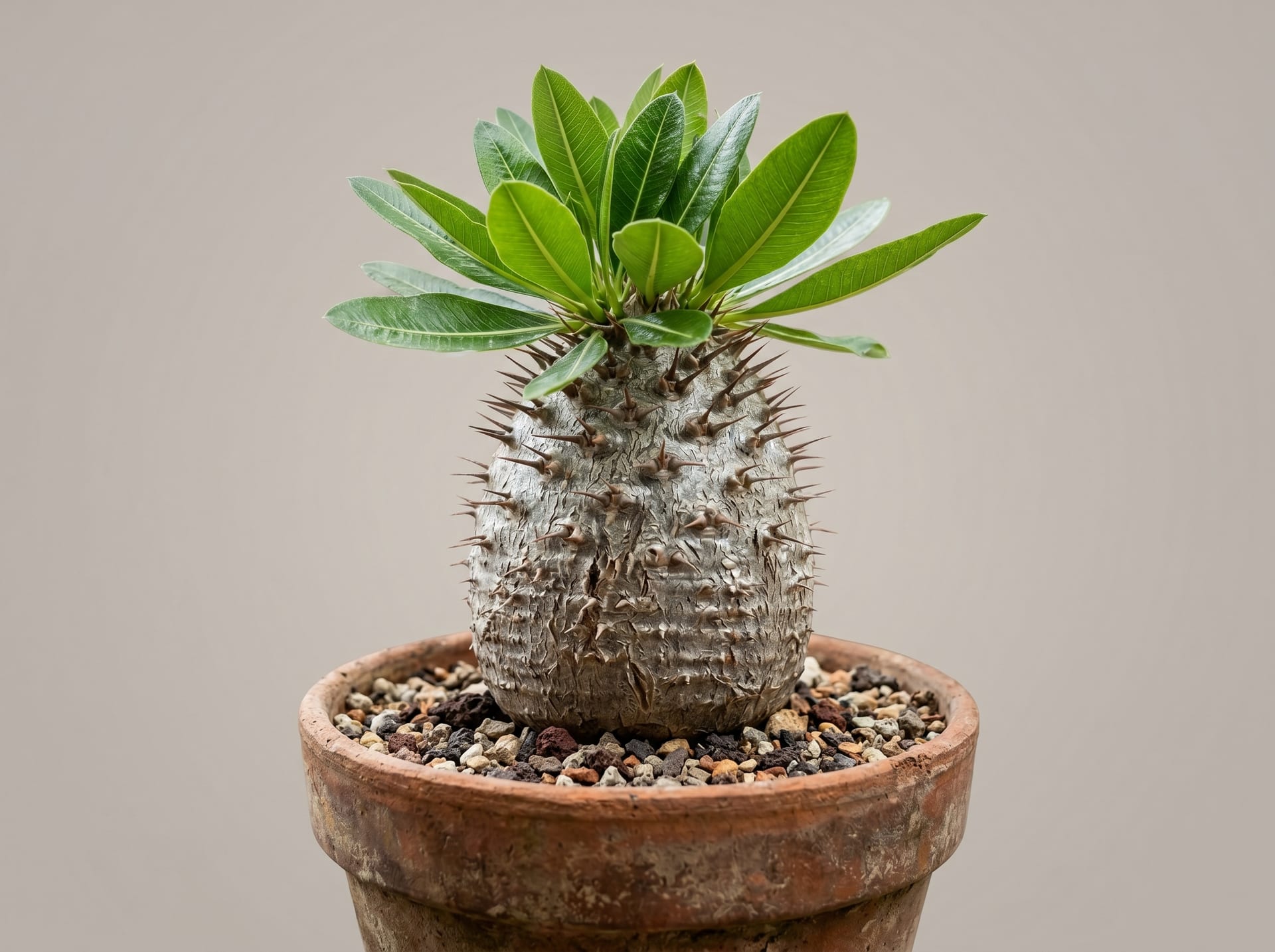
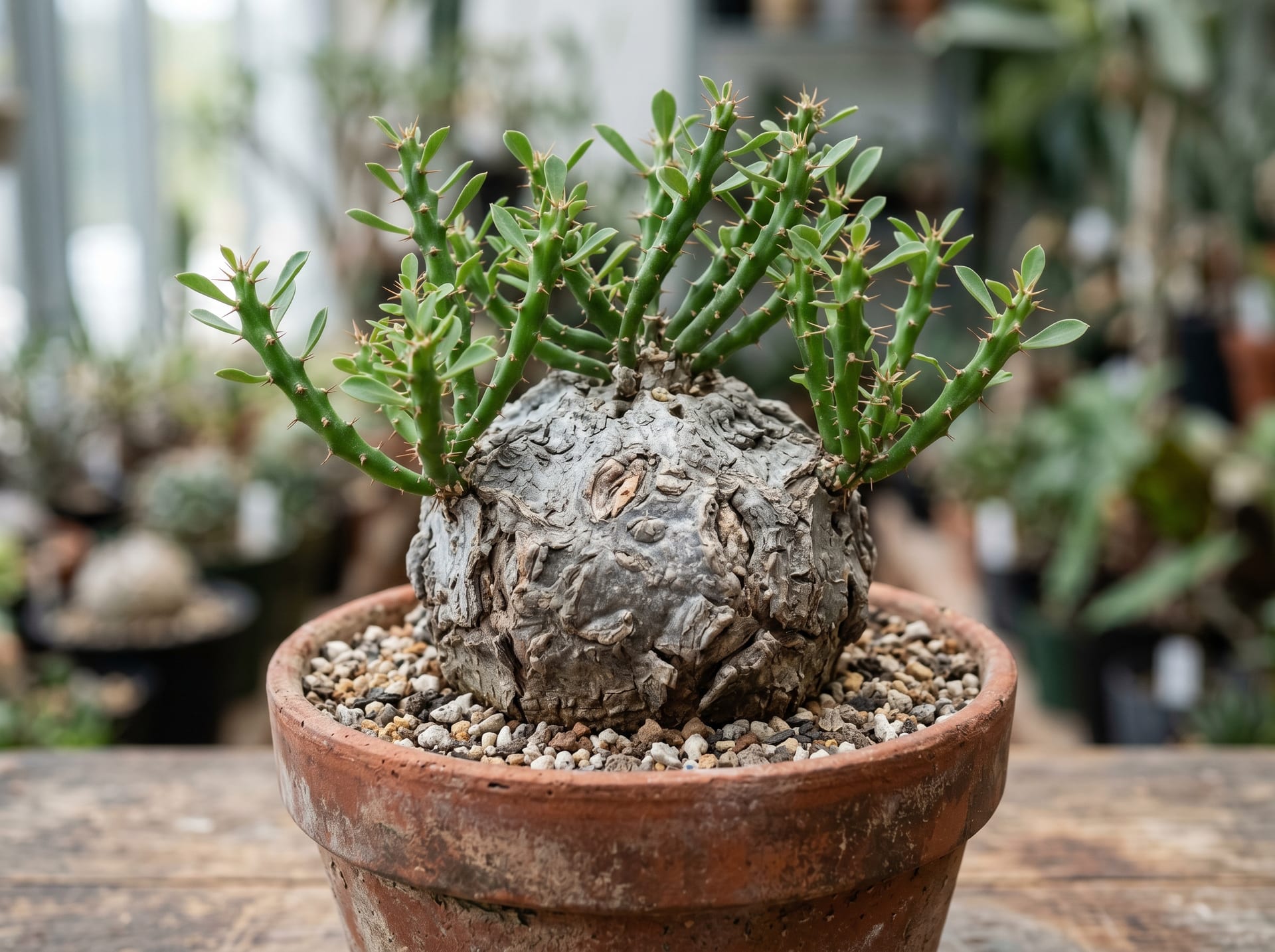
AI-generated image
Pachypodium Makayense
AdvancedPachypodium makayense
From Makay Mountains, Madagascar, forming flatter, wider caudex than Gracilius.
Overview
Pachypodium makayense is a relatively recently described species from the rugged sandstone mountains of the Makay Massif in southwestern Madagascar—a biodiversity hotspot hosting numerous endemic species. It is distinguished from P. gracilius by its flatter, more laterally spreading caudex, a form that attracts significant collector interest. The trunk is gray-green with dense spines and flowers are yellow. The flowers are large and glossy, characteristically marked with a white ring around the corolla tube. Taxonomically, it is sometimes treated as a subspecies of P. rosulatum. As a narrow endemic from a restricted area, it remains rare in cultivation and commands premium prices. Care follows the P. Its distinctive flat, wide caudex form and rarity make it highly sought after in specialist circles.
Lifespan of the Pachypodium Makayense
The Pachypodium Makayense lives 20-50 years.
Size of the Pachypodium Makayense
The Pachypodium Makayense grows to 10-30cm.
Temperature & humidity for the Pachypodium Makayense
The ideal temperature for the Pachypodium Makayense is 10〜40℃.
gracilius model: full direct sun, extremely porous soil, generous growing-season watering, and complete winter drought above 10°C.
Basic Info
Origin
Makay Massif, Toliara Province, southwestern Madagascar
Lifespan
20-50 years
Size
10-30cm
Temperature
10〜40℃
Growing Tips
Light & Placement
As with P. gracilius, grow it in plenty of direct sun. Insufficient light spoils the firmness of the caudex, so avoid it.
Watering
In the growing season, water after the soil dries. Water the soil at the base so water does not pool on the flat, spreading caudex.
Temperature & Overwintering
Cold tolerance is low; keep it above 10°C. Withhold water in winter and overwinter it in a warm, bright spot indoors.
Soil & Repotting
An ultra-fast-draining mix based on pumice and hyuga pumice is the rule. Choose a wide-mouthed pot to suit the broad caudex.
Pests & Cautions
The spines are dense, so wear gloves when repotting or moving it. Wet soil combined with cold leads to root rot, so keep it dry in winter.
Pachypodium Makayense FAQ
QWhat is the growing difficulty level for Pachypodium Makayense?
Advanced. A variety suitable for advanced growers. Requires advanced cultivation techniques and specialized equipment, with careful environmental adjustments needed.
QWhat is the ideal temperature for Pachypodium Makayense?
The ideal temperature for Pachypodium Makayense is 10〜40℃. Avoid sudden temperature changes and maintain a stable environment.
QWhat is the lifespan of Pachypodium Makayense?
The average lifespan of Pachypodium Makayense is 20-50 years. With proper cultivation environment and nutrient management, you can keep it healthy for a long time.
QHow large does Pachypodium Makayense get?
The mature size of Pachypodium Makayense is 10-30cm. This may vary slightly depending on cultivation environment and individual differences.
QWhat is the typical price for Pachypodium Makayense?
The price of Pachypodium Makayense varies significantly by variety, characteristics, size, and lineage. Please check GrowerDirect's price guide for the latest market information.
Last updated: October 2, 2026
References & Sources
Edited & verified by: GrowerDirect Editorial Team
The classifications, regulations, and growing data on this page are created and verified based on the primary information database below.
Taxonomy & Authority
Regulations & Conservation Status
Pachypodium spp. (at genus level) listed in CITES Appendix II.
Sources: CITES Appendix II species list / CITES Appendices (valid from 2023)
Regulations may change. Always verify the latest information with the relevant authorities.
Related Species
Find listings for this species
Related Articles
Pachypodium gracilius Care Guide | Growing Thick Caudex from Seed
A practical guide to caring for Pachypodium gracilius, a popular caudex plant. Covers seed propagation and cultivation, choosing the right soil and pots, summer growing season and winter dormancy management, and secrets to watering and fertilization for developing thick caudexes.
Pachypodium Species Guide | Characteristics and Differences of Gracilis, Brevicaule, and Baronii
A detailed introduction to the most popular Pachypodium species. This guide explains the characteristics and differences of Gracilis, Brevicaule, Baronii, Lamerei, and Horombense, along with cultivation tips for each.
Pachypodium Seed Propagation Guide | From Sowing to Germination and Growth
This guide explains how to grow Pachypodium from seed. We cover everything from sourcing seeds and sowing to managing germination, caring for seedlings, and the unique joys of seed propagation.
Rooting and Initial Care of Pachypodium Gracilius
Methods for encouraging root development in imported bare-root Pachypodium gracilius. Explains the preparation of pots, soil media, and temperature conditions; watering practices during rooting (maintaining primarily dry conditions); how to confirm successful rooting and interpret key indicators; initial post-rooting care; and seasonal management guidelines.
🩺 Common diseases
Can't find the plant you're looking for?
Post your wishes for free and growers with matching plants will contact you with introductions.