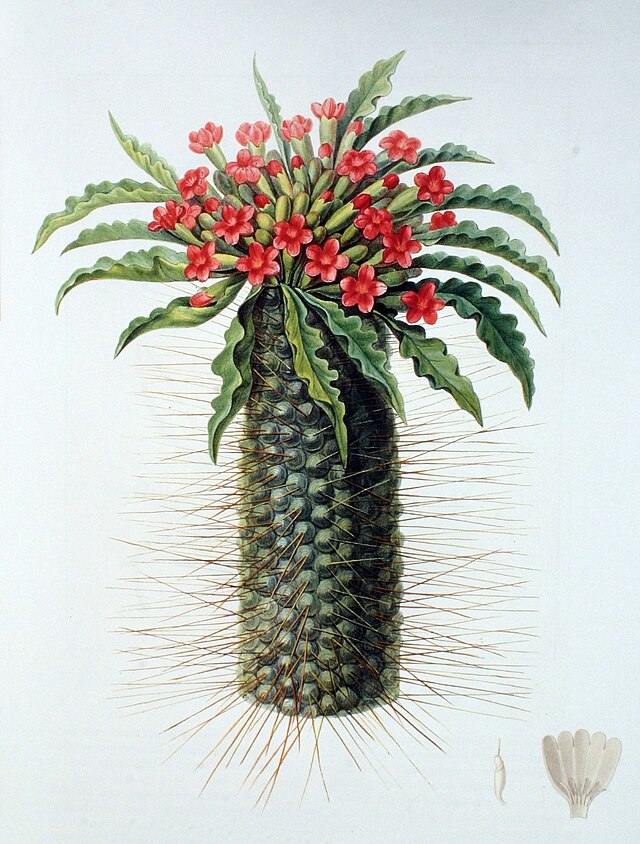
Source: Wikimedia Commons
Pachypodium Namaquanum
AdvancedPachypodium namaquanum
Known for bending toward the sun, a unique rare species listed in CITES Appendix II.
Overview
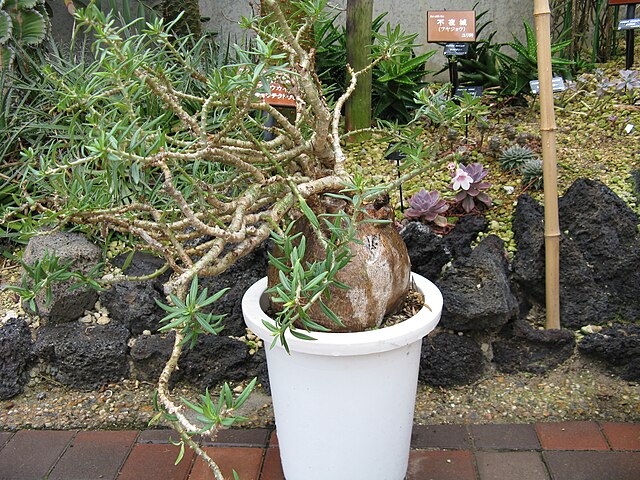
Pachypodium namaquanum, the Halfmens, grows on rocky slopes in Namaqualand, South Africa, and southern Namibia. Its extraordinary characteristic is the tendency of the columnar stem to lean northward toward the sun—a consistent behavior that inspired its Afrikaans name meaning 'half human.' The stem grows as a single column, bearing leaves and flowers only near the apex. Flowers are brownish-red and fragrant. Listed under CITES Appendix II, it is among the rarest caudex plants in cultivation. Growth is very slow. Extremely porous soil and intense direct sun are essential. Restrained watering during growth and complete drought in winter are correct; summer heat and humidity are its principal cultivation challenge. As a CITES I protected species, it represents the pinnacle of rarity in caudex collecting.
Lifespan of the Pachypodium Namaquanum
The Pachypodium Namaquanum lives 100+ years.
Size of the Pachypodium Namaquanum
The Pachypodium Namaquanum grows to 30-100cm.
Basic Info
Origin
Namaqualand, South Africa, and southern Namibia
Lifespan
100+ years
Size
30-100cm
Temperature
5〜35℃
Growing Tips
Light & Placement
Strong direct sun is essential. The trunk naturally leans toward the sun as it grows, so keep the pot facing the same direction.
Watering
Water sparingly even in the growing season. Water only after the soil has dried well, and since growth is very slow, do not overdo it.
Dormancy Care
Withhold water during dormancy and keep it dry. It tends toward winter growth, so judge the growing and dormant periods by watching the leaves.
Soil & Repotting
An ultra-fast-draining mix is essential. Use a quick-drying blend based on pumice and hyuga pumice, and keep repotting to a minimum to avoid root damage.
Pests & Cautions
Its greatest weakness is summer heat and humidity. In summer, keep it in a cool, well-ventilated spot and avoid stagnant humidity and wet soil.
Pachypodium Namaquanum FAQ
QWhat is the growing difficulty level for Pachypodium Namaquanum?
Advanced. A variety suitable for advanced growers. Requires advanced cultivation techniques and specialized equipment, with careful environmental adjustments needed.
QWhat is the lifespan of Pachypodium Namaquanum?
The average lifespan of Pachypodium Namaquanum is 100+ years. With proper cultivation environment and nutrient management, you can keep it healthy for a long time.
QHow large does Pachypodium Namaquanum get?
The mature size of Pachypodium Namaquanum is 30-100cm. This may vary slightly depending on cultivation environment and individual differences.
QWhat is the typical price for Pachypodium Namaquanum?
The price of Pachypodium Namaquanum varies significantly by variety, characteristics, size, and lineage. Please check GrowerDirect's price guide for the latest market information.
Last updated: October 1, 2026
References & Sources
Edited & verified by: GrowerDirect Editorial Team
The classifications, regulations, and growing data on this page are created and verified based on the primary information database below.
Taxonomy & Authority
Regulations & Conservation Status
Pachypodium spp. (at genus level) listed in CITES Appendix II.
Sources: CITES Appendix II species list / CITES Appendices (valid from 2023)
Regulations may change. Always verify the latest information with the relevant authorities.
Related Species
Find listings for this species
Related Articles
Pachypodium gracilius Care Guide | Growing Thick Caudex from Seed
A practical guide to caring for Pachypodium gracilius, a popular caudex plant. Covers seed propagation and cultivation, choosing the right soil and pots, summer growing season and winter dormancy management, and secrets to watering and fertilization for developing thick caudexes.
Pachypodium Species Guide | Characteristics and Differences of Gracilis, Brevicaule, and Baronii
A detailed introduction to the most popular Pachypodium species. This guide explains the characteristics and differences of Gracilis, Brevicaule, Baronii, Lamerei, and Horombense, along with cultivation tips for each.
Pachypodium Seed Propagation Guide | From Sowing to Germination and Growth
This guide explains how to grow Pachypodium from seed. We cover everything from sourcing seeds and sowing to managing germination, caring for seedlings, and the unique joys of seed propagation.
Pachypodium Gracilius Winterization and Root Rot Rescue Technique | Dormancy Period Management, Watering Adjustment, and Recovery Guide from Decayed Roots
Explains Pachypodium gracilius winterization management and root rot rescue technique. Introduces practical methods from watering adjustments during dormancy to root removal and regeneration procedures.
🩺 Common diseases
Can't find the plant you're looking for?
Post your wishes for free and growers with matching plants will contact you with introductions.