Source: Wikimedia Commons
Tylecodon reticulatus
IntermediateTylecodon reticulatus
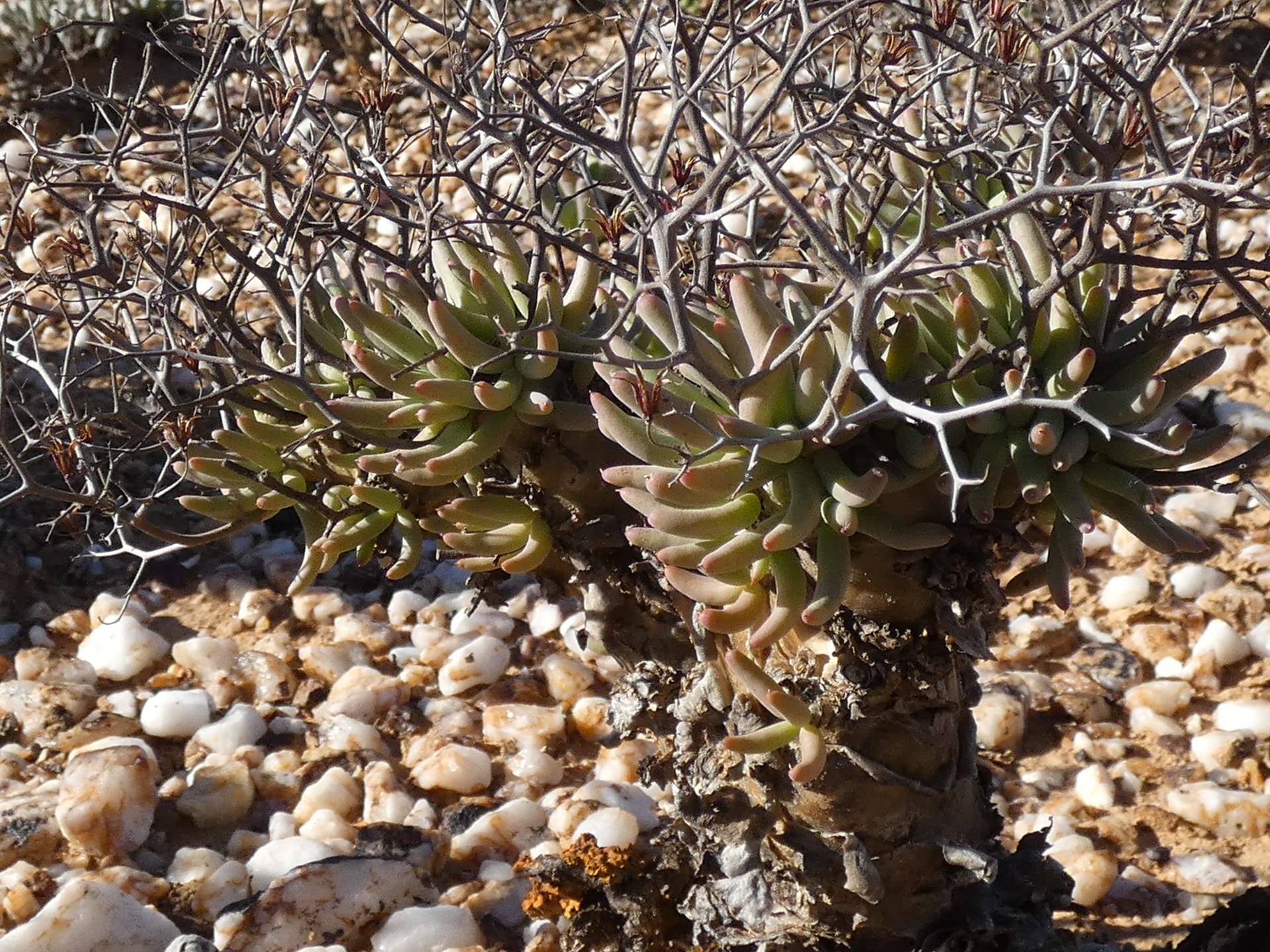
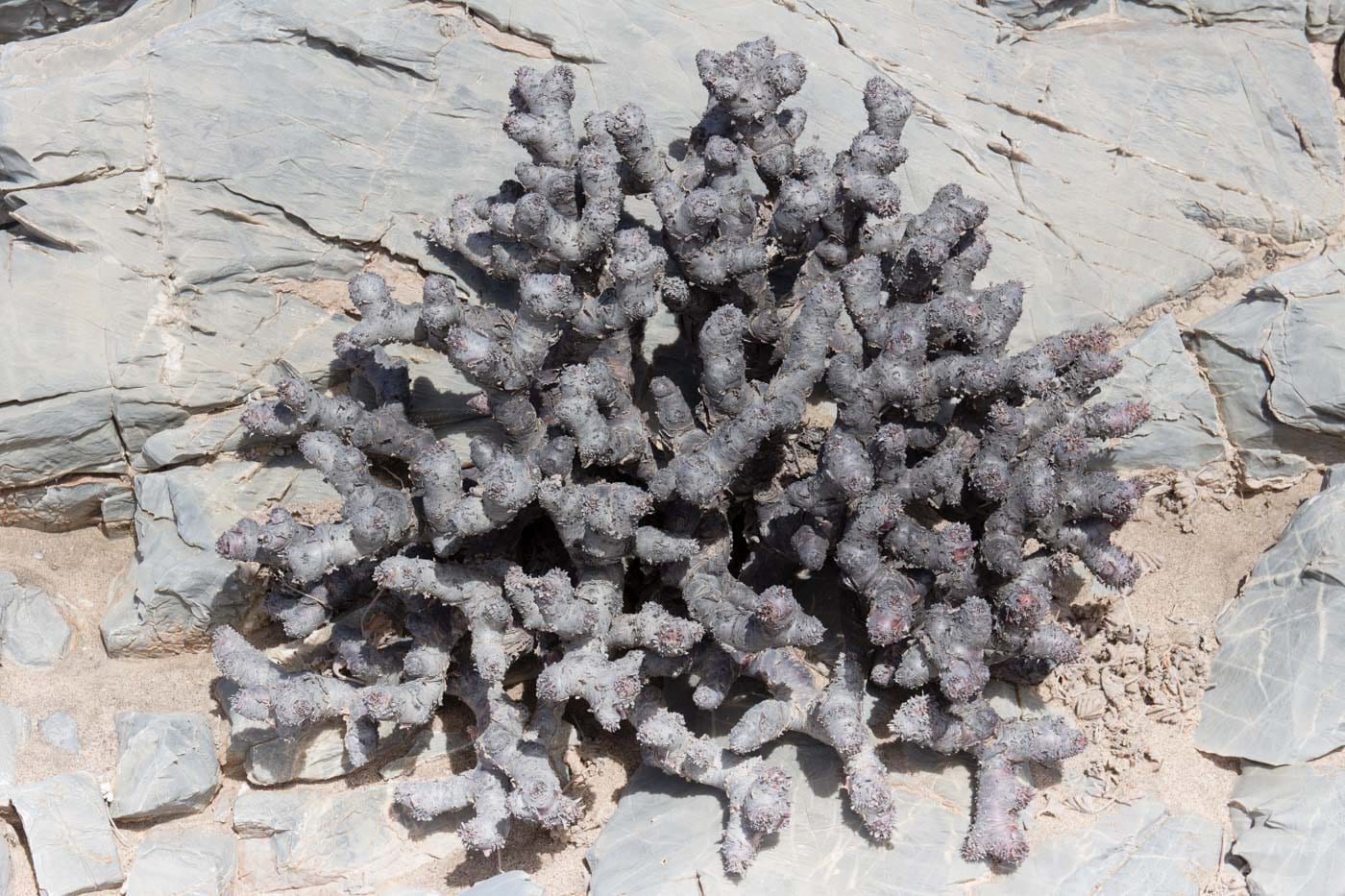
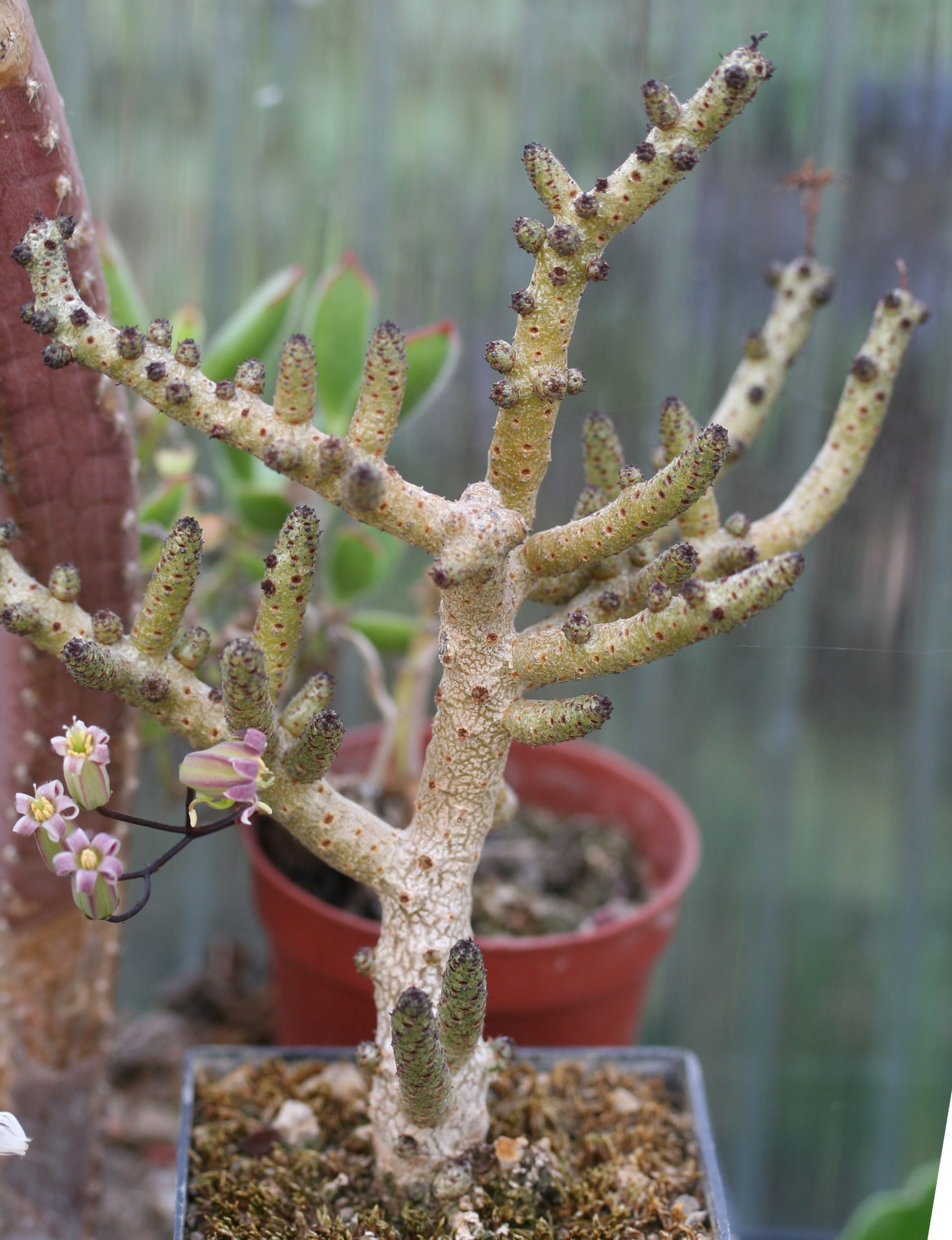
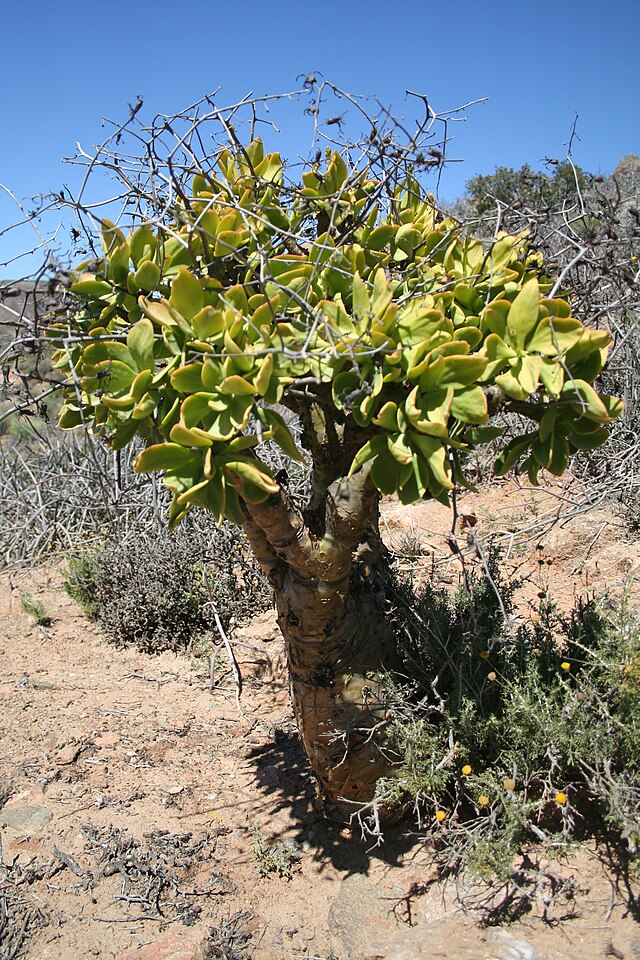
A winter-growing Tylecodon whose spent flower stalks persist and harden into a finely branched, silvery thorny net that envelops the plant. It has a squat trunk and fleshy leaves at the branch tips.
About
Tylecodon reticulatus is a winter-growing stem succulent in the Crassulaceae, found from southern Namibia through the Northern and Western Cape of South Africa (Namaqualand, the Little Karoo and elsewhere), on dry rocky hills and quartz-gravel flats with sandy loam in the Succulent Karoo. It was not considered threatened early in the 21st century. The squat trunk is about 6 cm thick and 3–38 cm tall, topped by a rounded crown, forming a dome about 30 cm (sometimes 60 cm) across. The light brown bark peels in papery strips. The leaves, crowded at the branch tips, are cylindrical to spindle-shaped, about 0.5–4 cm long, and range from bluish green to strongly pink-tinged. Its defining feature comes after flowering: the finely branched inflorescences persist and harden, building up year by year into a silvery, thorny net around the plant. This reticulum gives the species its name, and in Afrikaans it is called sifkop, "sieve head". The greenish-yellow tubular flowers, 6–8 mm long, open in winter. Two subspecies, phyllopodium and reticulatus, are recognised. It is poisonous to livestock. In Japan it is sold mainly by specialist nurseries, and seed is also available.
Source: Wikipedia (CC BY-SA 4.0)
Lifespan of the Tylecodon reticulatus
The Tylecodon reticulatus lives Very slow-growing and long-lived (10–20 years from seed to maturity).
Size of the Tylecodon reticulatus
The Tylecodon reticulatus grows to Trunk about 6 cm thick and 3–38 cm tall; a dome about 30 cm (sometimes 60 cm) across.
The dust-like seeds weigh under 0.03 mg and are scattered by wind.
Basic Info
Origin
Southern Namibia to the Northern and Western Cape, South Africa
Lifespan
Very slow-growing and long-lived (10–20 years from seed to maturity)
Size
Trunk about 6 cm thick and 3–38 cm tall; a dome about 30 cm (sometimes 60 cm) across
Temperature
10〜35℃
Watering & Fertilizer
Dilute high-potassium feed in the growing season
Growing Tips
Light & Placement
It does best fully exposed to sun but will grow and flower in half-sun.
Watering
A winter grower: from late summer to early spring water when the roots are almost dry, reducing to about once every two weeks in the cold of winter.
Dormancy Care
It is deciduous and dormant from late spring through summer; withhold water then.
Temperature & Overwintering
Keep it at a minimum of 5°C in winter, preferably 8°C; the leaves drop easily in cool conditions.
Soil & Repotting
Use a very free-draining mix (equal parts well-rotted compost or fine bark and river sand or pumice, or a gritty cactus mix) and repot every two to three years with slow-release fertilizer added. Plant with the neck at soil level and never bury the swollen stem deeply.
Propagation
Propagate from seed sown as soon as it can be removed from the capsules. The first leaf may take two months to appear and plants need 10–20 years to mature. Pot seedlings on in their second or third year, then avoid moving them around too much.
Pests & Cautions
It is poisonous to livestock; keep it away from children and pets. Watch for mealybugs. The net of old flower stalks is the plant's signature, so leave it in place.
Tylecodon reticulatus FAQ
QWhat is the growing difficulty level for Tylecodon reticulatus?
Intermediate. A variety suitable for intermediate growers. Requires some cultivation experience and knowledge of environment management. Pay careful attention to temperature and humidity control.
QWhat is the lifespan of Tylecodon reticulatus?
The average lifespan of Tylecodon reticulatus is Very slow-growing and long-lived (10–20 years from seed to maturity). With proper cultivation environment and nutrient management, you can keep it healthy for a long time.
QHow large does Tylecodon reticulatus get?
The mature size of Tylecodon reticulatus is Trunk about 6 cm thick and 3–38 cm tall; a dome about 30 cm (sometimes 60 cm) across. This may vary slightly depending on cultivation environment and individual differences.
QHow should I water and fertilize Tylecodon reticulatus?
Tylecodon reticulatus: watering & fertilizer — Dilute high-potassium feed in the growing season. Aim for appropriate frequency and amount.
QWhat is the typical price for Tylecodon reticulatus?
The price of Tylecodon reticulatus varies significantly by variety, characteristics, size, and lineage. Please check GrowerDirect's price guide for the latest market information.
Last updated: September 23, 2026
References & Sources
Edited & verified by: GrowerDirect Editorial Team
The classifications, regulations, and growing data on this page are created and verified based on the primary information database below.
Taxonomy & Authority
Regulations & Conservation Status
South Africa listed this species in CITES Appendix III in 2023. Appendix III species need an export permit or certificate of origin for international trade, but no registration is required for transfers within Japan.
Sources: Species+ (CITES): Tylecodon reticulatus
Regulations may change. Always verify the latest information with the relevant authorities.
Related Species
Find listings for this species
Related Articles
How to Grow Uncarina | Differences Between the Madagascar Endemic Species Grandidieri and Roeoesliana
An explanation of the appeal and cultivation methods of the Madagascar endemic caudex plant Uncarina genus. We introduce the differences between Uncarina grandidieri and roeoesliana, seedling cultivation, and repotting timing.
Complete Guide to Choosing Caudex Plants as Gifts | Recommended Varieties by Occasion and How to Include Care Notes
A guide to choosing caudex plants as gifts organized by occasion. We introduce how to select varieties based on the recipient's cultivation experience and how to include care notes for long-term enjoyment.
Diagnosing and Treating Poor Root Development in Caudex Plants | Causes and Solutions for Roots That Won't Emerge or Won't Grow
A detailed guide to root emergence problems in caudex plants. From diagnosis methods to solutions, practical techniques for promoting healthy root development are introduced.
Complete Guide to Growing Jatropha podagrica (Buddha's Navel) | Cultivation Management to Enjoy Its Distinctive Caudex and Coral-Red Flowers
Characteristics and cultivation methods of the caudex plant Jatropha podagrica. Detailed explanation of watering management during dormancy, soil, and propagation methods.
🩺 Common diseases
Can't find the plant you're looking for?
Post your wishes for free and growers with matching plants will contact you with introductions.