Source: Wikimedia Commons
Japanese Pogonia
IntermediatePogonia japonica
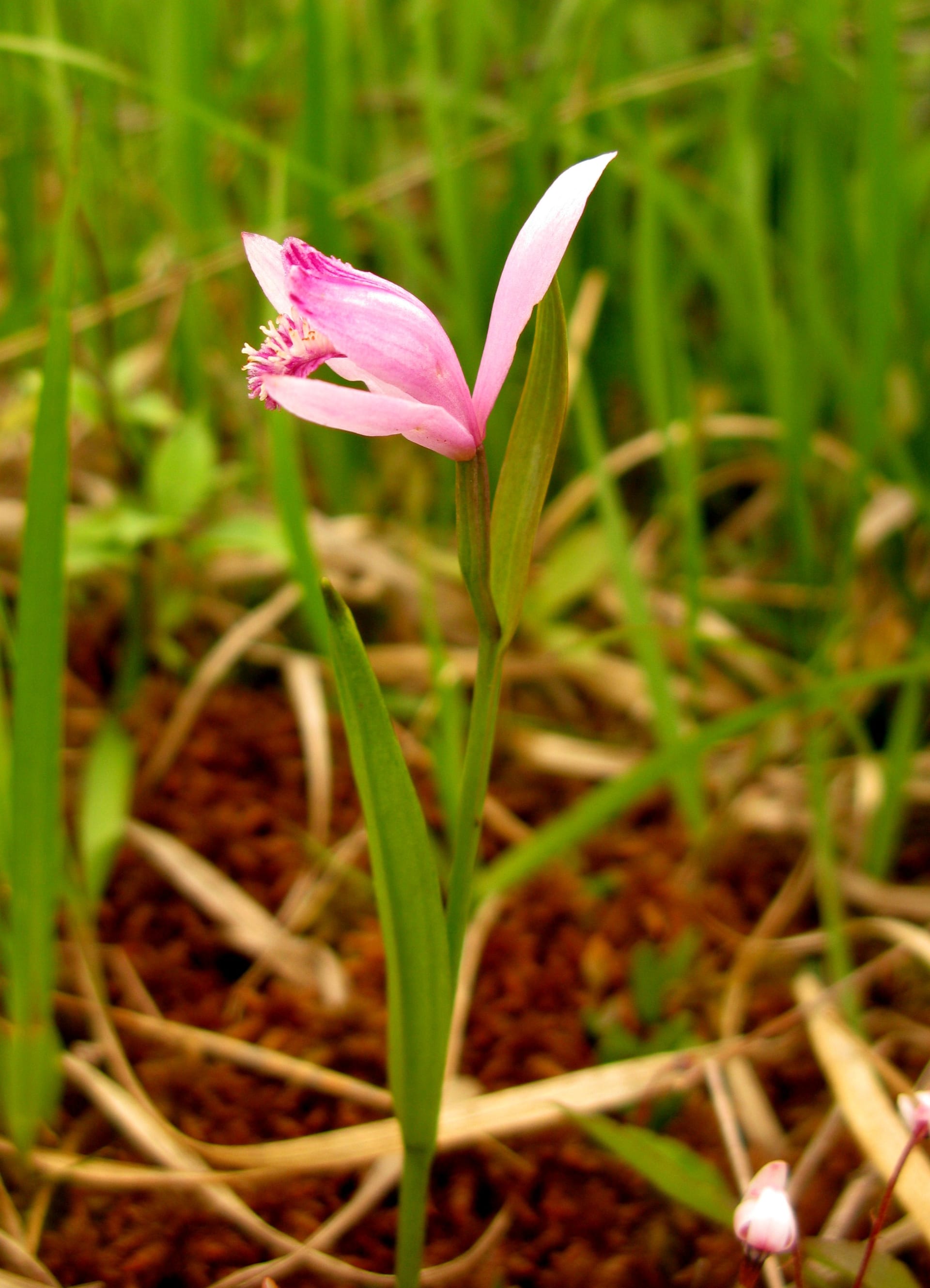
A small terrestrial orchid of sunny wetlands and moors. A slender stem bears a single leaf and, in early summer, one sideways-facing flower in the soft pink-purple of the crested ibis (toki). The inside of the lip is densely covered in fleshy hairs.
About
Tokiso (Pogonia japonica) is a perennial orchid named for its flower colour, which resembles the wing colour of the crested ibis (toki). It grows in China, the Kuril Islands, Korea and Japan; in Japan it is found in Hokkaido and Honshu and rarely in Shikoku and Kyushu (north of Yakushima), in sunny moors and wetlands. A creeping rhizome sends up stems 10-30 cm tall at intervals, each with a single lance-shaped leaf. From May to July a single pink-purple flower faces sideways at the top of the stem. The sepals are 1.5-2.5 cm long, the lip is three-lobed at the tip with dense fleshy hairs inside the middle lobe, and the flower does not open wide. A leaf-like bract 2-4 cm long sits beneath it. Forms include the white-flowered f. pallescens and the narrow-tepalled f. lineariperiantha. Wetland succession, development and collecting for cultivation have reduced it across Japan; it is Near Threatened on the Ministry of the Environment Red List and threatened on many prefectural lists, and collecting is banned in some places, for example under Okayama Prefecture's nature conservation ordinance. The Taiwanese tairin-tokiso (a Pleione) is sometimes sold as tokiso, but it belongs to a different genus with very different habits and care. In Japan wildflower nurseries sell it along with its named forms.
Source: Wikipedia (CC BY-SA 4.0)
Size of the Japanese Pogonia
The Japanese Pogonia grows to 10-30 cm tall; sepals 1.5-2.5 cm long.
Basic Info
Origin
Japan (Hokkaido and Honshu; rare in Shikoku and Kyushu), Korea, the Kuril Islands and China
Lifespan
Perennial; spreads by rhizomes
Size
10-30 cm tall; sepals 1.5-2.5 cm long
Temperature
15〜30℃
Humidity
50〜70%
Watering & Fertilizer
Very little fertilizer
Growing Tips
Light & Placement
A plant of sunny wetlands; give good light during growth, easing only the harshest midsummer sun and heat.
Watering
As a wetland plant it needs constantly moist compost in growth.
Temperature & Overwintering
Native from Hokkaido to Honshu, it tolerates winter cold; in summer keep the pot somewhere airy so it does not overheat.
Soil & Repotting
Plant it in a shallow pot of moisture-retentive material such as sphagnum. The rhizomes spread sideways, so repot during dormancy when crowded.
Dormancy Care
After the top dies back in autumn it is dormant; keep the mix from drying out even then.
Pests & Cautions
A Japanese native; choose nursery-propagated plants rather than wild-collected ones. Some prefectures restrict collecting wild plants by ordinance. The Taiwanese Pleione (tairin-tokiso) is sometimes sold as tokiso, so check the scientific name.
Japanese Pogonia FAQ
QWhat is the growing difficulty level for Japanese Pogonia?
Intermediate. A variety suitable for intermediate growers. Requires some cultivation experience and knowledge of environment management. Pay careful attention to temperature and humidity control.
QHow large does Japanese Pogonia get?
The mature size of Japanese Pogonia is 10-30 cm tall; sepals 1.5-2.5 cm long. This may vary slightly depending on cultivation environment and individual differences.
QHow should I water and fertilize Japanese Pogonia?
Japanese Pogonia: watering & fertilizer — Very little fertilizer. Aim for appropriate frequency and amount.
QWhat is the typical price for Japanese Pogonia?
The price of Japanese Pogonia varies significantly by variety, characteristics, size, and lineage. Please check GrowerDirect's price guide for the latest market information.
Last updated: September 23, 2026
References & Sources
Edited & verified by: GrowerDirect Editorial Team
The classifications, regulations, and growing data on this page are created and verified based on the primary information database below.
Taxonomy & Authority
Regulations & Conservation Status
The whole orchid family is listed in CITES Appendix II (checked on Species+). International trade requires permits such as export permits, but no registration is needed to buy, sell or transfer plants within Japan. It is listed as Near Threatened on the Ministry of the Environment Red List, and collecting is banned in some areas, for example under Okayama Prefecture's nature conservation ordinance. It is native to Japan and is not designated as a Nationally Rare Species under the Act on Conservation of Endangered Species (checked against the Ministry of the Environment list). Some prefectures restrict collecting wild plants by ordinance, so choose nursery-propagated plants rather than wild-collected ones.
Sources: Species+ (CITES) / Ministry of the Environment, Japan: list of Nationally Rare Species
Regulations may change. Always verify the latest information with the relevant authorities.
Related Species
Find listings for this species
Related Articles
Camellia Bonsai Growing Guide — Enjoying Flowering Bonsai
From the appeal of Camellia (Camellia japonica) bonsai to placement, watering, soil and repotting, fertilizing, pruning and flower bud formation, pest control, and tree shaping, this guide explains the practical management points unique to flowering bonsai.
Coelogyne Genus Seasonal Care Guide | Withholding Water in the Dry Season and Tips for Regulating the Bloom Cycle
A seasonal guide to Coelogyne, a type of epiphytic orchid, from watering during the growing season to dry-season drought management and tips for regulating the bloom cycle.
Post-Bloom Care: The Annual Cycle from New Growth to Flower Formation
Learn the annual care cycle for orchids from the end of flowering to the next bloom. This guide covers post-flower care including flower stem cutting methods, signs to observe during new shoot development, summer growth period considerations, requirements for flower bud formation, and finishing care from bud emergence through blooming.
A Complete Guide to Enjoying Orchid Exhibitions and Sales Events | Variety Selection and Post-Purchase Care
A guide to enjoying orchid exhibitions and sales events. Covering practical tips on variety selection, how to identify rare species, and post-purchase environmental acclimatization.
Can't find the plant you're looking for?
Post your wishes for free and growers with matching plants will contact you with introductions.