Source: Wikimedia Commons
Austral Ladies' Tresses
AdvancedSpiranthes australis
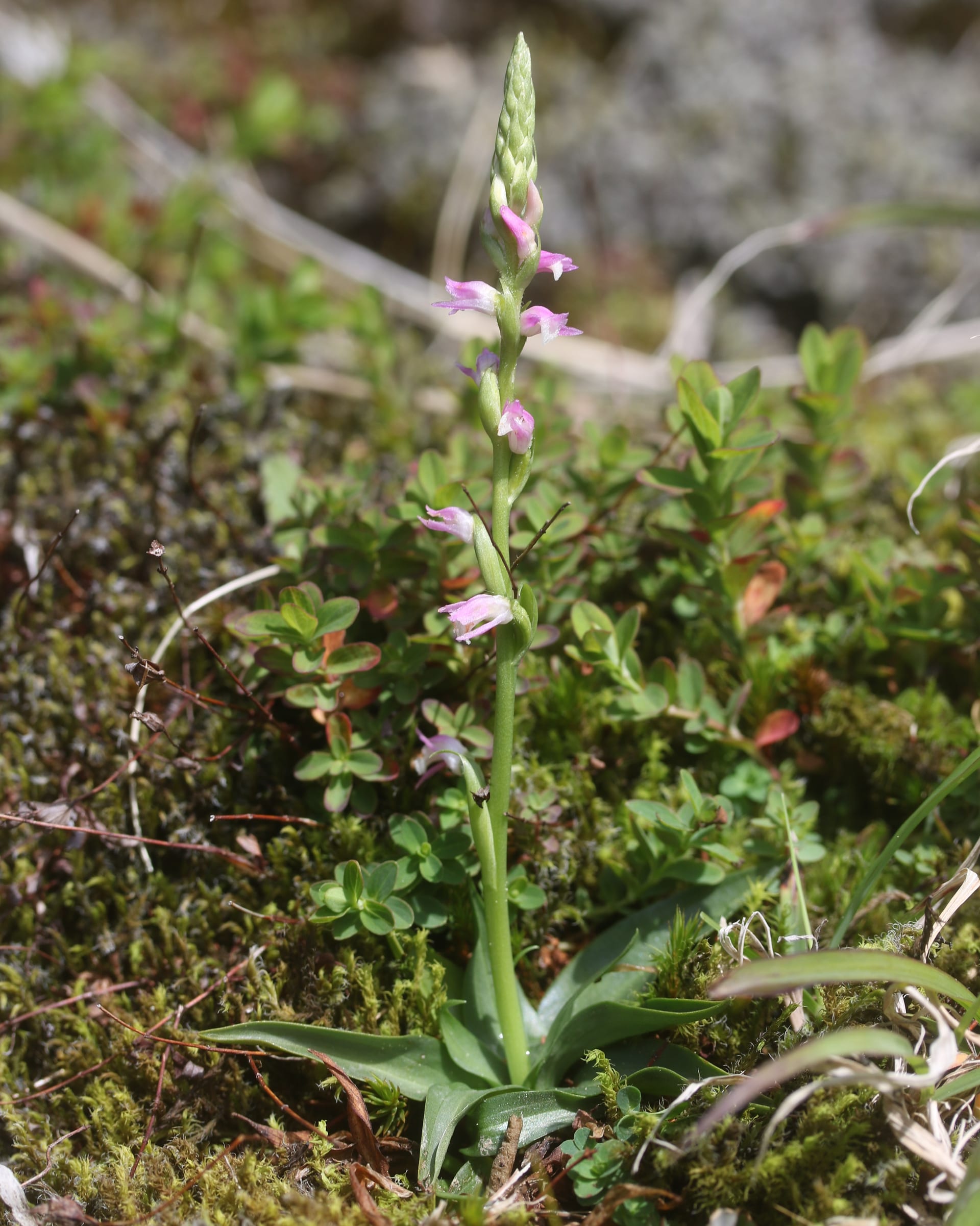
A small orchid of lawns, banks and other familiar grassland. Tiny pink flowers spiral up a slender spike, the twisted spike giving it its Japanese name. Left- and right-handed spirals occur in roughly equal numbers, and white and other variant forms exist.
About
Nejibana (Spiranthes australis), also called mojizuri, is a small perennial orchid. In Japan it was long treated as Spiranthes sinensis var. amoena, but the concept of S. australis was broadened in 2019 and the Japanese plants are now included in it. It is found throughout Japan and widely from eastern Europe and Siberia through temperate and tropical Asia to Oceania, in short, sunny, moist grassland. Unusually for an orchid, it is common close to people, on lawns, banks and in city parks. The flower spike is 10-40 cm tall, with small flowers, pink tepals and a white lip, arranged in a spiral around the stem; this twisted spike gives it its Japanese name. Left- and right-handed spirals occur in roughly equal numbers, and some plants do not twist at all. It flowers from April to September. It has been grown since the Edo period under the name mojizuri, and variants such as white-flowered plants are prized by enthusiasts. However, it depends on fungal partners and individual plants are short-lived, so keeping the same plant for many years is very difficult. In 2023 S. hachijoensis, found from Kyushu to Kanto, was described as a new species, so Japan's ladies' tresses include more than one species. In Japan wildflower nurseries sell variants such as white-flowered plants.
Source: Wikipedia (CC BY-SA 4.0)
Size of the Austral Ladies' Tresses
The Austral Ladies' Tresses grows to Flower spike 10-40 cm tall; flowers 4-5 mm long.
Basic Info
Origin
Throughout Japan; eastern Europe to Siberia, temperate and tropical Asia and Oceania
Lifespan
Perennial, but individual plants are short-lived and populations renew themselves from seed
Size
Flower spike 10-40 cm tall; flowers 4-5 mm long
Temperature
15〜30℃
Humidity
50〜70%
Watering & Fertilizer
Little or no fertilizer
Growing Tips
Light & Placement
A plant of sunny grassland; grow it in a well-lit spot.
Watering
It likes moist grassland; do not let the soil dry out completely.
Temperature & Overwintering
Native throughout Japan, it copes with heat and cold and overwinters with its leaves.
Soil & Repotting
Its roots live with symbiotic fungi. Repotting can disturb this partnership and cause the plant to die after flowering, so avoid repotting where possible.
Propagation
Clonal propagation by division is difficult; even in the wild it renews itself from self-sown seed, which can sprout in neighbouring pots.
Pests & Cautions
A Japanese native; choose nursery-propagated plants rather than wild-collected ones. Some prefectures restrict collecting wild plants by ordinance. Keeping the same plant for many years is considered very difficult.
Austral Ladies' Tresses FAQ
QWhat is the growing difficulty level for Austral Ladies' Tresses?
Advanced. A variety suitable for advanced growers. Requires advanced cultivation techniques and specialized equipment, with careful environmental adjustments needed.
QHow large does Austral Ladies' Tresses get?
The mature size of Austral Ladies' Tresses is Flower spike 10-40 cm tall; flowers 4-5 mm long. This may vary slightly depending on cultivation environment and individual differences.
QHow should I water and fertilize Austral Ladies' Tresses?
Austral Ladies' Tresses: watering & fertilizer — Little or no fertilizer. Aim for appropriate frequency and amount.
QWhat is the typical price for Austral Ladies' Tresses?
The price of Austral Ladies' Tresses varies significantly by variety, characteristics, size, and lineage. Please check GrowerDirect's price guide for the latest market information.
Last updated: September 23, 2026
References & Sources
Edited & verified by: GrowerDirect Editorial Team
The classifications, regulations, and growing data on this page are created and verified based on the primary information database below.
Taxonomy & Authority
Regulations & Conservation Status
The whole orchid family is listed in CITES Appendix II (checked on Species+). International trade requires permits such as export permits, but no registration is needed to buy, sell or transfer plants within Japan. It is native to Japan and is not designated as a Nationally Rare Species under the Act on Conservation of Endangered Species (checked against the Ministry of the Environment list). Some prefectures restrict collecting wild plants by ordinance, so choose nursery-propagated plants rather than wild-collected ones.
Sources: Species+ (CITES) / Ministry of the Environment, Japan: list of Nationally Rare Species
Regulations may change. Always verify the latest information with the relevant authorities.
Related Species
Find listings for this species
Related Articles
Coelogyne Genus Seasonal Care Guide | Withholding Water in the Dry Season and Tips for Regulating the Bloom Cycle
A seasonal guide to Coelogyne, a type of epiphytic orchid, from watering during the growing season to dry-season drought management and tips for regulating the bloom cycle.
Post-Bloom Care: The Annual Cycle from New Growth to Flower Formation
Learn the annual care cycle for orchids from the end of flowering to the next bloom. This guide covers post-flower care including flower stem cutting methods, signs to observe during new shoot development, summer growth period considerations, requirements for flower bud formation, and finishing care from bud emergence through blooming.
A Complete Guide to Enjoying Orchid Exhibitions and Sales Events | Variety Selection and Post-Purchase Care
A guide to enjoying orchid exhibitions and sales events. Covering practical tips on variety selection, how to identify rare species, and post-purchase environmental acclimatization.
Complete Window-Sill Cultivation Guide for Mini Orchids | Techniques for Blooming Fragrant Orchids in Small Spaces and Low-Light Environments
A practical guide to growing miniature orchids on windowsills. Optimize light levels, humidity, and fertilizer management to achieve repeated blooms of fragrant orchids in confined indoor spaces.
Can't find the plant you're looking for?
Post your wishes for free and growers with matching plants will contact you with introductions.