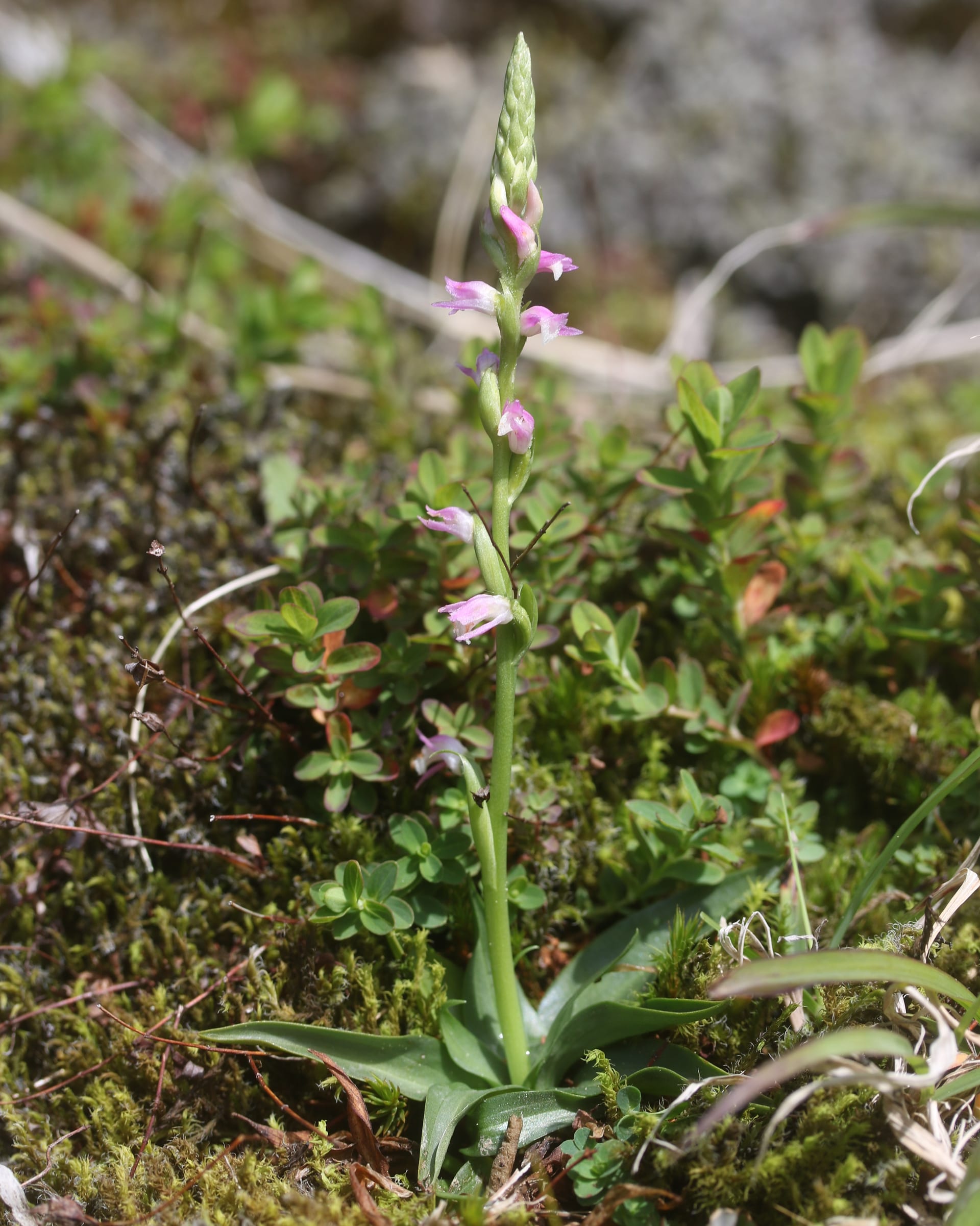
 © Alpsdake / CC BY-SA 4.0
Austral Ladies' Tresses
Austral Ladies' Tresses is a small terrestrial orchid that can sometimes be found growing wild in lawns and on grassy banks. Its defining feature is a slender flower spike lined with tiny pink blooms arranged in a spiral — the twist that gives the plant its Japanese name, nejibana, meaning "twisted flower." The spiral can wind either clockwise or counterclockwise in roughly equal numbers, and occasional white-flowered forms add extra variety. It's a plant best suited to experienced growers, as cultivation calls for real attention to detail. While the species itself persists as a perennial, individual plants are short-lived, renewing themselves generation after generation by self-seeding. Understanding this life cycle is key to enjoying it over the long term.
View Austral Ladies' Tresses encyclopedia →0% commission on your first sales!Register by September 30, 2026 and your first 2 plants are commission-free!
Grower Wanted!
List your plants on GrowerDirect and sell directly to customers nationwide!
6 Transparency Commitments from GrowerDirect
Growers disclose the following information for Orchids listings, guaranteeing transparency on variety, origin, light requirements, and growing difficulty.
- Variety Disclosed
- Real Photos
- Color Specification
- Origin Disclosed
- Light Requirements
- Difficulty Level Disclosed
Browse all 142 varieties
Light Requirements
Growing Difficulty
Verified growers wanted for Orchids
Growers are signing up now ahead of launch. Subscribe to be notified when new listings go live.
Getting alerts is free with a member account. When new listings match your saved search, we'll notify you by email and in-app.
Browse other categories
Austral Ladies' Tresses key facts
- Growing Difficulty
- Advanced
- Lifespan
- Perennial, but individual plants are short-lived and populations renew themselves from seed
- Size
- Flower spike 10-40 cm tall; flowers 4-5 mm long
- Watering
- Little or no fertilizer
- Light & Placement
- A plant of sunny grassland; grow it in a well-lit spot.
- Watering
- It likes moist grassland; do not let the soil dry out completely.
- Temperature & Overwintering
- Native throughout Japan, it copes with heat and cold and overwinters with its leaves.
- Soil & Repotting
- Its roots live with symbiotic fungi. Repotting can disturb this partnership and cause the plant to die after flowering, so avoid repotting where possible.
- Propagation
- Clonal propagation by division is difficult; even in the wild it renews itself from self-sown seed, which can sprout in neighbouring pots.
- Pests & Cautions
- A Japanese native; choose nursery-propagated plants rather than wild-collected ones. Some prefectures restrict collecting wild plants by ordinance. Keeping the same plant for many years is considered very difficult.
About Austral Ladies' Tresses
Austral Ladies' Tresses is a small terrestrial orchid with tiny pink flowers spiraling up a slender stem, in roughly equal right- and left-turning forms, including rare white variants — a plant best suited to experienced growers.
7 things to know before growing Austral Ladies' Tresses
1Sun and Airflow Matter
Austral Ladies' Tresses does best outdoors in a sunny spot with good air circulation. Avoid harsh late-afternoon sun, but give it as much daylight as possible for healthy growth.
2Don't Let It Dry Out
In the wild it grows in damp lawns and grassy banks, so it dislikes extreme dryness. Water thoroughly once the soil surface dries, and avoid letting it stay dry for long periods.
3Balance Drainage and Moisture
Soil that's too dry or constantly waterlogged both weaken the plant, so choose a mix that balances drainage with moisture retention. A commercial alpine or wildflower potting mix is a good starting point.
4Avoid Repotting When Possible
The roots of this orchid live in partnership with fungi in the soil. Disturbing that relationship by repotting can cause the plant to die after flowering, so the basic rule is to avoid repotting whenever possible.
5Adjust Care by Season
Native throughout Japan, it handles both heat and cold well and keeps its leaves through winter. Give it good sun all year and don't let the soil dry out completely. Sudden changes in environment can stress the plant, so introduce changes gradually.
6Check the Spike and Leaves
When choosing a plant, look for a sturdy flower spike and firm, healthy leaves. Part of the fun is noticing individual variation — whether the spiral twists clockwise or counterclockwise, or spotting the occasional white-flowered form.
7Renews Itself by Seed
Individual plants are short-lived, and the species keeps going by self-seeding and renewing itself generation after generation. Keep this life cycle in mind and take a long-term view when growing it.
Frequently asked questions about Austral Ladies' Tresses
- Q.Is this a good orchid for beginners?
- A.Austral Ladies' Tresses is generally considered a plant for experienced growers. It requires an understanding of its life cycle and careful ongoing care, so it's best attempted once you're comfortable growing orchids.
- Q.How big are the flowers?
- A.The flowers are small and many of them are arranged in a spiral along a slender flower stalk about 10 to 40cm tall. Each has pink petals and a white lip.
- Q.Does the spiral always twist the same way?
- A.The spiral turns clockwise or counterclockwise in roughly equal proportions, and neither direction is better than the other. Occasional white-flowered forms also appear, adding to the individual variation you can enjoy.
- Q.How long does the plant live?
- A.As a species it's perennial, but individual plants tend to be relatively short-lived. It keeps going by self-seeding and renewing itself generation after generation.
- Q.Can it be grown in a garden bed or only in a pot?
- A.It can be grown either in a garden bed or in a pot, as long as the spot gets good sun and airflow. Choose a soil mix that balances drainage with moisture retention.
Handy Growing Tools for Austral Ladies' Tresses
Learn more about Austral Ladies' Tresses in the encyclopedia
View Austral Ladies' Tresses encyclopedia entry →
Care difficulty, size, origin and light needs — all basics covered.
More in this category
Can't find the plant you're looking for?
Post your wishes for free and growers with matching plants will contact you with introductions.