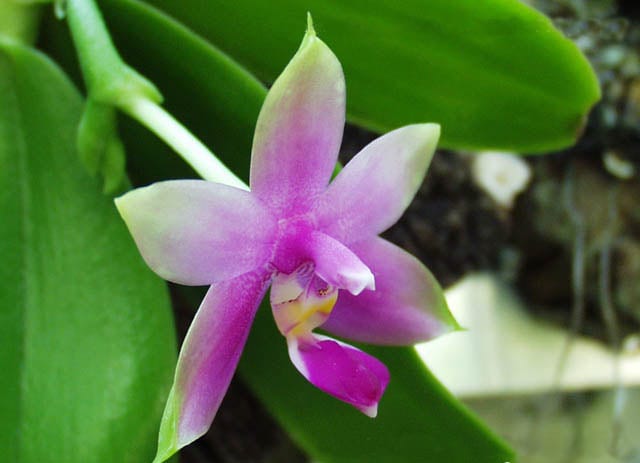
 © Andi S. / CC BY 2.0
Violet Phalaenopsis
Violet Phalaenopsis (Phalaenopsis violacea) is a small species orchid native to lowland forests in places like Sumatra. Its short, zigzagging flower stems bear blooms roughly 3.5cm across, opening one after another in shades dominated by violet-purple, along with a striking spice-like fragrance. Unlike many hybrid orchids, it offers a wilder, more distinctive look and scent, though it favors warm, humid conditions and is generally considered better suited to experienced growers. As a perennial, it can be grown for years as the plant renews itself over time. Its small-to-medium size makes it easy to fit into a growing space, making it an appealing choice for anyone curious about species orchids.
View Violet Phalaenopsis encyclopedia →0% commission on your first sales!Register by September 30, 2026 and your first 2 plants are commission-free!
Grower Wanted!
List your plants on GrowerDirect and sell directly to customers nationwide!
6 Transparency Commitments from GrowerDirect
Growers disclose the following information for Orchids listings, guaranteeing transparency on variety, origin, light requirements, and growing difficulty.
- Variety Disclosed
- Real Photos
- Color Specification
- Origin Disclosed
- Light Requirements
- Difficulty Level Disclosed
Browse all 142 varieties
Light Requirements
Growing Difficulty
Verified growers wanted for Orchids
Growers are signing up now ahead of launch. Subscribe to be notified when new listings go live.
Getting alerts is free with a member account. When new listings match your saved search, we'll notify you by email and in-app.
Browse other categories
Violet Phalaenopsis key facts
- Growing Difficulty
- Advanced
- Lifespan
- Perennial that can be kept for many years (little data on lifespan)
- Size
- Small to medium; flower stem 10-12.5 cm, flowers about 3.5 cm across
- Watering
- Dilute liquid fertilizer in the growing season
- Light & Placement
- It likes deep shade; keep it out of direct sun.
- Watering
- Keep humidity high and water regularly so it never dries out completely.
- Temperature & Overwintering
- A warm grower from the lowlands; keep it warm indoors in winter and away from cold.
- Soil & Repotting
- Pot it in sphagnum or bark, or mount it to suit its pendulous habit.
- Fertilizer
- Feed dilute liquid fertilizer regularly in the growing season.
- Enjoying the Flowers
- Flowers open in succession, so leave the stem in place while it is still green.
About Violet Phalaenopsis
A small species orchid native to lowland Sumatra, bearing 3.5cm violet flowers in succession on a zigzagging stem, with a distinctive spice-like fragrance. Best suited to experienced growers; a perennial that can be grown for years.
7 things to know before growing Violet Phalaenopsis
1Bright, indirect light
In the wild, Violet Phalaenopsis grows as an epiphyte in lowland forest canopies, so it does best in bright, indirect light rather than direct sun. Strong direct sunlight can scorch the leaves, so a spot with filtered light, such as behind a sheer curtain, works well.
2Never let it dry out completely
Keep humidity high and water on a regular schedule so the growing medium never dries out completely. It thrives in warm, humid conditions, but stagnant, poorly ventilated air should be avoided.
3Use moss or bark, not soil
Rather than ordinary potting soil, use a well-draining medium such as sphagnum moss or bark chips. Mounting it on fern fiber or in an unglazed clay pot can also bring out its natural, species-orchid character.
4Protect from winter cold
Native to tropical lowlands, this orchid is sensitive to cold, so keep it in a warm indoor spot during winter and avoid exposing it to low temperatures. Maintaining relatively high temperature and humidity year-round helps encourage better blooming.
5Repot when the medium breaks down
Sphagnum moss and bark gradually break down and drain less well over time, so watch the condition of the roots and medium to decide when to repot. After repotting, water sparingly until the roots settle in.
6Watch the zigzag flower stem
One of the highlights of this species is its distinctive zigzagging flower stem, which produces blooms one after another. Its strong, spice-like fragrance is another draw, and placing it in a well-ventilated room helps the scent carry.
7Choose with experience in mind
Since this species calls for a bit more growing experience, first-time growers should look for a plant with healthy, well-established roots. As a perennial that can be renewed and grown for years, it's worth choosing a plant you're happy to care for over the long term.
Frequently asked questions about Violet Phalaenopsis
- Q.Can beginners grow this orchid?
- A.Violet Phalaenopsis is generally considered a species better suited to experienced growers. Its watering and temperature needs as an epiphytic orchid take some getting used to, so prior experience with orchids is helpful.
- Q.What does the flower smell like?
- A.The flowers give off a strong, spice-like fragrance. Since blooms open one after another rather than all at once, the scent can be enjoyed over an extended period.
- Q.How large are the flowers?
- A.The flowers are around 3.5cm across, in shades dominated by violet-purple. The flower stem is compact, around 10 to 12.5cm long, and grows in a distinctive zigzag shape as it blooms.
- Q.How long can this orchid be grown for?
- A.It is a perennial plant that can be grown for many years as the plant renews itself over time. Detailed data on its lifespan is limited, so it's best to keep an eye on the plant's condition through ongoing care.
- Q.What should I keep in mind about placement?
- A.It does best in bright, indirect light with relatively high temperature and humidity. In winter especially, keep it in a warm indoor spot and avoid exposing it to cold.
Handy Growing Tools for Violet Phalaenopsis
Learn more about Violet Phalaenopsis in the encyclopedia
View Violet Phalaenopsis encyclopedia entry →
Care difficulty, size, origin and light needs — all basics covered.
More in this category
Can't find the plant you're looking for?
Post your wishes for free and growers with matching plants will contact you with introductions.