 © Dinkum / CC BY-SA 3.0
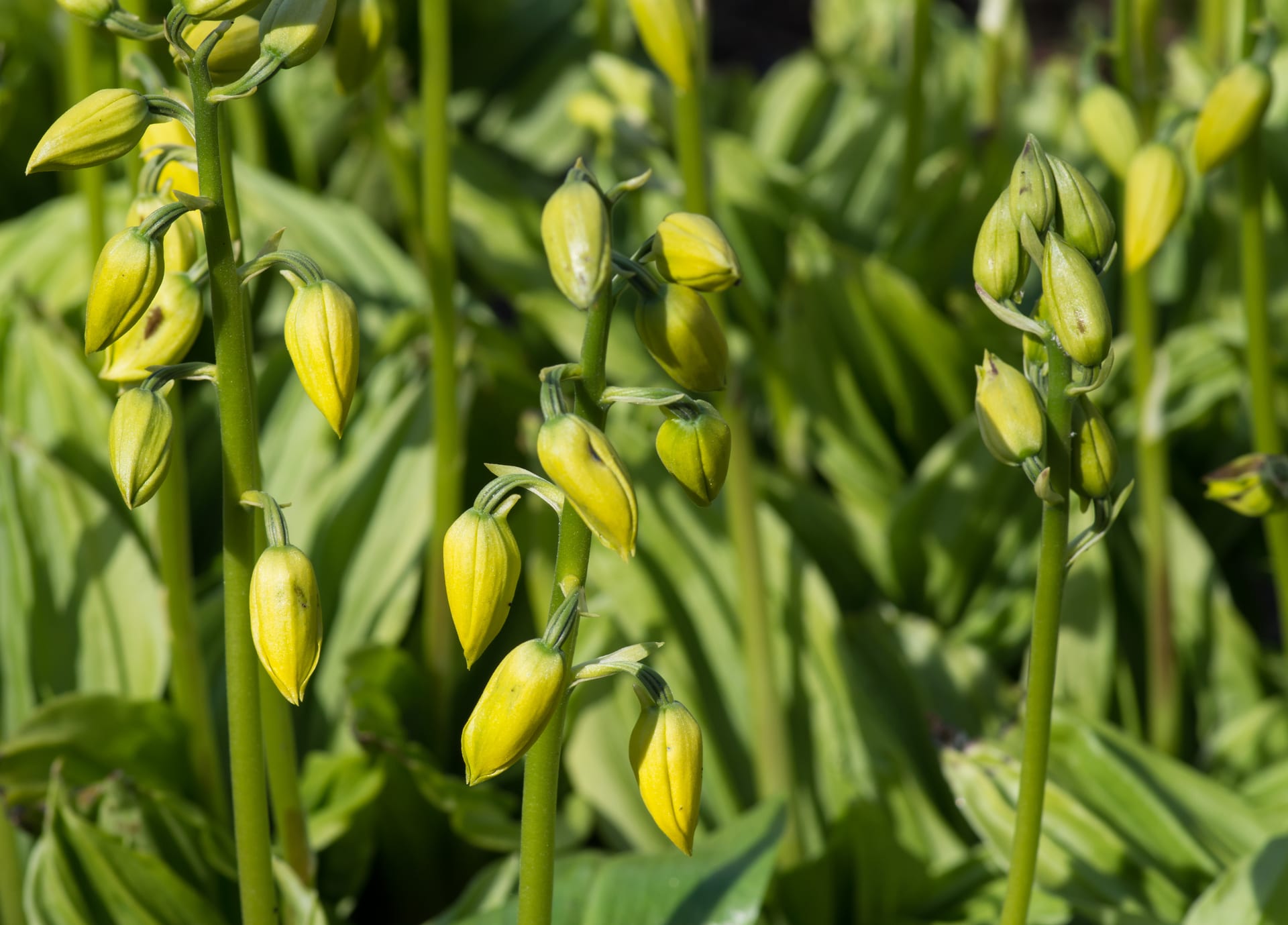
Yellow Calanthe
Yellow Calanthe is a striking relative of the classic Japanese Calanthe orchid, prized for its clusters of bright yellow, large blooms. Both its flowers and overall plant size are noticeably bigger than standard Calanthe, and from late winter into spring it produces citrus-scented flowers that fill the air with a gentle fragrance. As a perennial with a sturdy pseudobulb that can persist for several years once established, it rewards patient care with blooms that return year after year. It's also valued as an important parent in Calanthe hybridization, admired for its elegant form that suits both traditional Japanese gardens and container displays. While best suited to growers with some prior experience, it's a long-lived plant that offers lasting rewards for those who get the basics right.
View Yellow Calanthe encyclopedia →0% commission on your first sales!Register by September 30, 2026 and your first 2 plants are commission-free!
Grower Wanted!
List your plants on GrowerDirect and sell directly to customers nationwide!
6 Transparency Commitments from GrowerDirect
Growers disclose the following information for Orchids listings, guaranteeing transparency on variety, origin, light requirements, and growing difficulty.
- Variety Disclosed
- Real Photos
- Color Specification
- Origin Disclosed
- Light Requirements
- Difficulty Level Disclosed
Browse all 142 varieties
Light Requirements
Growing Difficulty
Verified growers wanted for Orchids
Growers are signing up now ahead of launch. Subscribe to be notified when new listings go live.
Getting alerts is free with a member account. When new listings match your saved search, we'll notify you by email and in-app.
Browse other categories
Yellow Calanthe key facts
- Growing Difficulty
- Intermediate
- Lifespan
- Perennial; pseudobulbs persist for several years
- Size
- Flower stem 40-50 cm tall; flowers 4-6.5 cm across
- Watering
- Dilute liquid fertilizer from spring to early summer
- Light & Placement
- A forest-floor plant: bright light in spring, then partial shade away from strong sun from early summer.
- Watering
- Water thoroughly when the surface dries, and do not let it dry out completely in winter.
- Temperature & Overwintering
- It is more of a warm-region plant than C. discolor; protect it from freezing in cold areas, and keep it cool and airy in summer.
- Soil & Repotting
- Use a free-draining mix of kanuma or pumice with leaf mould in a fairly deep pot, as it grows large. Repot after flowering or in autumn.
- Pests & Cautions
- Calanthe readily pick up incurable viruses; sterilise tools between plants and isolate any with symptoms. Choose propagated plants rather than wild-collected ones.
About Yellow Calanthe
Discover Yellow Calanthe, an orchid known for its clusters of bright yellow blooms, citrus-scented flowers, and elegant growth habit larger than typical Calanthe.
7 things to know before growing Yellow Calanthe
1Prefers Bright Shade
Yellow Calanthe prefers bright, indirect light rather than direct sun, thriving in dappled shade similar to a forest understory. Outdoors, a spot under eaves that avoids harsh afternoon summer sun works well.
2Water Well When Growing
During the active growing season from spring through autumn, water thoroughly once the soil surface dries, taking care not to let it dry out completely. After flowering, as the plant heads into dormancy, gradually reduce watering to avoid excess moisture.
3Choose Well-Draining Soil
Because it grows from a pseudobulb, Yellow Calanthe is sensitive to excess moisture and prefers a well-draining potting mix. A commercial Calanthe blend, or a mix combining pumice and leaf mold, works well.
4Repot After Flowering or in Autumn
Because it grows into a large clump, plant it in a deep pot using a well-draining mix of kanuma or pumice with leaf mold. Once the plant has filled its pot, repot it into fresh mix either after flowering or in autumn.
5Protect From Winter Freezing
Yellow Calanthe isn't especially cold-hardy, so during winter it should be kept indoors or under cover, away from frost and freezing temperatures. Keeping the soil on the drier side during dormancy also helps reduce stress on the plant.
6Blooms Late Winter Into Spring
Flower stalks reach roughly 40 to 50 cm in height, bearing numerous large blooms about 4 to 6.5 cm across from late winter into spring. The flowers carry a fresh, citrus-like scent that can also be enjoyed when displayed indoors.
7Check Leaves and Pseudobulb
When choosing a plant, look for firm, unblemished leaves and a well-filled, healthy pseudobulb. Since this orchid is best suited to growers with some prior experience, it's worth reviewing the basics of its care before bringing one home.
Frequently asked questions about Yellow Calanthe
- Q.Is Yellow Calanthe suitable for beginners?
- A.Yellow Calanthe is generally considered suitable for growers with some prior experience rather than absolute beginners. Those already comfortable with basic watering and placement should find it manageable, but first-time orchid or woodland-plant growers may want to review the care basics beforehand.
- Q.How is Yellow Calanthe different from standard Calanthe?
- A.Yellow Calanthe grows larger overall, with bigger flowers and a bigger plant, compared to standard Calanthe. It produces numerous bright yellow blooms with a citrus-like fragrance, and it's also known as an important parent used in Calanthe hybrids.
- Q.When does it bloom?
- A.It flowers from late winter into spring, sending up stalks roughly 40 to 50 cm tall topped with numerous large blooms about 4 to 6.5 cm across. The flowers also carry a fresh, citrus-like fragrance during bloom.
- Q.How often does it need repotting?
- A.Yearly repotting isn't necessary. Once the plant has filled its pot, repot it either after flowering or in autumn. Since it grows into a large clump, choose a fairly deep pot.
- Q.What should I watch for in winter care?
- A.Since Yellow Calanthe isn't especially cold-hardy, it's important to keep it somewhere protected from frost and freezing temperatures during winter. Watering should also be reduced and kept on the drier side while the plant is dormant.
Handy Growing Tools for Yellow Calanthe
Learn more about Yellow Calanthe in the encyclopedia
View Yellow Calanthe encyclopedia entry →
Care difficulty, size, origin and light needs — all basics covered.
More in this category
Can't find the plant you're looking for?
Post your wishes for free and growers with matching plants will contact you with introductions.