 © Michael Wolf (Webseite) / CC BY-SA 3.0
Jenkins' Dendrobium
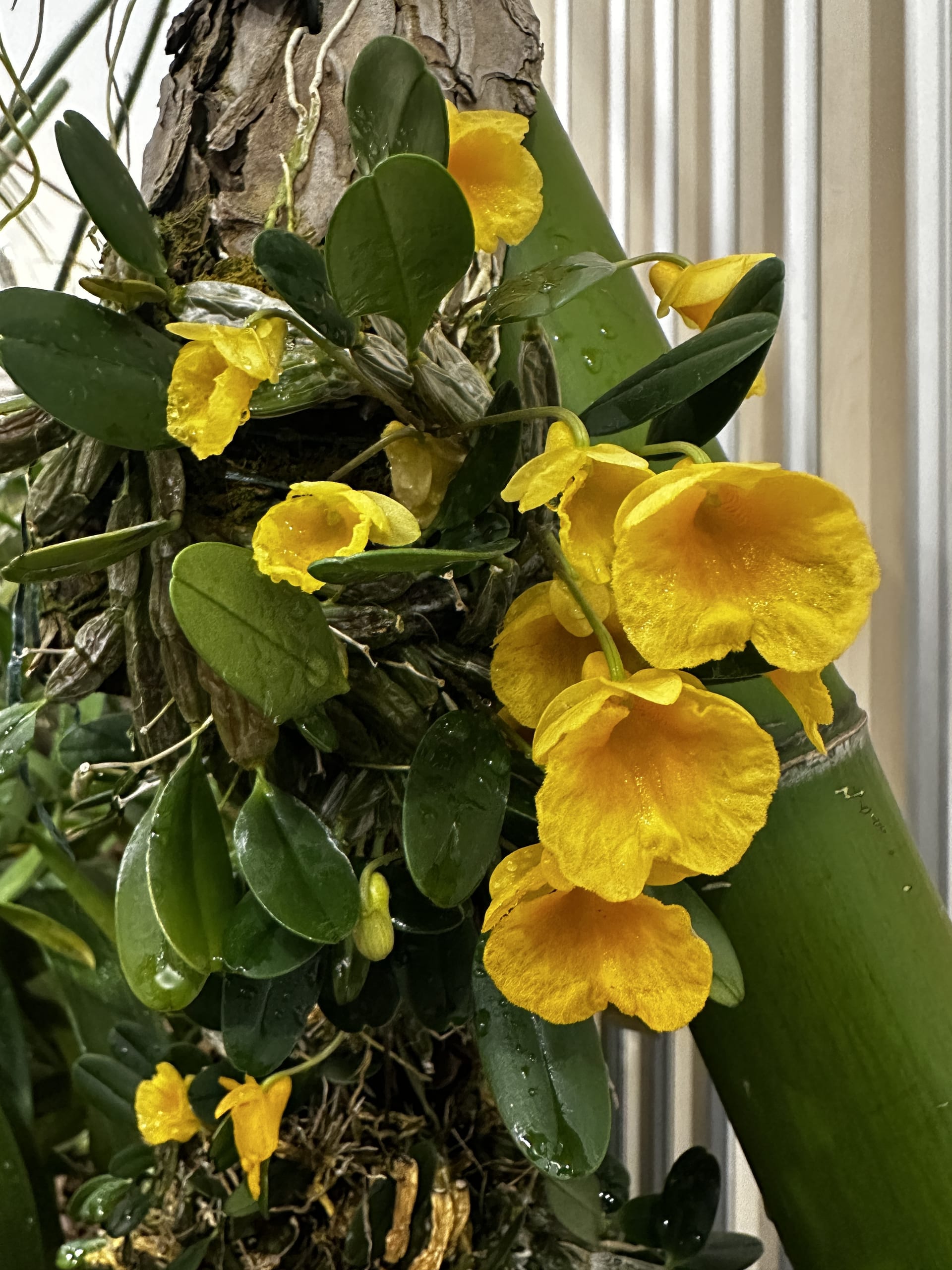
Dendrobium jenkinsii is an extremely miniature Dendrobium whose flat, small pseudobulbs cluster tightly together as the plant matures. In early spring, bright yellow flowers with a honey-like fragrance open in clusters of one to five blooms from the side of a single thick leaf. Plants are typically sold mounted on cork, showing off their epiphytic growth habit in a compact form. While it calls for some growing experience, watching the pseudobulbs multiply over the years into a full, clumping specimen is one of the real rewards of keeping this orchid.
View Jenkins' Dendrobium encyclopedia →0% commission on your first sales!Register by September 30, 2026 and your first 2 plants are commission-free!
Grower Wanted!
List your plants on GrowerDirect and sell directly to customers nationwide!
6 Transparency Commitments from GrowerDirect
Growers disclose the following information for Orchids listings, guaranteeing transparency on variety, origin, light requirements, and growing difficulty.
- Variety Disclosed
- Real Photos
- Color Specification
- Origin Disclosed
- Light Requirements
- Difficulty Level Disclosed
Browse all 142 varieties
Light Requirements
Growing Difficulty
Verified growers wanted for Orchids
Growers are signing up now ahead of launch. Subscribe to be notified when new listings go live.
Getting alerts is free with a member account. When new listings match your saved search, we'll notify you by email and in-app.
Browse other categories
Jenkins' Dendrobium key facts
- Growing Difficulty
- Intermediate
- Lifespan
- Perennial that can be kept for many years as it clumps up (little data on lifespan)
- Size
- Miniature; flowers about 3 cm across
- Watering
- Dilute liquid fertilizer in the growing season
- Light & Placement
- It likes bright light, especially full light in winter; lightly shade only from harsh midsummer sun.
- Watering
- Mounted plants dry quickly, so water often while growing; in winter water sparingly and keep it dry.
- Temperature & Overwintering
- It prefers intermediate to slightly cool conditions; bring it indoors in winter and keep it from frost.
- Soil & Repotting
- Mount it on tree-fern or cork; move it to a new mount when it outgrows the old one.
- Dormancy Care
- A dry winter rest helps it flower well in early spring.
About Jenkins' Dendrobium
Dendrobium jenkinsii is an extremely miniature epiphytic orchid grown mounted on cork, producing honey-scented yellow flowers in early spring. Best suited to growers with some orchid experience.
7 things to know before growing Jenkins' Dendrobium
1Light and Placement
Dendrobium jenkinsii likes bright light, and giving it plenty of sun in winter in particular helps it flower in early spring. Provide light shade only during the strongest midsummer sun. Good air circulation also helps keep the roots and pseudobulbs healthy.
2Watering
Because the plant is mounted on cork rather than potted in soil, it dries out quickly. During the spring-to-autumn growing season, water thoroughly (or mist frequently) once the mount has dried. In winter, growth slows, so cut back on watering and keep the plant slightly on the dry side to encourage flower buds to form.
3Growing on a Cork Mount
As an epiphyte that grows with its roots exposed to the air, this orchid is sold and grown mounted on cork or a piece of wood rather than planted in soil. Roots that stay damp for too long are prone to rot, so make sure the mount dries out well in a well-ventilated spot after watering.
4Remounting
When the cork mount deteriorates or the plant outgrows it, it's time to move the orchid onto a new mount. The best window is right after flowering, before the roots become active and new growth begins.
5Seasonal Temperature Care
This orchid enjoys warm conditions during its growing season, but a cooler, drier rest period in winter helps trigger flowering the following spring. Protect it from cold drafts and frost while still allowing it to experience cool, relatively dry conditions.
6Choosing a Healthy Plant
Look for plants with plump, firm pseudobulbs and roots that are well attached to the mount. Leaves without dark spots or wrinkling, along with several pseudobulbs clustered together, are signs of a healthy, well-established plant.
7Growth and Division
The pseudobulbs multiply gradually into a clustering clump, so the plant can be enjoyed and grown for many years. Once it has filled out, it can also be divided during its active growing season to produce additional plants.
Frequently asked questions about Jenkins' Dendrobium
- Q.Is this orchid suitable for beginners?
- A.Dendrobium jenkinsii is generally considered suitable for growers with some orchid experience rather than complete beginners. Its epiphytic watering needs and seasonal care require a bit of a learning curve, so prior experience with other orchids helps.
- Q.When does it bloom, and what does it smell like?
- A.It blooms in early spring, producing one to five bright yellow flowers from the side of a single thick leaf. The flowers carry a sweet, honey-like fragrance that can be enjoyed up close during the blooming period.
- Q.How large does this plant get?
- A.It's an extremely miniature Dendrobium, with flowers around 3 cm across. The pseudobulbs themselves stay small too, making it an easy size to fit into a compact growing space.
- Q.How often should I water it?
- A.Because it's mounted on cork, it dries out quickly, so during the spring-to-autumn growing season you'll need to water or mist it frequently whenever the mount dries. In winter, growth slows and the plant should be kept a bit drier.
- Q.How long can this plant be grown?
- A.It's a perennial plant that can be grown for many years as its pseudobulbs gradually multiply. Detailed data on its overall lifespan is limited, but with periodic division, the plant can be kept going and passed on for a long time.
Handy Growing Tools for Jenkins' Dendrobium
Learn more about Jenkins' Dendrobium in the encyclopedia
View Jenkins' Dendrobium encyclopedia entry →
Care difficulty, size, origin and light needs — all basics covered.
More in this category
Can't find the plant you're looking for?
Post your wishes for free and growers with matching plants will contact you with introductions.